
Reading

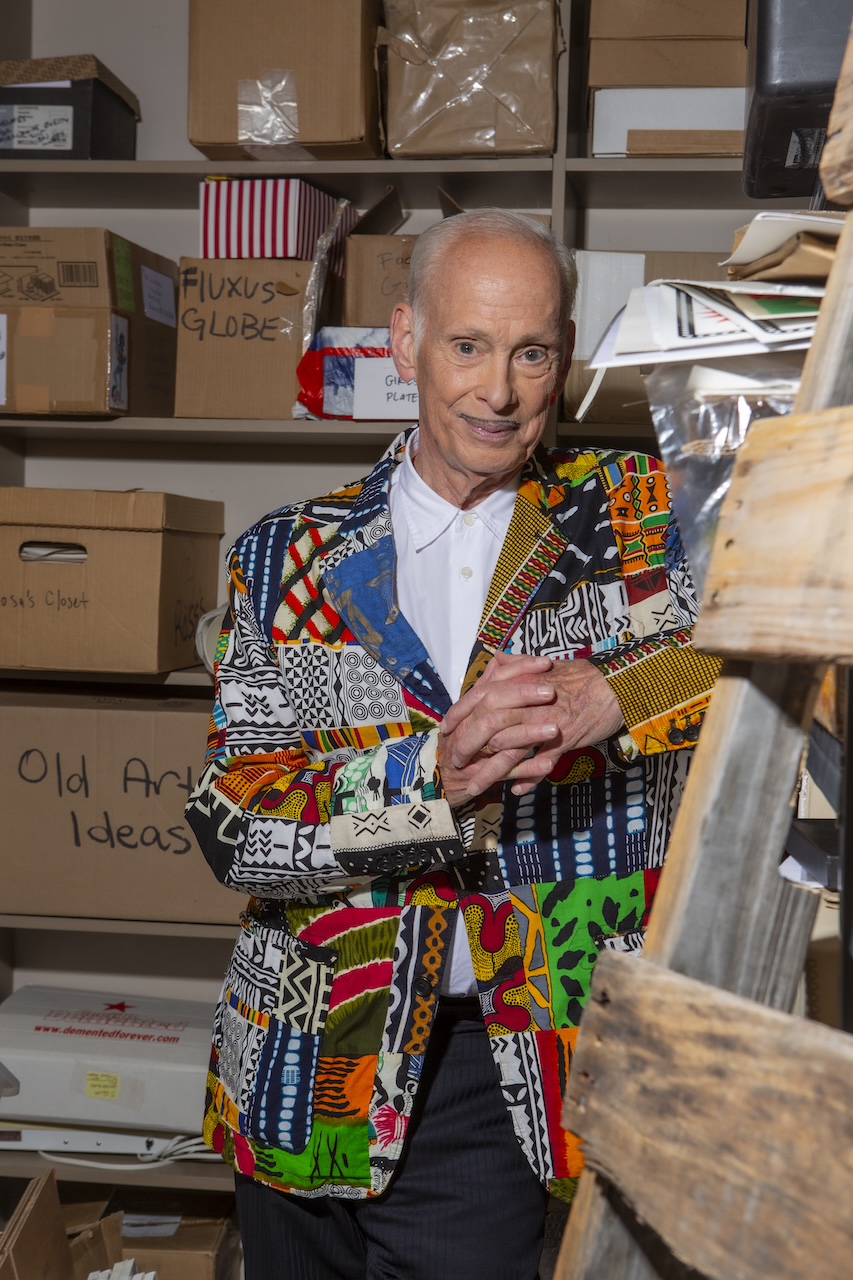
John Waters: An Iconoclast Revisited

Previous Story
Article Image

BmoreArt’s Picks: November 4-10

Next Story
Article Image

BmoreArt News: Amy Sherald, Hilton Carter, Inviti [...]

“Hey where the fuck are we anyway today?” a grainy, black-and-white Susan Lowe whines.
“Timonium, I think,” someone replies off-camera.

But I am in Barcelona, an ocean away from the strip malls and tract housing of suburban Maryland. It’s the weekly Monday night screening series of queer classics at La Cinètika, an abandoned movie theater squatted by anarchists and reopened to the public as a radical anticapitalist cultural center. Never have I ever felt more like one of the anti-establishment characters in John Waters’ turn-of-the-millenium black comedy Cecil B. Demented. Tonight, though, we’re watching Waters’ Multiple Maniacs, the prolific filmmaker’s first feature-length “talkie” from 1970, often overlooked in his œuvre of more palatable, color, or “polished” films.

I have always been a huge fan of John Waters’ films, visual art, writing, and public persona, but I had never seen this early work. The European audience is packed with fellow devotees who look like they could’ve been styled by “Dreamlander” Van Smith in skin-tight leopard print, biker jackets, Divine eyebrows, and updos of every color. I’m again reminded of just how influential Baltimore’s hometown antiheroes have been in shaping global counterculture and, eventually, even mainstream aesthetics.
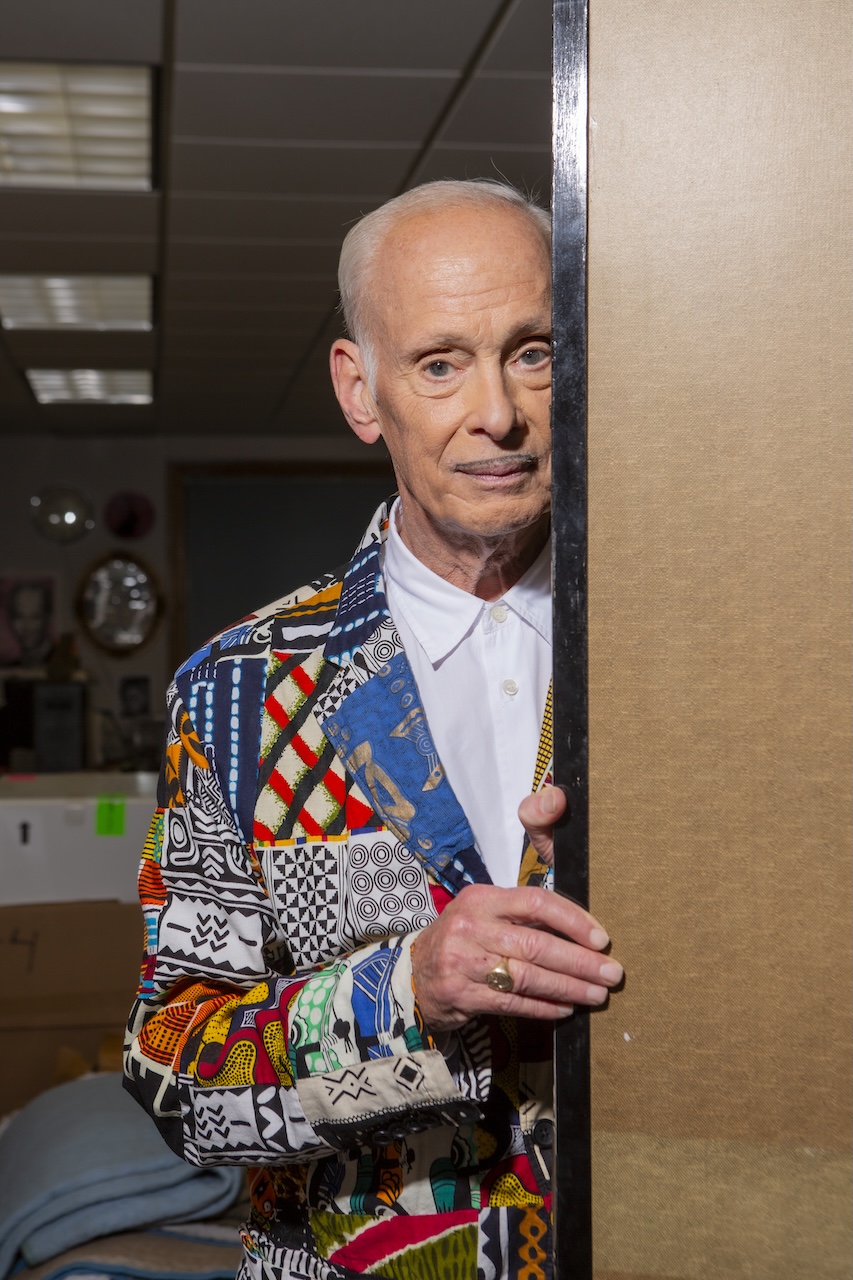
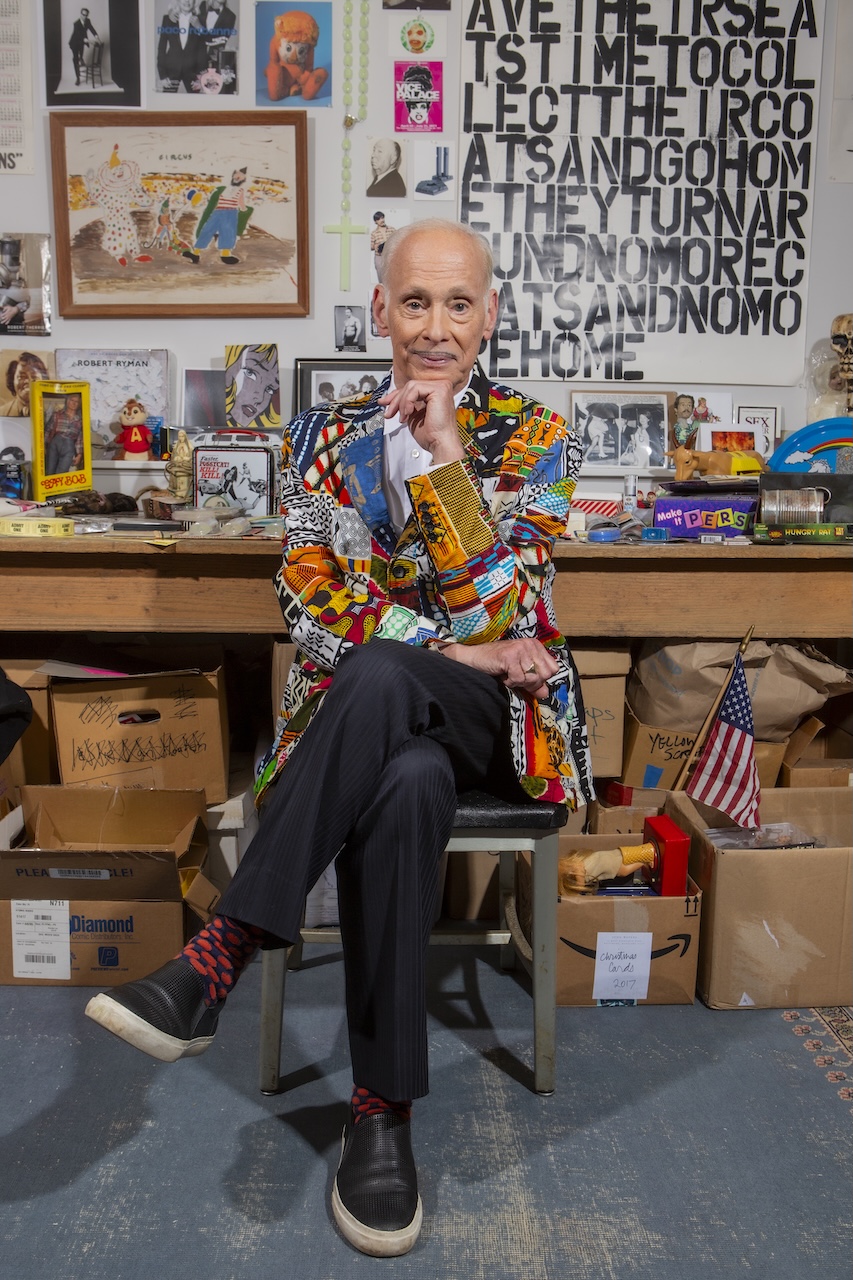
“We were doing ‘punk’ before a word for it existed,” Waters tells me a few days later. I had called him with a quandary: what the hell is left to write about his life, work, and the unimaginably long shadow he’s cast worldwide from humble old Baltimore? After all, Waters himself has published seven books—mostly about his experiences—and tours delivering one-man-shows and interviews far more than any almost octogenarian probably should. (“I just don’t want to use up all my material in this interview that I would use in my shows that I write!” Waters cautions, “I make a living from talking. If I give away all my information, I don’t have a career.”)

As America deindustrialized, John Waters and his keen observations of Baltimore’s decadence have become a chief export. What more content can be extracted? Refined? Over the course of our conversation, I get the suspicion that the consummate iconoclast is perhaps a bit weary from the task of managing his own sprawling, unlikely legacy.

People said, ‘What did you make those movies for?’ I made them for my friends. They were just what my friends and I thought was funny at the time.
John Waters

I ask if he had revisited Multiple Maniacs recently. “I never sit around and watch my own movies. Are you kidding?!” Waters concedes, though, that he did rewatch the film for its 2016 Criterion Collection restoration and re-release, “It was so amazing to see… ‘Janus Films presents’—Janus Films! That logo, when I grew up, was Truffaut and Godard and the most serious art movies, Bergman! And then you see ‘Janus Films presents Multiple Maniacs.’ It just proves that anything can happen.”

And a lot of improbable history has occurred since Waters’ 1970 ópera prima was inducted into the cinematic canon nearly a decade ago. Watching Multiple Maniacs—which the Maryland Film Festival will screen on original 16mm this Friday, Nov. 7— I’m struck by an unexpected sense of urgency and relevance for a film very much loaded with then-contemporary references from over half-a-century ago: the Sharon Tate murders, the Weather Underground, the riots and political violence of the 1960s, the National Guard’s response, to name a few. If Maniacs was a sort of viking funeral for the bubble of postwar American optimism and the traumas that popped it, it’s oddly disconcerting to watch from our current point of political uncertainty, accelerating cultural fragmentation, and anxiety.

Maniacs has an eerily postapocalyptic atmosphere: think La Jetée on LSD. Baltimore’s streets somehow look more deserted than usual, even though the city had about 300,000 more residents back when it was filmed. Like most of Waters’ pre-Hairspray films, there are no “moral” protagonists to root for—only desperate victims plotting against (and performing some very strange sex acts upon) one another.

I always thought when I was making that movie—we had Nixon and Vietnam—it couldn’t get worse, but it feels worse now. But I think that humor is still the way to win.
John Waters

“What I’ve always done is make fun of political correctness,” Waters reflects. “We were in the hippie years, and I always said I thought of Divine to be my Godzilla to scare hippies.”

I mention that I was surprisingly moved by the film’s last scene, in which Divine, driven mad by grief and rage, goes on a rampage through Fell’s Point, terrorizing crowds of hippies until she’s gunned-down by soldiers in the street. The shaky camerawork and point-of-view shots bear an uncanny foreshadowing of the all-too-real experience of watching political unrest and state violence live-streamed in real time. I saw Multiple Maniacs shortly after Trump deployed the National Guard to Los Angeles. Speaking to John Waters, I find myself thinking how much the viral video of a man throwing a Subway sandwich at federal agents in Washington, DC could’ve been plucked from one of his films.

“When I made Multiple Maniacs, it was just after the Martin Luther King riots. I lived in an apartment on 25th Street, where we filmed. The National Guard was out front of our apartment in tanks,” Waters explains, “So it was all real. It was a joke about exactly what was happening.”

But Waters didn’t set out to be political with a capital “P” per se, nor to become a household name synonymous with the culture wars. He’s quick to remind us that the film “is also a joyous one that was celebrating everything you weren’t supposed to celebrate. And at the time, people said, ‘What did you make those movies for?’ I made them for my friends. They were just what my friends and I thought was funny at the time.”

Waters himself still sounds bemused at the enduring cultural impact these inside jokes have had, mentioning with something bordering on awe that former Librarian of Congress Carla Hayden selected Pink Flamingos for the National Film Registry in 2021. It’s a far cry from his work’s reception in the 1970s, when copies of his films were burned, censored, or panned by critics. “In the Baltimore Sun, every critic wrote the meanest reviews, which we quoted in the ads.”

I ask Waters if it is weird to have been a catalyst in the corrosion of social norms and conventions of “decency.” What is it like to watch the world embrace degeneracy, decades after facing backlash for obscenity?

He reminds me, though, that he’s lost nearly every censorship case, except for the title of his 1998 film Pecker. “I was my own lawyer. I said ‘Well, what about Shaft? What about Free Willy?’ and I won that one!”

“Since Trump, you can say anything if you’re a Republican!” Waters laughs. That’s perhaps the most surreal irony of our political climate—our reality has far outpaced Waters’ fictions in terms of indecency. Suddenly, John Waters might just be a wholesome public figure.

In 2004, the MPAA’s decision to rate his film A Dirty Shame NC17 certainly didn’t help at the box office. Since then, Waters has struggled to secure financing for film productions. But for someone who hasn’t released a feature in over two decades, Waters remains as relevant and busy as ever. His self-deprecating fine art retrospective The Worst of Waters is on view at The Arthur Roger Gallery in New Orleans. By the end of the year, he’ll have done fifty-one one-man shows in eighteen cities. “I live on the road. I am a carnie! I am in a sideshow!”

“John, don’t you ever want to retire?” I ask, amazed at his enviable energy.

“And do what?! If I retire, I’d probably drop dead.”

The world needs John Waters now more than ever. He’s presently writing his next show, Going to Extremes, which will tour next year. Appropriately, he sees a parallel to the themes in Multiple Maniacs, and confesses, “I always thought when I was making that movie—we had Nixon and Vietnam—it couldn’t get worse, but it feels worse now. But I think that humor is still the way to win.”

The Maryland Film Festival will screen a 16 mm print of Multiple Maniacs on Friday, Nov. 7 at 9:30 PM. Tickets are available here.


This story is from Issue 20: The Icons,

Related Stories
The Definitive Design Textbook's Seventh Edition Diversifies the Canon

The idea of a master narrative and the Eurocentric bias of earlier editions of this text have been pressured, and forced to make room for multiplicity and inclusivity. The history of graphic design appears here fresher, livelier, and more relevant.

A Case for Why Maryland's Version of the Cinema Olympics is Unique... and Better for Film Artists

Since its inception in 1999, the MdFF has always defined itself as a discovery festival, a place to see films you might not see anywhere else. This year's Festival pivots to fall, running November 5-9.

China Martens' Debut Novel is a Striking Polaroid of Early Noughties Mayhem and Motherhood in Baltimore

Martens is a focused storyteller who delivers a strong narrative. The book is achingly heartfelt yet a whole lot of fun, a heady read by a writer who knows her craft and lets it fly.

We've Got Your Must-See Picks for October 2, 3, 4, and 5

Baltimore's New/Next Film Festival is back, with 30 feature-length movies, premiers, vintage gems, and more shorts than you can possibly watch. Brandon Soderberg has your guide to what not to miss.