Reading

April Gray: The Visionary Behind the Jewelry Counter

Previous Story
Article Image

BmoreArt News: Pedagogy Study Hall, Nick Cave, Ke [...]

Next Story
Article Image

SWAB Art Fair 2025: A Laboratory for Artworld Sur [...]

When I meet April Gray at the Baltimore Museum of Art (BMA) gift shop, she’s shimmering—naturally—with jewelry: a chunky silver necklace, a thick silver cuff, dangly earrings, a ring on practically every finger. I follow her to the little alcove where we’ll conduct our interview. Around us, groups of kids on museum field trips, armed with worksheets and pencils, mill through the exhibits. April waves and says hello to everyone we pass. She’s clearly at home here.

After serving nearly ten years as the BMA’s Head Jewelry Buyer, Gray was promoted to her current role as Assistant Director of Retail Operations in early 2025. Growing up in both Baltimore City and County, she spent her twenties training as a professional film photographer. She earned her Bachelor’s in Fine Arts from Savannah College of Art and Design (SCAD), where she focused on photography.

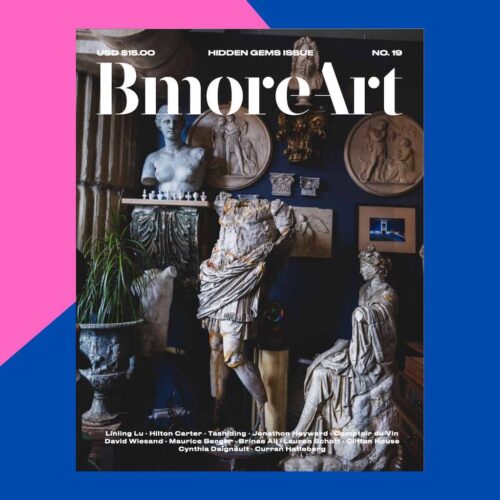
Gray brings her artist’s eye and sense of composition to the BMA gift shop: this is obvious when one walks around the glass cases, seeing the artful, enticing way the jewelry is arranged within. As a follow up to her stunning portrait in BmoreArt’s print Issue 19, I looked forward to learning more about her. Settling into the comfortable quiet of the BMA’s modern halls, we talked about the ins and outs of working in the museum retail space and what inspires her love of jewelry. 

There aren’t any rules when it comes to jewelry. Wear what you love and what makes YOU happy.
April Gray


How did your work with the Baltimore Museum of Art begin? 

It all started when I moved home after living in Rhode Island for a few years. As everyone does, you fall back into an industry in which you’ve had prior experience. I was hired at Anthropologie. There, I met a girl who also worked at the BMA, and she would come in for display projects around the holidays. She mentioned to me one day that she was leaving her position at the BMA and that I should apply for the job. She gave me her director’s number, and I sent him my resume. I was hired as their lead sales associate two weeks later. It was all very quick and seemed like it was meant to be.

My job transitioned into a buyer after about four years. And, this past January, I was promoted to Assistant Director of Retail Operations. In addition to buying Jewelry for the BMA Shop, I buy our Children’s Gifts and Art supplies. I also dabble in product development. But jewelry is mainly what I’m known for.

You have great jewelry on. Can you tell me a little about it? 

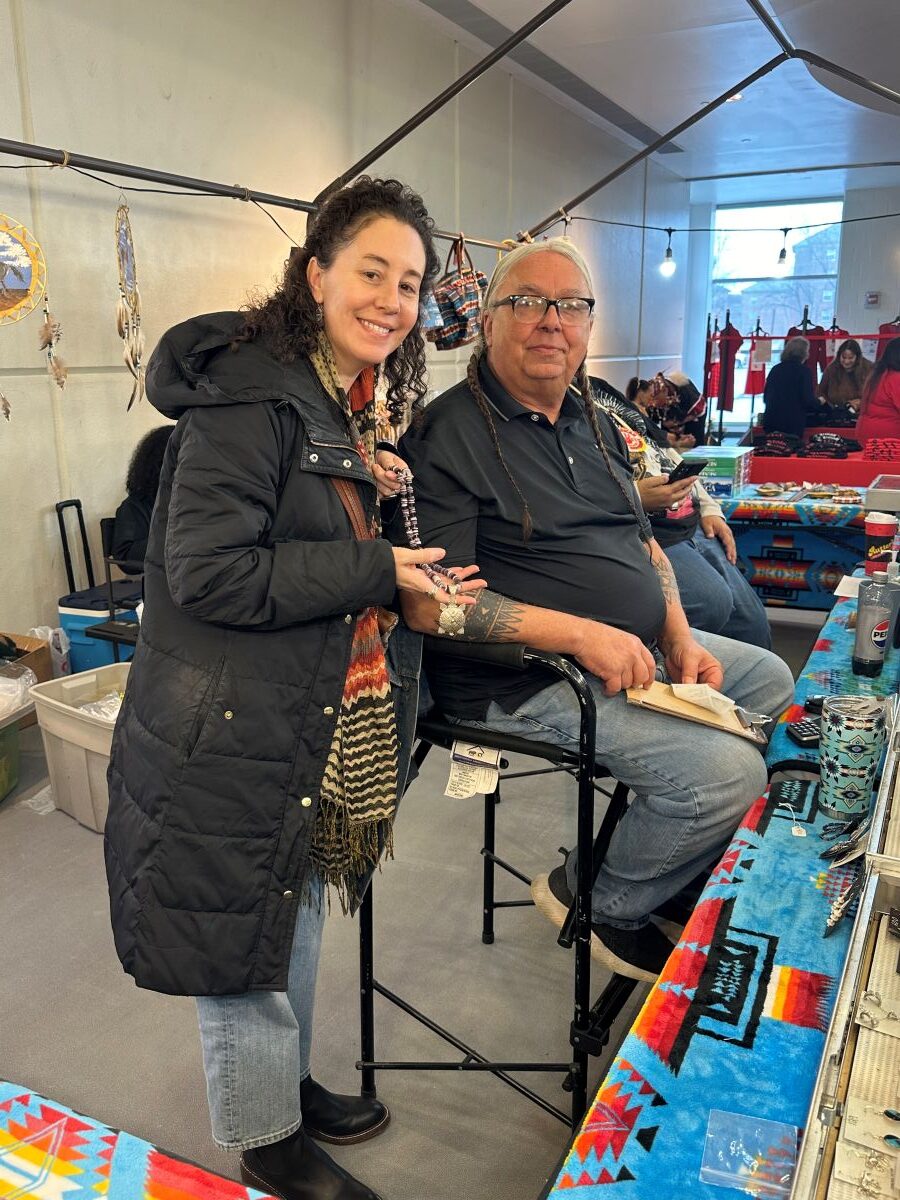
Thank you. These pieces came from a great little jewelry store in Baltimore that’s no longer around. Fire and Ice was the name. I believe they still have a store left at BWI. Quite a bit of my jewelry collection comes from that store. This piece I have on [silver ring] is made by Mark Tayac. He’s an indigenous artist and was part of the Preoccupied Exhibition we had here. I sold a lot of his jewelry in the shop, and I still have some pieces left. 

This cuff [thick silver cuff] I’m wearing, is one of Earl Jones’ pieces. Currently, The Baltimore Jewelry Center is having a retrospective of Earl’s work. Sadly, he passed away last year.  He’s an absolute Baltimore legend in my eyes, when it comes to sculpture and jewelry. 

I’m always wearing a mix of new and old. For example, this was my mother’s little 90’s cherub pendant [thick silver necklace]. And these were my mother’s [dangly silver earrings], probably from like the late 80s or 90s. There aren’t any rules when it comes to jewelry. Wear what you love and what makes YOU happy.

You mentioned you’re wearing your mother’s jewelry. Did she inspire your style? 

Absolutely. I think my mother has definitely inspired my love for jewelry and that has influenced me in my career.  She doesn’t wear much gold or diamonds, mostly sterling silver and gemstones. That’s what I grew up with. So, for me personally, I am a huge fan of gemstones. I gravitate towards sterling silver jewelry with unique stone settings that are really different. I’ve had this ring [shell ring on silver band] since I got it for my 19th or 20th birthday. I’m not buying antique or vintage jewelry for the shop, but I do buy things that are inspired by older pieces. I also really love modern and contemporary jewelry. 

Have you influenced your mom’s perspective on jewelry in some ways as well? 

Through my career, my Mom has added to her jewelry collection with many of the pieces that I have bought for the shop, which is the biggest compliment.

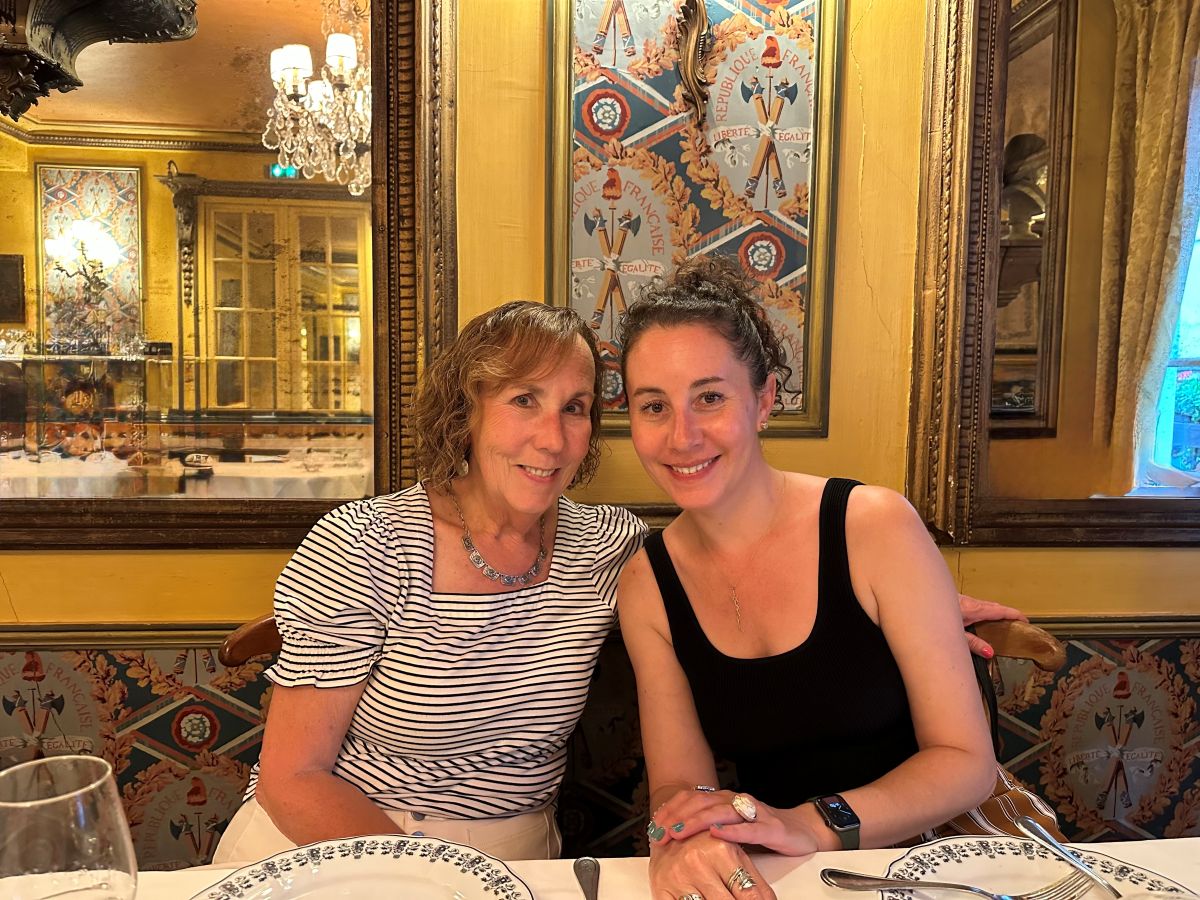
April Gray and her mother in Paris, photo courtesy of April Gray.
April Gray and Mark Tayac, photo courtesy of April Gray.
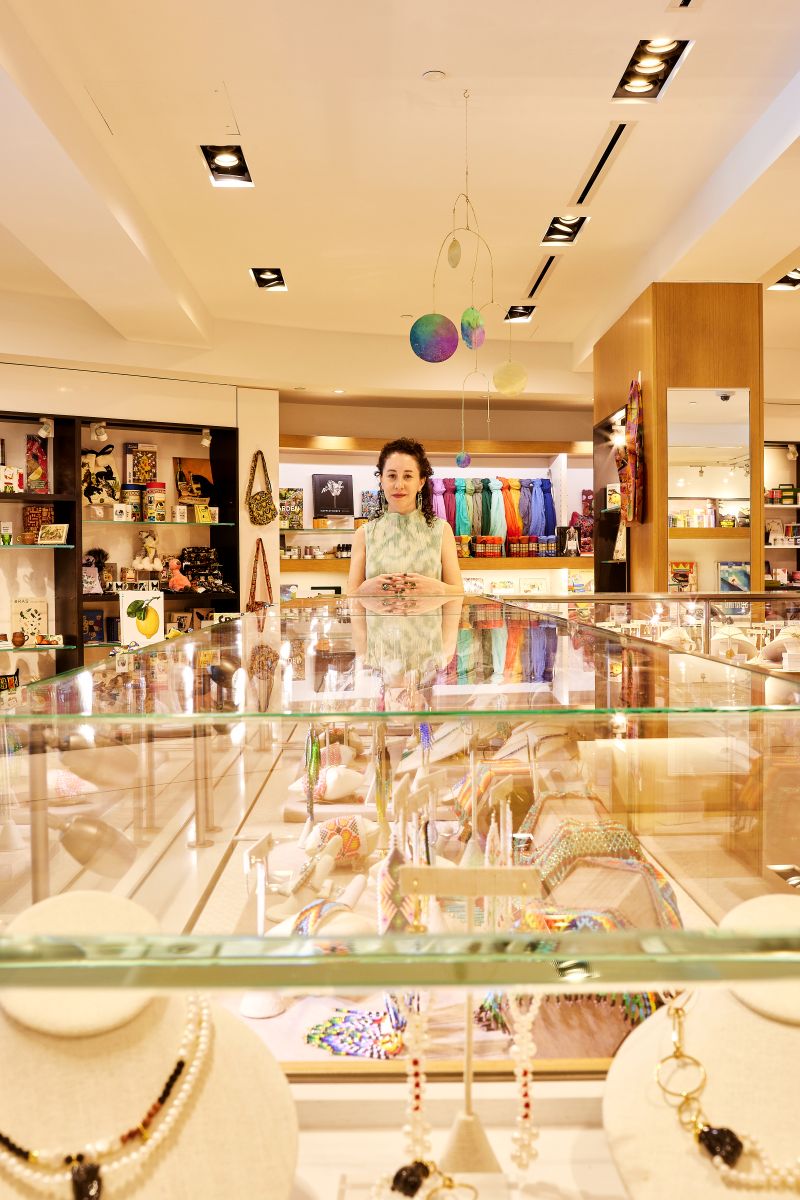
Headshot, courtesy of April Gray.
Although our museum has visitors from all over the world, I’m generally buying for a small market, and I like to be very selective and super unique with my choices for the shop.
April Gray

Are you still pursuing your own artistic practice outside of your job here at the BMA? Do you do any photography or jewelry making? 

No, I am not a jewelry maker, just a huge lover. As for photography, I still shoot on my own, but nothing that I would put up and share with anyone. Basically, just shooting on my travels. Maybe something might happen for me in the photography world again, but I’m an analog gal, and having access to a darkroom isn’t as easy as it was in college. When I graduated SCAD in 2005, my main focus was large format black and white printing.

My senior thesis show was all large format prints made from very large pieces of film. Polaroids done with a 4X5 camera, in a studio. I spent a lot of time in the dark room. Like, that was my thing. Now, you can’t really access that. I took one Photoshop class during my last semester there [at SCAD] When I graduated and got into wedding photography, portraits and events, I sort of taught myself how to use Photoshop with YouTube and blogs. Remember blogs? I had one. And what I realized was I don’t like Photoshop at all, and I don’t like digital manipulation. I like darkroom manipulation. So there came a point where I was like, you know what? This just isn’t fun anymore. And then I switched careers.

Does your appreciation for analog art translate to your work here in terms of what you pick and source in the shop? 

I think so. When you look through the jewelry cases, you’re going to find a wide range of jewelry that could suit any sort of customer. Everything from the most delicate to the big statement pieces. When I’m buying jewelry, I try to have everyone’s taste in mind, not just myself. It’s really important to have a mix of things and to have a broad range of price points. We want everyone to feel like they can come in and find something special to buy no matter what their budget is.

I can imagine that buying within the umbrella of the museum is different from buying merchandise for, say, Anthropologie, because you’re trying to make connections to what you have on display here. Can you talk a little bit about that? 

Although our museum has visitors from all over the world, I’m generally buying for a small market, and I like to be very selective and super unique with my choices for the shop. Whereas at Anthropologie, their buyers are buying for a mass market. In fact, when Anthropologie goes out to shows and they buy jewelry, most of the time they require the vendor or the artist to sign an agreement where they only sell specific styles to them, that way it’s not sold anywhere else. I’ve been at shows where I’ve looked at a piece of jewelry and they’ve marked it off and said, sorry, Anthropologie picked that. You can’t have it. 

So, what I like about buying for the BMA is that it’s more of a smaller market which makes items more special and adds to the shopping experience. We always have merchandise tied to exhibitions in the museum and that can play a big role in what merchandise we have in the shop. When searching for new merchandise, it’s nice to come across someone who’s just starting out at their very first show. I place an order and think, this is great. A few years later I’ll see them at a major gift show in New York City and just be like, wow, you made it!

Photo courtesy of April Gray.
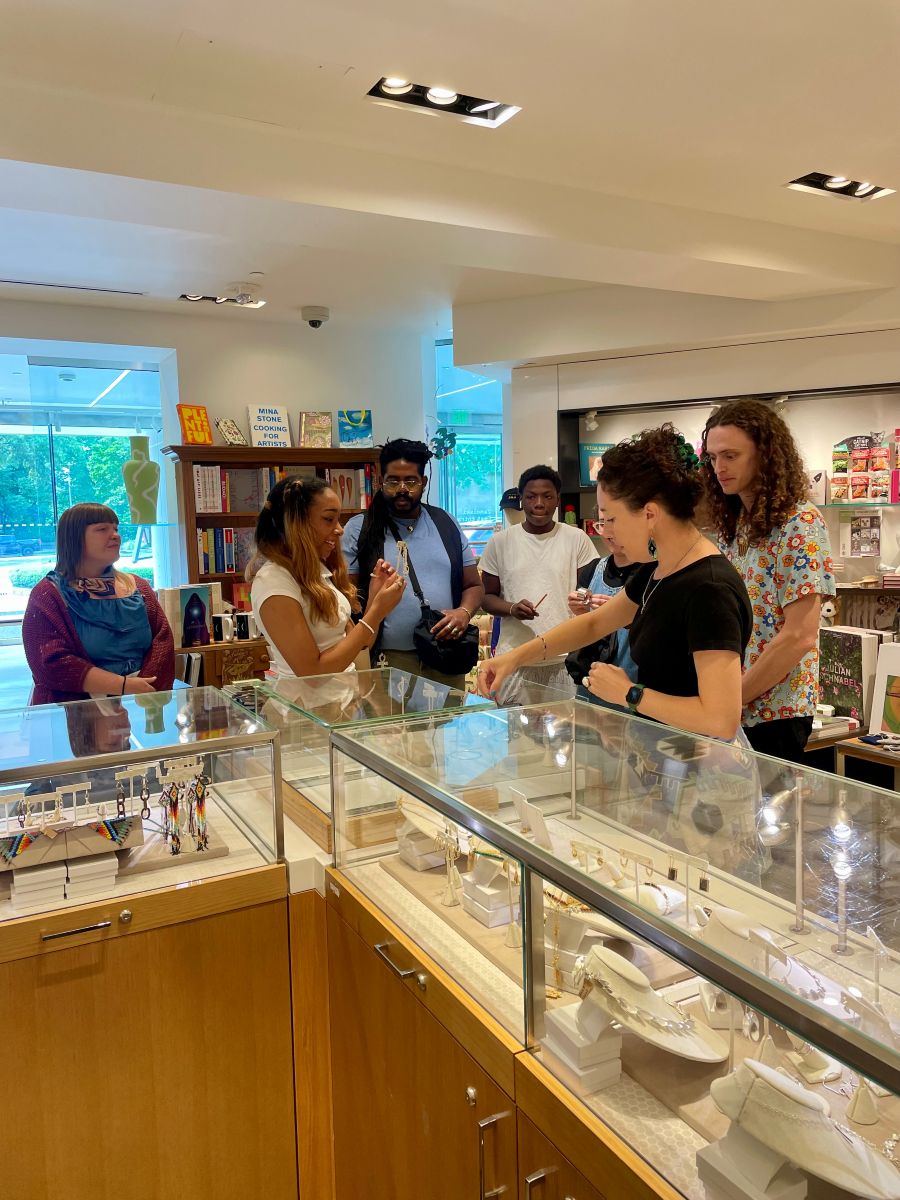
April Gray working with students from Baltimore Jewelry Center, photo courtesy of April Gray.

You’ve cultivated an expertise and a vision. Do you find ways to share that beyond retail?

I’ve done mentoring programs with New York Now—a major gift show in NYC twice a year—where I was a mentor to emerging artists. Before the show, I would get their names and their websites. I would then go and look at all their stuff. Then at the show, I find their booth, look at their stuff, and then I would just offer feedback. Like, what can you do here to improve, or what I like about this, etc. And I miss doing that. They don’t offer that anymore, but I will say that through my career, I have been labeled somewhat of a mentor to a few people within my industry. Which feels good.

I would love to do consulting later in life—specifically with jewelry and with museum shops, small boutiques or shops that are struggling. For example, how do I merchandise this? How do I blend collections together? How do I use stones, color, texture and metals to make this work? Because not everyone can merchandise. I mean that respectfully. It’s not easy to do if you have 12 collections and have a huge square space of cases. It’s your job to put everything out and make it work. You really could go crazy thinking about it. So, it’s helpful to actually break things down by color and texture and then to work from there. 

Can you talk a bit more about the ways you have worked with local artists and jewelry makers? 

The Baltimore Jewelry Center has brought their summer program students on a field trip to the shop for the past five years. That’s a wonderful relationship that I have made with them, and I love talking to the new students every year. 

My proudest achievement here though would have to be with Earl Jones. I had been buying his work for almost seven or eight years up until the point when he passed, and we became very close. About two or three years before he passed, I was a part of getting two of his sterling silver pins acquired into our permanent collection here at the museum. So, this show that they’re doing for Earl [at the Baltimore Jewelry Center], the BMA loaned these two pins to the show. They’re on view at the Baltimore Jewelry Center. This was a real full circle moment for me. Not only did I know Earl and support him but he was a friend and a vendor. It’s really something special.

I also source a lot of local jewelry. When we had Joyce Scott’s exhibition a year and a half ago, she made me some jewelry for the BMA shop. Right now, one of my colleagues, Tracy Beale, who works at the museum, has her jewelry in our cases. Yes, I have some local jewelry artists from Baltimore and from Maryland. But then, of course, we have jewelry from all over the US and the world.

Jewelry by Earl Jones, photo courtesy of April Gray.
Earl Jones and April Gray, photo courtesy of April Gray.
Sometimes, museum shops are overlooked for their importance in contributing to the success of the museum... I say, you should always go to the gift shop first. Because you're going to see a postcard or a print and you're going to think, I've got to see that!
April Gray

I’m really curious about the connection between the shop and the museum at large and what differentiates that from a regular retail space.

Our shop is a beautiful space, just like our galleries, because it is filled with beautiful, hand-picked unique gifts. We hold ourselves at a very high level when it comes to the quality of our merchandise, and it shows. We are so different from your average shop, and we should be, because we are a museum store.

One of my outlets for support and where I learn a lot about the museum retail industry is through the Museum Store Association. I attend an annual conference every year where we have speakers, round tables, educational sessions and other museum shop-related events. 

The MSA is composed of people who work in the museum retail industry, vendors who sell to museums and people who work in Visitor Experience. I’ve heard a lot of great speakers over the years but the one that really stands out is a woman who talked about how it is data-proven that if you enter a museum shop and make a purchase, that visitor is more likely to come back again and most-often, bring or tell another person. That’s some powerful info! So, it’s proven that the museum shop is an integral part of the visitor experience. 

Sometimes, museum shops are overlooked for their importance in contributing to the success of the museum. I feel like that’s starting to really change. I say, you should always go to the gift shop first. Because you’re going to see a postcard or a print and you’re going to think, I’ve got to see that! Those connections happen all the time. The museum shop holds an extremely important place in the whole grand scheme of the museum.

We shine the most when we have a major exhibition to buy for, and you can really see the art on the walls in the gallery transformed into merchandise that hits our sales floor. When we did the Joan Mitchell show, I had a jewelry artist create a custom collection for the BMA shop that was inspired by the color palettes found in Joan Mitchell’s paintings. For the Making Her Mark exhibition, I had a jewelry artist create miniature painting pendant necklaces that were inspired by the beautiful artwork in the show. There’s been some stellar exhibitions that have allowed us to really flourish in our buying creatively.

Are you doing all of this on your own or do you have a team that you’re collaborating with? 

For my categories—children’s gifts, art supplies, and of course, jewelry—I do everything on my own. Our gift buyer, Lydia Bailey, does all of our tabletop, textiles, stationery, and general gifts. Then we have Lori McBee who is our book buyer. The three of us, collectively, are responsible for all the merchandise sold in the shop. We like to call ourselves the Trifecta. We all have a very select eye when it comes to buying for the shop and when it all ends up on the sales floor together, there’s something very symbiotic about it. Our buying styles and our tastes blend so well together. Sometimes we don’t even have to talk about it; I’ll buy something, and they’ll buy something and we’re like, oh my Gosh, we’re on the same page!

Besides the BMA gift shop, what are your favorite places to shop in Baltimore? 

I do have a favorite shop in my neighborhood (Hampden) called In Watermelon Sugar. Just a block or so away from there is the Parisian Flea which has lovely antique and vintage jewelry. I also have to give a shout out to my friends at Dylan’s Oyster Cellar for being my favorite restaurant in Baltimore.

Are there any other museum gift shops you would recommend to folks? 

Last year the Museum Store Association Conference was in Baltimore, and we had our gala event at the American Visionary Art Museum. During the event we could all shop at Sideshow, AVAM’s gift shop. It was so much fun!

I’m a big fan of shops that give off a certain vibe. When I was in Paris this past June, I went to a museum called the Conciergerie, which is a fortress and prison where Marie Antoinette was kept until her final days. The gift shop appears as you finish the tour. The open-concept shop was merchandised beautifully and had such unique things. I was shopping under the vaulted ceilings of the fortress with dimmed lighting. I bought a medieval needlepoint pillowcase with little medieval animals on it. I’ll treasure it forever. 


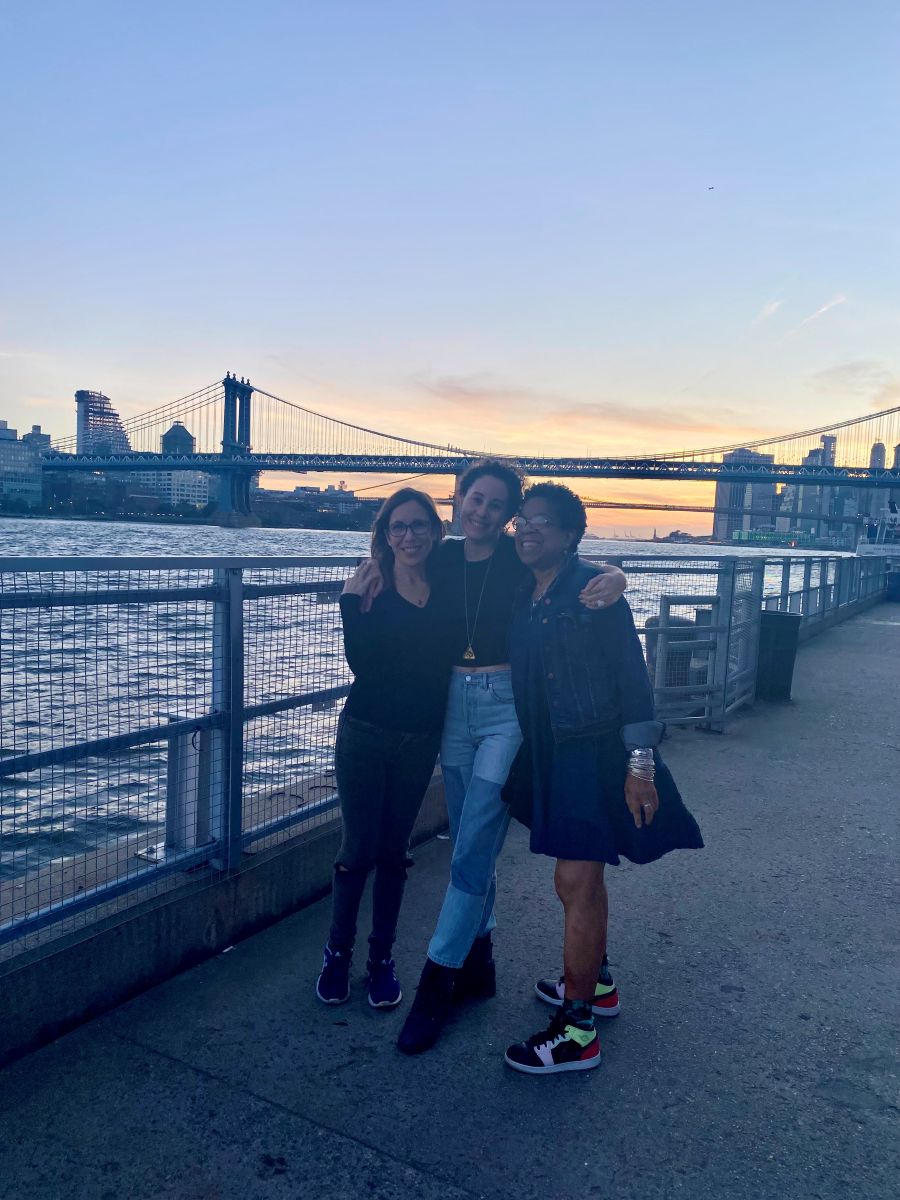
BMA gift shop buyers, Lydia Bailey, April Gray, and Lori McBee. Photo courtesy of April Gray.
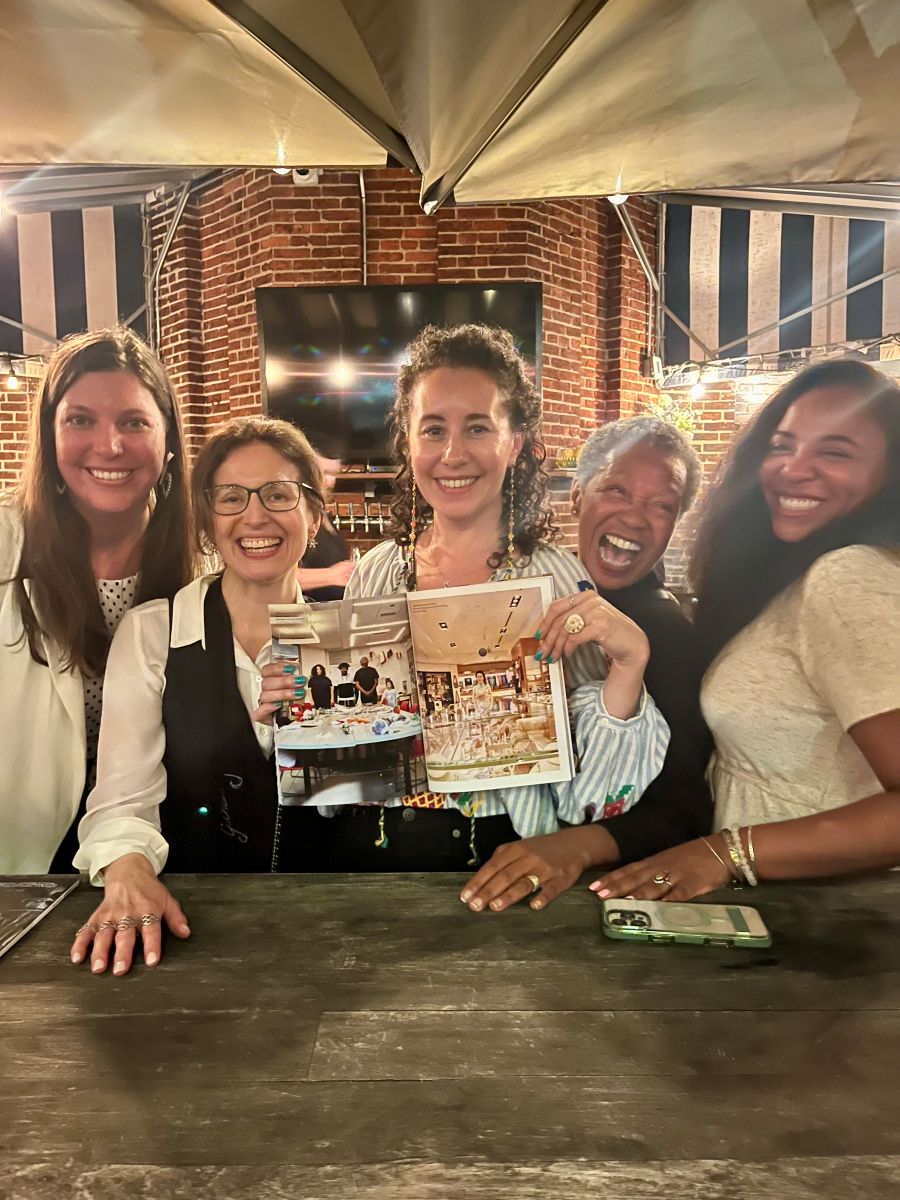
April Gray and colleagues celebrating her portrait at the launch of BmoreArt Issue 19: Hidden Gems. Photo courtesy of April Gray.

This story is from Issue 19: Hidden Gems, available here.

Related Stories
Protest, Identity, and Humor Converge at Pubic Wig Fashion Show

Merkin Dream III expanded on themes of women’s rights, sex work, body image, and dysphoria through bold design, movement, and performance.

From Upcycled Heirlooms to Ren-Fest Regalia, Craft Honed Over Half a Century

A collaborative approach and emphasis on repurposing materials characterizes Lauren Schott’s jewelry making and highlights the ethos of her business. Schott is not only a highly skilled jeweler with over five decades of experience, but she also is dedicated to reusing metals and gemstones.

Plant Stylist and Social Media Influencer Reigns King of the Urban Jungle

A Baltimore native and a creative force, Carter is changing the way people think about greenery in their homes, encouraging the masses to bring nature indoors.

Haskins' Currency Studio Is the Blueprint For Baltimore Art, Fashion, and Culture

There’s nothing quite like Michael E. Haskins’ Currency Studio in the city. Looking around the space, you’ll find everything from hats, baby vests, jewelry, stools, tote bags, speakers, and more. The self-proclaimed visionary does it all: He paints, sculpts, makes furniture, clothing, and more.