Reading

SWAB Art Fair 2025: A Laboratory for Artworld Survival Tactics

Previous Story
Article Image

April Gray: The Visionary Behind the Jewelry Counter

Next Story
Article Image

BmoreArt’s Picks: October 7-13

BARCELONA: “The ‘fair’ has come to mean a place for selling things. But it isn’t just that—a fair is a place of encounter,” Carolina Díez-Cascón, the new director of SWAB Art Fair announced with the excited conviction of an idealistic candidate at a political rally. It was a press conference ahead of SWAB’s 18th edition, where her father—the architect and collector Joaquín Díez-Cascón, who founded the fair in 2006 and has directed since—publically passed the torch to his daughter.

There’s a satisfying synchronicity to the fact that SWAB—his baby, so to speak—just turned eighteen and is going to live with its big sister. “The father teaches the child, and then the child teaches the father,” the elder Díez-Cascón said of his daughter’s big ideas. “The world is changing and we don’t know what is coming—but that is a topic for the younger generations. It’s not the same artworld as it was eighteen years ago… the youth are the future of collection… but how are we going to ask a young person to buy artwork when they can’t afford a home?”

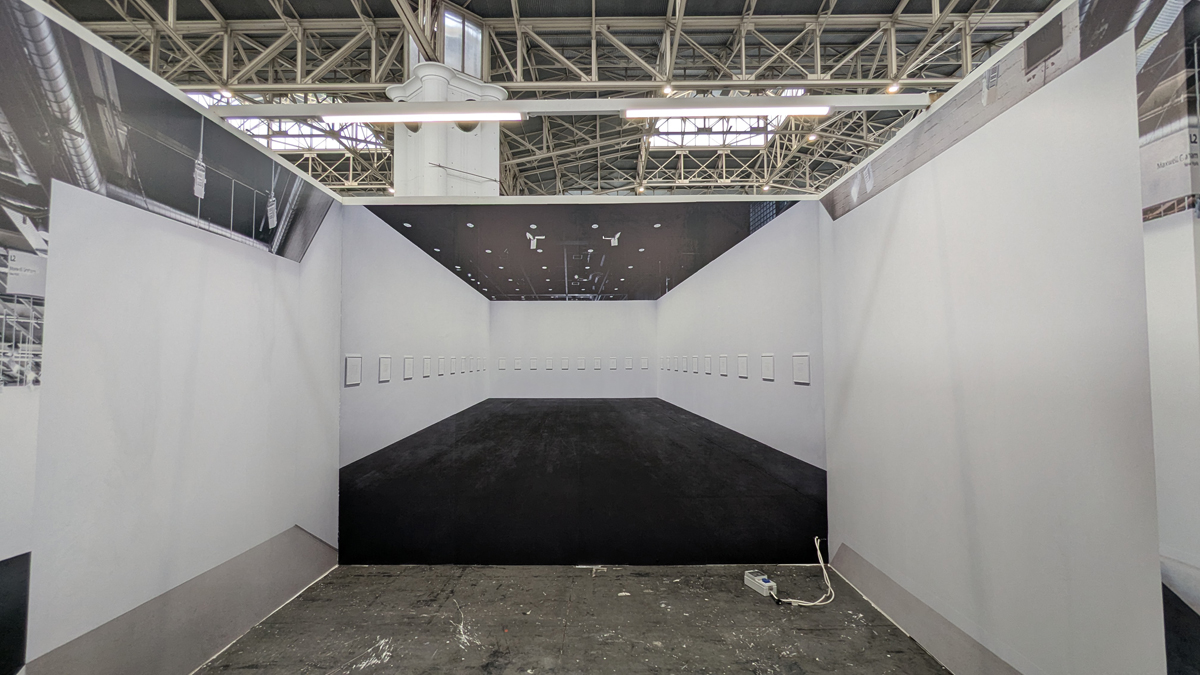
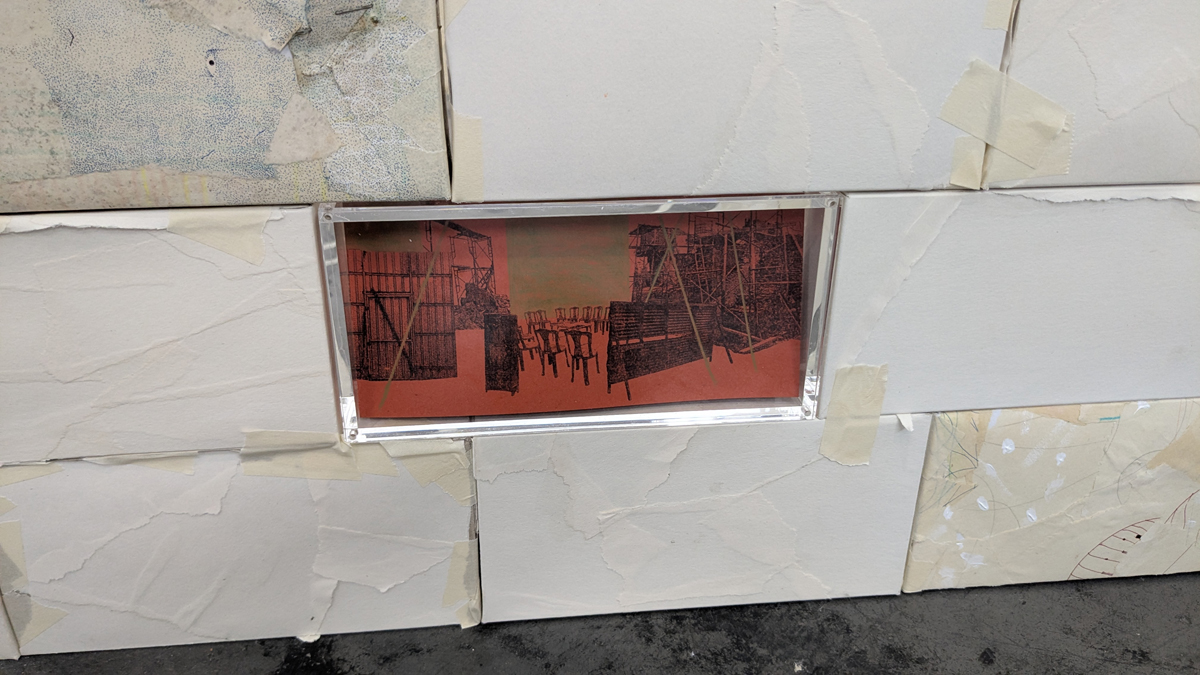
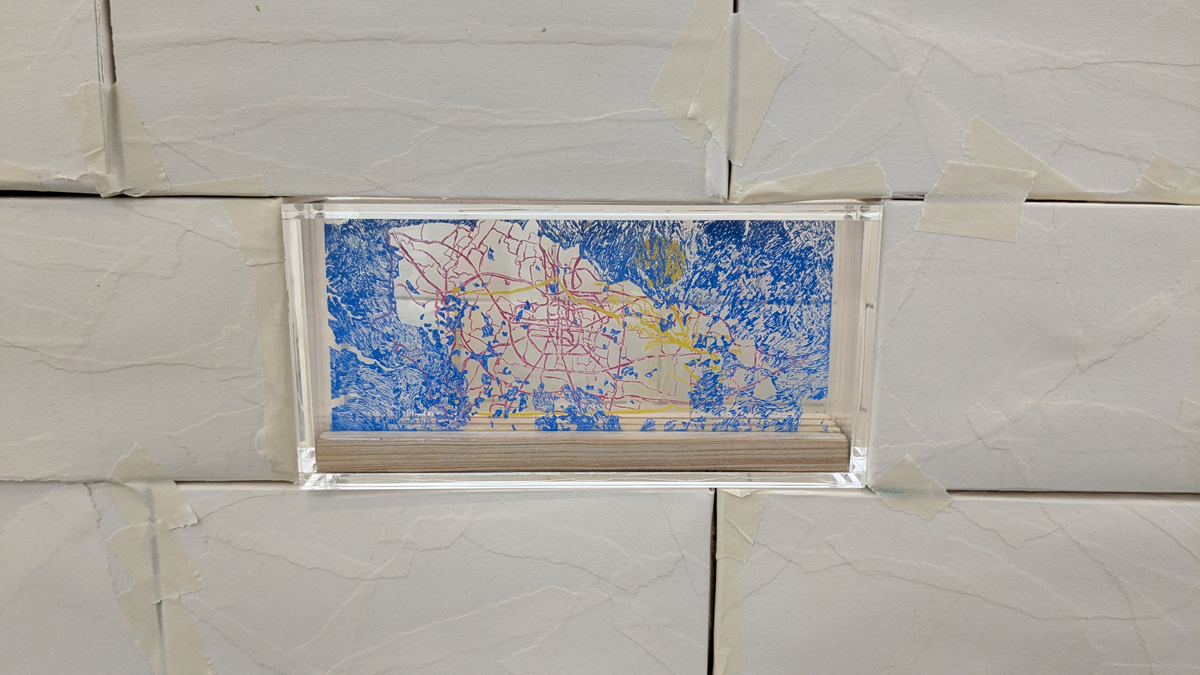
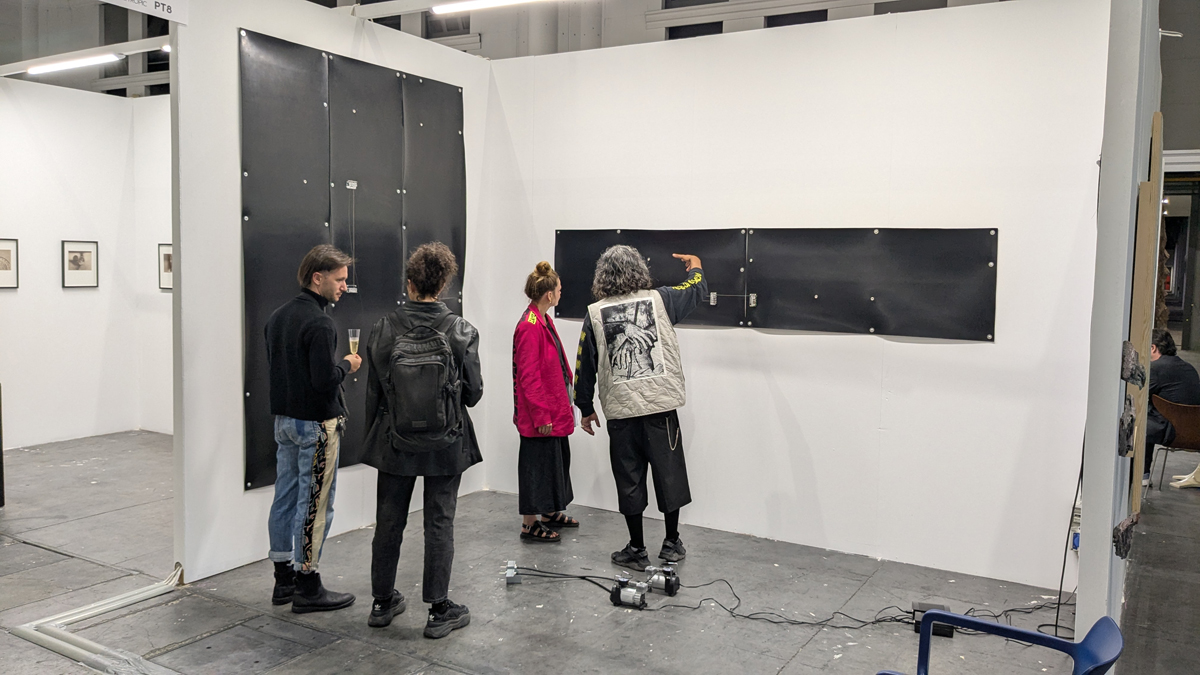
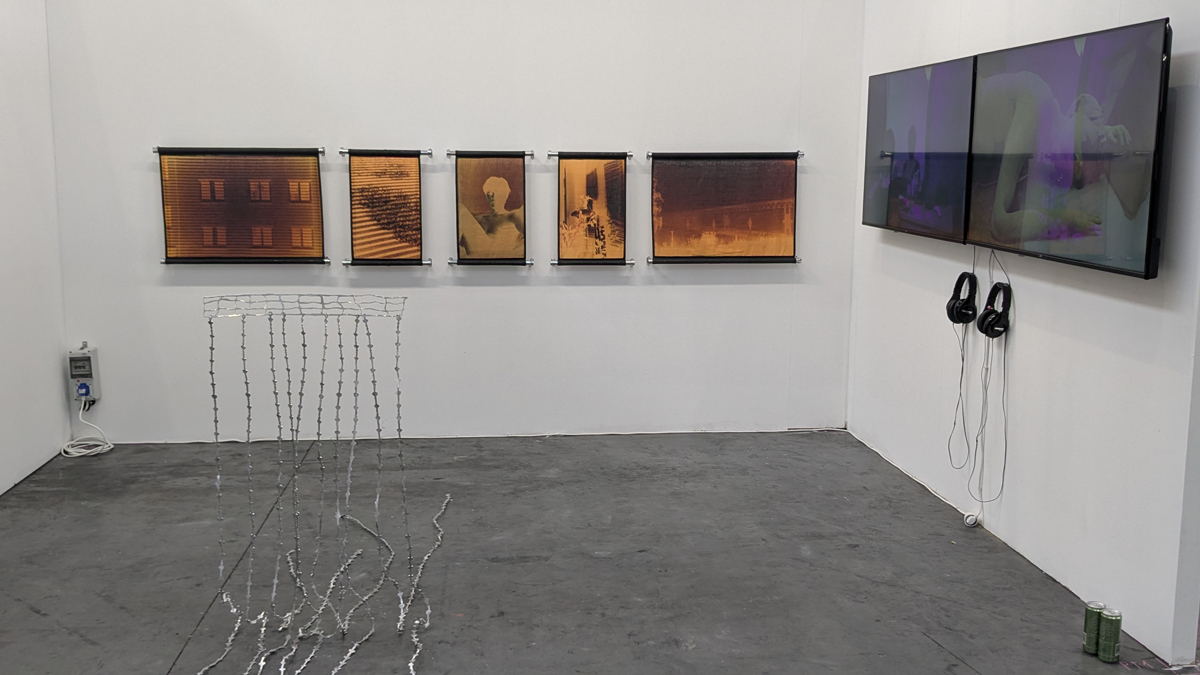
Francesco Cagnin at Autokomanda (Belgrade) in the MFAF (My First Art Fair) section devoted to new galleries. The prints are eerily-empty booths documented at Art Basel.
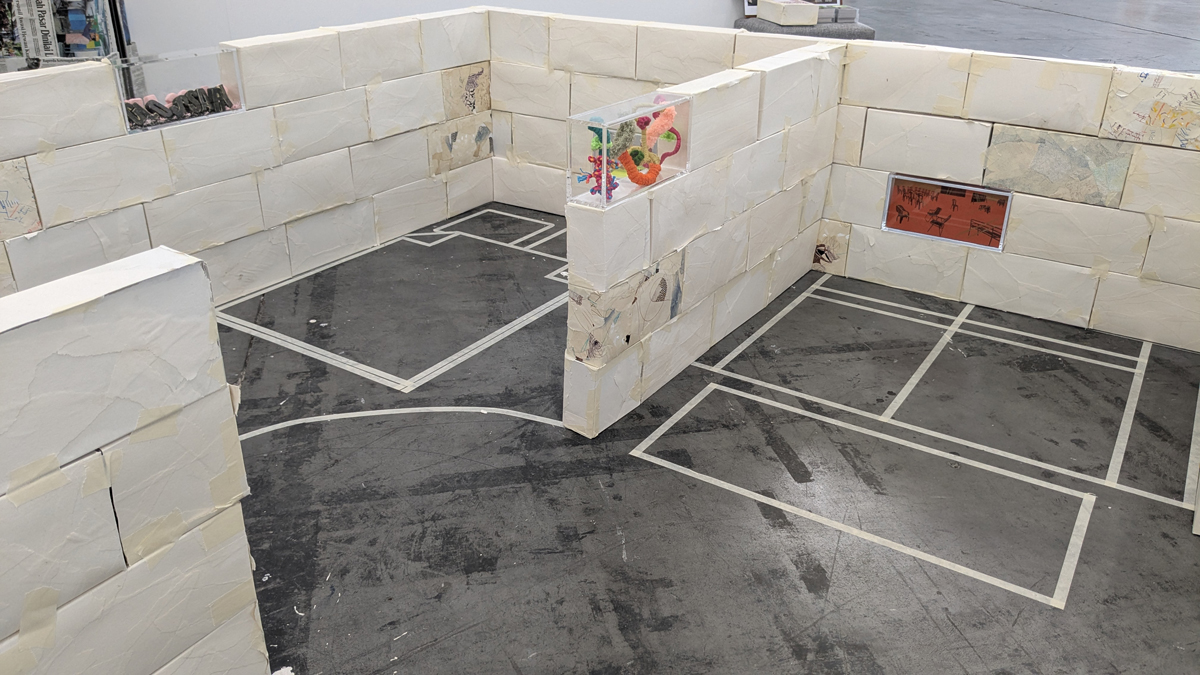
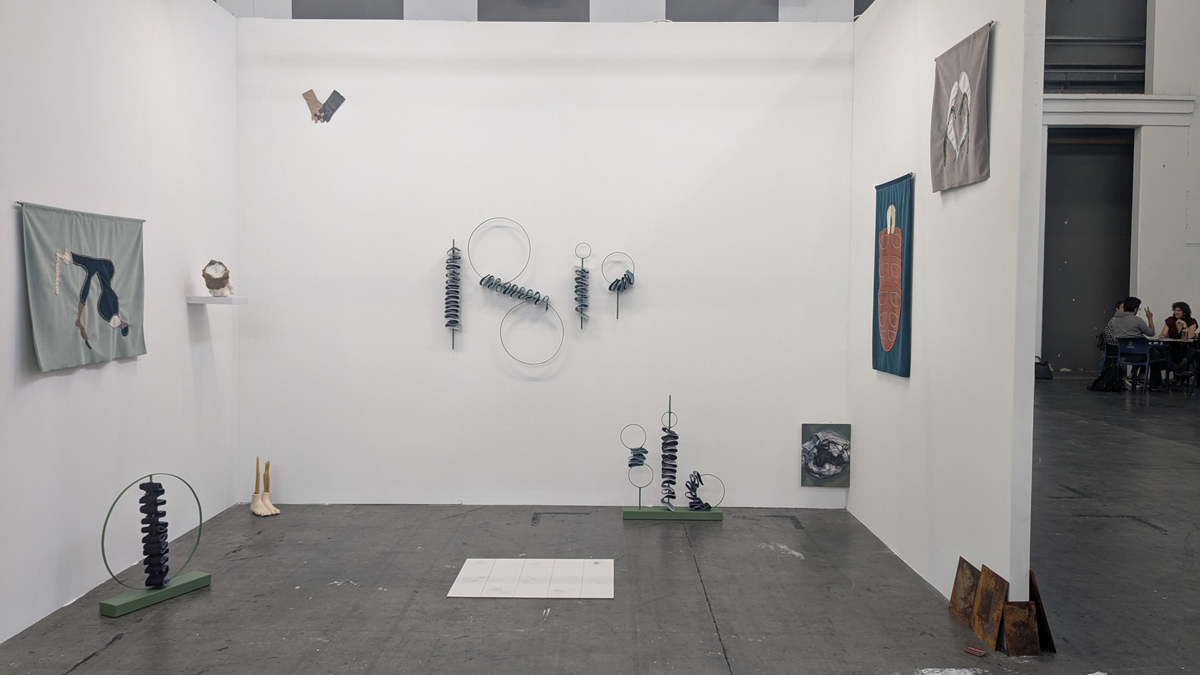
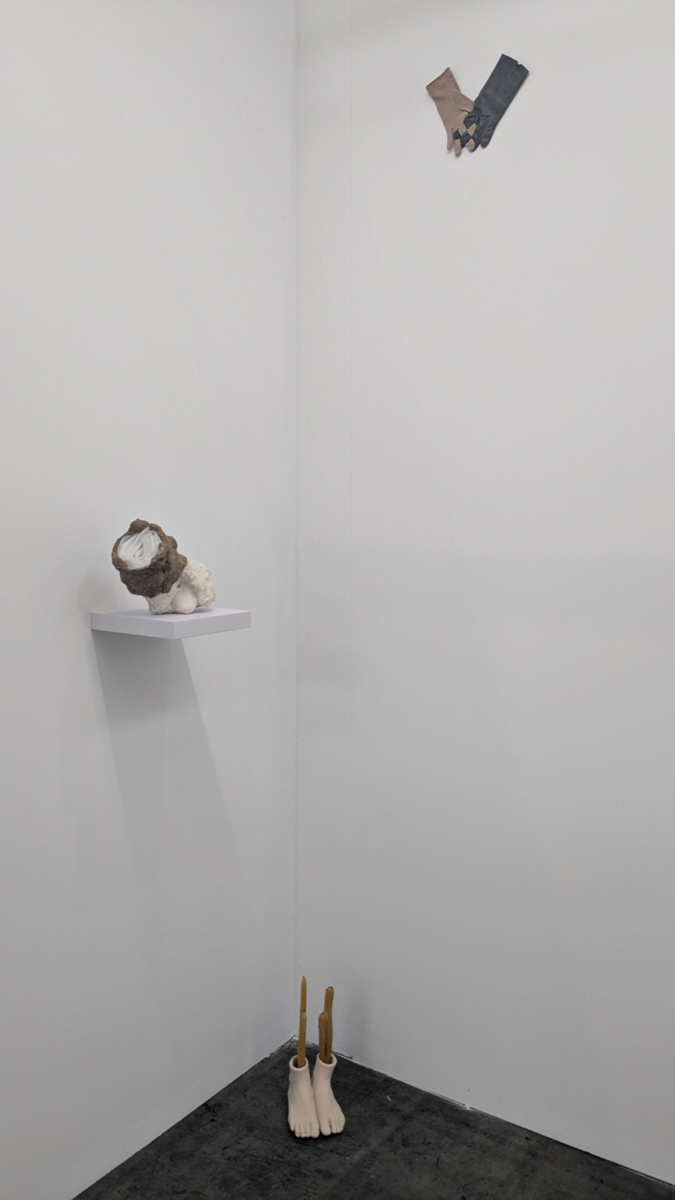
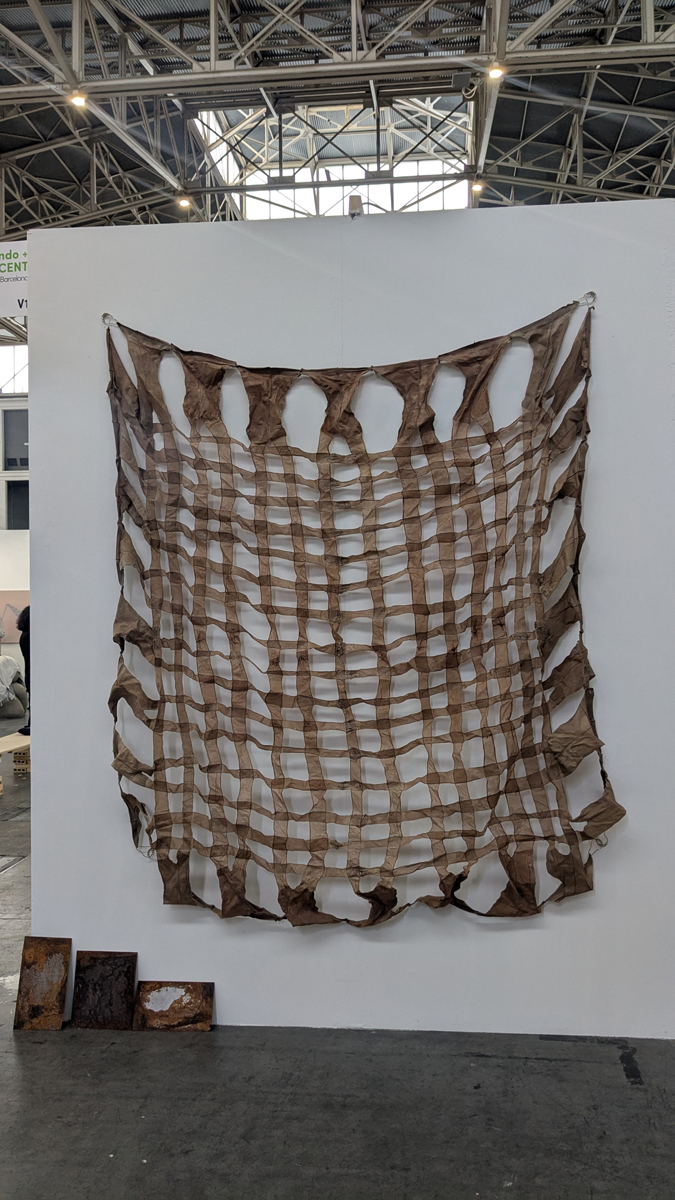
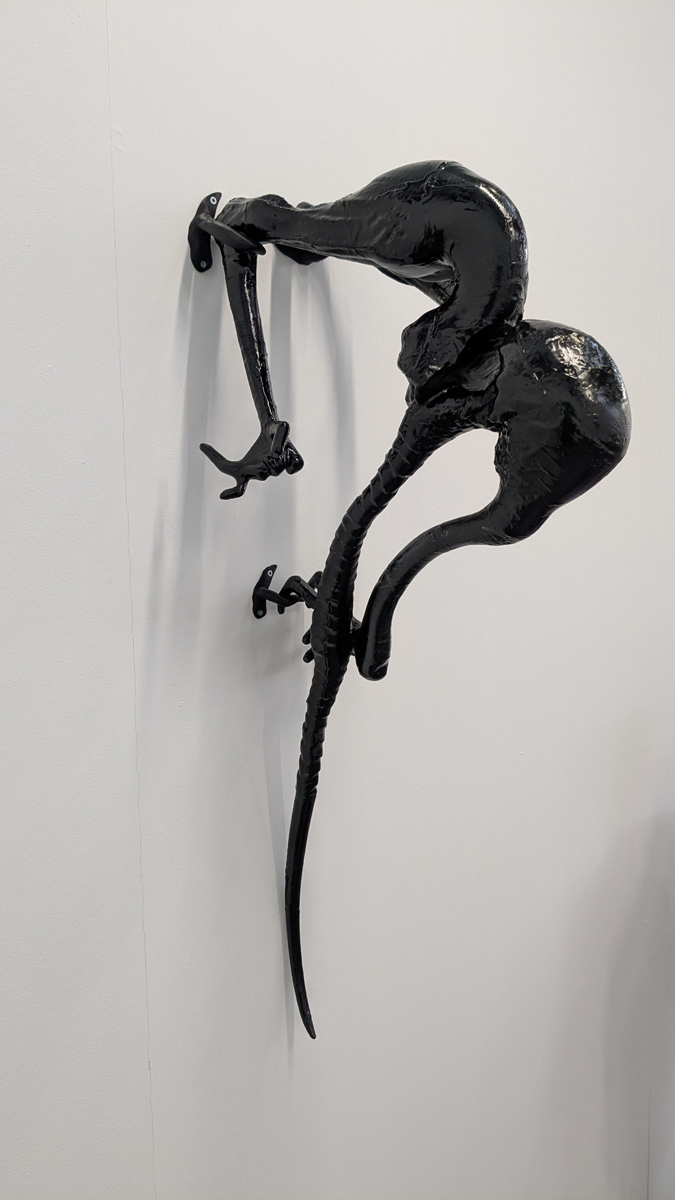
Agnieszka Szostek at C U AT SADKA (Kraków) in the SOLOS section of the fair
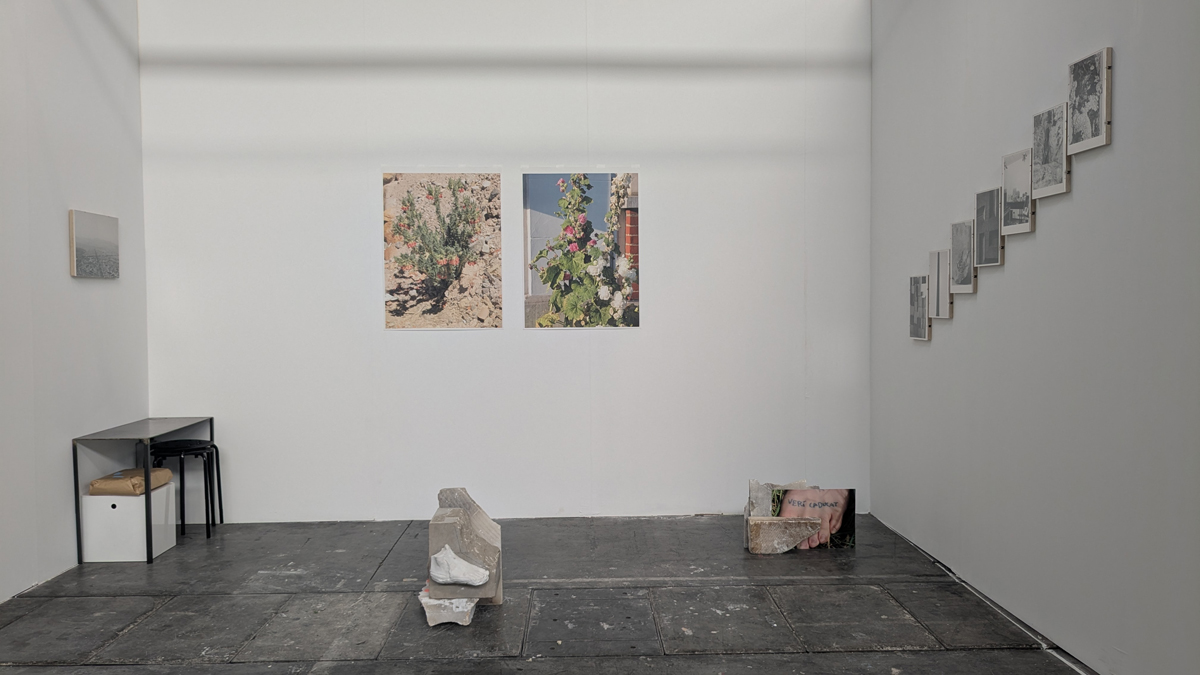
Andrea Davila Rubio and Andrés Rivas Rodís at NÉBOA (Lugo) in the MFAF section

The younger Díez-Cascón has no shortage of plans for making the artworld both more financially sustainable and accessible, and from what I witnessed at SWAB, she’s hit the ground running. The fair has started dissolving boundaries between institutional, DIY, and established dealers—a strategy key for adaptability and symbiotic relationships. “They all want the same thing: to survive.” A scrappy, artist-run space with low overhead (but cash flow problems) might attract a younger group of potential collectors than higher-end commercial galleries whose stable of artists and patrons are dying off and needs fresh blood. Encouraging partnerships between the established galleries with capital reserves, institutions seeking new audiences, and nimble young curatorial projects makes sense. There are emerging commercial galleries whose booths are sponsored by public or institutional funds, punks engaging in cold-hard commerce, and refreshingly low-stress, convivial vibes all around.

I spoke with the directors of one local artist-run space, for example, who were originally invited to show in a different section of the fair but couldn’t afford a solo booth. The SWAB organizers proposed a compromise: sharing a discounted booth with a gallery from Central America in the VORTEX section, intended to foster collaborations between Spanish and Latin American artists. Both galleries ended up saving money, and the group show they mounted together was richer for it.

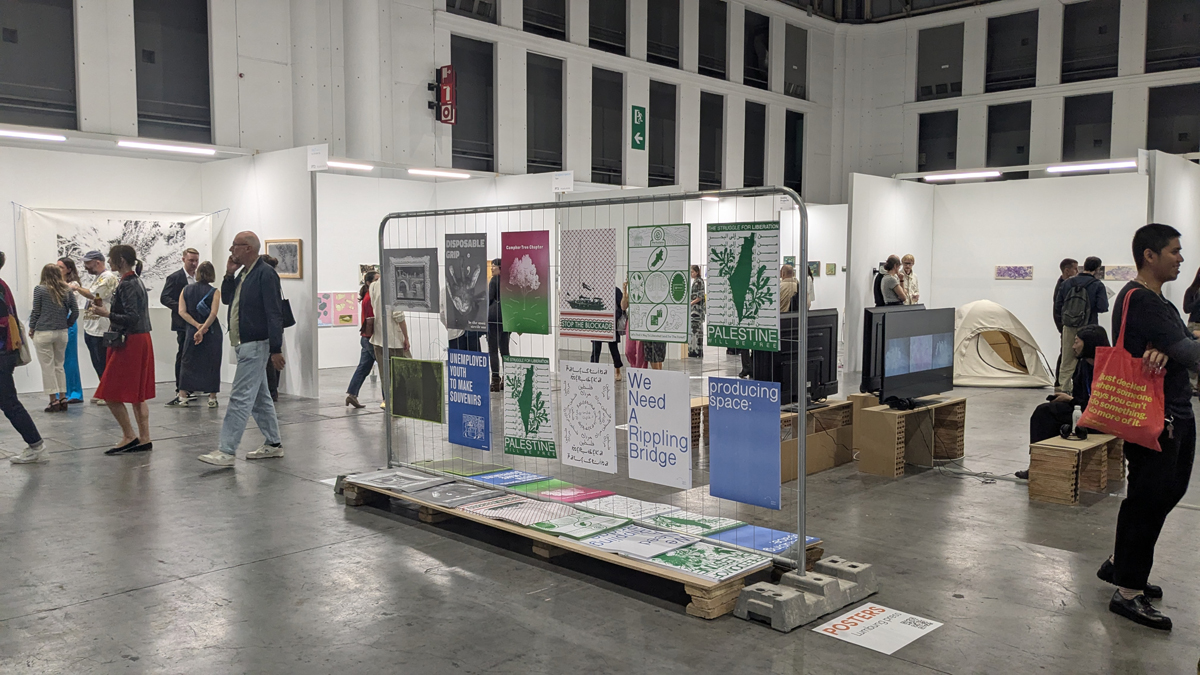
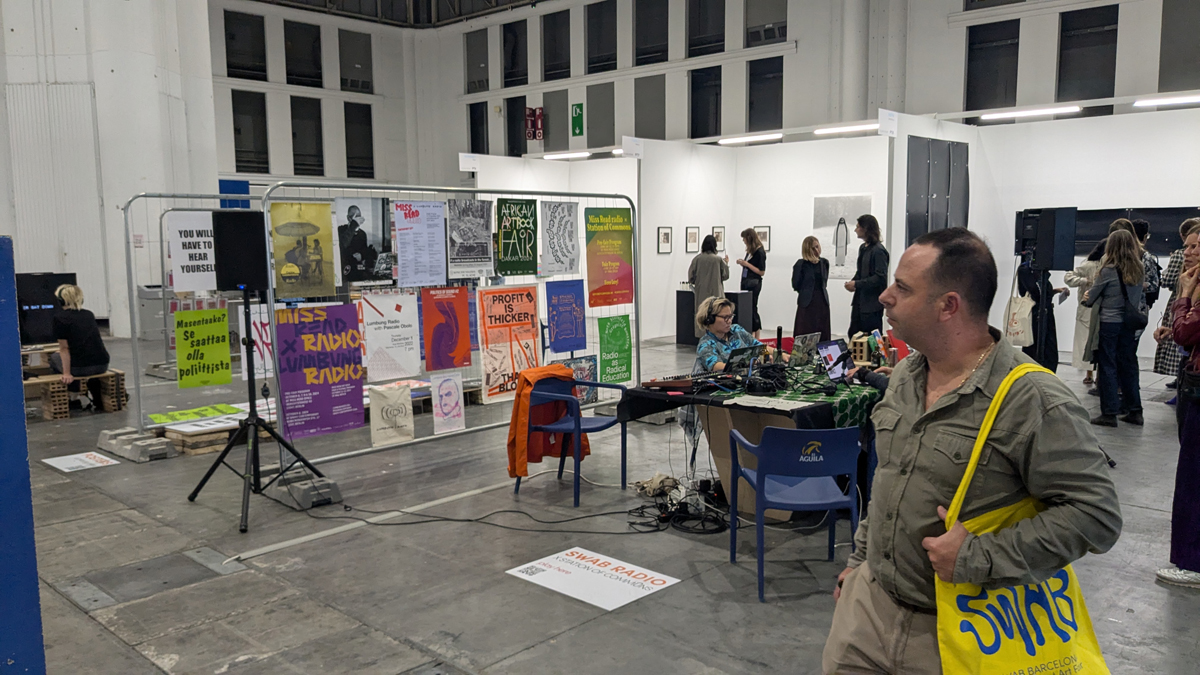
Lumbung Radio and Lumbung Press (Helsinki) featuring free prints contributed by participating galleries
The idea was to do things alternatively, but we ended up coming back to the capitalist way...
Karen Alphonso of Le Labo

Similarly, the POLAR + TROPIC section was curated to encourage discourse between Nordic and South East Asian galleries, all organized around an up-cycled conversation pit in the shape of a sauna, as well as video screenings and free prints and multiples. The idea, the fair director proposed, was to offer something complimentary to visitors who might otherwise be intimidated by collecting. The hope is that a free poster or experience with new media art might pique their interest in purchasing art objects down the line.

And what conversations might arise in the “sauna” installation? “The arts in Northern Europe have historically benefitted from public sector investment. Whereas in Southeast Asia, we’ve seen a reliance on collectives because of a lack of that support,” Díez-Cascón explained. With uncertain, shifting politics and priorities globally, exchanging their respective experiences, skills, resources, and networks might prove mutually beneficial.

For all the doom-and-gloom in most art press lately, it’s downright exhilarating to be in a context buzzing with optimism and potential, all based on solidarity. In the United States, the right wing has all but gutted public arts funding at the same time art fairs are being cancelled and private sector galleries are dropping like flies. Maybe the model of signing leases to rent and renovate brick-and-mortar spaces in each of the world’s most expensive cities while spending tens of thousands of dollars to participate in blue-chip fairs competing for a tiny, exclusive customer base is a bit unsustainable? (I recall speaking to a friend of a friend a few years ago whose gallery invested the cash equivalent of buying a forever space in Baltimore or Barcelona to rent a booth for a few days at Art Basel Miami Beach in the hopes of selling at least one painting that cost more than the average American’s home).

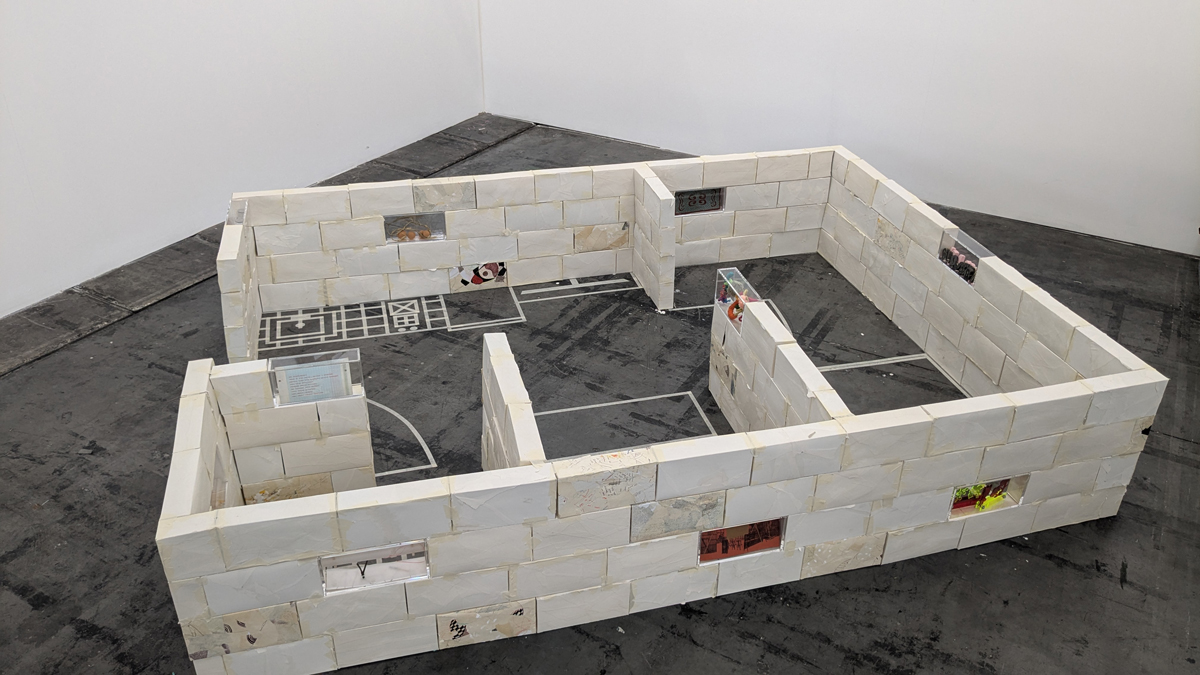
Indonesian gallery Gelanggang Olah Rasa (Bandung) built a charming mini-museum featuring tiny artworks by Aurora Arazzi, David Bakti, Dewi Putri, Dian Mayang Sari, Esty Wika Silva, Liza Markus, Luqi Lukman, Reza Kutjh, Rizki Tilarso, Rumah Tangga, and Sabiq Hibatulbaqi in the POLAR + TROPIC section
Reza Kutjh
Dewi Putri Meliana
Indonesian gallery Gelanggang Olah Rasa (Bandung) built a charming mini-museum featuring tiny artworks by Aurora Arazzi, David Bakti, Dewi Putri, Dian Mayang Sari, Esty Wika Silva, Liza Markus, Luqi Lukman, Reza Kutjh, Rizki Tilarso, Rumah Tangga, and Sabiq Hibatulbaqi in the POLAR + TROPIC section

Meanwhile at SWAB, some of the artists and gallerists I spoke with were offered free or discounted space because they’ve been loyal fair participants in past fair editions, and their presence enriches the fair. Others paid well under 2000€. With overhead that low, a gallery could feasibly break even selling a handful of works priced around 500€, or one painting priced at 2500€. Or a dozen priced far lower. At one point, a gallerist from a wealthier country asked my opinion about re-pricing an artwork to reflect both the local market and the expectations of the artist, because fair organizers had asked him to lower the cost in the interest of accessibility before the doors opened to the public. It’s so refreshing to have honest conversations about money in a convention center, no sheepish iPad-PDF-forwarding required.

“There’s been a disconnect between society and an artworld elite,” Carolina Díez-Cascón said with a hint of exasperation in her opening remarks, “This is the problem. It’s time to listen to the youth.”

Dialica (Barcelona) won the Art Nou prize for their booth featuring Aleix Plademunt (2D) and Mikel Adan (3D)
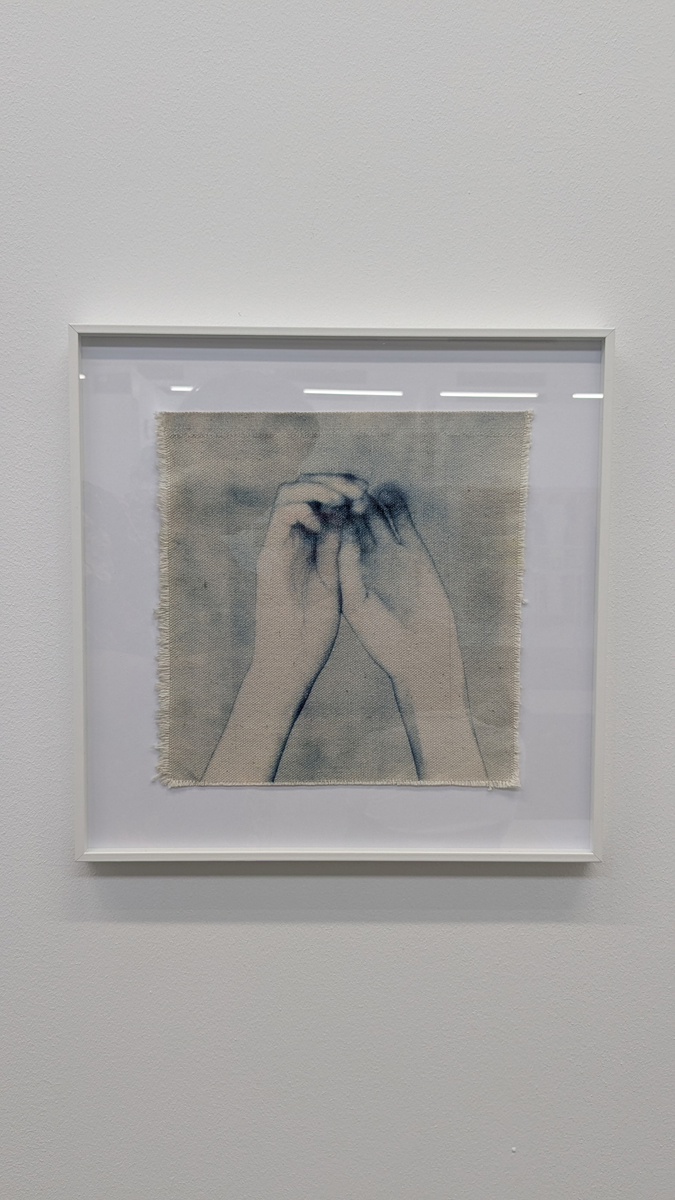
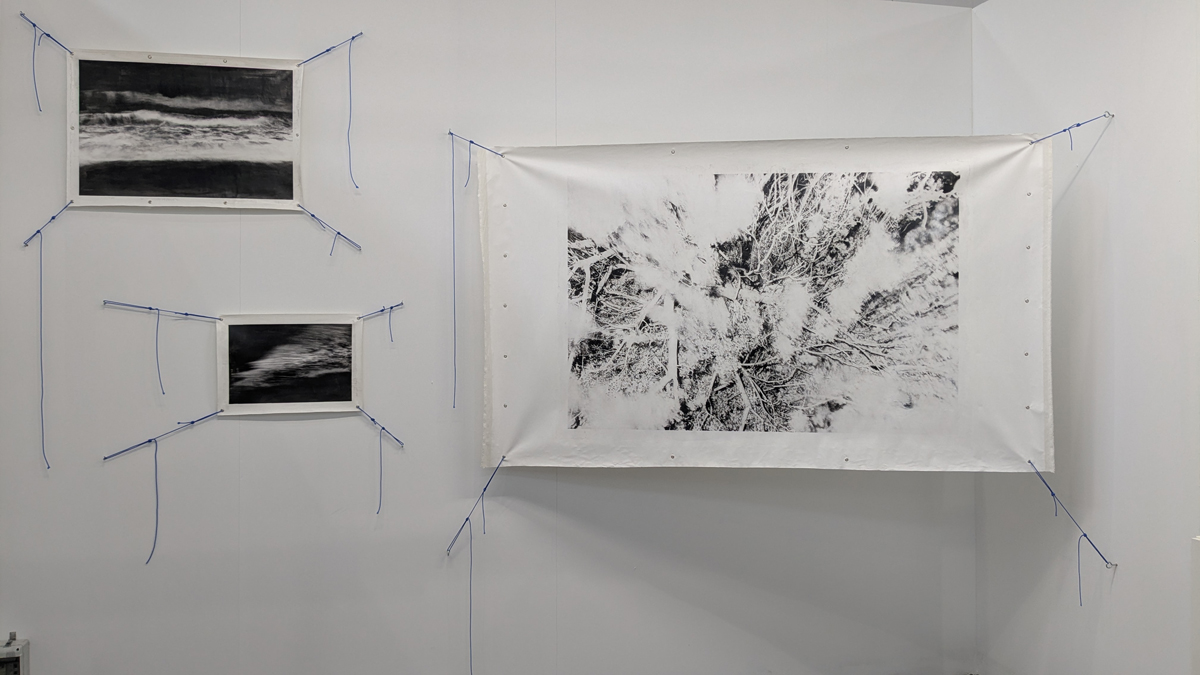
A delicate cyanotype on canvas by Basel-based artist Lena Laguna Diel at Malpaís (Barcelona) in the SOLOS section, which was selected for Piramidón Centre's acquisitions and residency prize
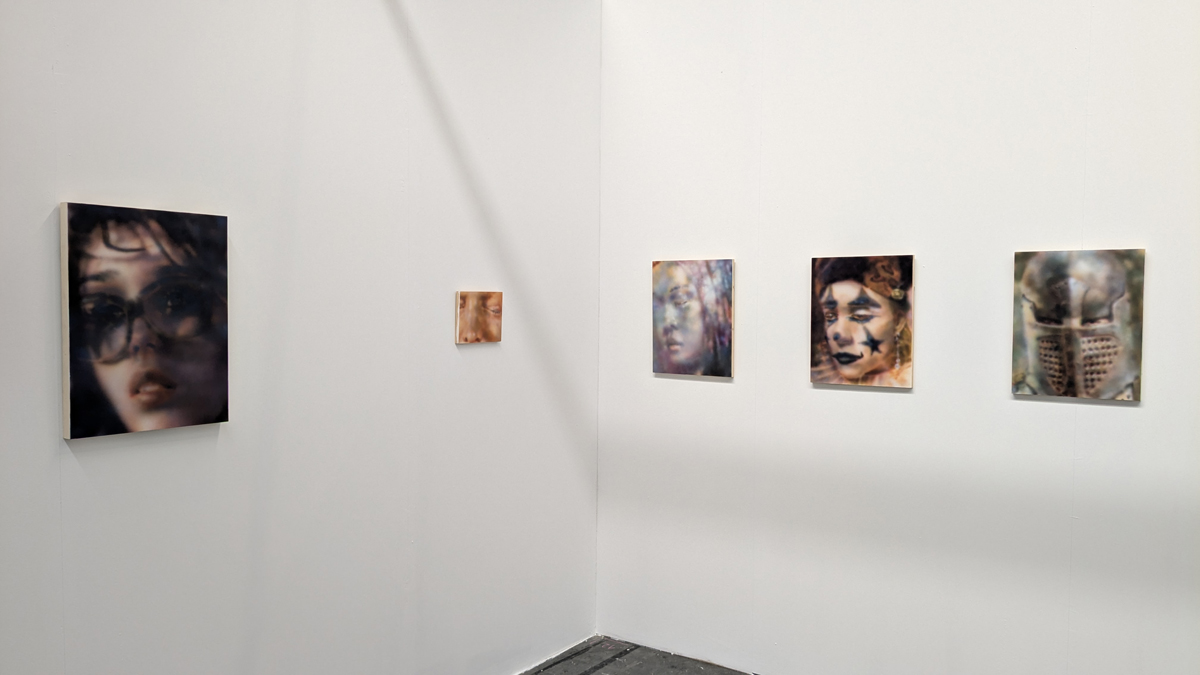
Pablo Merchante at SC Gallery (Bilbao)
The world is changing and we don’t know what is coming—but that is a topic for the younger generations. It’s not the same artworld as it was eighteen years ago… the youth are the future of collection… but how are we going to ask a young person to buy artwork when they can’t afford a home?
Joaquín Díez-Cascón

Indeed, “youth” has been the buzzword of the fair. I started to wonder if that fixation might be reflective of pervasive demographic anxieties? This came up when I asked a fair employee if they knew of any galleries from the US, hoping to see some familiar faces from across the pond. She explained that by the time the geographically-curated sections of the fair—highlighting East Asian, Latin American, Iberian, or Nordic galleries—had been booked, there weren’t many booths left in the general section, so they ended up with zero galleries from the US this year. That struck me as surprising, since the United States (representing only about 5% of the human population) historically tends to be over-represented at art fairs.

But that got me thinking: the one concrete thing all of the focus regions in this edition of SWAB have in common is a ticking demographic time bomb. Nearly every European, American, and East Asian country represented at “youth”-centric SWAB this year is, ironically, grappling with the same challenges of a rapidly-aging population. Most of the art world capitals’ fertility levels are way below the replacement rate necessary to replenish the supply of monied Baby Boomers and Gen-Xers who will eventually retire, die, and stop paying for art. We basically just re-shuffle (weirdly, controversially) dwindling numbers of debt-saddled Millennial and Gen-Z citizenry back-and-forth between a handful of ever-more-speculated global cities, each of which blames newcomers from another for gentrification or more xenophobic concerns. The only actually “young” countries left are in the Middle East, Africa, and scattered Pacific atolls that will probably be underwater by the time my generation dies—and at a youth-centric fair, those countries were underrepresented. (This might seem like a very long, strange aside, but it was a thought that stuck with me as I had countless chats about “survival strategies” for the cultural sector with international peers all complaining about rising rents, a dearth of new collectors/patrons, and a tide of misplaced nationalistic protectionism everywhere from Mexico City to Tokyo. But maybe part of why I love this town is that I can be a gay pushing 40 and still be considered jove by Catalan standards!)

Jake Santos at Abobozzo Gallery (Toronto)
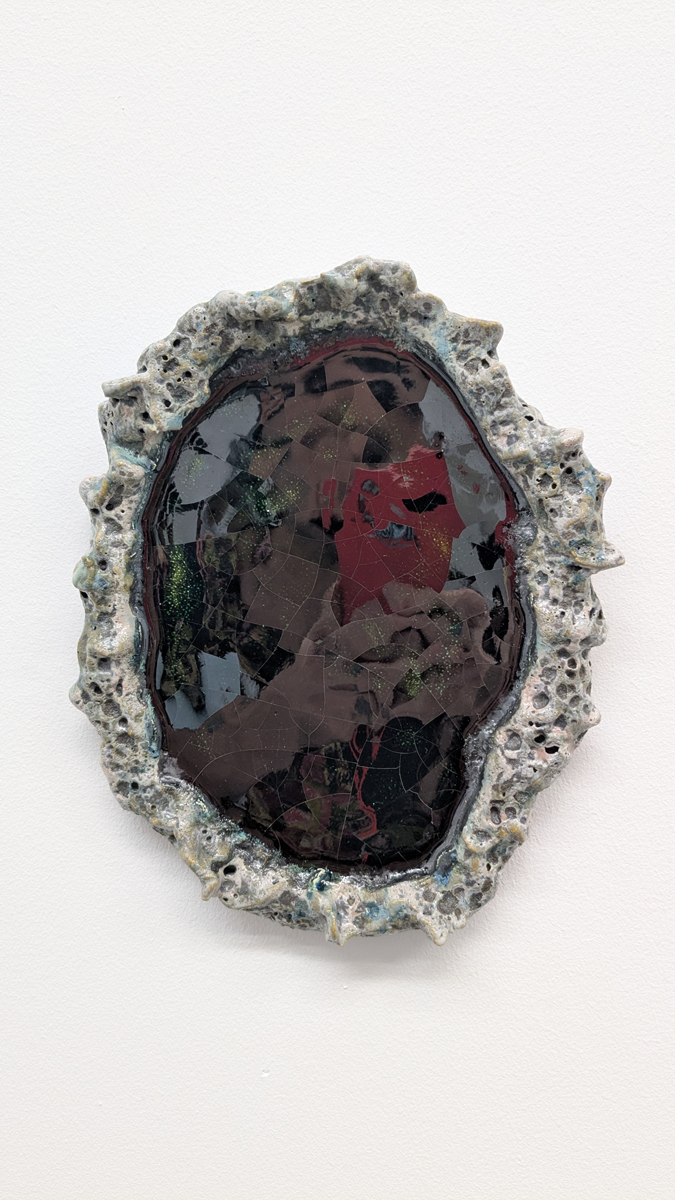
Keiko Machida at Le Labo (Geneva)
Nina Rieben at Le Labo (Geneva)

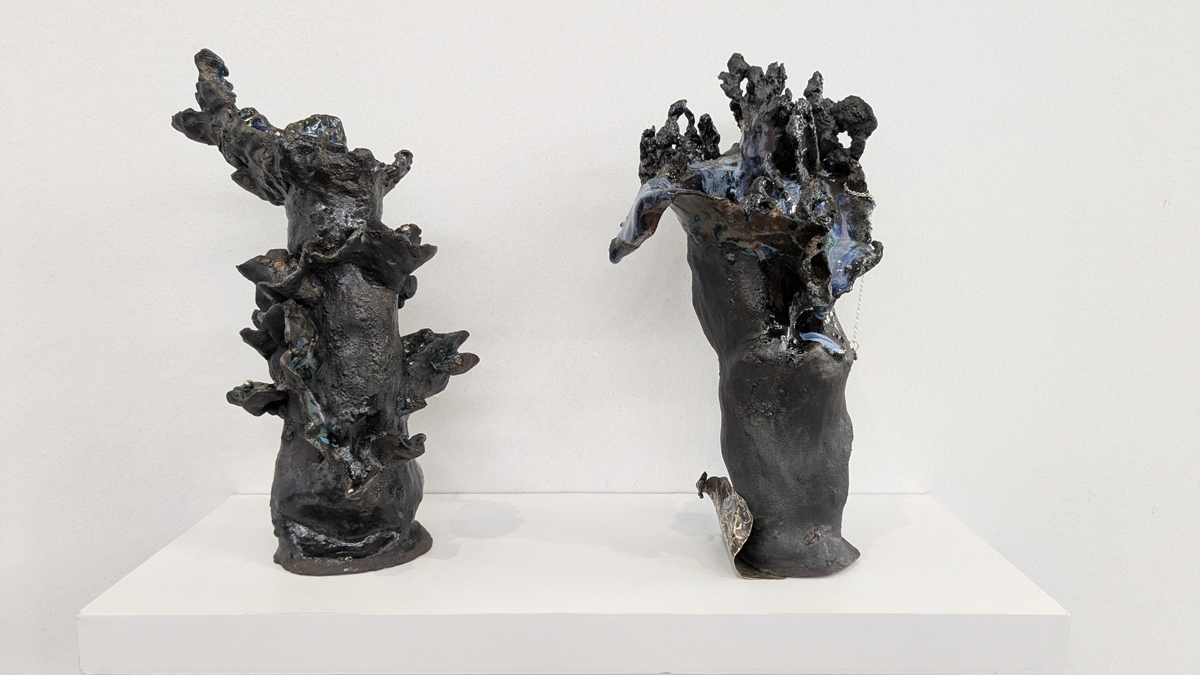
And those discussions about cultural sector survival in different contexts were enlightening. I was drawn into Le Labo‘s booth by this small, black-mirror-like ceramic sculpture by Keiko Machida, but ended up staying for a great conversation with gallerist Karen Alphonso, who told me the space has been around for a whopping seventeen years—in artist-run space years, practically an eternity. Infamously, the exorbitantly expensive city of Geneva decided to evict all of its squats in 2007. Rightfully concerned that the city would lose its cultural life, Alphonso and her friends decided to collectively, legally rent one of the spaces, and subsidize its exhibitions and programming by throwing raves and working day jobs. As is so often the case, the collective didn’t work out and Alphonso was left alone with a hefty monthly bill. When she decided to call it quits, the city realized it was hemorrhaging its art scene and offered the space for free. This allowed her to not have to consider the gallery like a business until relatively recently. “The idea was to do things alternatively, but we ended up coming back to the capitalist way,” she laughed. It’s a recurring theme at SWAB this year: no one got into the arts to make money; they just developed a more financially sustainable model out of necessity.

Inés Verdugo, Ana Delgado Palomino, and Robin Vuitch in a booth co-curated by 200Cent (Barcelona) and Segismundo (Guatemala) in the VORTEX section
Robin Vuitch in a booth co-curated by 200Cent (Barcelona) and Segismundo (Guatemala) in the VORTEX section

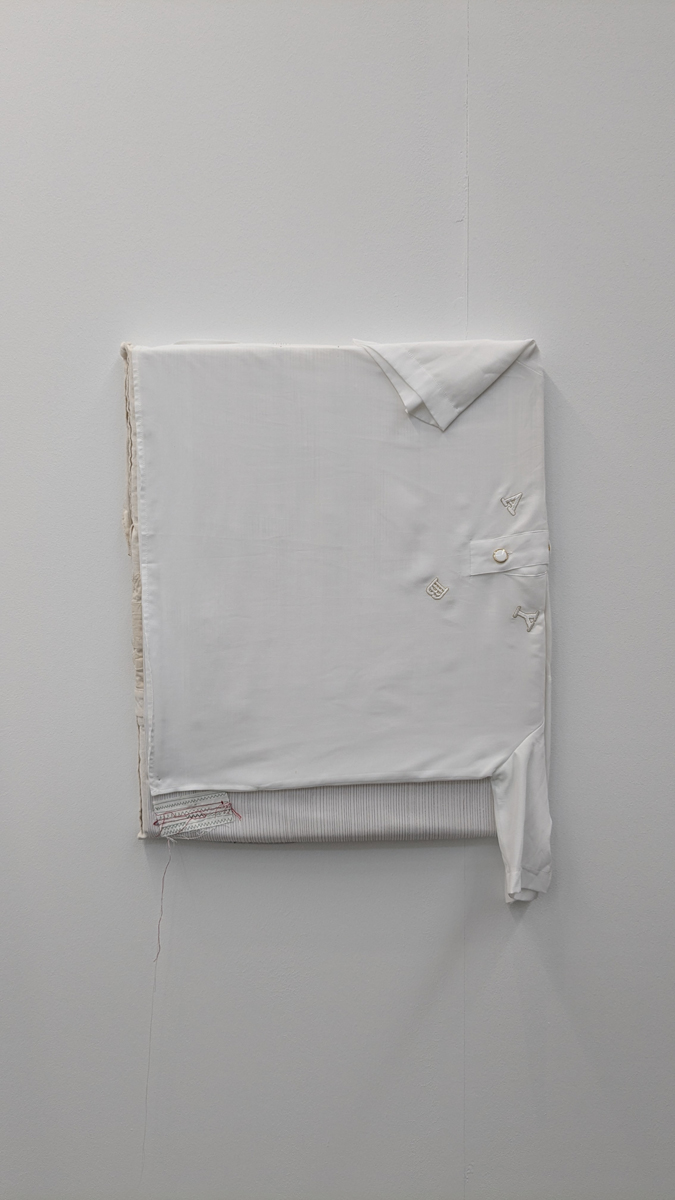
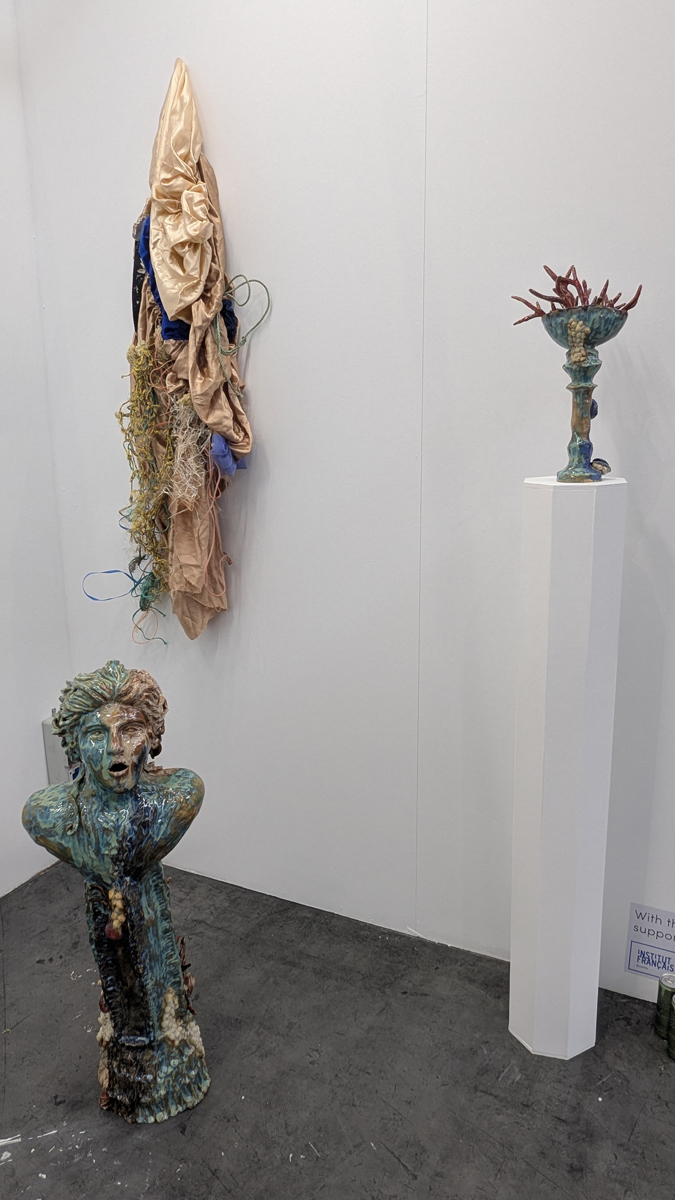
I was happy to see 200Cent, one of my favorite Barcelona artist-run spaces, at the fair again this year, sharing a booth with Guatemalan gallery Segismundo. In the customary “where are you from originally?” small talk, I was pleasantly surprised to discover artist Robin Vuitch went to my alma mater MICA, though she proudly identifies as an art-school dropout. I had been admiring her piece assembled from found pantyhose at the press preview earlier, remarking to gallerist Kirra Kusy that it looked as if it were site-specific to dialog with the convention center’s ceiling tresses. Later at the vernissage, she was awarded the Premi Fundació Úniques—a prize for outstanding women artists working in Catalan-speaking regions—and the piece was acquired by the foundation.
What are the odds?!
It’s a small artworld, and with events like SWAB attracting like-minded people from Baltimore and Bangkok alike, it feels like it’s getting smaller in the best way possible.

Below, a few other highlights in no particular order:

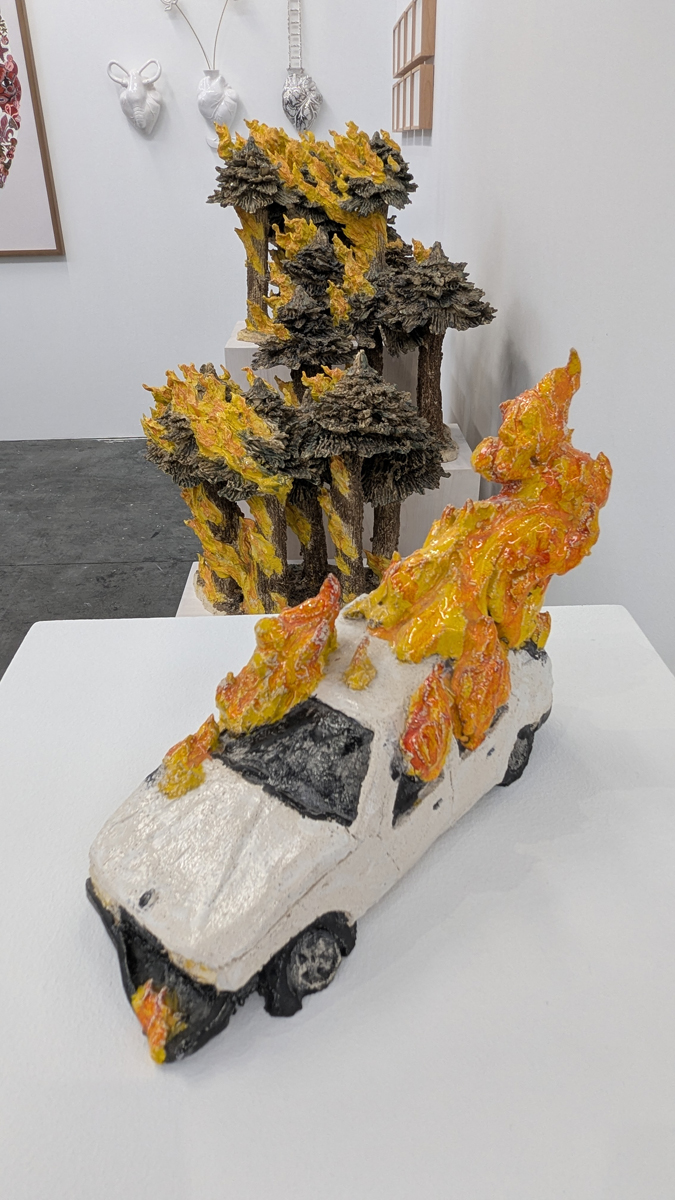
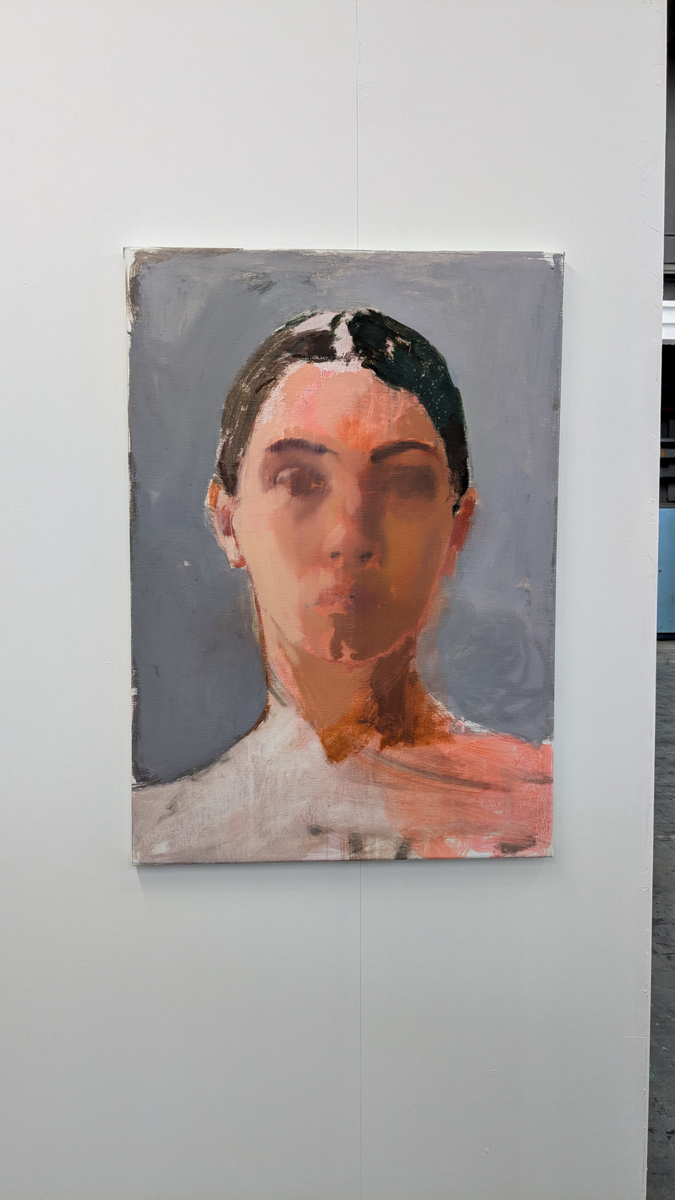
Photos documenting the installation of a playground inspired by Tatlin's Tower by Domènec and wildfire sculptures by Joan Pallé ADN Galeria (Barcelona/Paris)
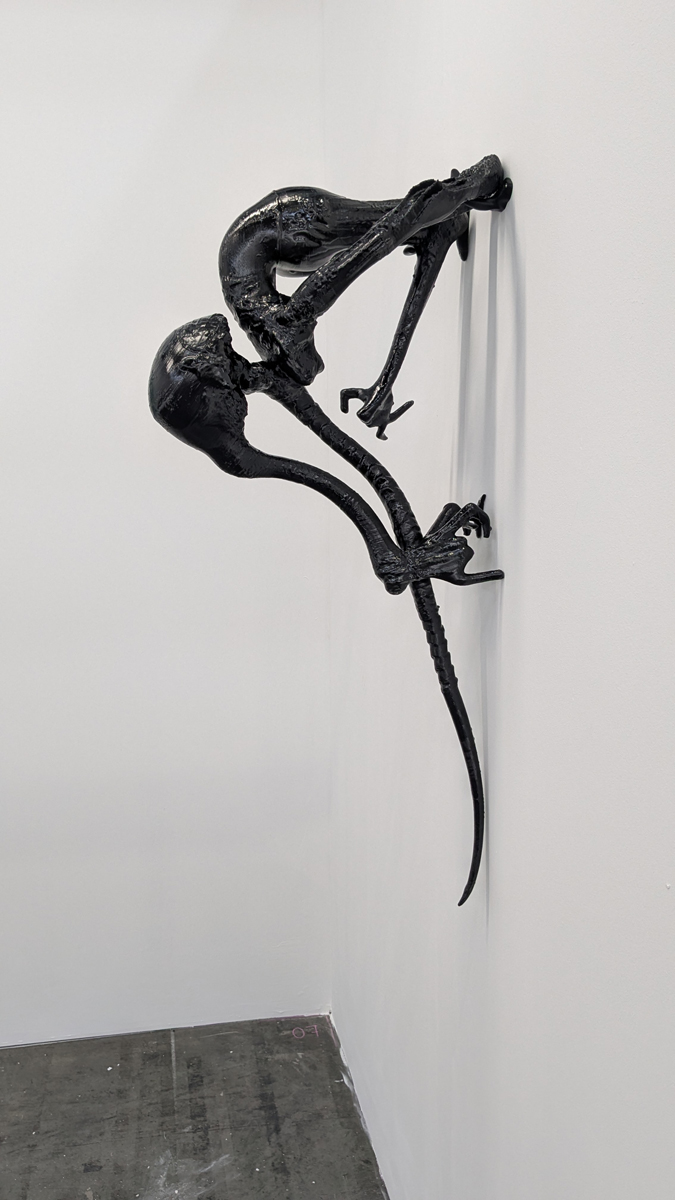
Leilei Wu at Silica (Cannes)
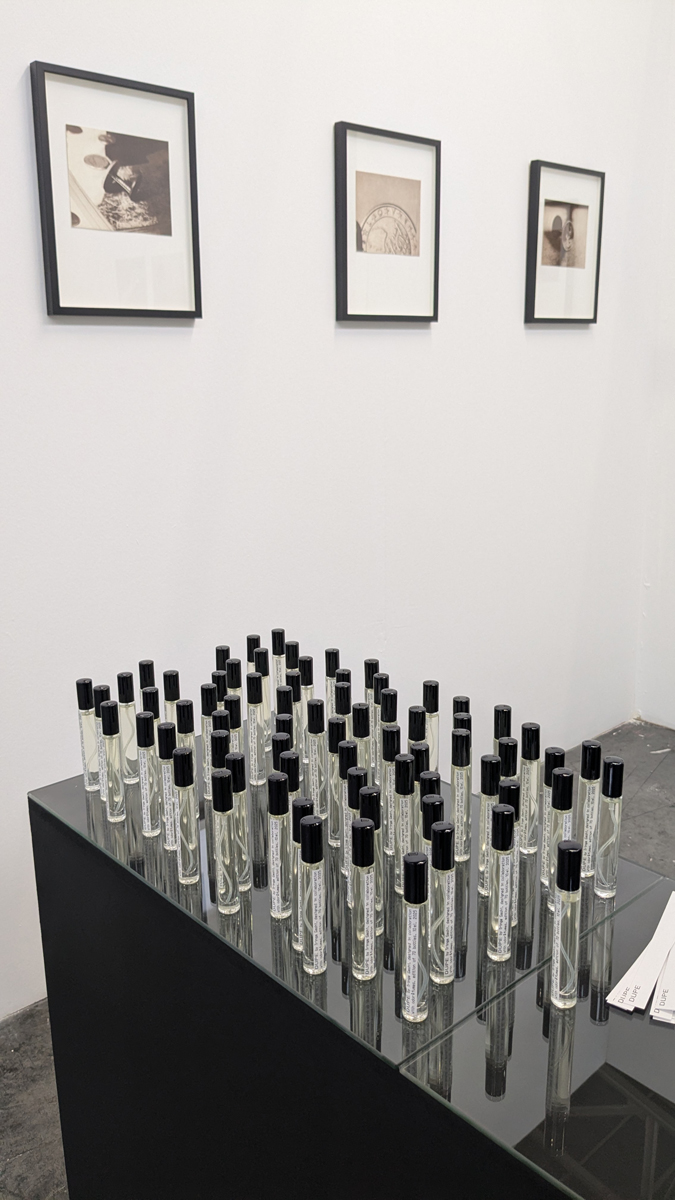
Scents that smell like "consumption" (coins, plastic bags, etc...) by Tringa Gashi at Fuxia 2 (Malmö) in the POLAR + TROPIC section
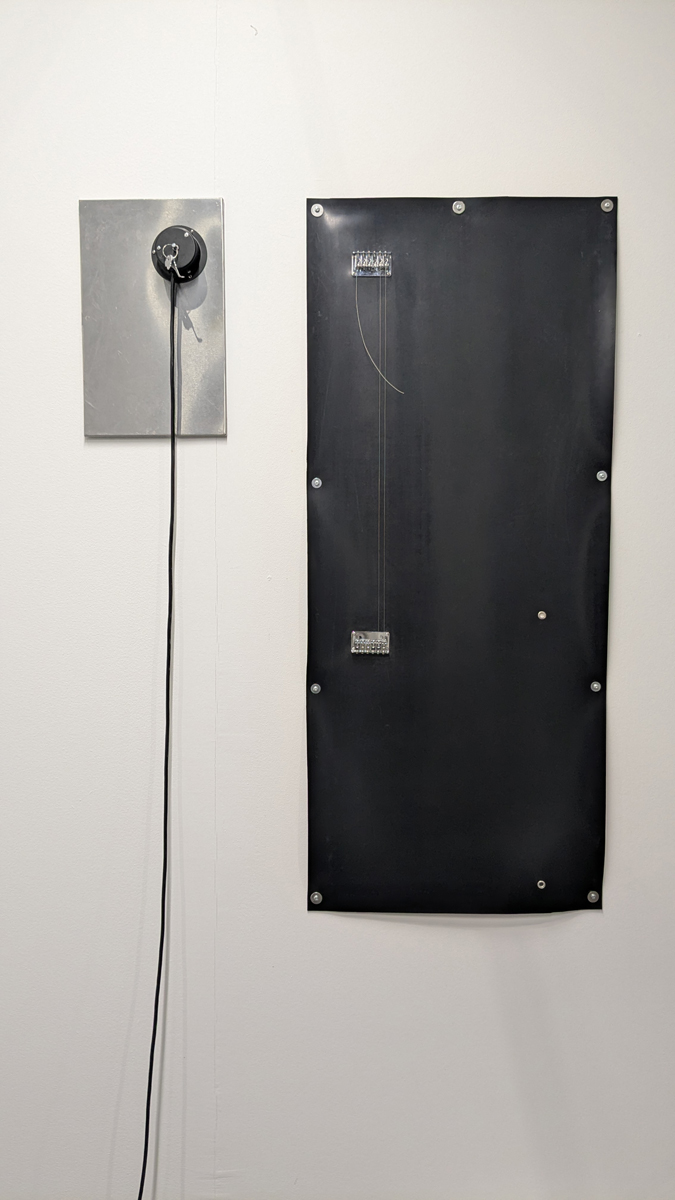
Oda Haugerud at NSFW (Gothenburg) in the POLAR + TROPIC section
Ceramics by Violeto in the booth shared by ungallery (Buenos Aires) and casa espacio (Barcelona) in the VORTEX section
(L-R) Thyra Dragseth, Dev Dhunsi, and Louise Herreira Evensen in a booth co-presented by Oslo galleries Podium and K4 in the POLAR + TROPIC section
Inkjet acrylic medium transfers of analog photography by Duy Nguyen, a Vietnamese-Norwegian artist who, by happy coincidence, is friends with the Norwegians next door, at MoT+++ (Ho Chi Minh City) in the POLAR + TROPIC section
Camille Benbournane at BAM Projects (Bordeaux) in the SOLOS section
Andrzej Staniek at Galeria Szczur (Poznan) in the SOLOS section

SWAB Art Fair closes Sunday, October 5th at 8:00 pm. The fair is located in the Textile Pavilion. Fira de Barcelona, Rius i Taulet Avenue, 10, 08004 Barcelona

Related Stories
A Baltimore context imbues the exhibition with the feeling of an ecclesiastic gathering of old friends, a family reunion, a sacred circle.

A quintessentially modern American painter, Sherald employs centuries-old painting techniques in order to arrive at images that belong in the art historical cannon

The Baltimore Institution Aims to Bring the Excitement of Auctions to a Broader Public with Online and Local Showrooms

“When people are having conversations about art in Baltimore, I just want Alex Cooper to be a part of it.”

A Conversation with the Healer, Trainer, and Educator on Her Dedication to Cultivating Healthier Communities of Color

"You have to be creative in order to be a healer. To be a healer is to imagine someone in a state that they aren’t yet in and support them to get there."

The 2025 Armory Show VIP Preview in Photos, featuring two Baltimore-based Galleries

Photos by E. Brady Robinson of art, visitors, artists, and culture workers at the Armory VIP Preview on September 4, 2025