Reading

BmoreArt News: Pedagogy Study Hall, Nick Cave, Kevin Brown

Previous Story
Article Image

New/Next Film Festival Returns to The Charles Theater

Next Story
Article Image

April Gray: The Visionary Behind the Jewelry Counter

This week’s news includes: UMBC ‘s Pedagogy Study Hall with Tomashi Jackson and Nia K. Evans, SAAM announces Nick Cave’s upcoming exhibition, SNAC-ing with Kevin Brown, New/Next Film Fest, Black Baltimorean ASL, Women Artist of the DMV exhibition, John Waters becomes the voice of John Waters, Imagining Shakespeare exhibition opens at Folger Shakespeare Library, Revolutionary Words literary magazine, a haunted episode of Free Admissions podcast, Luann Cara at Lord Baltimore Hotel — with reporting from Baltimore Magazine, Baltimore Fishbowl, The Baltimore Banner, and other local and independent news sources.

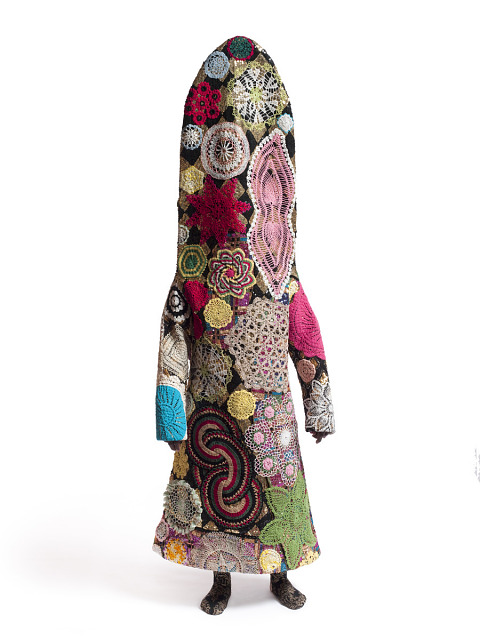
Header Image: Nick Cave, Soundsuit (2009) from SAAM’s collection

📰🔥🌏 Informed and Informal - ASOTU | More Than Cars Daily Push Back
 

BmoreArt is a reader-supported,
independent publication.
To support our work, consider
becoming a subscribing member.
 

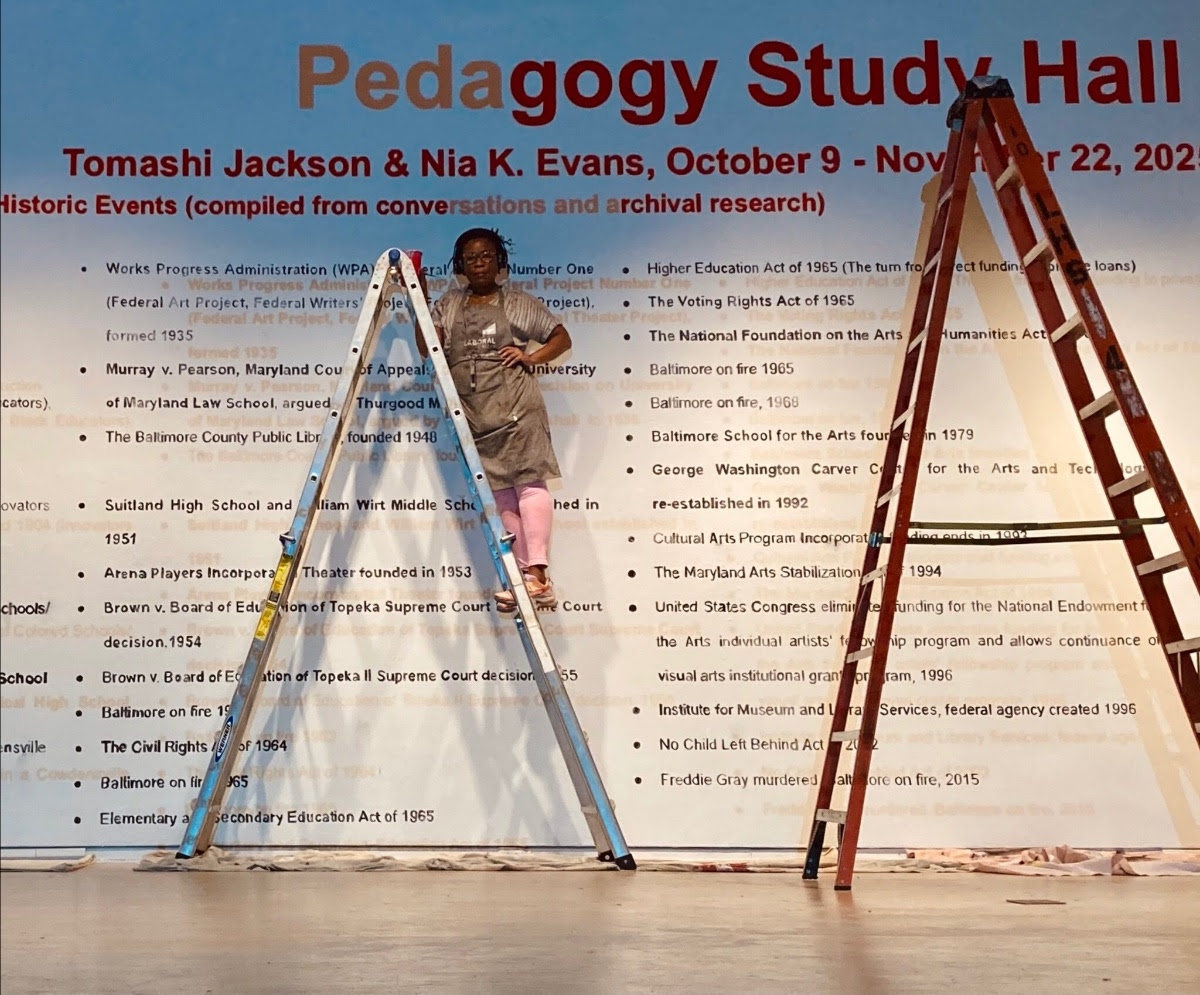
Artist Tomashi Jackson paints a mural in the CADVC gallery containing a timeline of significant moments resulting from her research.

UMBC’s Center for Art, Design, and Visual Culture presents Pedagogy Study Hall | October 9 – November 22, 2025
Press Release :: September 30

UMBC’s Center for Art, Design, and Visual Culture (CADVC) presents Pedagogy Study Hall, on view from October 9 through November 22.

Pedagogy Study Hall is a collaborative exhibition, research project, and public humanities residency by interdisciplinary artist Tomashi Jackson and policy analyst and economic advocate Nia K. Evans. The project examines systems of investment and disinvestment in the arts and humanities as reflections of broader civic and economic structures. Drawing on Baltimore’s grassroots history of cultural labor and social justice organizing, Pedagogy Study Hall offers a multilayered model for public memory, artistic research, and civic pedagogy.

Pedagogy Study Hall is not a static exhibition but a process — an accumulative and iterative space where teaching, learning, and collective study unfold in real time. Jackson and Evans define pedagogy not only as the philosophy and practice of teaching, but also as the systems of decision-making and environments that make learning possible.

The CADVC exhibition presents a spatialized archive of research collected through two years of public programs, interviews, and collaborative inquiry. Materials include audio and video recordings, a mural documenting a timeline of salient events, zines, press clippings, archival documents, and program-based ephemera. Programming explores the interplay of art, law, policy, education, and community activism in shaping the cultural landscape. Key elements include:

• Timeline Mural: A graphite-washed wall charting arts and humanities legislation and other datapoints from the founding of the NEA and NEH through the present, with new entries added during the exhibition based on Baltimore interviews and research.

• Video Installations: A series of interviews with historians, civil rights attorneys, and Baltimore cultural workers, expanded over the run of the show. In the CADVC theater, a looped projection of Tommy Tonight — Jackson’s drag alter ego — critiques cultural institutions such as the library, the museum, and the artist residency space. This includes On My Own (Devotions in the BMA & at Lisa’s House in Roxbury) (2023), produced at the Baltimore Museum of Art during Jackson’s residency with CADVC. At night, a large-scale amphitheater projection extends the exhibition outward into public space.

• Public Programs: The exhibition functions as a forum for active research. Live interviews and conversations recorded during public programs will be added to the gallery over time, generating new content and extending the exhibition’s evolving form. These materials will provide the foundation for a multimedia publication, edited by Evans and scheduled for release in 2027.

Across its run, Pedagogy Study Hall will host a wide-ranging series of public events including reading groups, drawing sessions, workshops, and roundtables. Highlights include:

October 9 — Opening Reception & Artist Talk (5:30–7:30 p.m.; moderated by Teri Henderson)

October 10 — Visionaries and Outcasts Reading with Tomashi Jackson, Nia K. Evans, Michael Brenson, and Annie Storr (10–11:30 a.m.)

October 11 — Talk/Draw with Jackson, Evans, Michael Hunt, and members of With Us For Us coalition. DJ: M’Balou Camara (1–4 p.m.)

October 17 — Public Arts & Humanities Panel (curated by Christopher Brooks) (12–1:30 p.m.)

October 24 — Public Drawing Session with Alx Velozo (2–4 p.m.)

October 29 — Dresher Center for the Humanities Forum: Arts & Humanities in Baltimore — Current Assessments (12–1 p.m.)

October 30 — Poetry Workshop with Ainsley Burrows (5–7:30 p.m.)

November 5 — Nicole King on Poppleton and activist print culture (3–4 p.m.)

November 12 — Public Drawing Session with Alx Velozo (3–5 p.m.)

November 13 — Denise Meringolo on public history, digital publishing, and the Baltimore Uprising (12–1:30 p.m.)

November 19 — Roundtable with Jackson, Evans, Davarian Baldwin, and Matt Cregor (Hybrid, 6–7:30 p.m.)

November 20 — With Us For Us in Conversation with Nia Evans (6–8 p.m.)

November 22 — Closing Talk/Draw with Eric Mack, Tomashi Jackson, and Nia Evans. DJ: M’Balou Camara (1–4 p.m.)

Program details and updates will be posted at cadvc.umbc.edu.


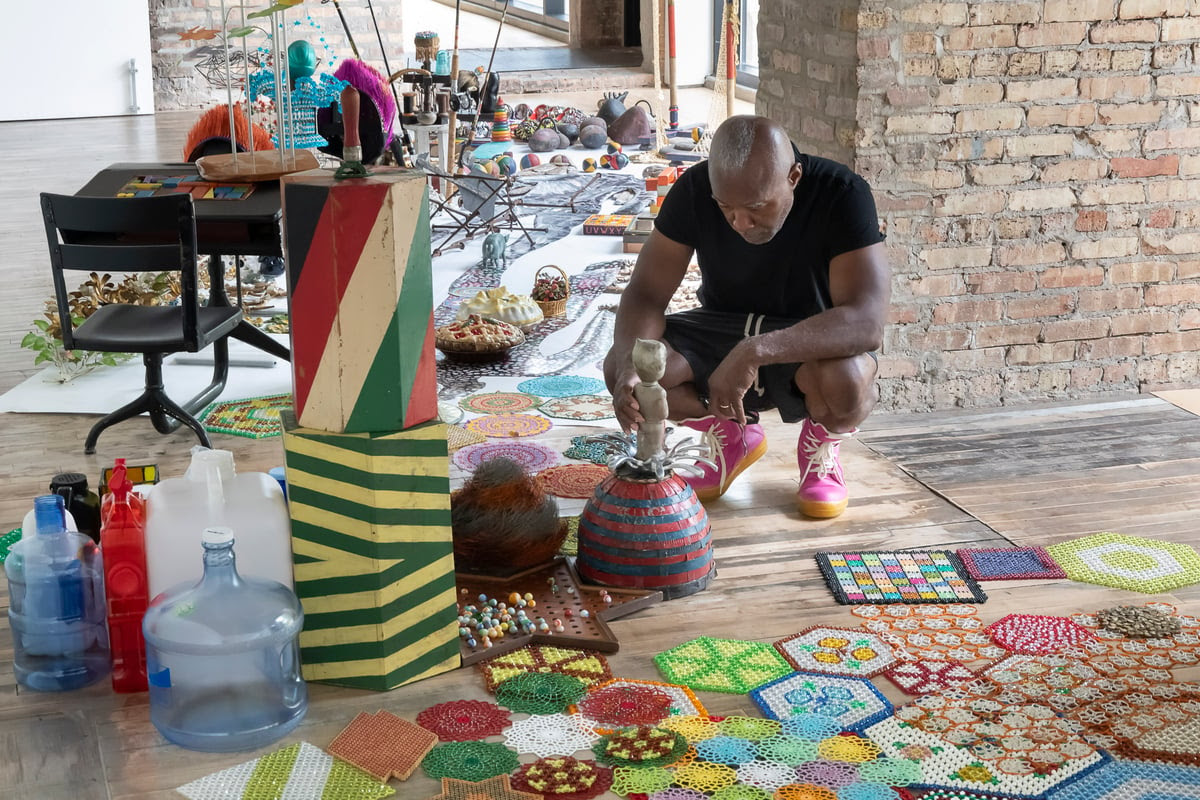
Image courtesy of the artist and Jack Shainman Gallery. Photo by James Prinz.

Smithsonian American Art Museum Debuts Monumental New Commission by Nick Cave in February 2026
Press Release :: September 25

The Smithsonian American Art Museum will debut “Nick Cave: Mammoth,” a monumental new body of work by internationally acclaimed artist Nick Cave, in February 2026. Commissioned by the museum, “Mammoth” marks Cave’s first solo exhibition in Washington, D.C. and represents the museum’s largest-ever commission by a single artist.

“Mammoth” is Cave’s most personal project to date. Drawing on his childhood in Chariton County, Missouri—where his grandparents farmed and where the quilts, tools and clothing they made were a part of everyday life—Cave roots this installation in family history, landscapes and craft traditions. He transforms these sources into a world animated by memory and the transformative possibilities of the imagination. Combining sculpture, video and found objects, the exhibition reflects on the artist’s own creative impulse and invites audiences to consider their relationship to the natural world and the everyday objects and histories that shape our lives.

“Nick Cave: Mammoth” will be on view at the Smithsonian American Art Museum from Feb. 13, 2026, through Jan. 3, 2027. The exhibition is organized by Sarah Newman, the James Dicke Curator of Contemporary Art, with support from Anne Hyland, curatorial associate.

“‘Nick Cave: Mammoth’ builds on the museum’s commitment to present artists whose work speaks to the American experience and fosters connection,” said Jane Carpenter-Rock, acting Margaret and Terry Stent Director of the Smithsonian American Art Museum. “It is an honor to support a new body of work by one of today’s leading artists, the museum’s most significant commission to date by a single artist and to present it in dialogue with the sweep of American art across our galleries.”

“‘Mammoth’ is a conversation across time, a meditation on how and why we make, and how we live with what we inherit,” said Newman. “Nick Cave gathers fragments of daily life—toys, tools, keepsakes, even the remains of ancient creatures—and transforms them into a shared space of memory and imagination. His work is a powerful reminder that objects are often more than things; they carry our histories, our knowledge, and the stories that carry us forward.”

Cave remakes a suite of galleries on the museum’s third floor into a series of immersive environments. Against a 60-by-20-foot hand-beaded tapestry laid over a landscape of Chariton County, Missouri, towering lifeguard chairs rise—some crowned with massive skeletal mammoth heads, others draped in hides. In the center of the space, a glowing, 700-square-foot light table holds thousands of found objects—from vintage tools, juggling balls and pie plates to his grandmother’s thimble collection—arranged like paleontological specimens. Some remain recognizable; others have been transformed into masks, creatures and contraptions that feel alive with spirit and intention.

The mammoths come alive in “Roam,” a video projected across four walls of an adjoining gallery that follows the massive creatures as they wander through present-day Chicago. In another space, Cave presents bronze sculptures from his “Amalgams” series, which fuse casts from his own body with natural forms such as flowers, birds and trees. These works, surrounded by metal tole flowers and antique cast-iron doorstops—including those from his grandparents’ home—evoke both loss and renewal, the solace of nature and the imprint of inheritance.

The installation will be activated by a site-specific performance; details will be announced at a later date.

About Nick Cave

Nick Cave (born 1959, Fulton, Missouri; lives and works in Chicago) is an artist and educator working between the visual and performing arts through a wide range of mediums including sculpture, installation, video, sound and performance. His work builds upon generations of Black artists and artisans, from quilters such as his own grandmothers to the assemblers of yard art in the American South, who imbued cast-off materials with new meaning. Cave has harnessed this transformative impulse throughout his work—most famously in his series of “Soundsuits,” part sculpture and part garment, which conceal their wearers’ identities at the same time as they metamorphose into others.

Cave earned a bachelor’s degree in fine art at Kansas City Art Institute, a master’s degree from Cranbrook Academy of Art in Bloomfield Hills, Michigan, and is currently director of the graduate program in fashion at the School of the Art Institute of Chicago. His work is in many museum collections, including the Smithsonian American Art Museum (Washington, D.C.), the Hirshhorn Museum and Sculpture Garden (Washington, D.C.), the Philadelphia Museum of Art, the Whitney Museum of American Art (New York), the Museum of Modern Art (New York), the Museum of Contemporary Art Chicago and the Crystal Bridges Museum of American Art (Arkansas). In 2022, he completed a multi-part commission from the Metropolitan Transportation Authority in New York City for a glass mosaic and video work “Each One, Every One, Equal All” that is on view in the Times Sq-42 St Station. Other recent projects and exhibitions include the major retrospective “Nick Cave: Forothermore” at the Museum of Contemporary Art Chicago (2022); “The Let Go” at Park Avenue Armory (2018); and “Nick Cave: Until” at the Massachusetts Museum of Contemporary Art (2016).

Public Programs

In addition to a special performance, the museum will present public programs in support of the exhibition; details about these events will be available on the museum’s website.


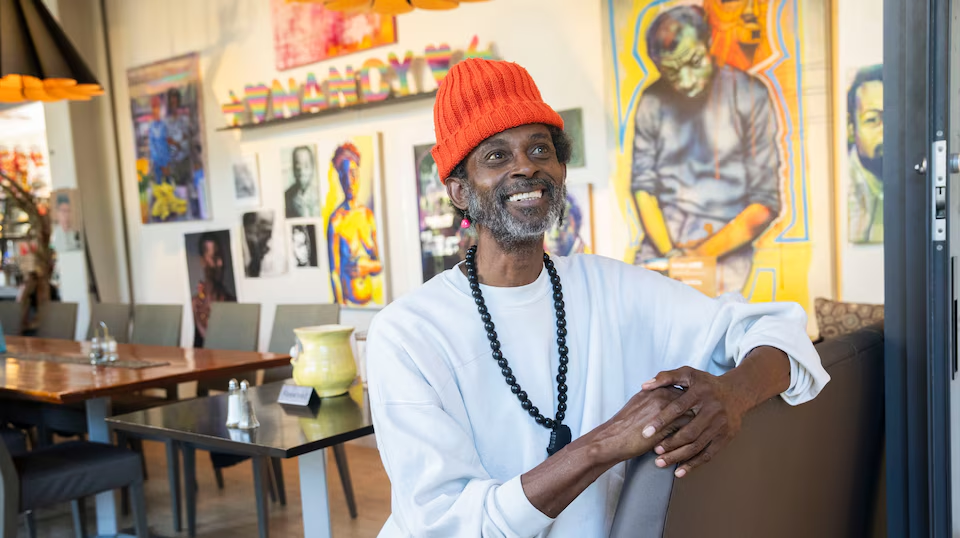
Kevin Brown is the owner of Nancy by SNAC in Station North. (Kaitlin Newman/The Banner)

The Dish: Downtown Kevin Brown opened his café with love, and kept it going in grief
by Christina Tkacik
Published September 24 in The Baltimore Banner

One moment, Kevin Brown, 65, is passing out cake to visiting art students. The next, he’s bent over, whispering in a deep conversation with a customer who is also a close friend. Later, he’s ribbing a guest who brought in a coffee cup from another store. Then he’s throwing himself on the floor to greet someone in an inside joke.

For two decades, Brown has served central Baltimore reasonably priced breakfast fare, soups and sandwiches at his Nancy by SNAC café.

“We don’t sell anything you can’t make yourself at home,” he says of his North Avenue eatery. But Brown’s quick wit and charismatic, always unfiltered personality make every visit feel special.

Chef John Shields called Brown “an explosion of joy” and a Baltimore institution all his own.

Nancy by SNAC celebrated its 20th anniversary Saturday with cornbread waffles, shrimp and grits, and cream puffs. There were congratulatory speeches from longtime customers, friends and even Comptroller Bill Henry, who told The Banner in a statement that Brown is “a fixture of Baltimore’s cuisine and culture for a generation.”

But the occasion was marked by a moment of silence for what was missing: Brown’s late husband, Bill Maughlin.

Maughlin’s influence on — and then absence from — the eatery has played an outsize role in its journey.

When Maughlin died suddenly of a heart attack in 2023 at 53 years old, a grief-stricken Brown seriously considered shutting down. Instead, buoyed by his customers and some help from his older brother David Brown, the doors remained open.

Brown opened Station North Arts Café (aka SNAC) with Maughlin on North Charles Street. They launched its current iteration, Nancy by SNAC, on the campus of Maryland Institute College of Art 15 years ago.

Nancy by SNAC “was like a ray of sunshine” when it opened, said Phyllis Berger, a photography instructor at Johns Hopkins University who frequently brings her students in to meet Brown. “Suddenly there was a place to go.”

Brown’s regulars include art students, elected officials and people high up in the local art world, such as sculptor Joyce Scott and muralist Ernest Shaw, whose paintings adorn the café.

People in his restaurant smile at each other because Kevin brings us together,” wrote Olive Waxter, president of the Hippodrome Foundation Inc., in an email.

Ironically, Brown spent much of his early life trying to get away from the people around him.

His mother, a PTA veteran who showed up to every school board meeting, had high expectations for her 17 children, of which Brown was the youngest. The siblings were hard on each other and big on teasing, but underneath the sarcasm was a deep sense of loyalty and unconditional love. “We had to stick together,” Brown said. “We are all we have.”

Growing up in South Baltimore’s Millhill neighborhood, he found solitude in school and at the library. “I didn’t want to go home. There were too many people in the house,“ he said. “When I read every book in the library, I memorized the Dewey decimal system.”

Among the literature he devoured were the writings of James Baldwin, the playwright, essayist and social critic whose portraits hang all over Brown’s café. The work of Baldwin, whom Brown met twice, showed a path for someone like him. “It was OK to be smart and poor and gay and Black,” he said.

After college, Brown had various jobs in journalism, including at The Baltimore Sun, The Afro and WJZ — and he has a handwritten thank-you note from Oprah Winfrey to prove it. He later worked in city government but said his frankness and sometimes smart-aleck attitude meant he clashed with bosses. “I’ve been fired from every job I’ve ever had, except for this one,” he said.

While he was working for the city, a friend gave him the nickname Downtown Kevin Brown, which he has embraced.

Brown met Maughlin over drinks in 1990 at the Hippo nightclub on North Charles. The two were total opposites: Brown was a city mouse, while Maughlin, 10 years younger, grew up in the small, mostly white town of York, Pennsylvania. Yet the two clicked instantly.

Friends said it wouldn’t work, but Maughlin seemed to live to protect Brown and make him happy. “He did everything for me, and sometimes I feel so undeserving of that love,” Brown said. The laundry, the car registration — Maughlin took care of it all.

After several years as a couple — and after Brown was sacked from yet another job — they decided to go into business. Inside their first SNAC (which they closed in 2018), Maughlin prepared brownies, soups and other dishes from his own recipes. Brown held down the front-of-house operations and an art gallery. “I’m the loudmouth that talks too much and takes the money,” he said.

Together, Brown, who is Black, and Maughlin, who was white, fostered a space where anyone could feel at home. “Black, white, young, old, straight, gay, we don’t care,” Brown said. “We’re going to talk to you, we’re going to fuss with you.”

The North Avenue location they later added was named Nancy by SNAC after the late Nancy Haragan, a longtime supporter of the local art scene. “These students drive me crazy,” Brown said of the MICA crowd. “I didn’t have any gray hair before I started working here.”

The shop does not sell espresso drinks, nor does it carry oat milk. A handwritten, expletive-laden sign by the cash register notes in capital letters: “We don’t write your name on the cup. Fuck that.”

Yet for his tough talk, Brown is a natural teacher. Berger, the Hopkins photography instructor, recalled how she first met Brown when she was leading students to take pictures of an old gas station in the neighborhood. Brown invited them all to come back to his café.

“It personalizes the neighborhood, knowing there’s someone there who cares so much about it and who has really made such a difference on that street,” Berger said.

She’s made a habit of coming back with her students. During a recent sunny afternoon, they all filed into the shop where Brown presented them with slices of cake and asked about their work.

As he ended the chat, he offered some direction — and a sassy warning: “Take pretty pictures, and make our city look pretty! Or else I’m gonna hunt you down and fuck you up!”

It’s hard to imagine Brown anywhere else but the café. But after Maughlin died, Brown didn’t know if he could bear to face the business they built together without him.

David Brown, who had helped out in the café before Maughlin’s death, talked Brown into staying on.

After all, David reminded Kevin, Maughlin was the one who wanted the restaurant to reach 20 years in service.

This story was republished with permission from The Baltimore Banner. Visit www.thebanner.com for more.


A scene from “OBEX,” the latest movie from Baltimore writer and director Albert Birney. (Courtesy of New/Next Film Festival)

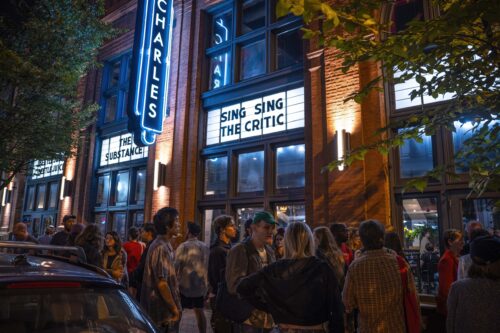
What not to miss at this weekend’s New/Next Film Festival
by Wesley Case
Published October 1 in The Baltimore Banner

Excerpt: In two years, Baltimore’s New/Next Festival has quickly lived up to its name.

The film festival, created in 2023 when the Maryland Film Festival took a year off, has become an imaginative playground for many emerging filmmakers in Maryland and beyond.

“Just as we’re establishing ourselves as a festival, they’re also coming into their own with their filmmaking voice,” said co-founder and programmer Eric Hatch.

Ahead of the third annual New/Next, which runs Thursday through Sunday at the Charles Theatre on North Charles Street, Hatch chatted about some of the weekend’s highlights, including an ’80s-inspired video game fantasy, an award-winning documentary and a screening handpicked by comedian Stavros Halkias.

… this story continues. Read the rest at The Baltimore Banner: What not to miss at this weekend’s New/Next Film Festival


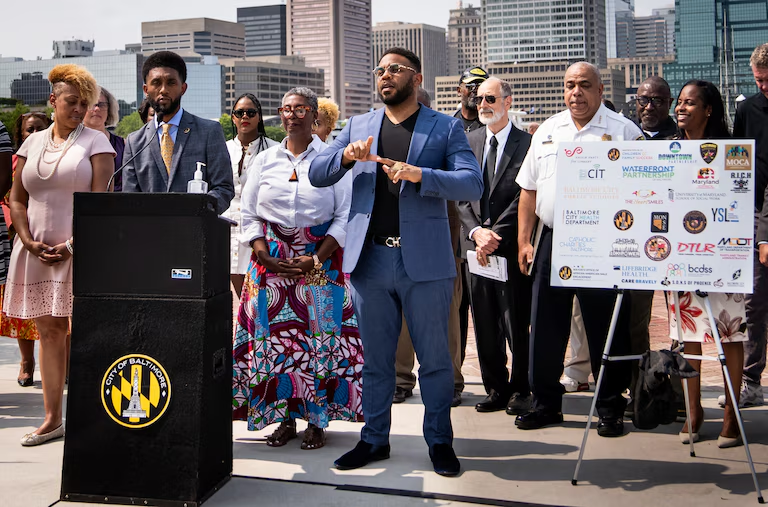
Interpreter Billy Sanders, center, joins Mayor Brandon Scott during a press conference in Baltimore in 2023. (Jessica Gallagher/The Banner)

ASL isn’t the same as English. Black Baltimorean ASL is a language unto itself.
by John-John Williams IV and Adora Brown
Published September 30 in The Baltimore Banner

Excerpt: When Mayor Brandon Scott delivers a speech with American Sign Language interpreter Billy Sanders, the Baltimore politician knows his message will get across.

Scott is an effective, direct speaker who can code-switch and throw in an occasional clapback — all with an undeniable West Baltimore accent. And Sanders has been there to capture every phrase since 2019.

Sanders is among the 6% of Black interpreters nationwide in an industry dominated by white women, according to the Registry of Interpreters for the Deaf. Add Black vernacular and Baltimore’s distinct accent into the mix, and the divide between interpreter and audience can lead to issues accurately interpreting for and from the Black deaf community.

… this story continues. Read the rest at The Baltimore Banner: ASL isn’t the same as English. Black Baltimorean ASL is a language unto itself.


These exhibits spotlight 600 female artists in DC area
by Jessica Kronzer
Published September 24 in WTOP News

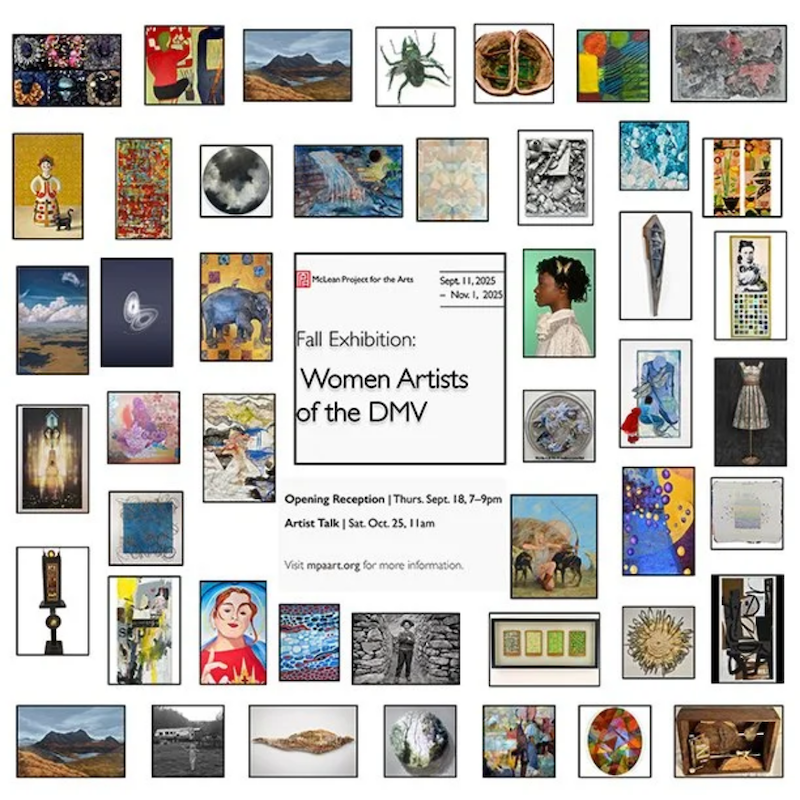
Excerpt: An art curator and blogger is on a mission to correct what he’s perceived as a lack of representation of female artists from the D.C. area in local museums.

Florencio “Lenny” Campello has spent the last few years curating a series of exhibits that feature artwork created by local women. His project, Women Artists of the DMV, has grown to 18 exhibits that include 600 artists.

The heart of the project is at American University’s Katzen Arts Center, where 63 pieces are on display.

“This isn’t even the largest one,” he said. “Some of these venues have over 100 artists in them.”

Campello hand selected each piece. Walking through the Women Artists of the DMV exhibition on American University on Wednesday, Campello laid out the detailed history of the artwork and the women behind it.


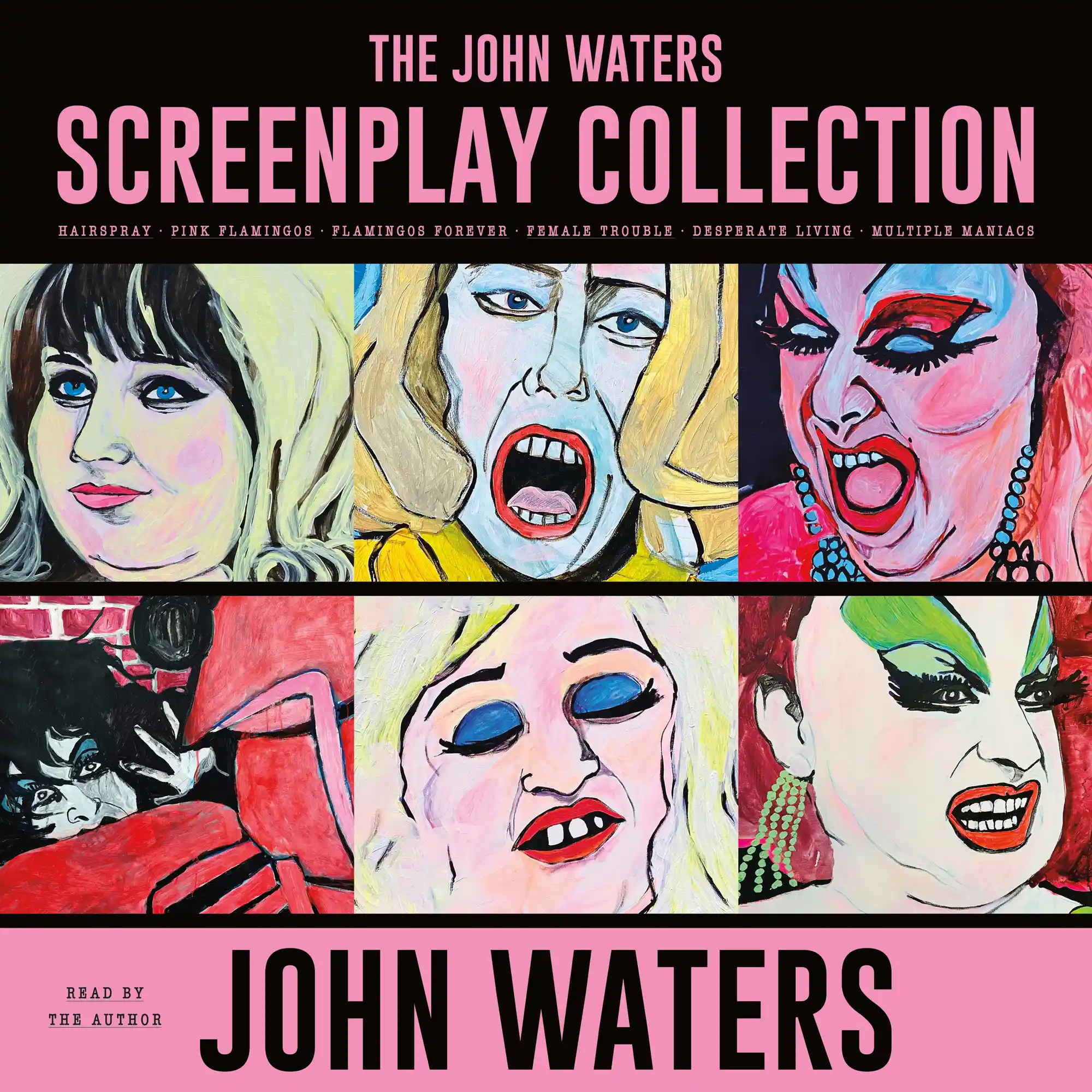
An audio book collection of John Waters' screenplays will be released next month in tandem with the print editions. Credit: Macmillan Audio.

‘Delightfully deranged’: John Waters voices every character from his early movies in new audio book collection
by Ed Gunts
Published September 29

Excerpt: John Waters fans won’t have to read the new screenplay books that he has coming out next month. He reads them himself, and voices every character, in an audio book collection that is being released in tandem with the print editions.

Waters and Macmillan Audio, a division of Macmillan Publishers, announced on Monday that the writer and filmmaker has narrated the screenplays of five of his movies and the screenplay for a sixth movie that was never filmed. All six have been compiled in “The John Waters Screenplay Collection,” which Macmillan will release on Oct. 21. The price is $26.99.

The six films are: “Multiple Maniacs” (1970); “Pink Flamingos” (1972); “Female Trouble” (1974); “Desperate Living” (1977); “Hairspray” (1988) and “Flamingos Forever,” a never-filmed sequel to Pink Flamingos, written in 1983. Screenplay books for “Pink Flamingos,” “Desperate Living” and “Flamingos Forever” came out in May. Screenplay books for “Multiple Maniacs,” “Female Trouble” and “Hairspray” will be released on Oct. 16.


The infant Shakespeare attended by Nature and the Passions. George Romney. Folger FPa49.

Folger Shakespeare Library Announces New Exhibition: Imagining Shakespeare: Mythmaking and Storytelling in the Regency Era
Press Release :: September 30

The Folger Shakespeare Library will open Imagining Shakespeare: Mythmaking and Storytelling in the Regency Era on October 4, 2025. The exhibition presents fourteen paintings from the Folger’s collection that were originally displayed together in the Boydell Shakespeare Gallery in London. Seen on view together for the first time since the Boydell Gallery closed in 1805, the paintings offer depictions of pivotal scenes from Shakespeare’s plays while also speaking to a larger narrative of how the playwright was refashioned into a cultural icon during the 18th century.

“The reception of Shakespeare has a complex, and at times, difficult history. This exhibition offers a unique opportunity to illustrate for our audiences how Shakespeare was placed upon a pedestal a century or more after his death,” said Folger Director Dr. Farah Karim-Cooper. “Across our galleries, we aim to show people how Shakespeare, as a man of the theater, worked when he was alive. With Imagining Shakespeare, we can show audiences how this narrative was deliberately transformed during the time of British Imperialism.”

Imagining Shakespeare reveals an important confluence of artistic ambition, commercial enterprise, and nationalism when publisher John Boydell (1720–1804) launched an initiative to commission dramatic scenes from Shakespeare’s plays by leading British artists of the Regency period. Through these artistic commissions, and the engravings and multi-volume edition of Shakespeare’s illustrated plays readily available for sale at the gallery, Boydell sought not only to elevate British artists but also to enshrine Shakespeare as both the enduring national icon and export of the British Empire.

The Folger’s exhibition utilizes a layout inspired by the salon-style display at the Boydell Shakespeare Gallery. It opened in 1789 at the fashionable address of 52 Pall Mall, as the first public gallery in the UK, and on display were 34 paintings from more than 21 Shakespeare plays. By 1802 there were more than 160 pieces of Shakespeare-centric art in the gallery. The Folger’s 14 paintings comprise the largest existing collection from the Boydell Gallery remaining today. Included are scenes from The Taming of the Shrew, Twelfth Night, and King Lear, as well as a large-format scene from the final act of Romeo and Juliet by James Northcote, which has been relocated from the Folger’s Reading Room specifically for this exhibition. Another life-size painting, The Infant Shakespeare Attended by Nature and the Passions by George Romney, directly puts forth the idea of Shakespeare as a “native genius” from birth. Alongside the paintings, original engravings from the Boydell Shakespeare Gallery will be on rotating view during the exhibition.

Imagining Shakespeare: Mythmaking and Storytelling in the Regency Era will be on view in the Stuart and Mimi Rose Rare Book and Manuscript Exhibition Hall until August 2, 2026. The Folger Shakespeare Library is located at 201 East Capitol Street, SE, Washington, DC 20003, and is open Tuesday–Sunday from 11am–6pm, with extended Friday hours until 9pm. Admission is free, with a suggested donation of $15. Visitors may also reserve timed-entry passes. Related events and talks will be listed on the Folger website. For more information about the exhibition, please visit: folger.edu/boydell.


Opportunity to support a local, student-led literary initiative
Newsletter :: September 23

Dear Friends and Supporters,

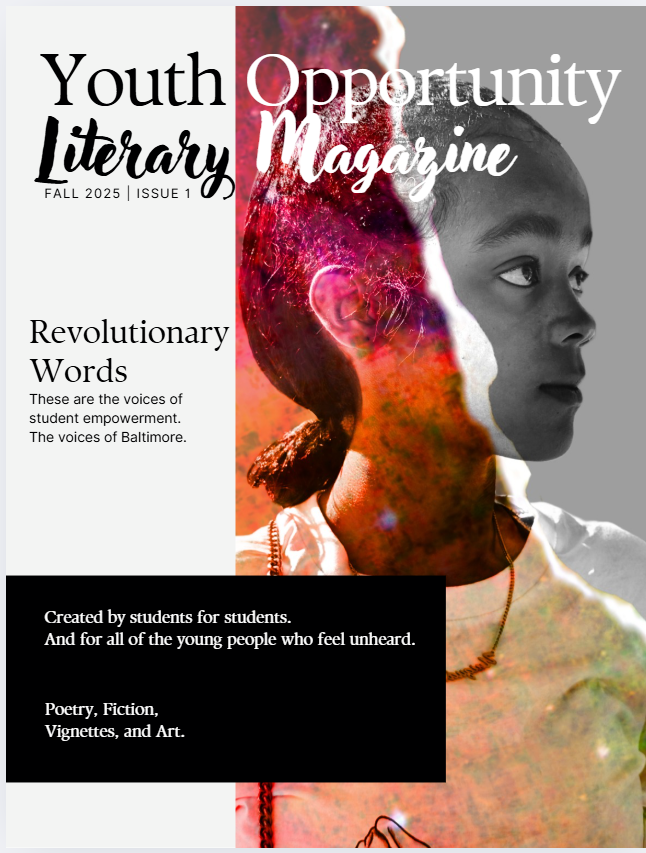
We are proud to introduce you to Revolutionary Words, the inaugural literary magazine of Youth Opportunity (YO!). What began as a classroom project has grown into a platform where young writers and artists can share their voices with the world. In these pages, our students express their creativity, courage, and curiosity—reminding us that literature has the power to connect communities, question assumptions, and ignite imaginations.

Our vision is bold: to create a sustainable space for student expression that extends beyond the walls of our school. Each edition will carry the stories, poems, essays, and artwork of young people whose perspectives are too often overlooked. We believe their words deserve to travel far, reaching readers who may never walk our hallways but who will recognize the truth and beauty in what they share.

To achieve this vision, we need partners who believe in the value of youthful imagination. Producing a high-quality, full-color magazine requires resources for design, printing, and distribution. With your investment, we can offset these costs and ensure that every student contributor sees their work published and celebrated. Your support will allow us to expand circulation, place copies in the hands of educators, families, and community leaders, and amplify the voices of our city’s youth.

We invite you to consider sponsoring Revolutionary Words at one of the following levels:

$250 – Emerging Voices Sponsor: Helps fund printing for a classroom set of magazines.

$500 – Community Connector Sponsor: Supports expanded distribution to local libraries, schools, and community centers.

$1,000 – Revolutionary Words Champion: Ensures the sustainability of future issues and wide circulation throughout the city.

As a valued sponsor, your name (or organization’s name) will be recognized in the magazine itself, celebrating your commitment to amplifying youth voices.

We invite you to join us in this opportunity—not just as readers, but as champions of the next generation of storytellers. Together, we can build a publication that empowers young people, connects communities, and demonstrates the enduring power of words.

Thank you for considering an investment in Revolutionary Words. Your partnership will help us turn this project into a lasting tradition that celebrates and sustains student voices. If you are open to contributing, please respond to this email.

Thank you, on behalf of Youth Opportunity and the Revolutionary Words editorial team.


Season 2, Episode 5: Are Ghosts Real? [Audio]
Aired on The Walters’ Free Admissions Podcast

This episode explores the ghoulish, the seemingly scary, and the creepy-crawly. Mike McKee, Head of Installation and Production, delves into just a few of the ghost encounters he’s had during the three decades he’s worked at the museum. Then, Dany Chan, Associate Curator of Asian Art, explores the deeper meanings behind works in the collection that seem scary at first glance. Finally, Preventive Conservator Sarah Freshnock explains how she keeps creepy crawly creatures at bay to protect the museum’s priceless art objects.


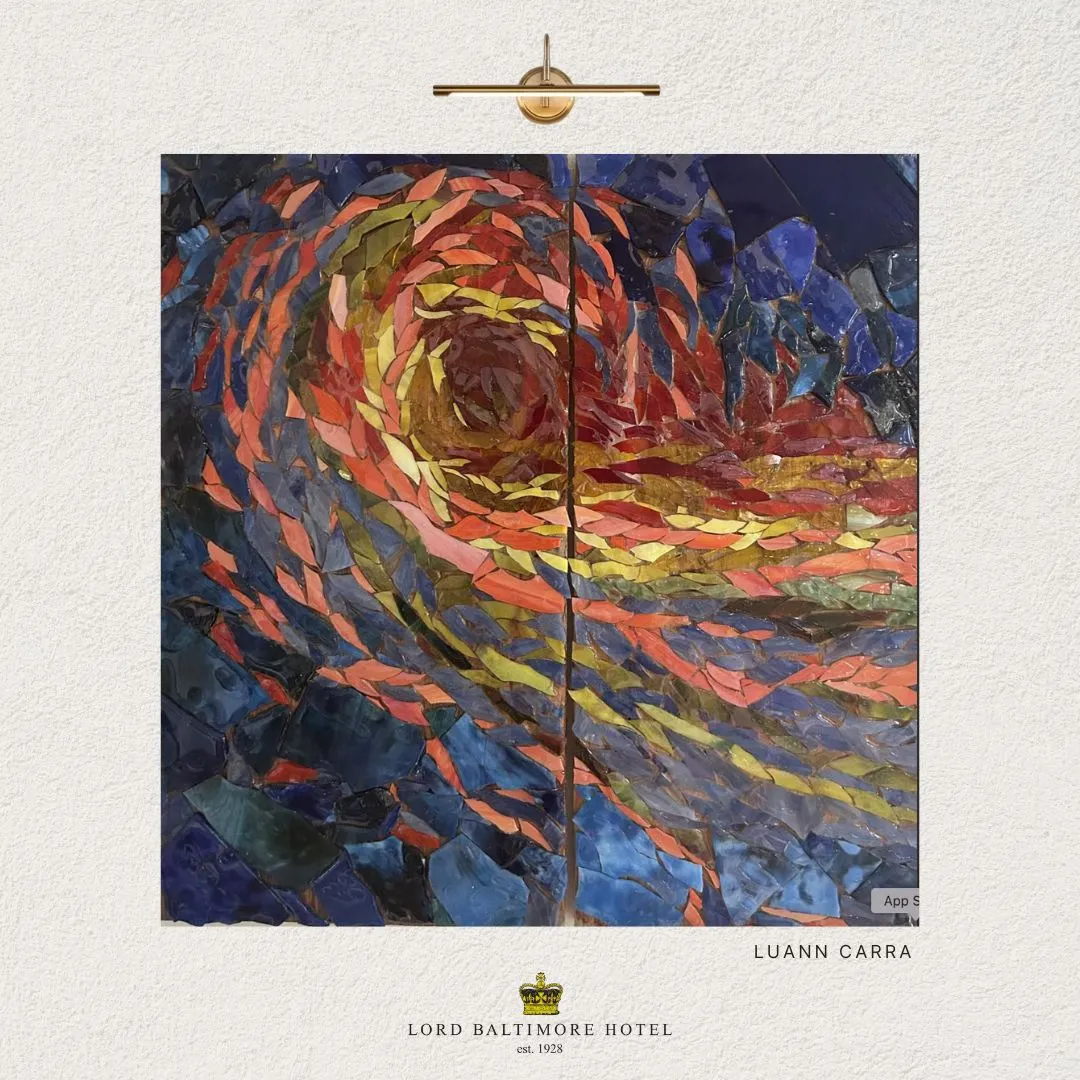
Luann Carra featured in ‘Good Taste’ exhibition at Lord Baltimore Hotel
by Aliza Worthington
Published October 1 in Baltimore Fishbowl

Excerpt: Local artist Luann Carra brings her unique style to the Lord Baltimore Hotel for the latest installment of the Good Taste art exhibition series.

The exhibition will mark the final part of the 2025 series, opening Oct. 1 and running through the end of December.

Titled “Re Do,” Carra’s exhibition is “a celebration of nature’s splendor featuring waves, trees, horses, mermaids and fish brought to life through an imaginative mix of mirror, tile, glass, found objects and love,” according to the press release. Her work demonstrates beauty in transforming everyday materials into mosaics inspired by the magic of nature.


header image: Nick Cave, Soundsuit (2009) from SAAM's collection

Related Stories
Ikhide's "Tales From Future Past" is on View through November 22 at CPM

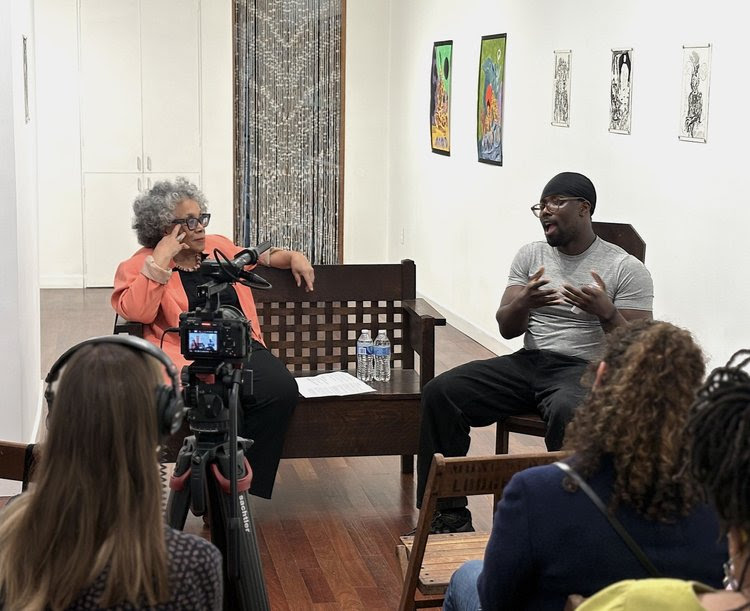
CPM Gallery recently announced that the run of Richard Ayodeji Ikhide's solo exhibition "Tales from Future Past" would be extended to November 22 by appointment. At the opening on September 27, the British-Nigerian artist was interviewed by luminary art historian, curator, and educator Lowery Sims.

The best weekly art openings, events, and calls for entry happening in Baltimore and surrounding areas.

This Week: Soft Gym celebration at the new YNot Lot, screening of "Without Arrows" at The Walters, artist talk with Jaz Erenberg at Loyola University of Maryland, Baltimore Clayworks Winterfest, Rooted in Joy reception at Coppin's Cary Beth Cryor Art Gallery, Arts for Learning celebration, and more!

In "Pandarayuhan: Home is a Memory" Divinagracia Explores Immigration and Identity at Creative Alliance

"One of my biggest intentions with this show was to really spotlight Filipino presence in Baltimore and specifically immigrant lives and journeys.”

Baltimore art news updates from independent & regional media

This week's news includes: Amy Sherald shines brightly in Baltimore, Hilton Carter makes his house a home, Inviting Light returns with a Wickerham & Lomax, John Akomfrah moving image + sound installation opens at the BMA, mayorial portraits unveiled at City Hall, Maryland Film Fest is here, and more