“UMBC allowed me to come here when all of this was a knot of emotion,” Jackson shared with me in an interview. “What was really keeping me up at night, this knot in my chest, was the long-term implications of an absence of shared history for visual artists who rely upon the humanities to pass it on. If we don’t give it away, we don’t get to keep it. We get to keep it because we give it away.” This shared history has been negatively impacted or even purposefully eradicated by continual disinvestments in the arts and humanities in schools and at local, state, and federal levels.
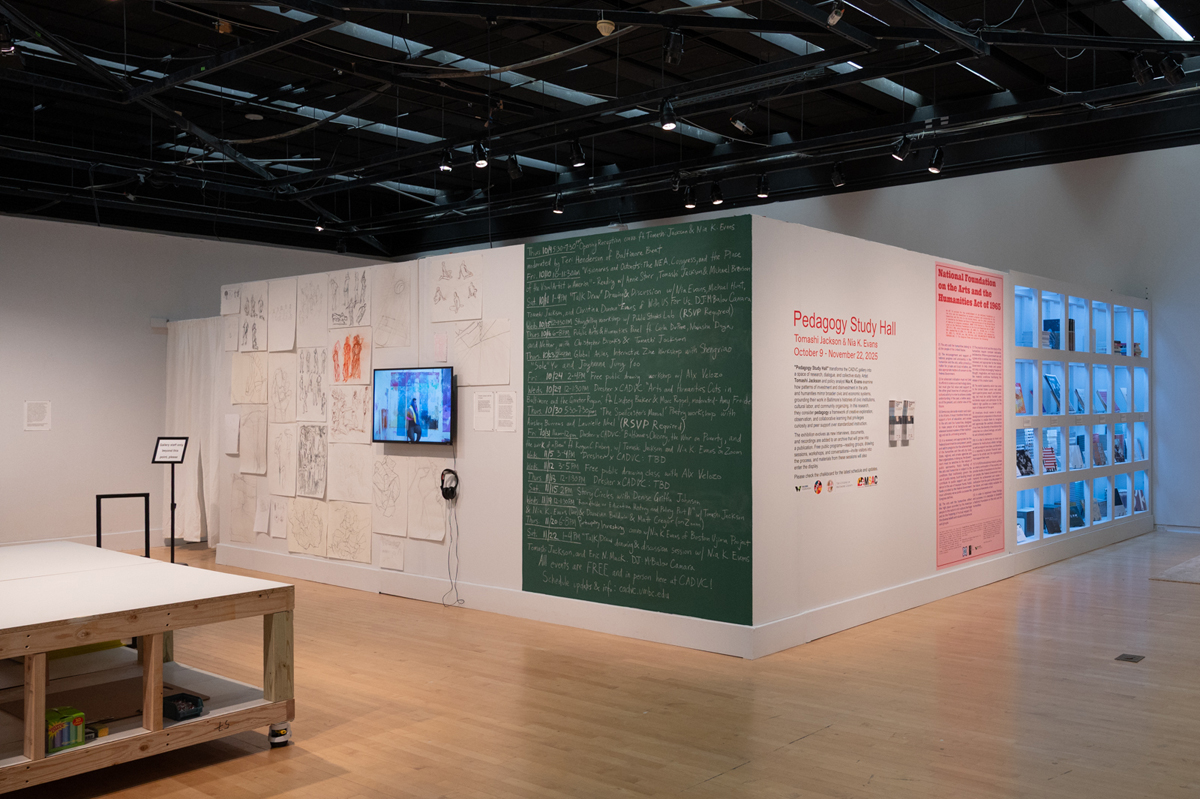
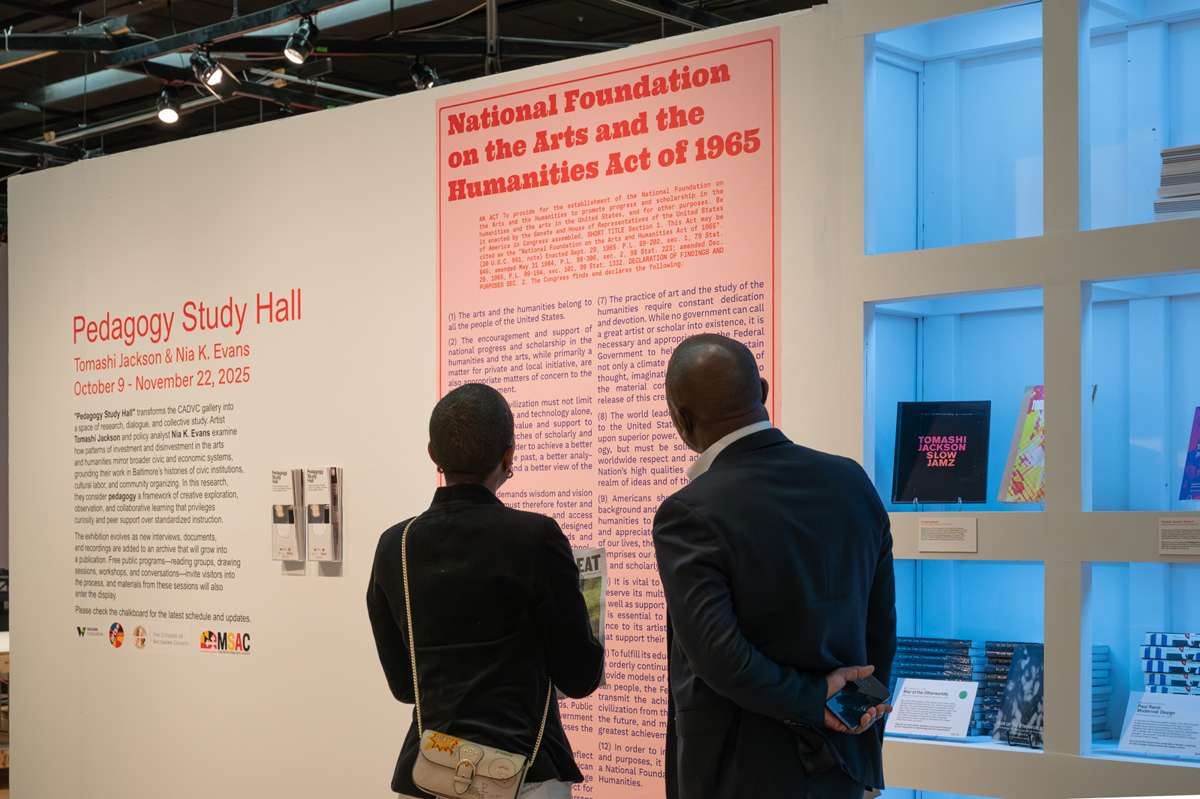
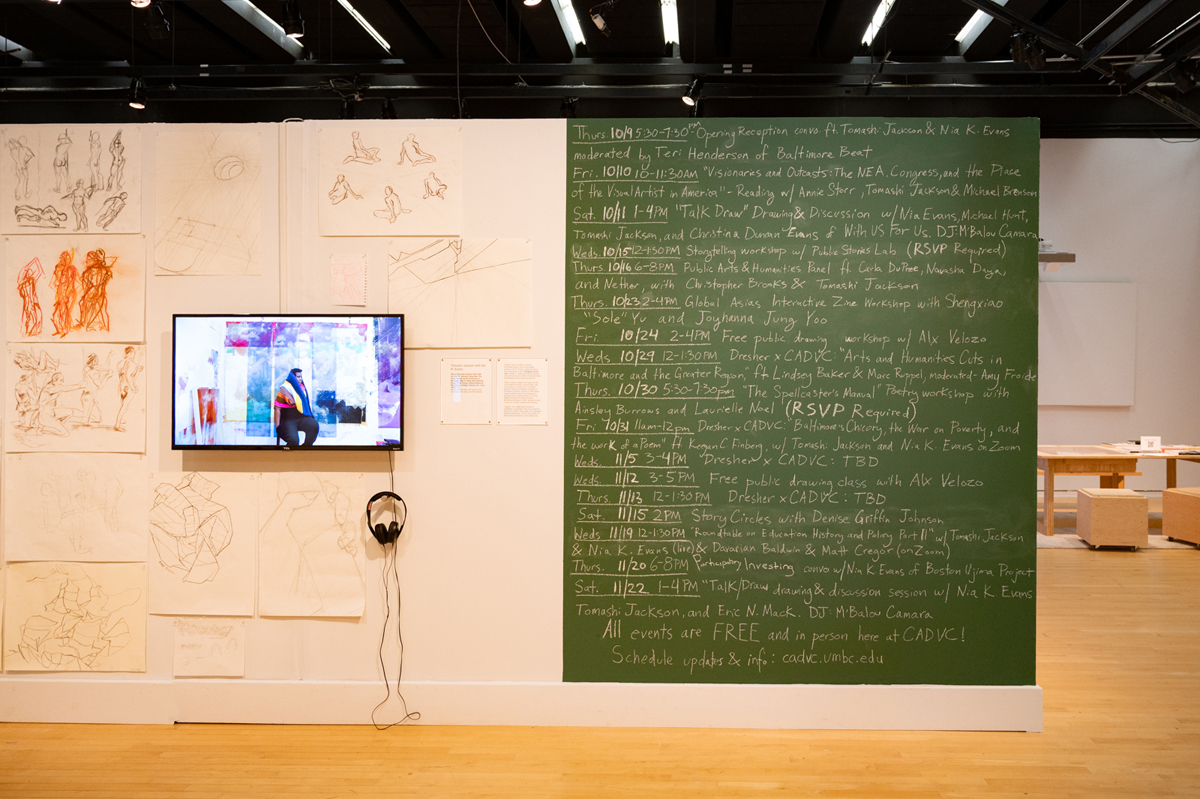
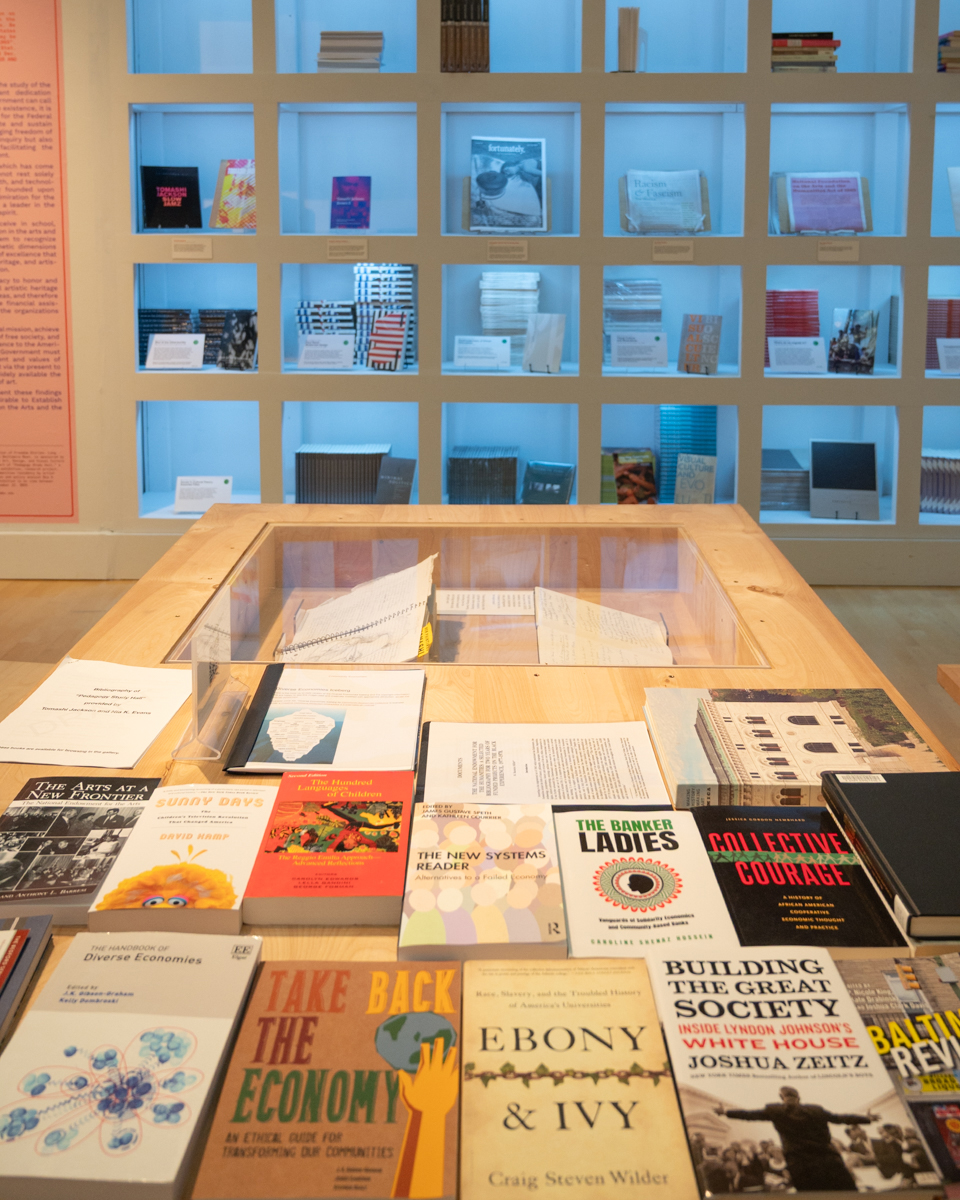
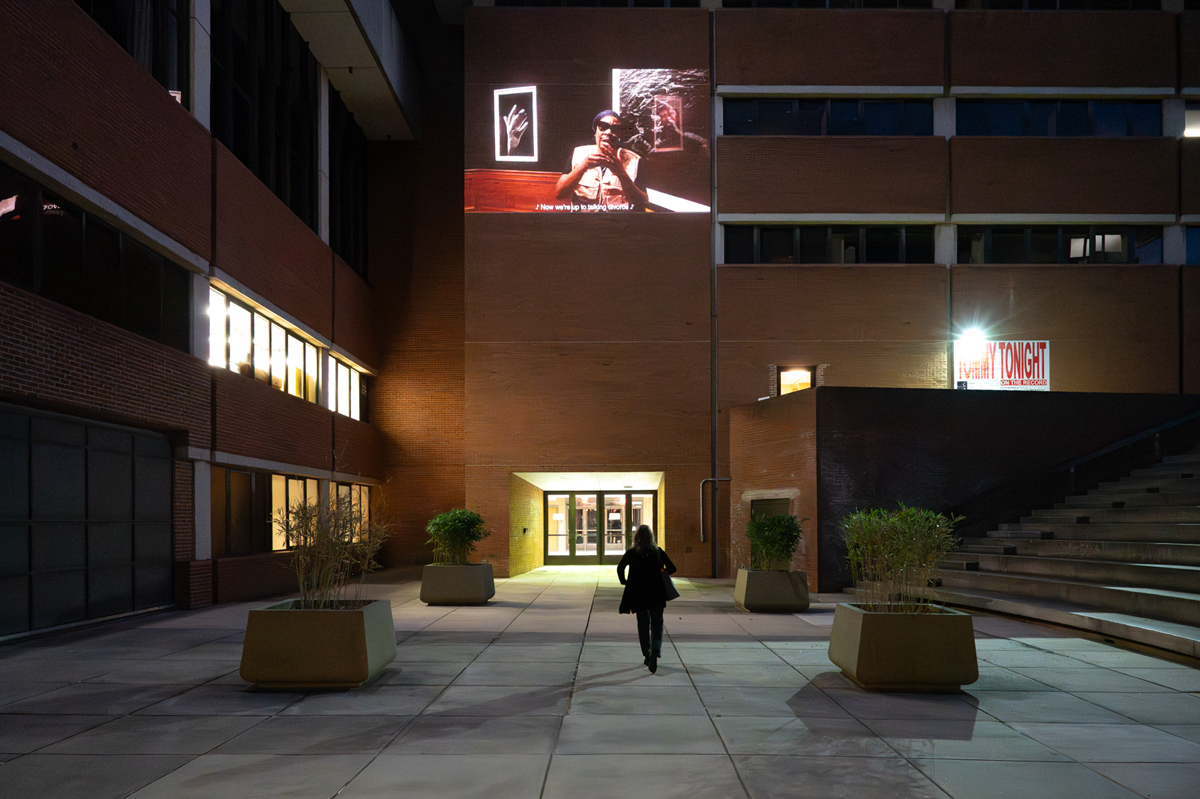
Pedagogy Study Hall provides public access to many of these histories. Gallery visitors can read legislation that affected arts, humanities, and education in a hand-drawn timeline that will accrue data points over the run of the exhibition. They can learn about local histories through video interviews with Baltimore-based cultural leaders. Individuals are also invited to shape history as active participants by engaging in reading discussions, arts workshops, and other educational offerings in community with others.
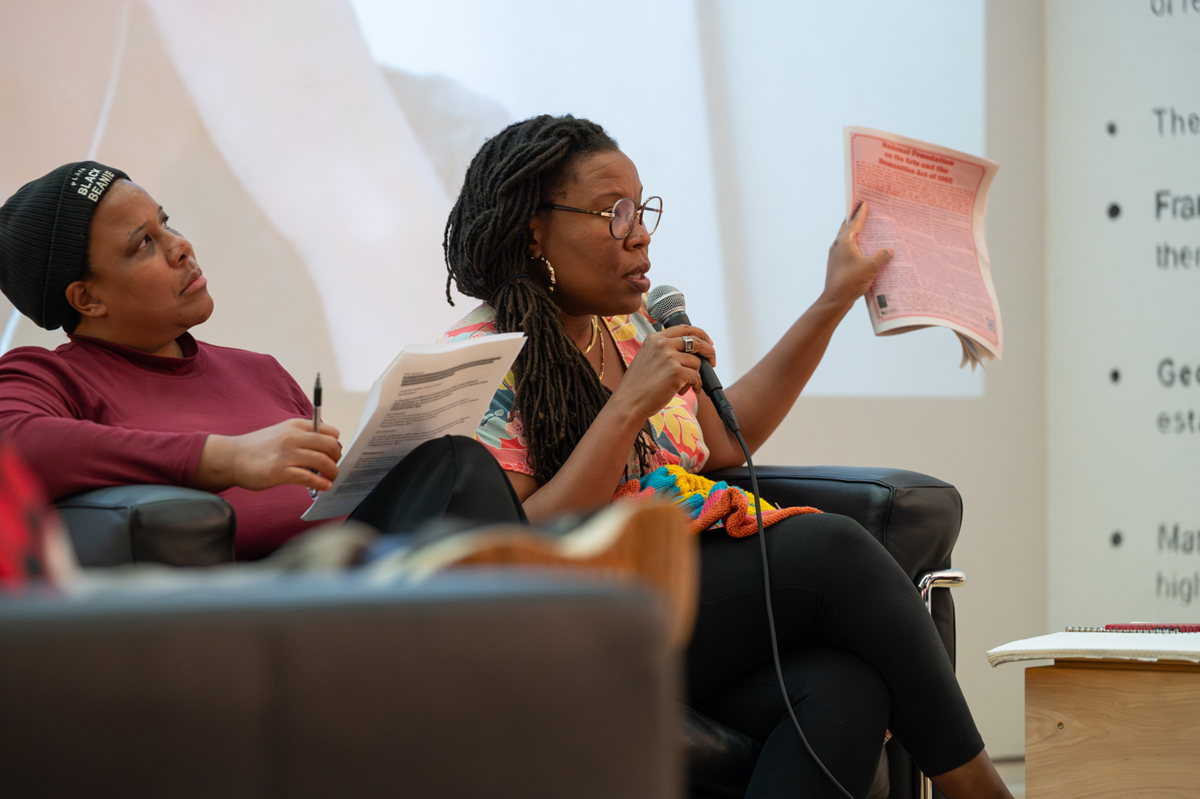
I experienced this multi-dimensional collective learning first hand during a program on October 10, which was focused on the book Visionaries and Outcasts: The NEA, Congress, and the Place of the Visual Artist in America by Michael Brenson. This book focuses on the National Endowment for the Arts’s 30-year fellowship program for visual artists and the public attitudes and political climate that shaped its rise and eventual demise.
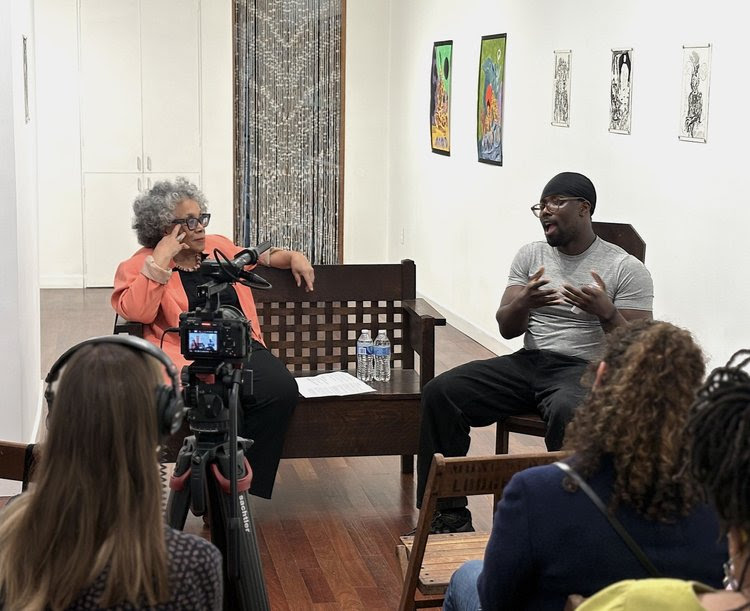
The event brought together Jackson, Evans, Brenson, museum educator Annie Storr, and participants in a program that was both an in-person event and a webinar, part discussion and part read-aloud of the book as several audience members followed along with their own copies. I left the event with a greater understanding of one way that the federal government invested and then disinvested in artists. I also walked away with an admiration for an approach to pedagogy that resonates with my own teaching practice—one that is multi-modal for different types of learners, inclusive of viewpoints from participants as much as invited speakers, and grounded in learning together in real time.
Following the program, Evans explained the benefits of learning collectively. “There’s something to be said for being able to ask other people questions and being able to have thought partners, a soundboard, perhaps have your thoughts and questions reflected by others. I think that’s a piece that’s very important. Because I definitely think the way we conduct life here can be isolating and it can be lonely.” said Evans. The collective learning that takes place through Pedagogy Study Hall is rooted in Jackson and Evans’ definition of pedagogy “not only as the practice of teaching, but also as the systems of decision-making and environments that make learning possible,” as stated on the CADVC website.