Reading

The Piano Lesson: August Wilson Resounds at Everyman Theatre

Previous Story
Article Image

BmoreArt’s Picks: September 16-22

Next Story
Article Image

BmoreArt News: Strong, Bright, Useful & True [...]

In yet another feather in the cap of the Baltimore theatre scene, Everyman Theatre is presenting their entry into the Baltimore August Wilson Celebration of the American Century Cycle.

Commemorating the artistry and brilliance of August Wilson, one of the 20th century’s preeminent playwrights, Baltimore theatres are partnering to present all ten plays that make up the August Wilson Century Cycle over a three year period. Beginning with Gem of the Ocean which is set in the 1900s, (launched at Arena Players in April of 2024), and finishing with Radio Golf set in the 1990s, these plays portray gripping and evolvingly complex depictions of Black American life in consecutive decades.

Collaborating to present each of the shows in historical order is no small feat on the part of the Baltimore theater community; and it marks a rare and exciting opportunity for theatre-goers. Other participating stages include Chesapeake Shakespeare Company, ArtsCentricFells Point Corner Theatre, Spotlighters Theater, Theatre Morgan at Morgan State University, Fells Pointe Corner Theater, Baltimore Center Stage, and Noah Silas Studios/Theater Project.

The Piano Lesson lands at Everyman Theatre as the fourth play in the chronology. Winner of the Pulitzer Prize for Drama in 1987, as well as the 1990 New York Drama Critics’ Circle Award, this play takes place in the 1930s. The plot, like most of the plays in The Cycle, focuses on one household’s relationships as well as how they navigate the times they live in. 

But there are always larger themes with Wilson’s writings. Presented with humor, pathos, bombast and melancholia, his characters lay bare their desires and disappointments, hopes and expectations. Topics like the importance of a family’s legacies and the importance of sentimental values come face to face, with one sibling’s need to let go of the past in order to realize his future, while the other sees the physical presence of the family’s history—the piano inherited from the previous generation—as more important to hold on to, rather than having it be sold off for the money it can bring. 
 

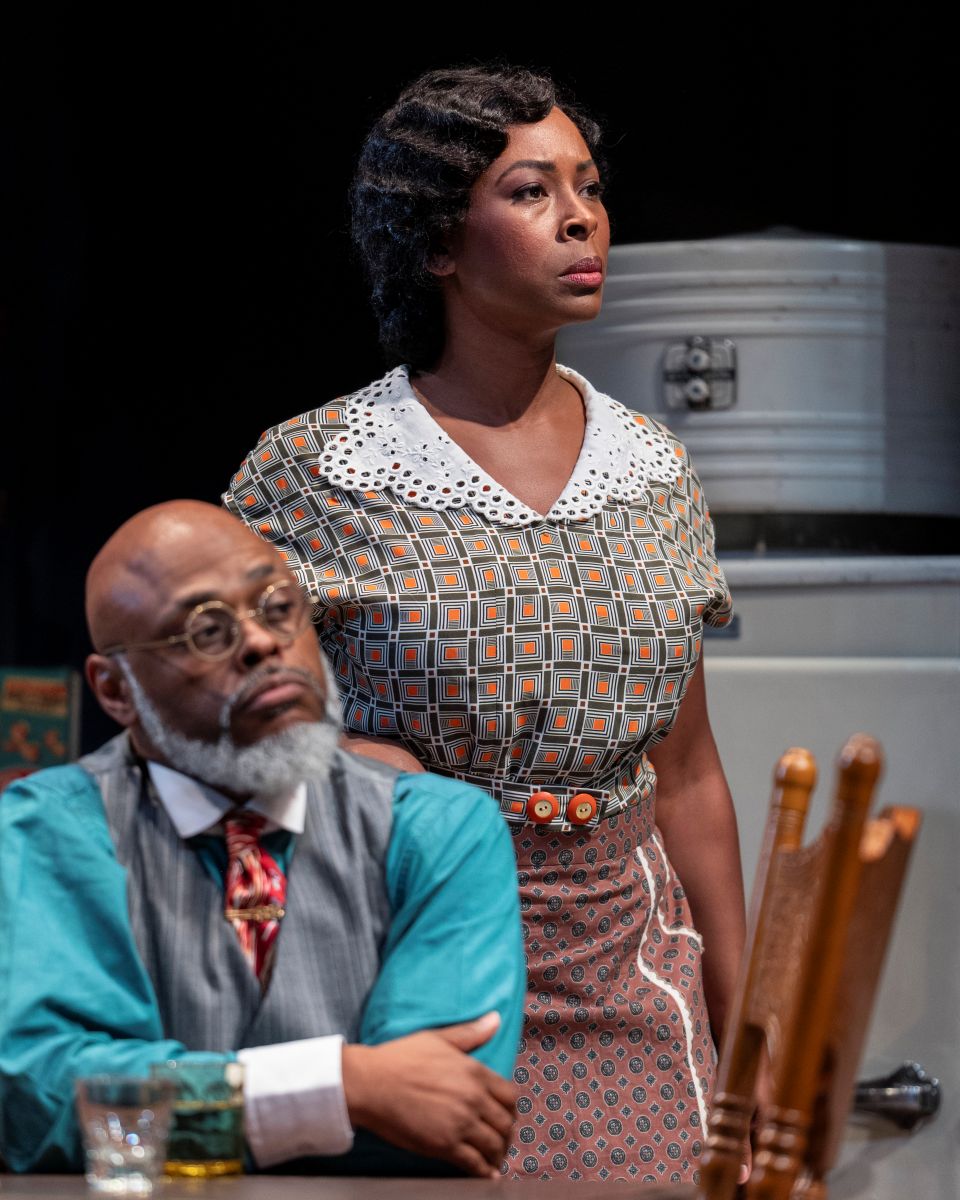
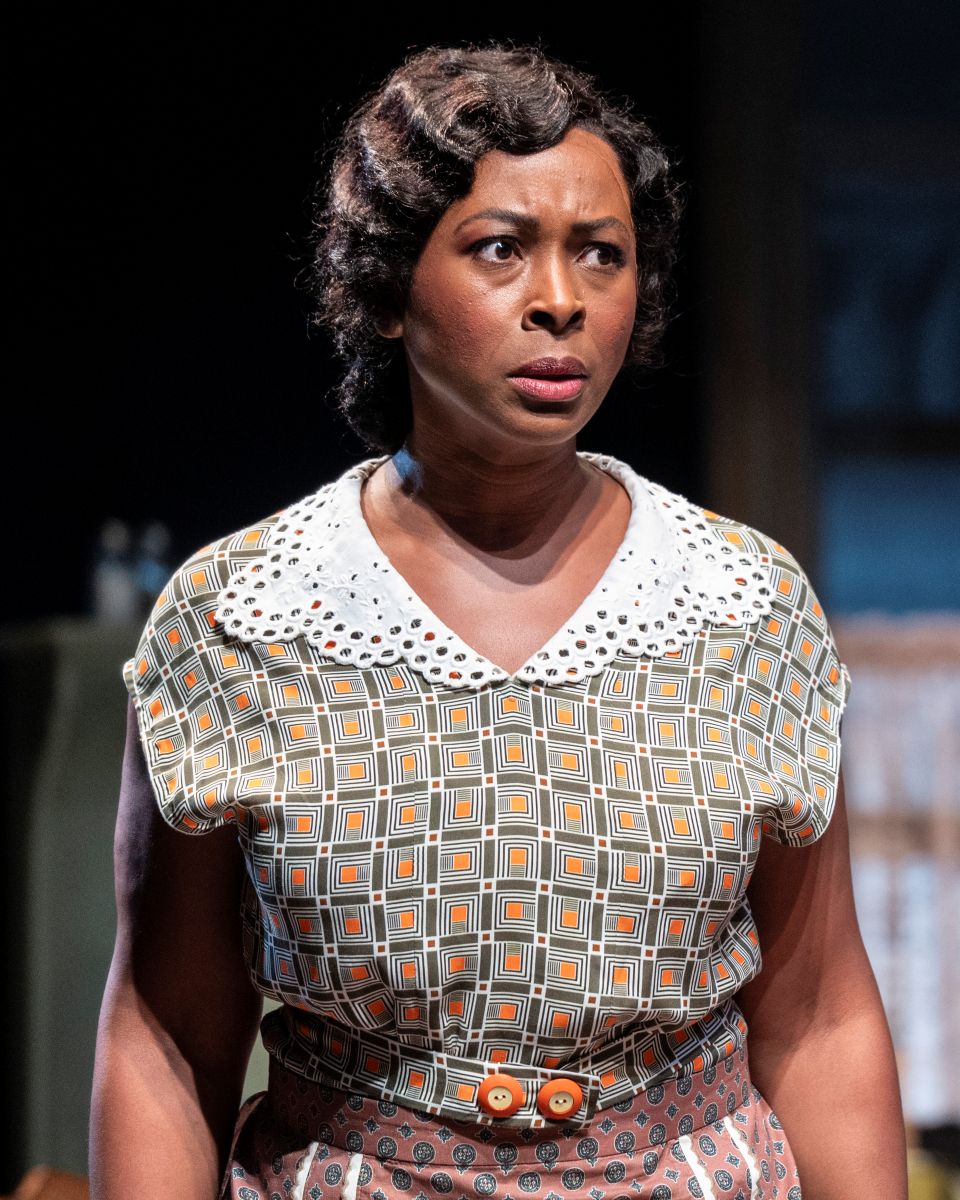
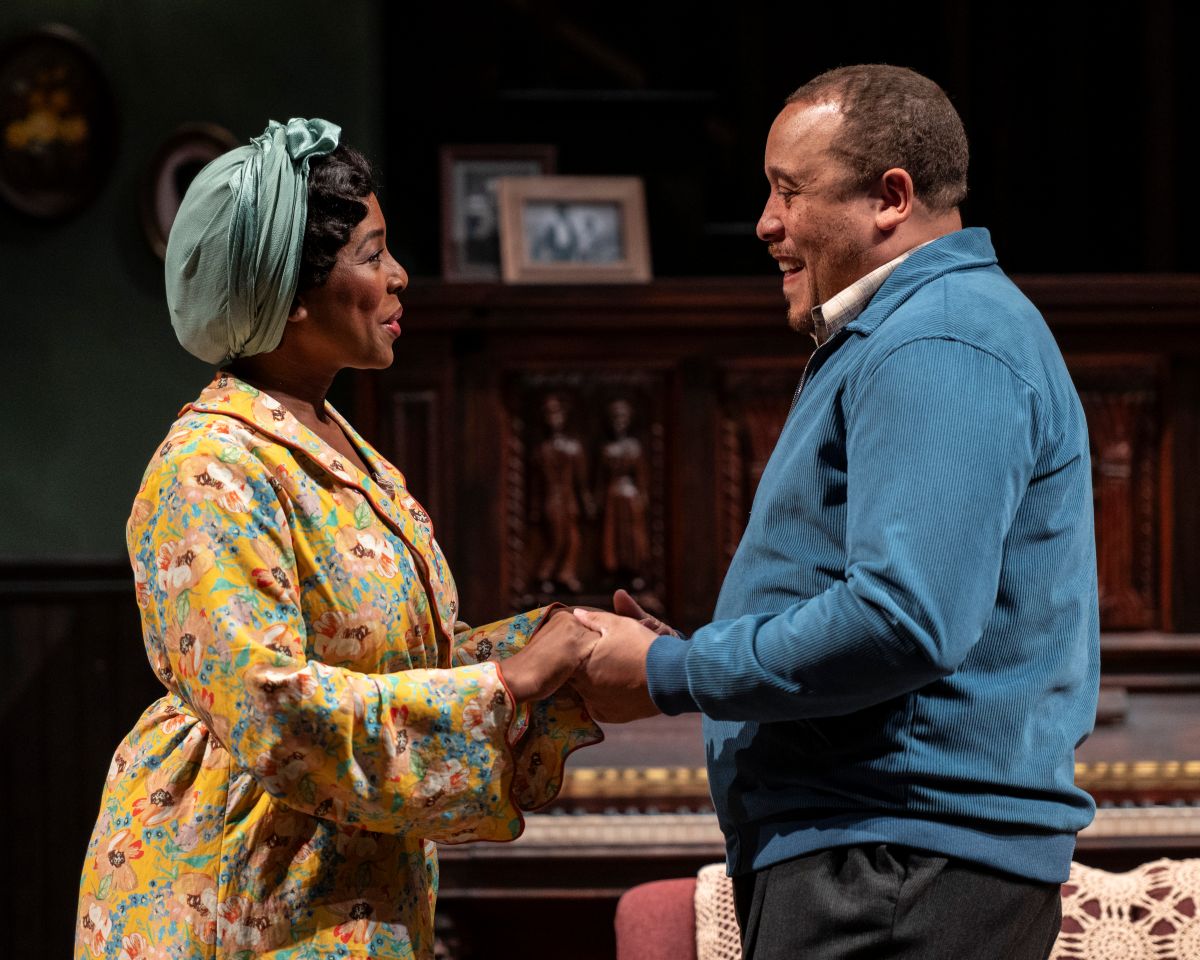
(left to right) KenYatta Rogers as Wining Boy and Resident Company Member-Chinai Routté as Berniece
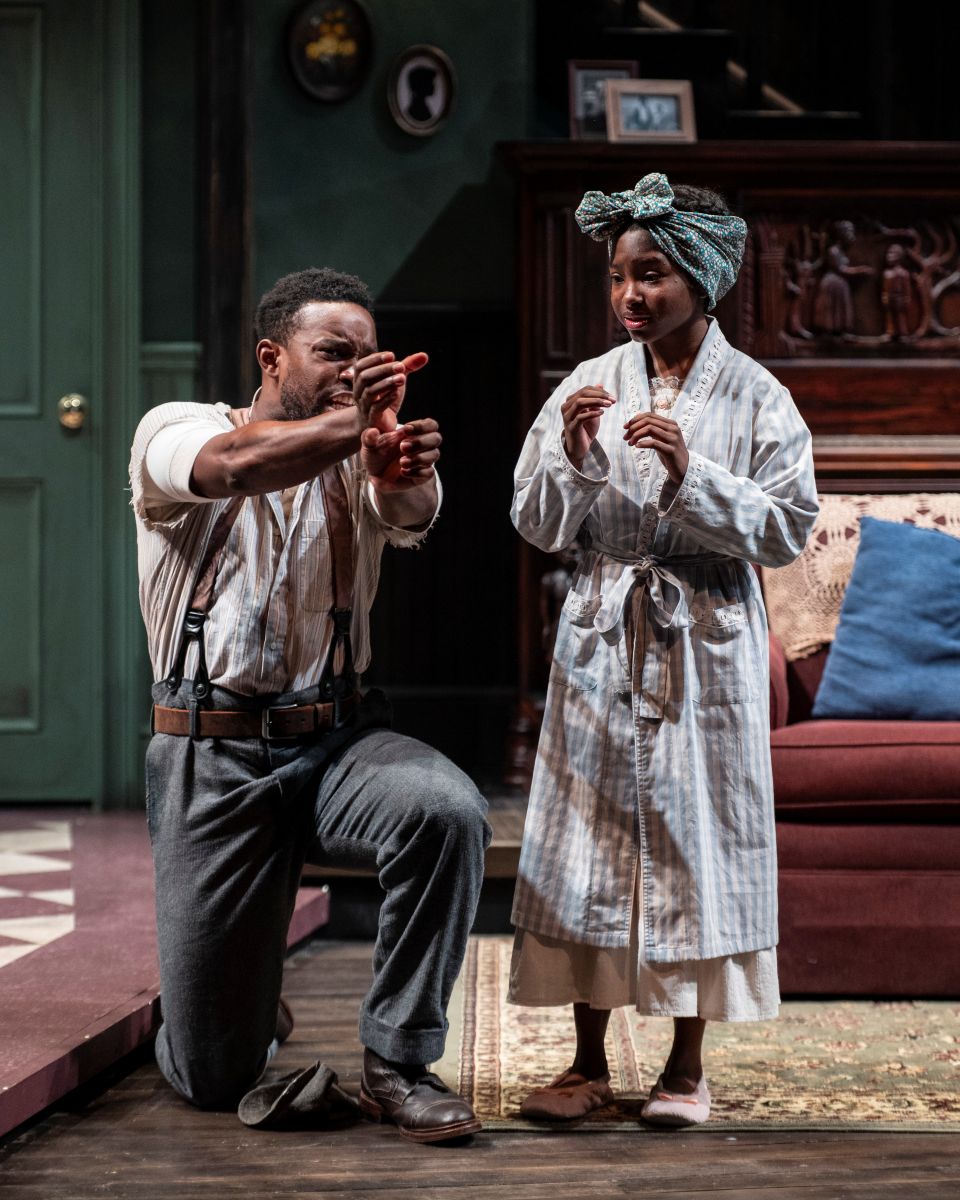
Left to right: RJ Brown as Boy Willie and Payton Crosier as Maretha
Left to right, KenYatta Rogers as Wining Boy and Resident Company Member-Chinai Routté as Berniece

Widowed Berniece and her daughter Maretha live with Berniece’s uncle, Doaker, in Pittsburgh circa 1936 in a modest house, eking out a living ‘up North’, having migrated from Mississippi. When Berniece’s brother, Boy Willie, shows up at the house unexpectedly, toting a truckload of watermelons of dubious ownership along with his best friend, the simple Lymon, chaos is introduced into the otherwise calm household. 

At the center of the controversy is Boy Willie’s determination to sell the family piano, a beautifully hand carved upright with scenes of the family’s past carved into the wood. The piano becomes the focal point of the story—Berniece’s determination that the piano will stay with the family versus Boy Willie’s equally adamant stance that it will be sold to pay for a plot of land on the original farm where his family had been slaves. Add into the mix the specter of the last member of the Sutter family—the family that had enslaved the Charles ancestors and still owns the land where Boy Willie desperately hopes to start his farm. Which one wins, legacy or progress? The play ends with a dramatic climax that had me on the edge of my seat. 


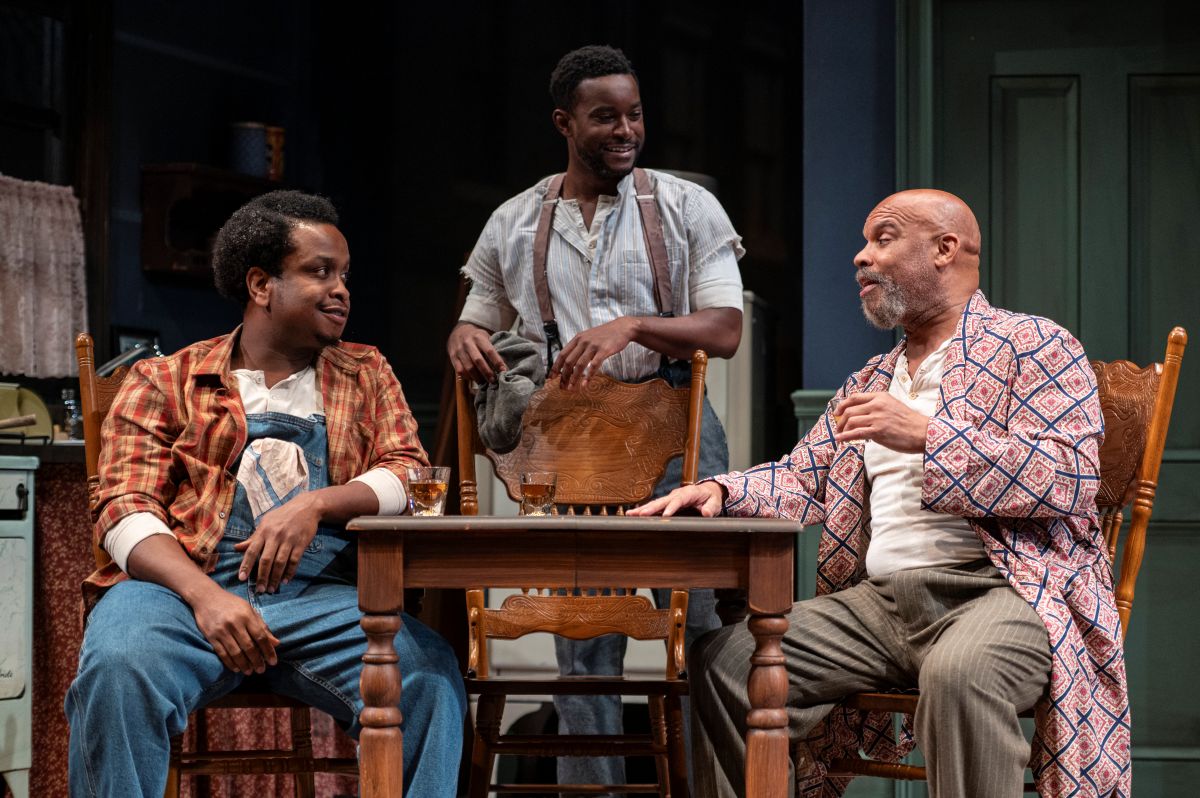
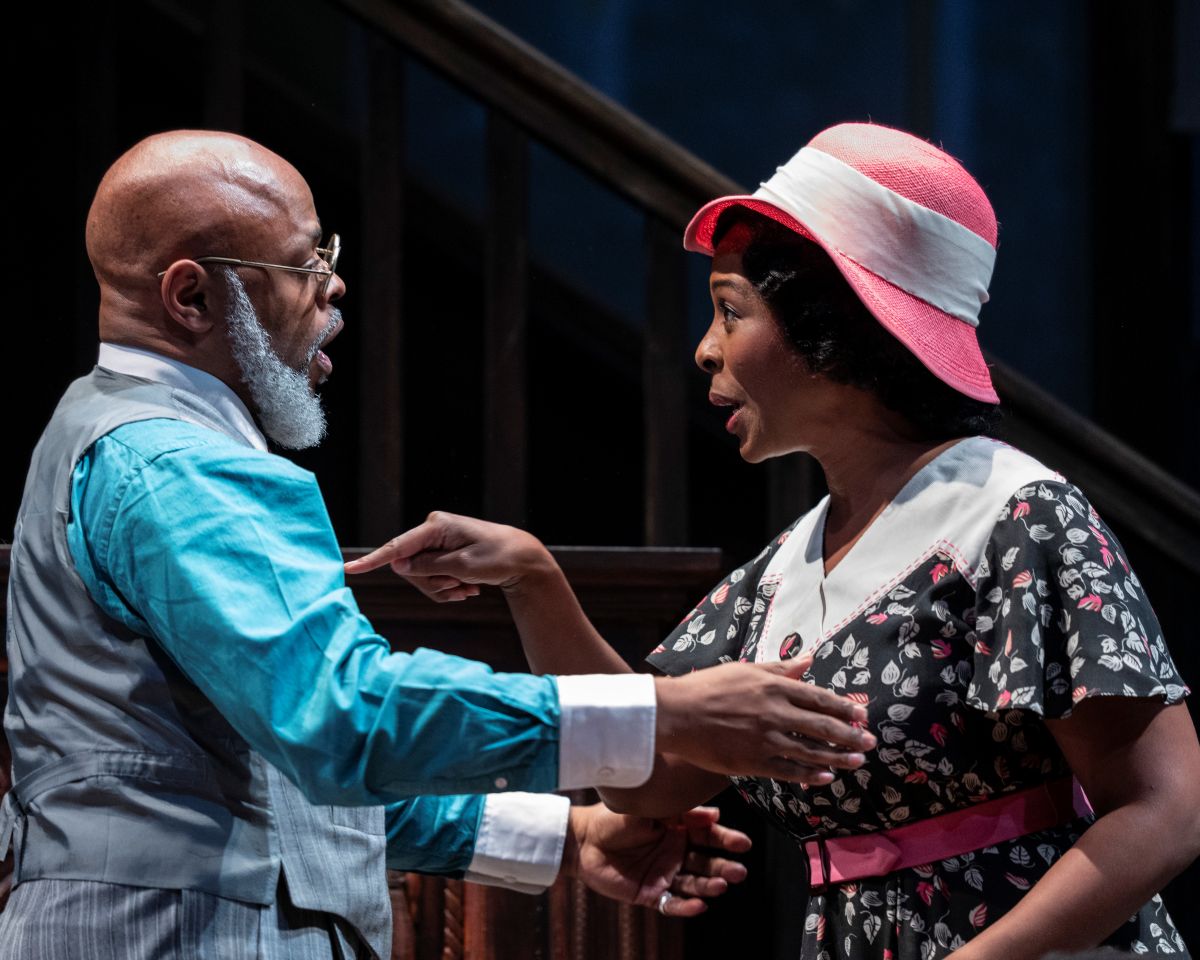
Left to right: Louis E. Davis as Lymon, RJ Brown as Boy Willie, and Jefferson A Russell as Doaker
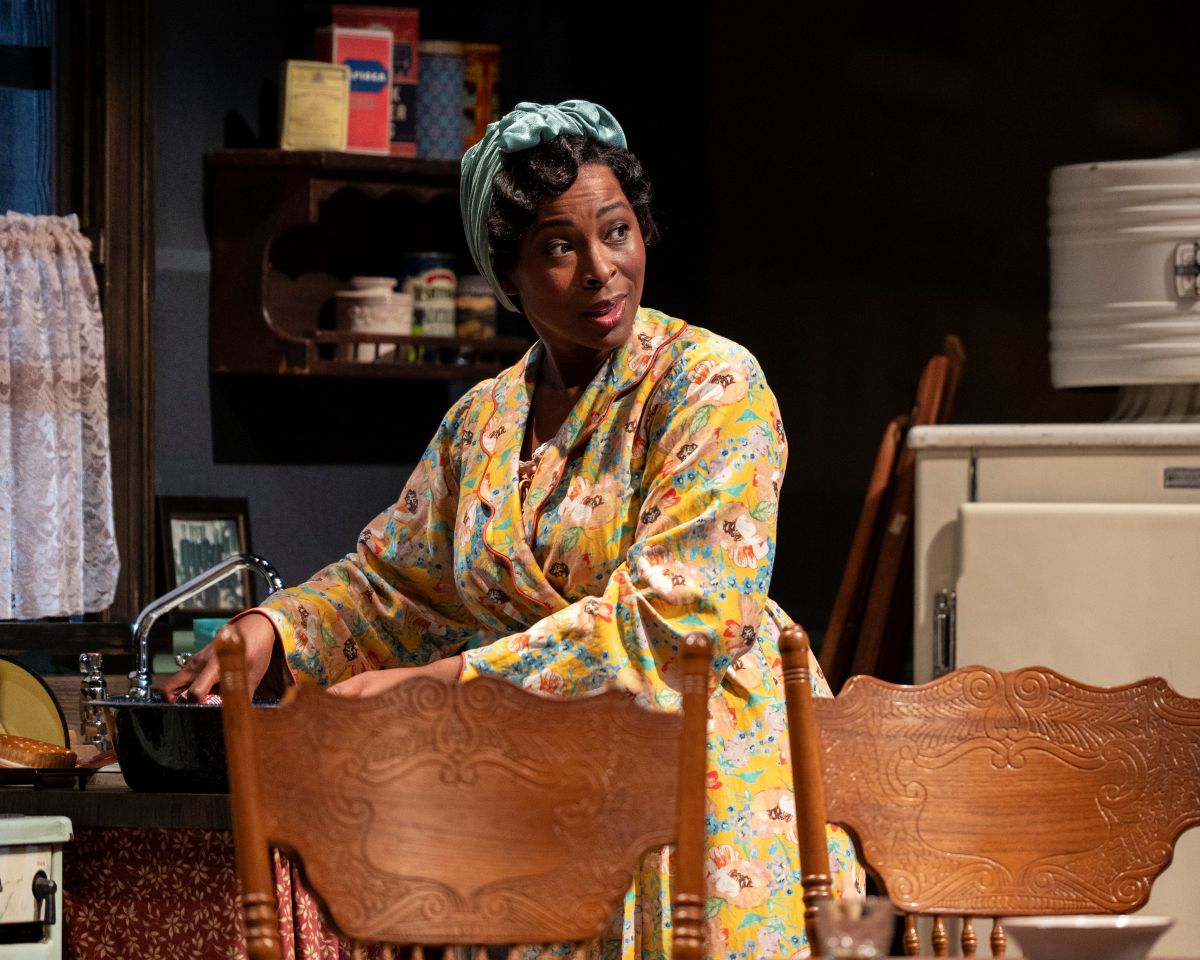
Resident Company Member -Chinai Routté as Berniece

One of the most satisfying aspects of any good play is the writer’s ability to capture dialogue that rings true, and The Piano Lesson does that as well as any piece I’ve ever seen. Director Paige Hernandez has designed the action on the stage so well that it flows almost seamlessly, except where the purpose is better served by jarring entrances and abrupt exits. As with any highly dramatic piece, it is the director’s responsibility to ensure that the actors stay true to the character and the play without going over the top or underplaying emotion, and Hernandez nails the task. 

Set Designer Daniel Ettinger does a terrific job with the set, so well that I want to see the play again to catch more little nuances of his design, like the molding on top of the staircase suggesting the wall, the stairway to the second floor, and the little table and lamp at the top of the stairs. Outstanding. 

Lighting Designer Alberto Segarra nicely illuminates the set and the action and contributes much to the final scene—good lighting can make or break a scene and there was nary a false flicker to this one. David Burdick appears to be a stickler for expertly capturing the tone of the 30s costumes. From hats to shoes, each character’s outfits are styled so well that I wanted to own them—men’s, women’s, hell, I don’t care. Loved them! And bless the restraint shown by Denise O’Brien for not putting the guys in those silly period looking wigs that are such a distraction. Of course, the two women and the child had ‘do’s that were perfect for the times. 

Resident Company Member Chinai Routté as Berniece
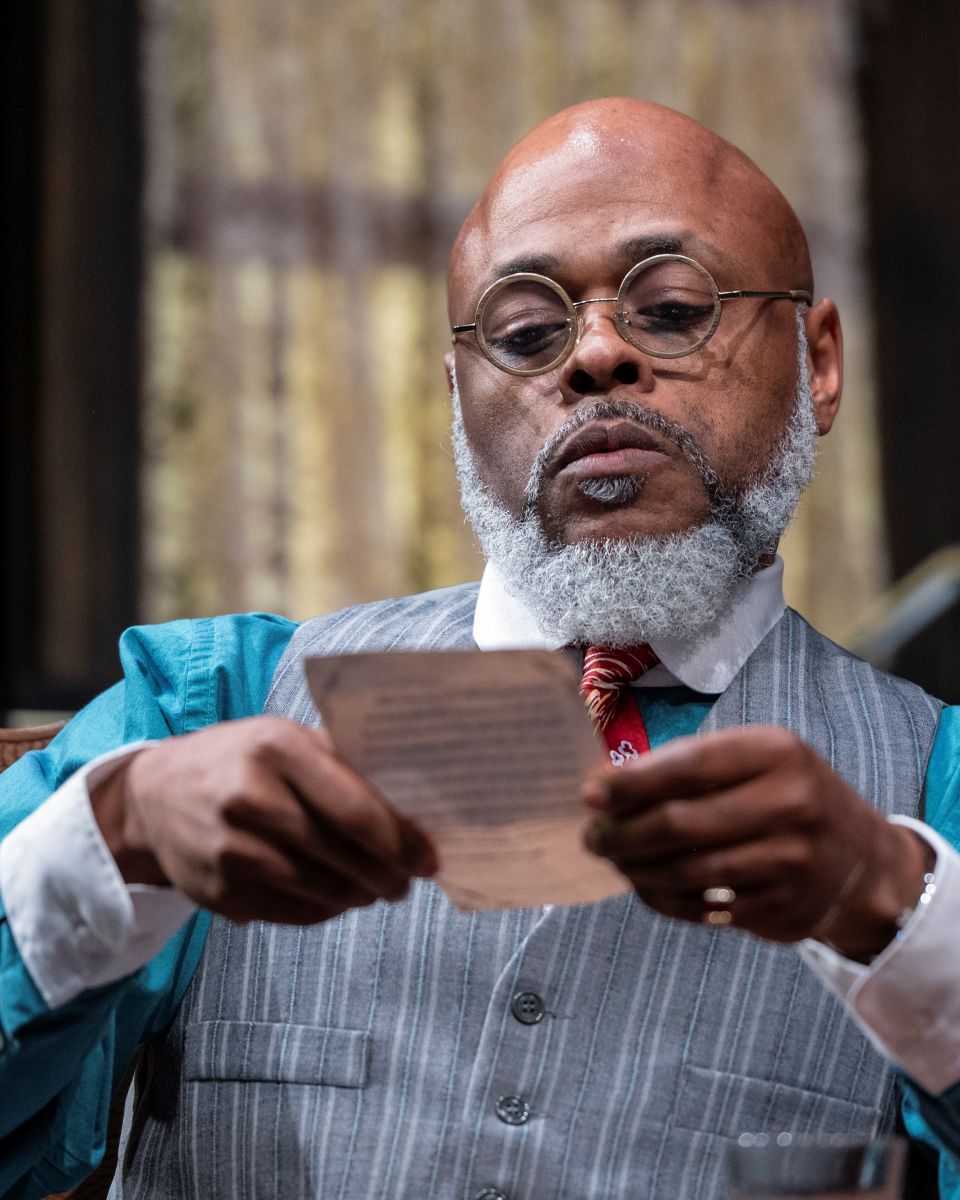
KenYatta Rogers as Wining Boy
RJ Brown as Boy Willie
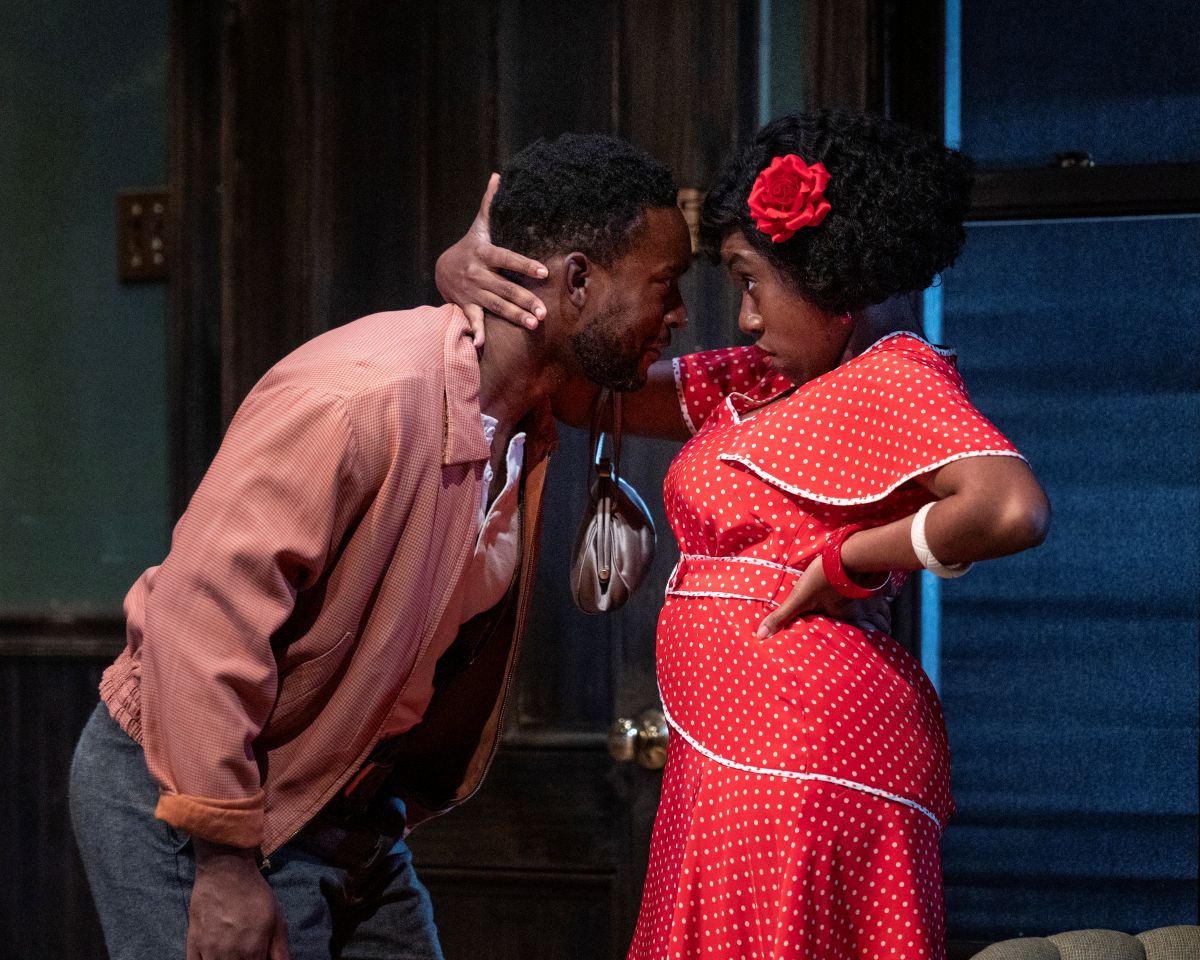
Left to right, RJ Brown as Boy Willie and Mecca Verdell as Grace

As is to be expected from one of the most preeminent theatres in the city, the ensemble on stage is of the highest quality. Payton Crosier and Mecca Rogers share the role of young Maretha. Rogers performed at the matinee I attended. She was well cast as an 11-year-old little girl, complete with adorable pigtails.

Speaking of Meccas—Mecca Verdell is hilarious as Grace, all bubbles and spirit and with a great physicality for bouncing around on the couch and teetering on those high heels like a pro. 

As Mediator-In-Chief of the Charles family, Jefferson A. Russell’s Doaker exudes a quiet authority. Largely trying to stay out of the volatile pathways of his warring niece and nephew, his efforts to quiet the waters anchor much of the action. Likewise, Mack Leamon’s Avery, the preacher and paramour of Berniece, is a focused actor with some serious chops. His facial expressions are kept largely in check—but when he pleads his case to persuade Berniece to marry him, there is a slightly harder and unexpected edge to him that carries the scene. KenYatta Rogers’ piano playing Wining Boy is full of bluster and bravado. His drunken tirade is spot-on in the second act. I’m a fan of Louis E. Davis and the winsome innocence he brings to the part of Lymon is squarely in his wheelhouse. 

But the drama and the tension and fireworks on stage are largely split between the two main players, RJ Brown as the volatile Boy Willie and Chinai Routté as the indomitable Berniece. These two spar like champions, feinting and bobbing and weaving around each other until they come close to landing blows. The sheer passion they each display is an impressive thing to behold and when the play reaches its conclusion, the two combatants, both bloodied but unbowed, left me drained.

For me, aside from the topics Wilson chooses and the colorful characters in each of his plays that I’ve seen and written about, it’s the playwright’s choice of language. Writing largely in the familiar vernacular of Black families from a social stratum that I am very familiar with, each line and conversation holds a bit of my past, reminding me of my roots as a Black American. But the themes are actually universal and totally relatable, thanks to the skills of August Wilson. 

I am truly looking forward to seeing the next entries in this great cycle of theatre. And how lucky we are to live in Baltimore, a city that knows great theatre and rises to its occasion.

The Piano Lesson runs August 31- September 28th, 2025 at Everyman Theatre, 315 W Fayette St, Baltimore, MD 21201, for tickets and information, visit Everyman Theatre’s website.

Keep updated on the schedule and venues for the Baltimore August Wilson Celebration of the American Century Cycle HERE.

Photos courtesy of Teresa Castracane Photography

Related Stories
"You, Me, The Reign" is a Soulful Album with Decades of Influences but Very Much of Baltimore 2025


Where Archive Meets Queer Magic

For me, going to the archives is a mental health and wellness practice. Seeing queer memories feels really healing.

A Photo Essay of Baltimore's Free Underground Music Festival

This October 10-12th, Subscape showcased experimental and genre-defying music from punk and noise to electronic and indie rock with a strong emphasis on local and regional talent. 

How a Silly Idea Evolved into the City's Beloved Competition

"In 2025, we were proud to return for the second straight year as presenting sponsor of the Kinetic Sculpture Race Powered by PNC," says PNC Regional President for Greater Maryland Laura Gamble.