Reading

On the Level: Imani Haynes

Previous Story
Article Image

BmoreArt’s Picks: August 19-25

Next Story
Article Image

BmoreArt News: Dave Herman, Betty Cooke, Opera Ba [...]

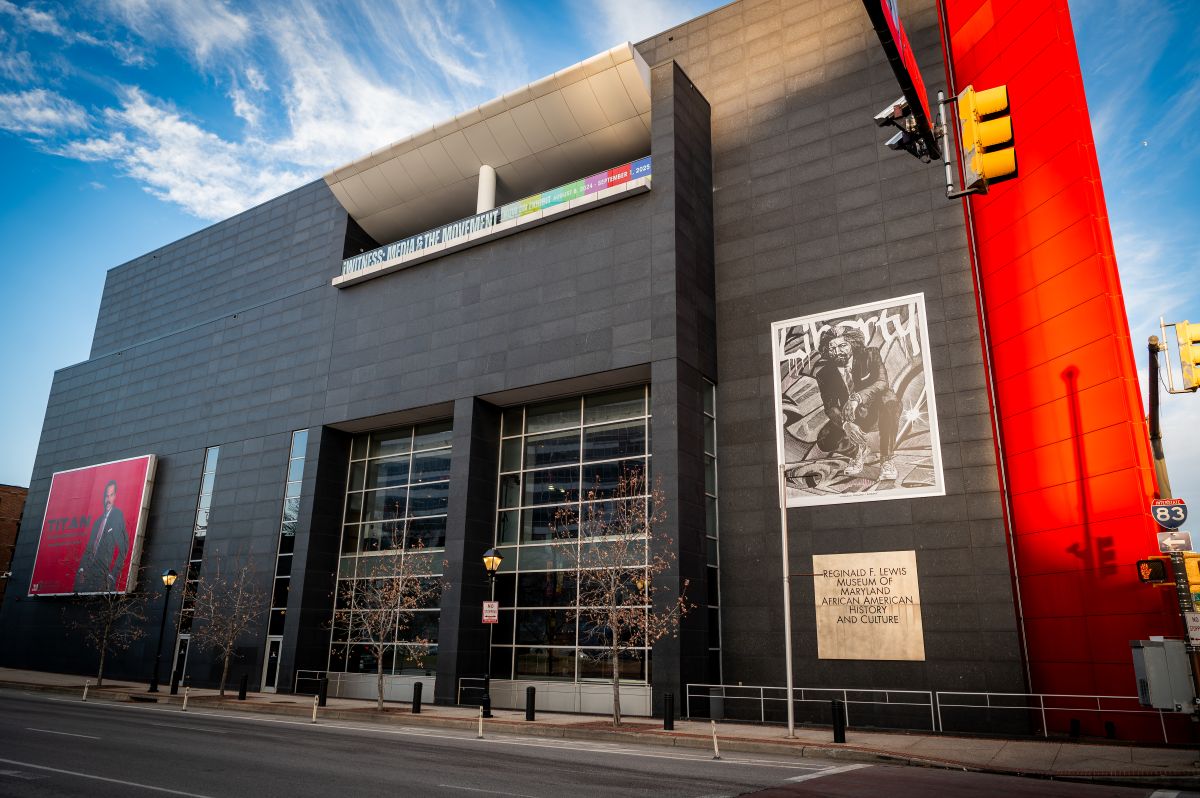
It was a hot summer day, but oddly not humid—a rare gift in Baltimore. The sky was clear, the breeze just enough to lift the weight of the sun. As I approached the Reginald F. Lewis Museum, its architecture struck me immediately: bold lines of glass and stone, the kind of building that feels both grounded and aspirational. The structure signals dignity, presence, and gravity, balanced by a vibrant, offset plane of red adding warmth to the monochromatic facade.

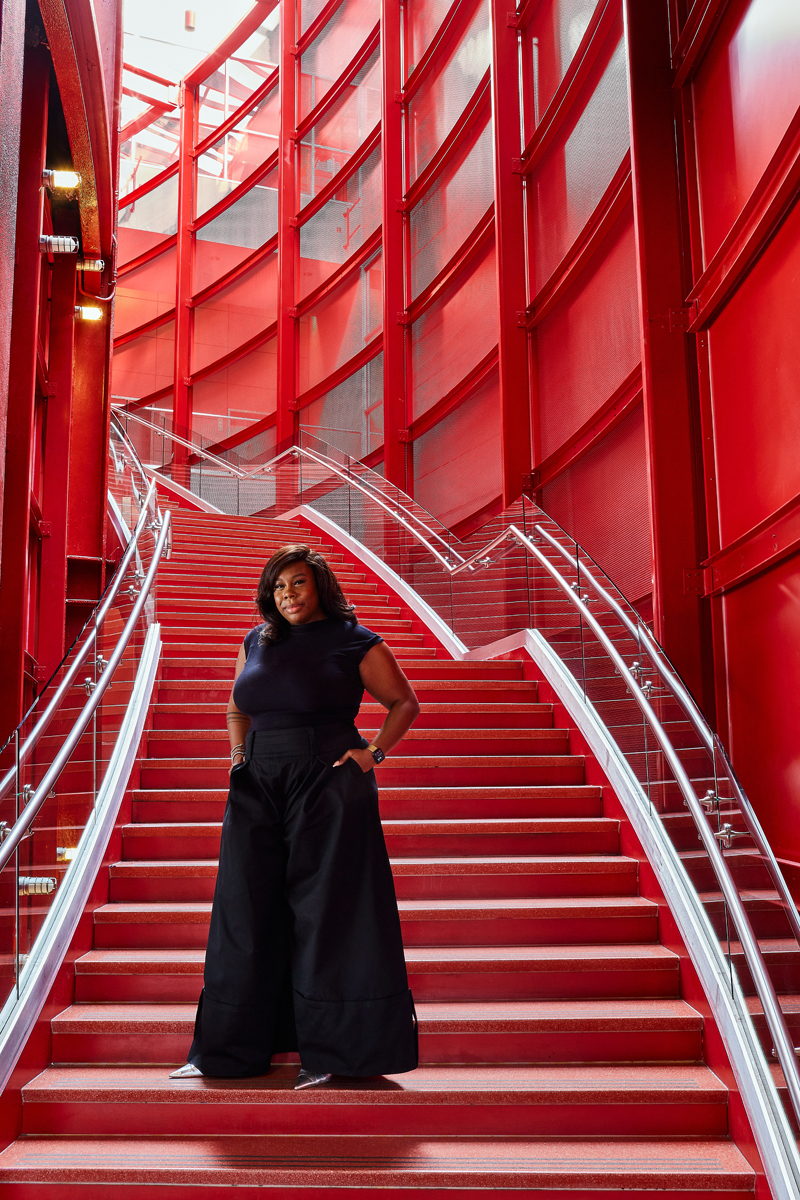
That very balance of qualities was reflected in Imani Haynes, the museum’s curator.

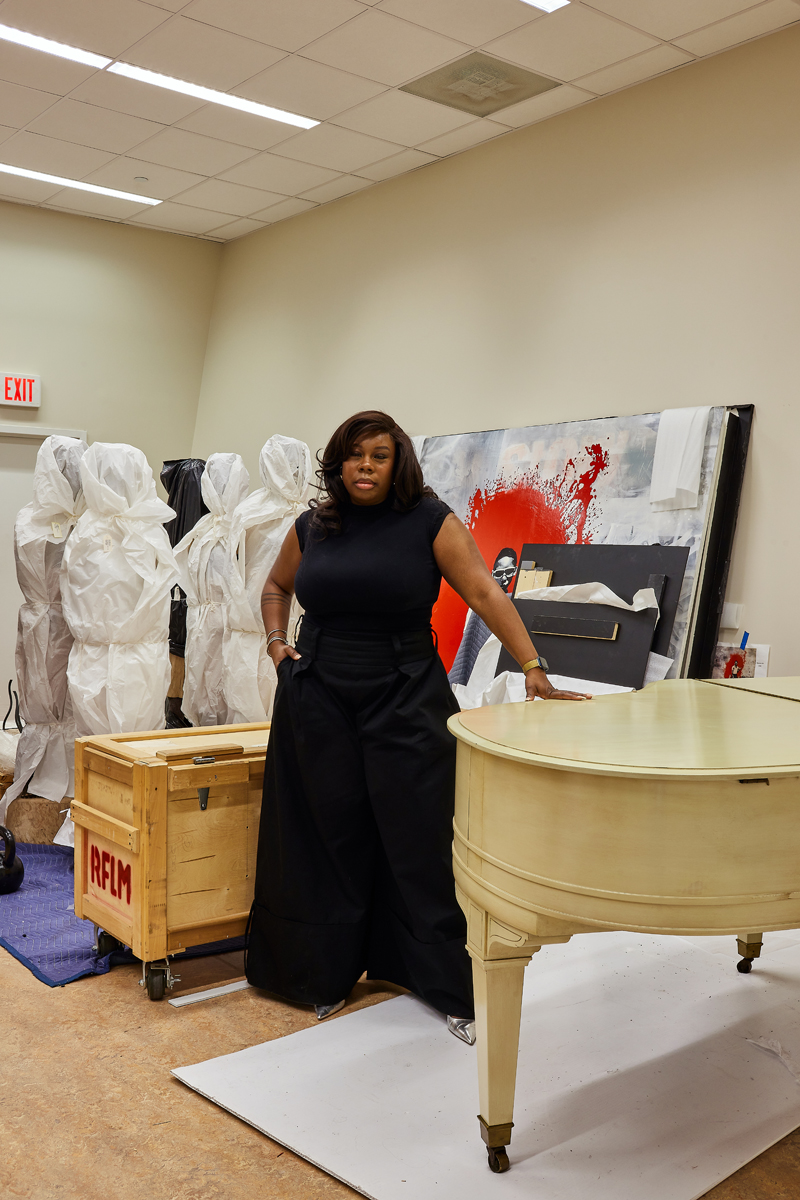
When I first met Haynes, I hadn’t anticipated the kind of tour that would unfold—it was a vivid, immersive, kinetic experience. We walked through exhibits filled with color, sound, the weight of history, and reverence. Each floor delved into a different topic, designed in such a way as to immerse the visitor in the stories presented. And at one point, in Collections storage, I had the chance to reach out and touch the keys of Billie Holiday’s piano.

Haynes has been instrumental in shaping the Lewis as a living, breathing cultural force—and not just for its 20th anniversary this year. Her approach to exhibition-making is deeply interactive and intuitive, blending historical gravity with contemporary resonance. There is a reverence in her tone when she speaks of the objects and the stories they hold. And there’s also joy. She curates with intention, with heart, and with a clear-eyed sense of responsibility to community, history, and future.

The Reginald F. Lewis Museum of Maryland African American History and Culture
As a child, museums were my happy place.
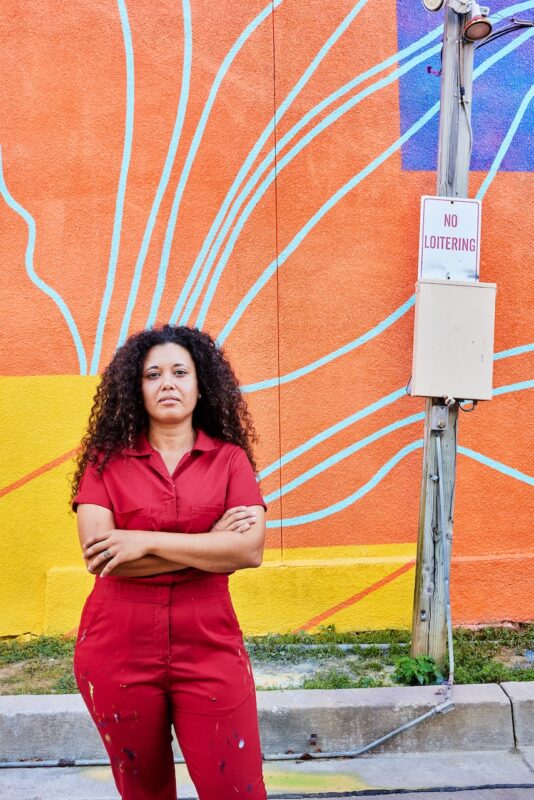
Imani Haynes

We began our walk in the iWITNESS: Media & the Movement exhibition, which explores how Black media shaped the civil rights movement. The gallery pulses with sound and memory—a transistor radio, the glossy pages of Jet, footage from Baltimore streets, the textures and furnishings of a mid-century living room. Haynes pointed out Reverend Dr. Pauli Murray’s book and signature, a commemorative coin featuring Malcolm X, and a voting demonstration machine once used by Baltimore City Council Member Victorine Adams to empower new voters.

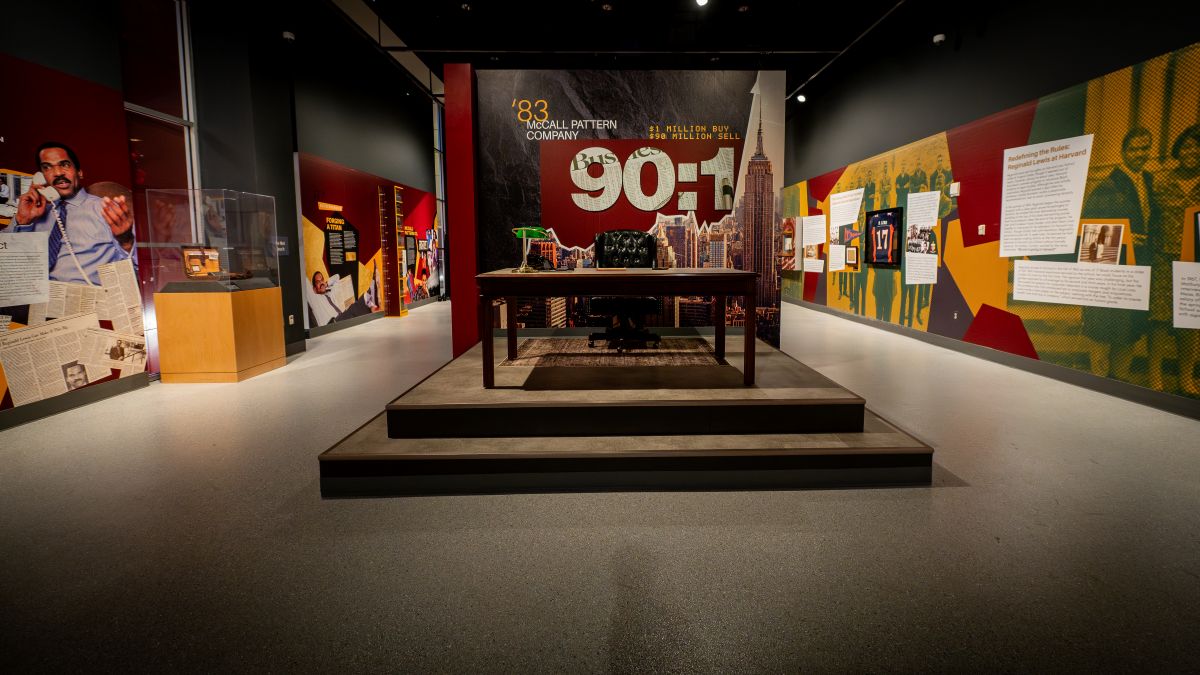
In the DeSousa gallery on the second floor, TITAN: The life and legacy of Reginald F. Lewis, which honors the life and legacy of the museum’s namesake, we are presented with items from his life—from his early education to the impossibly tall stack of legal books, the amassing of knowledge that formed the basis of Lewis’ career. One diorama, particularly immersive, features a replica of his desk, with his actual pen, calculator, schedule, and handwriting. There are photos, business cards, and family letters. His briefcase. There’s even a replica of his corner office on Wall Street.

It’s not just a story of business; it’s a story of being.

It isn’t just the objects that stay with you. It’s the curation of feeling. Each section is designed to transport visitors—not just to teach, but to let them live within the moment. From a reproduction of a 1960s living room to a working rotary phone in iWITNESS, to a mural from the inside of Reginald F. Lewis’s private jet in TITAN, Haynes and her team lean into full-bodied storytelling. Even color palettes and textures are considered with symbolic weight.

In every corner of our walkthrough, Imani Haynes emphasized process and care. One of the most powerful and sobering installations we encountered was in the museum’s newly updated permanent gallery, featuring a collaboration with the Maryland Lynching Memorial Project. A reverent display of soil samples from sites of racial terror killings is paired with the names and stories of those murdered. It is unsettling—and deliberately so—but also honors the victims in a way that feels reverential, while not flinching from the harsh truth of not just racism, but of systemic and vigilante extermination of Black people woven into America’s history. It invites reflection and reckoning in equal measure.

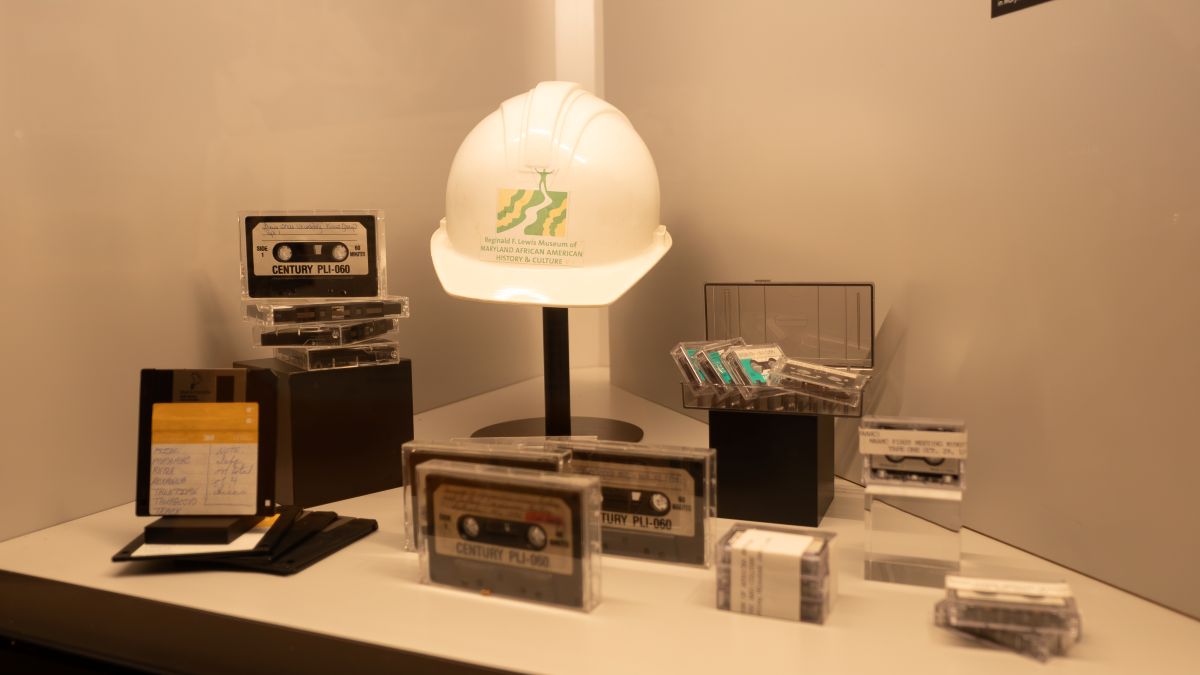
Before I left, Haynes introduced me to her team—a group of extremely talented individuals—and brought me into the Collections area, where we peered past boxed art works and shelves full of items of Black history… and touched the ivory keys of Billie Holiday’s piano.

In that quiet room at the very top of the Lewis, I saw what makes Haynes such a force: her ability to bridge the tangible and the intangible, to guide people not just through space, but through time.

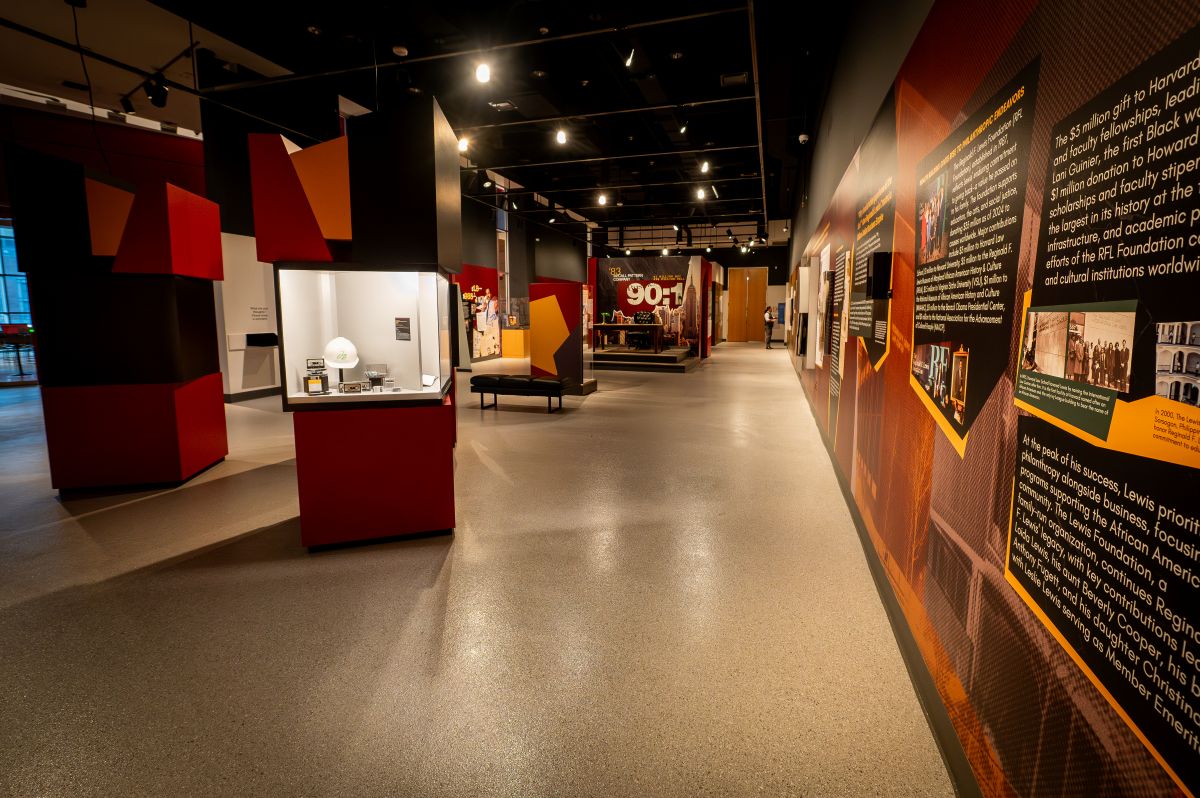
Installation view of TITAN exhibit at the Reginald F. Lewis Museum
Installation view of TITAN

First Exhibit Curated: It may not be the most academic answer, but I believe the first exhibit I ever curated was my childhood bedroom. From the layout of posters featuring my favorite musical artists to the intentional color choices on the walls, I treated the space as a reflection of my identity. Every design decision had meaning—each object told a story. In hindsight, it was my earliest exercise in visual storytelling, spatial planning, and thematic expression.

Current Exhibit/Project: TITAN: The Legacy of Reginald F. Lewis

Curatorial Philosophy: My curatorial practice is rooted in stewardship—of stories, objects, memory, and community. I believe exhibitions should be spaces of care, where Black histories and futures are preserved with intention and shared with purpose. I approach each project as an act of cultural responsibility, centering intergenerational voices and building systems that make space for collaboration, reflection, and imagination. Through immersive storytelling and thoughtful interpretation, I work to ensure that what we inherit—and what we create—serves those who came before us and those yet to come.

Favorite Colors: Pink, Blue, Yellow, and Green. Each color is significant to me. Pink is a color I’ve come to associate with the person I’ve grown into—vibrant, soft, and full of grace. Blue has always reminded me of my love for the ocean; before I found my calling in art and history, I dreamed of becoming a marine paleontologist, and blue symbolized that early sense of wonder and curiosity. Green has long represented life and growth for me. As a proud plant mom, it reflects how I nurture and connect with nature. Yellow was my very first favorite color—as a child, it brought me pure joy. From sunflowers to sunny days, yellow has always been a color of warmth, light, and happiness.

I want my legacy to reflect a commitment to truth-telling, community care, and creative risk-taking. I hope to be remembered as someone who expanded what curating could look like—centering Black stories with depth and dignity, mentoring with transparency, and creating systems that uplift artists and audiences alike.
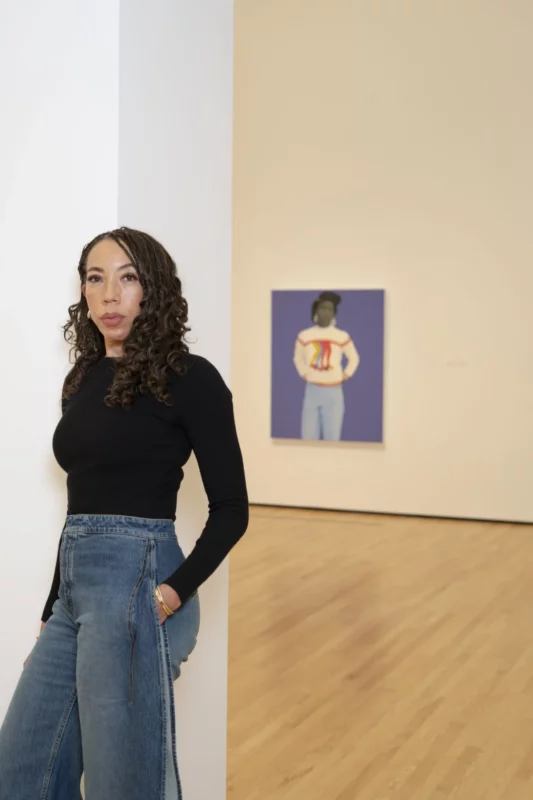
Imani Haynes

Can you share a bit about your educational path, how you first came to work at the Lewis Museum, and what your first experience was like working in the Baltimore arts scene?

I earned my BA in History from the illustrious Savannah State University and later took graduate courses at Morgan State University, where I received a fellowship with the James E. Lewis Museum of Art. That experience introduced me to the world of exhibition planning and cultural stewardship within an academic setting, serving as my first formal entry into the museum field.

Afterward, I became a history teacher with Baltimore City Public Schools, which deepened my understanding of how education and cultural identity intersect. My voice in cultural interpretation truly began to take shape during my time as a Museum Educator at the National Great Blacks In Wax Museum, where I connected with intergenerational audiences and helped bring Black history to life through interactive-visuals impact on storytelling which encouraged public engagement and impact.

Pursuing my MFA in Curatorial Practice at the Maryland Institute College of Art (MICA) gave me the language and space to refine the work I had already been doing. It allowed me to experiment, collaborate with peers, and explore curating as both a scholarly and artistic practice. After graduate school I went on to work in the Capital Region working with parks and cultural stewardship.

When the Curator position at the Reginald F. Lewis Museum opened up, it felt like a natural culmination of my experience had prepared me to steward Black Maryland’s legacy. The Lewis Museum was the place where I could bring all those threads together with purpose.

I’m deeply grateful to those who nurtured my growth and modeled excellence in cultural work: Dr. Felicia Bell, Dr. Joan Martin, Dr. Diala Toure, Dr. Julia Alexander, Mark Thorne, and Dr. Izetta Autumn Mobley. Their guidance helped shape the curator I am today.

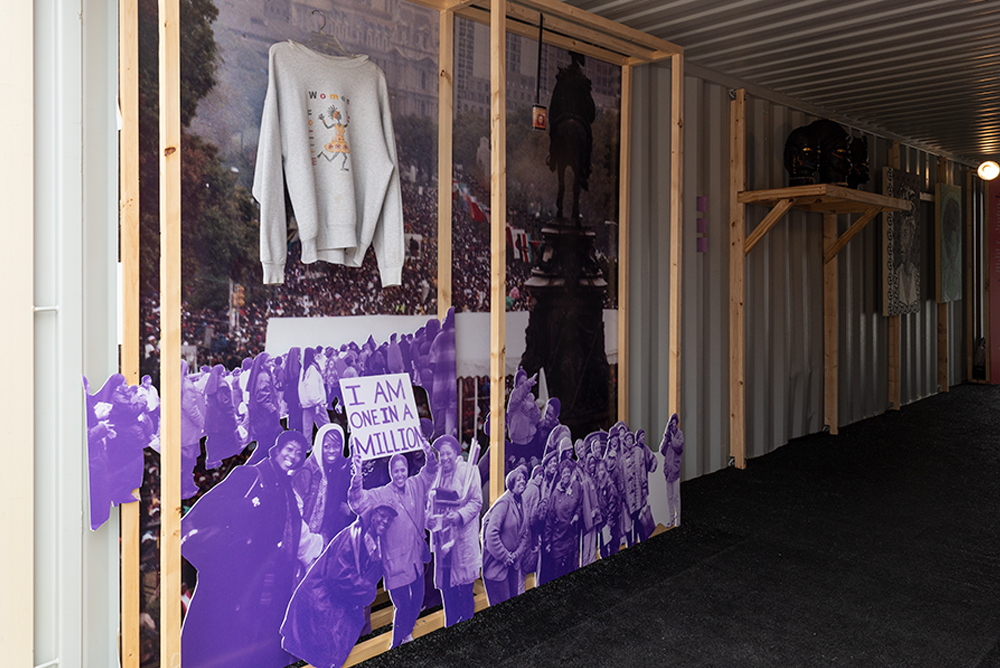
The Black Women's Museum installed in Baltimore, 2020. Photo from the BWM's website

The Black Woman’s Museum started as a mobile project in a shipping container. What inspired you to make it mobile, and how do you envision it growing into a global network?

The Black Woman’s Museum began as my MFA thesis project—a bold exhibition titled Million Woman March (a little on the nose). It explored the past, present, and future of radical Black womanhood, using the 1997 Million Woman March as its catalyst. Originally, the exhibition was meant to be in a traditional gallery, but when available spaces fell through, my program director, José Ruiz, encouraged me to consider a shipping container.

At first, I dismissed the idea. But I soon realized it was a blessing in disguise. The container became a blank canvas—one that pushed my imagination and design instincts. From managing logistics to curating a space that made visitors forget they were inside a metal box, the project became a true exercise in visionary thinking and creative problem-solving.

It opened in summer 2020, delayed by the pandemic, but the public response was powerful. People craved space to explore and honor Black women’s narratives. That momentum led me to officially found the Black Woman’s Museum later that year. I intentionally used the international possessive “Woman’s” to reflect the personal ownership and intimacy I want our audiences to feel.

Though on pause, I envision BWM becoming a global satellite museum—anchored in community, with multiple installations worldwide sharing the impact of Black women across time and geography.

Your exhibitions are filled with intentional sensory design. How do your personal background and experiences shape the way you think about storytelling through texture, space, and sound?

As a child, museums were my happy place. One formative visit to the National Great Blacks In Wax Museum exposed me to immersive storytelling through the slave ship, ancient Africa, and lynching galleries. It was the first time I felt history viscerally—through space, sound, and texture. That experience shaped how I understand interpretation today.

As a museum educator, I saw how sensory elements deepen visitor connection. Now, as a curator, designing exhibitions that engage beyond the visual—through oral histories, tactile materials, and spatial choices that provoke feeling and memory is a must. Sensory storytelling is essential to engaging our visitors, especially our youth. It turns exhibitions into living environments where our communities don’t just observe our narratives—they experience and remember it.

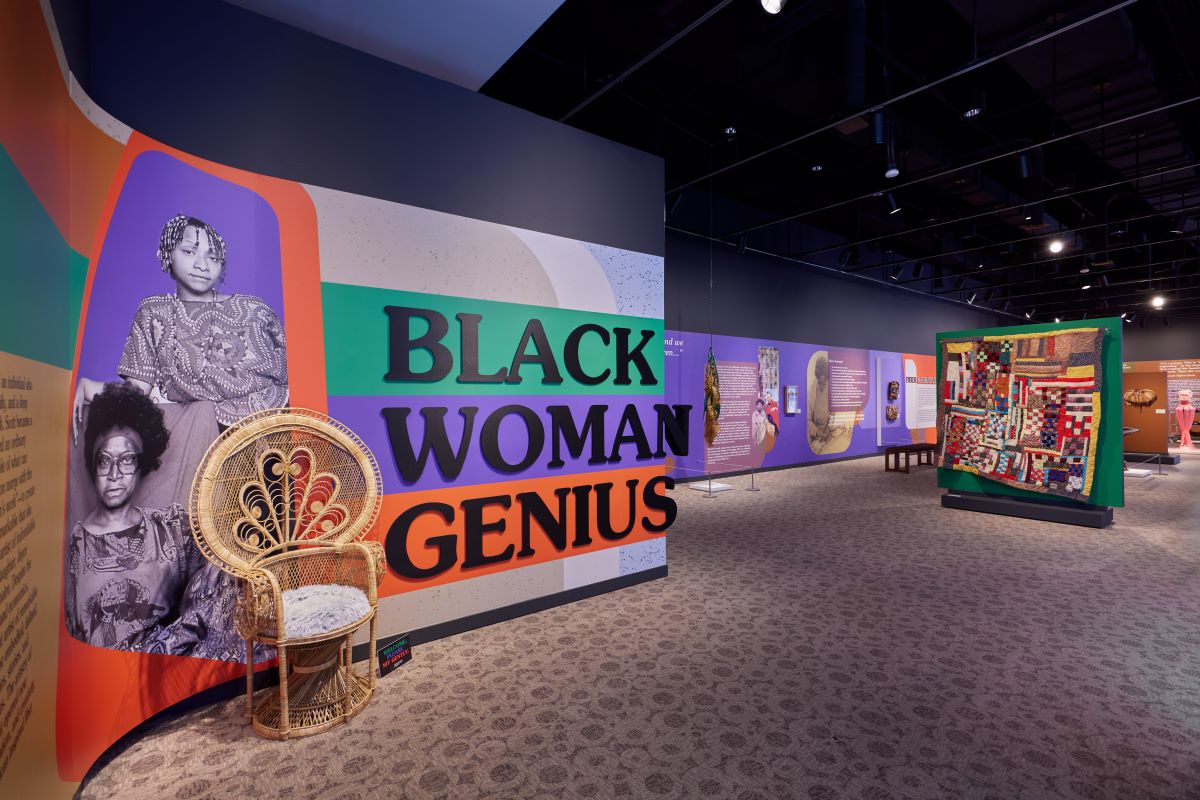
Entrance to Black Woman Genius: Tapestries of Generations at the Reginald F. Lewis Museum. Photo by Brian O'Doherty.
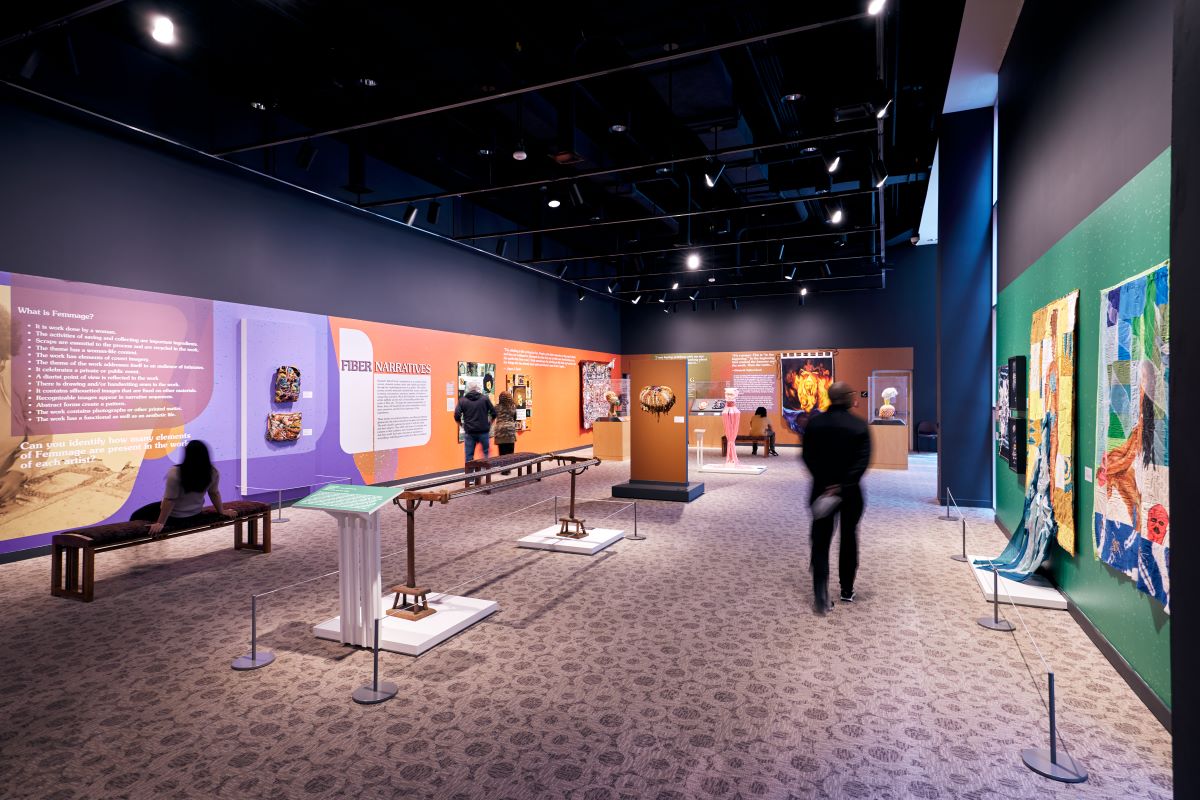
Gallery view of Black Woman Genius. Photo by Brian O'Doherty.

In Black Woman Genius, you worked with established creatives like Elizabeth Talford Scott and younger artists like Nastassja Swift. How do you balance honoring intergenerational tradition while nurturing innovation?

Balancing intergenerational tradition is deeply rooted in my upbringing. Growing up in a multigenerational household taught me how to honor the wisdom of my elders while staying connected to the creativity and vision of my peers. That dynamic—of holding reverence for tradition while embracing innovation—is central to my curatorial practice.

In Black Woman Genius, we explored themes that transcend age: memory, storytelling, love, and healing. Elizabeth Talford Scott’s legacy anchored the exhibition, alongside the work of seasoned artists like Joyce J. Scott, Glenda Richardson, Kibibi Ajanku, and Dr. Joan M.E. Gaither. At the same time, emerging voices like Aliana Grace Bailey, Aliyah Bonnette, Murjoni Merriweather, Mahari Chabwera, and Nastassja Swift extended those traditions through bold and contemporary interpretations.

My role was to create a space where reverence and experimentation could coexist—where artists across generations could be in meaningful dialogue. That exchange is where the magic happens.

Legacy is a recurring theme in your work. How has your time at the Lewis shaped your understanding of legacy, both personal and institutional?

Working at the Reginald F. Lewis Museum has taught me that legacy isn’t just about what we preserve from the past—it’s also about the systems, voices, and opportunities we leave for the future. Personally, I’ve come to see my curatorial work as both a record of the present and a foundation for those who come after me.

My time at The Lewis has shown me that institutional legacy is not static. It must be nurtured, questioned, and reimagined. To me, legacy means honoring our origin stories while staying responsive to the needs and brilliance of our evolving communities. That dual responsibility—past and future—is what defines my curatorial practice today.

You often emphasize curatorial collaboration and shared authorship. How do you bring that ethos into your role at a major institution?

While I may hold the title of curator, the responsibility of care, interpretation, and storytelling is a deeply collaborative endeavor. At the Reginald F. Lewis Museum, we are a small but mighty team—and every exhibition is a shared effort rooted in trust, transparency, and collective vision.

Our exhibit designer, José Alvarado, transforms abstract curatorial ideas into tangible, immersive journeys. His construction and graphic design elevate each exhibition’s visual narrative. Our collections manager, Em Davidson, brings deep care and insight to the process—offering artifacts and ephemera that provide powerful material evidence to the stories we aim to tell.

Arthur Brown, our Interpretive & Technical Support Coordinator, keeps communication flowing across departments and external partners while supporting research and logistics.
Education Program Manager Terry Taylor-Nock designs programming that extends the exhibit experience through public engagement. And our front-line team—Kiersten Cleveland and Destinie Howard—ensures that visitors feel seen, welcomed, and connected.

All of this work happens under the guidance of our Director, Robert Parker, and with the support of our President, Terri Lee Freeman.

Curatorial collaboration isn’t just a value here—it’s how we work, create, and grow together.

You described the “Forget Me Nots” installation as a kind of libation. How else do you bring spiritual or emotional resonance into the visitor experience?

Spiritual and emotional connection begins with identifying the intrinsic value embedded in our subjects’ stories—then creating a throughline that allows visitors to see themselves within those narratives. For me, it’s about honoring the human experience and inviting empathy.

Whether through soundscapes, tactile engagement, or intimate storytelling, I look for ways to tap into universal emotions: love, joy, grief, disappointment, fear, resilience, and hope. These are feelings we carry, regardless of background—and when a visitor encounters them in a gallery, it becomes more than an exhibit. It becomes a moment of reflection, remembrance, or even release.

That’s how resonance happens: not just through facts, but through feeling. That’s what makes the experience last.

The TITAN exhibit at the Reginald F. Lewis Museum
"TITAN" grand opening. Photo courtesy of the Reginald F. Lewis Museum

What advice would you offer to young Black curators seeking to reshape cultural institutions from the inside?

Always remember—your first duty is to the people. To the communities whose narratives you steward, to the artists whose work you uplift, and to the visitors who walk through your exhibitions looking to see themselves reflected. Our job as curators is not just about objects and aesthetics; it’s about building bridges between lived experience both new and old.

The stories you tell and the artwork you choose have the power to transport people—to new times, deeper understandings, and different vantage points. That’s a sacred responsibility. Reshaping institutions begins with grounding yourself in purpose. Lead with integrity, create space for community voices, and don’t be afraid to challenge tradition. Your perspective is unique. The work you do helps expand what museums can be—and who they are for.

Can you recall a behind-the-scenes moment that tested your curatorial dexterity—an “it’s always something” kind of day that became a benchmark in your growth?

During a period of departmental transition, I faced a unique challenge: how to efficiently gather critical information from artists that could serve the diverse needs of our curatorial, education, collections, and marketing teams—while our staff was lean and our timelines were tight.

Rather than relying on scattered emails or last-minute calls, I developed a comprehensive artist intake form. On the surface, it collected standard information about the artist and their work. But more intentionally, it invited artists to reflect on the exhibition themes, their creative practice, and the people, places, and histories that motivate them. With their permission, these insights were shared across departments to support interpretation, educational programming, archival accuracy, and public engagement.

What started as a necessity became a transformative tool—one that honored artist autonomy, streamlined internal workflows, and reinforced shared authorship across the museum. This experience taught me that systems born from crisis can become sustainable models for inclusion, clarity, and care.

What would you like your legacy to be, both within the museum world and beyond?

Within the museum field, I want my legacy to reflect a commitment to truth-telling, community care, and creative risk-taking. I hope to be remembered as someone who expanded what curating could look like—centering Black stories with depth and dignity, mentoring with transparency, and creating systems that uplift artists and audiences alike.

I want to leave behind more than exhibitions—I want to build sustainable structures: artist-first practices, intergenerational collaboration, and institutional models rooted in emotional intelligence and cultural stewardship. My hope is that the institutions I serve become more inclusive, imaginative, and accountable because of my contributions. Beyond the museum, I want my legacy to be one that led with love and compassion. I hope people remember how I showed up—for my community, for my peers, and for the stories I had the honor to steward. If my work has helped others feel seen, affirmed, or inspired then I’ve done what I was called to do.

This story is from Issue 19: Hidden Gems, available here.

Related Stories
The best weekly art openings, events, and calls for entry happening in Baltimore and surrounding areas.

This Week: Soft Gym celebration at the new YNot Lot, screening of "Without Arrows" at The Walters, artist talk with Jaz Erenberg at Loyola University of Maryland, Baltimore Clayworks Winterfest, Rooted in Joy reception at Coppin's Cary Beth Cryor Art Gallery, Arts for Learning celebration, and more!

Baltimore art news updates from independent & regional media

This week's news includes: Amy Sherald shines brightly in Baltimore, Hilton Carter makes his house a home, Inviting Light returns with a Wickerham & Lomax, John Akomfrah moving image + sound installation opens at the BMA, mayorial portraits unveiled at City Hall, Maryland Film Fest is here, and more

The best weekly art openings, events, and calls for entry happening in Baltimore and surrounding areas.

This Week: Jayme McLellan at UMBC, Maryland Film Fest at the Parkway, SPARK VII opening reception at The Peale, In the Stacks celebrates the 100th anniversary of The Great Gatsby, Cordially Invited opening reception, Submersive Productions opening reception at Creative Alliance, and more!

Baltimore art news updates from independent & regional media

This week's news includes: BMA receives largest gift in its history from Amy and Marc Meadows, BOPA becomes Create Baltimore, Driskell Center adds to its archives, Amy Sherald excitement, AVAM celebrates 30 years, MICA announces a new MPS degree, Academy Art Museum, and more!