Reading

TITAN: Exhibiting the Life and Legacy of Baltimore Icon, Reginald F. Lewis

Previous Story
Article Image

BmoreArt’s Picks: July 29 – August 4

Next Story
Article Image

BmoreArt News: Amy Sherald, The Walters, Robyn Murphy

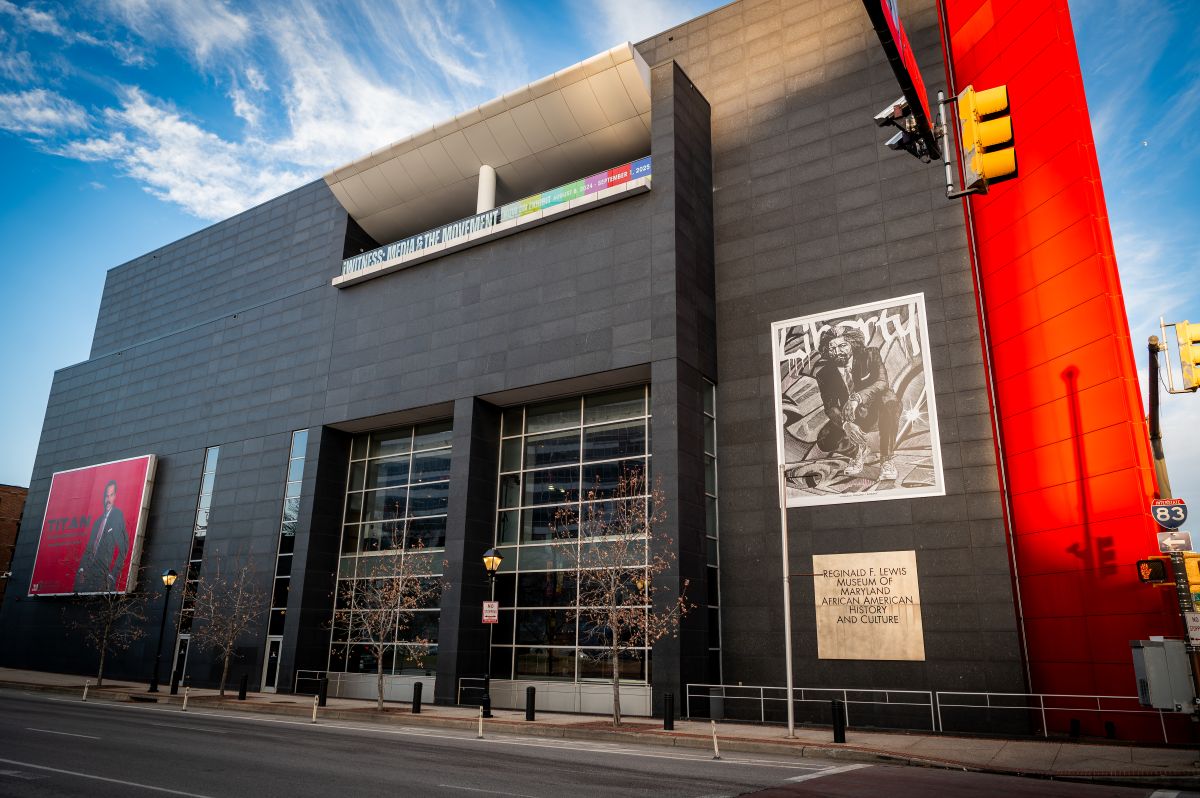
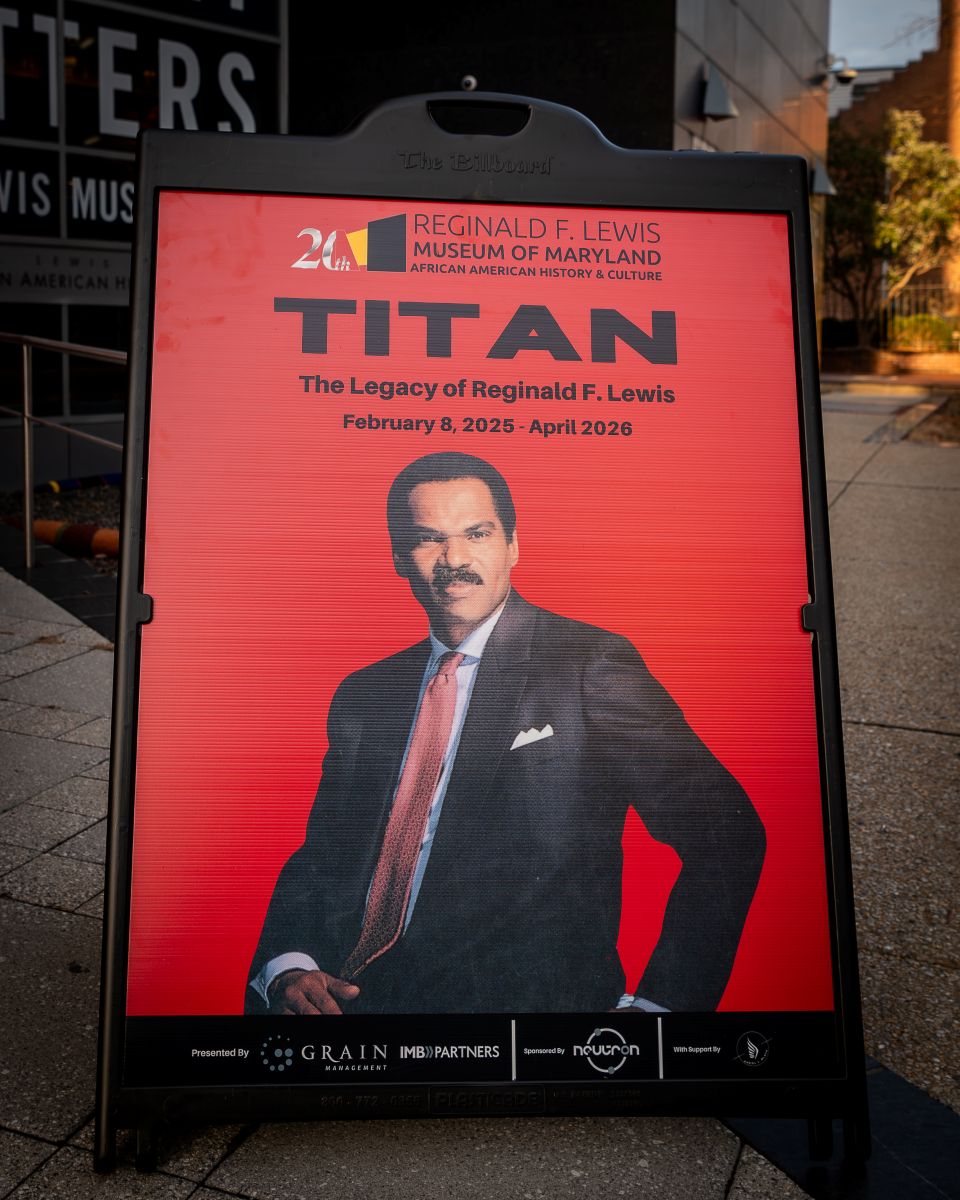
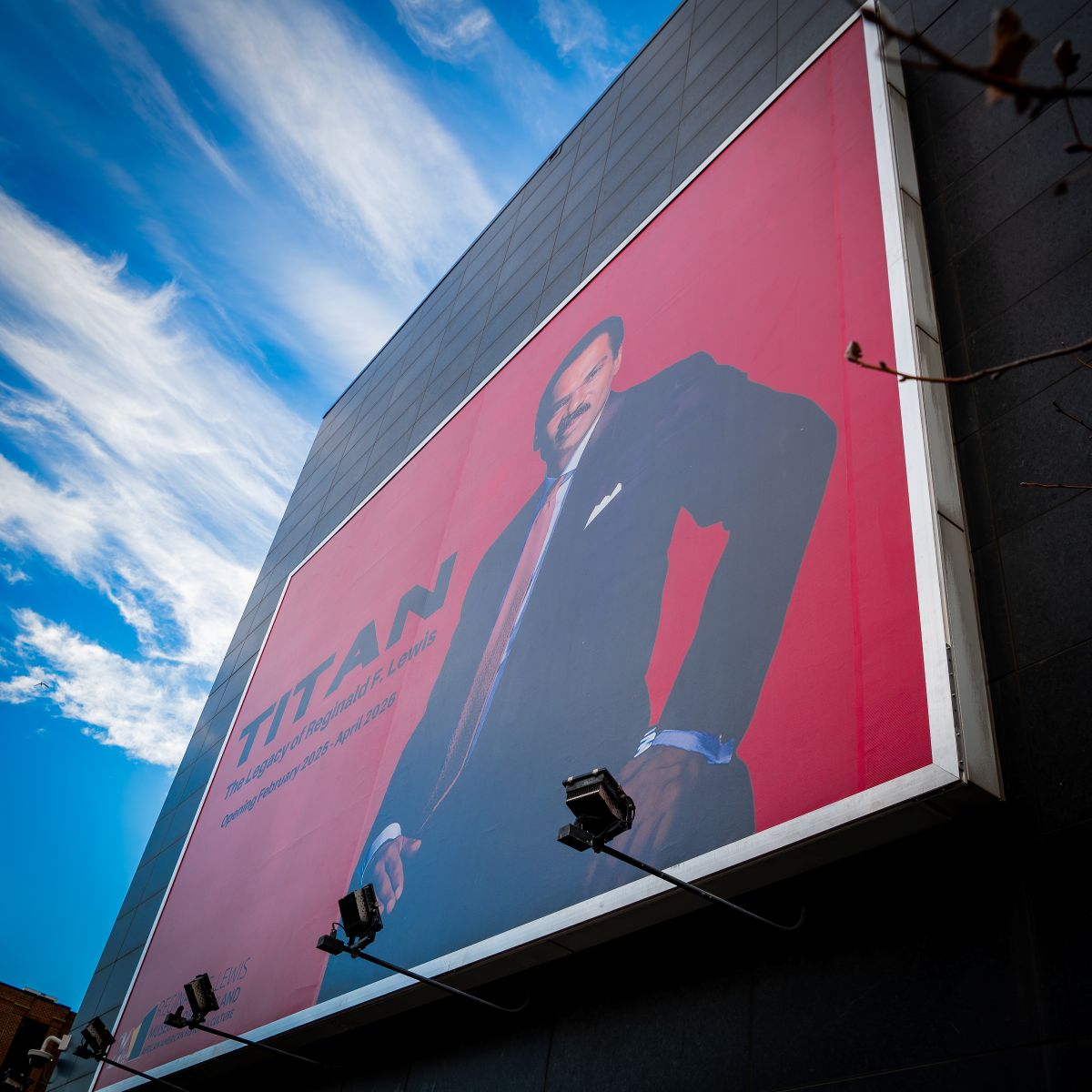
East Baltimore resident. Glass Ceiling breaker. Iconoclast. These are a few of the ways we come to understand Reginald F. Lewis after experiencing TITAN, the commemorative exhibition celebrating the eponym of the Reginald F. Lewis Museum as well as its 20th anniversary and 100th exhibition. 

Reginald F. Lewis, a Baltimore native, rose to the top ranks of Corporate America and holds the record of being many firsts: The first Black person to “pull off a billion-dollar buyout” according to the Wall Street Journal; the first Black person to start a successful law firm on Wall Street; and the first person (of any race) to be accepted to Harvard Law School without officially applying.

While Lewis was a bona fide history maker, he’s not a household name in the way that other Baltimore icons are, for instance, Thurgood Marshall or Billie Holiday. One of the aims of the TITAN exhibition is to change that, making Lewis recognizable to the next generation of leaders poised to emerge from Baltimore. To the museum’s credit we are not beaten over the head with what makes Lewis’ life extraordinary; instead, he’s presented as a regular guy from East Baltimore whose story proves there are many paths to success. 
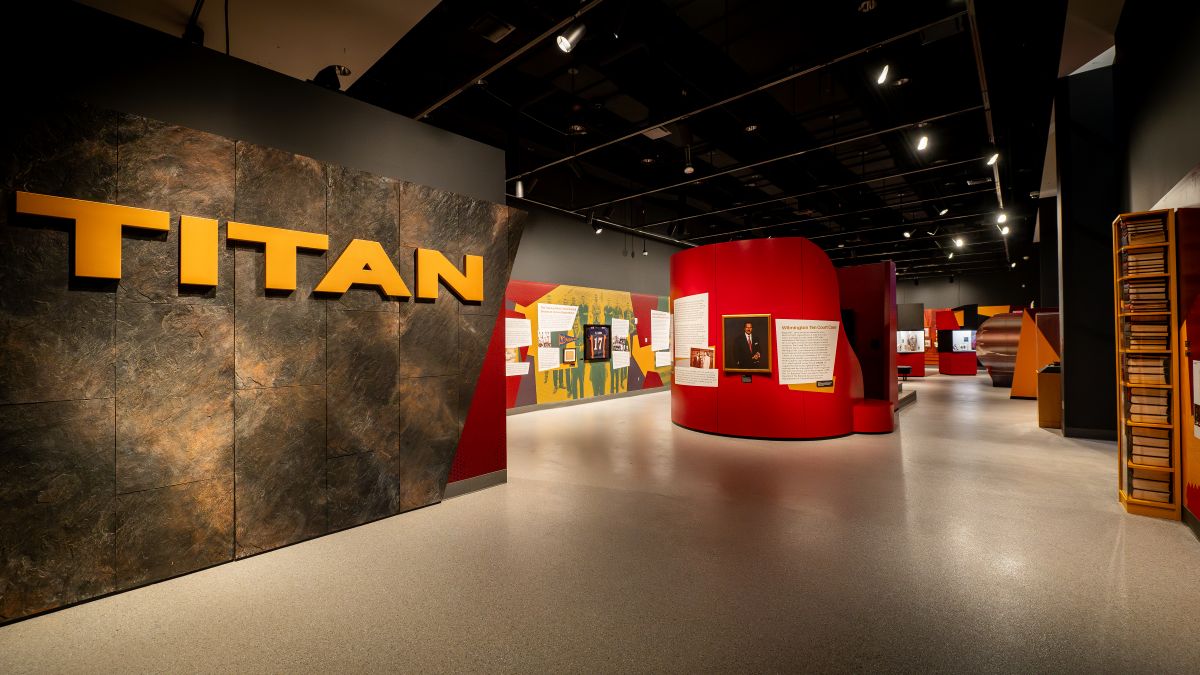
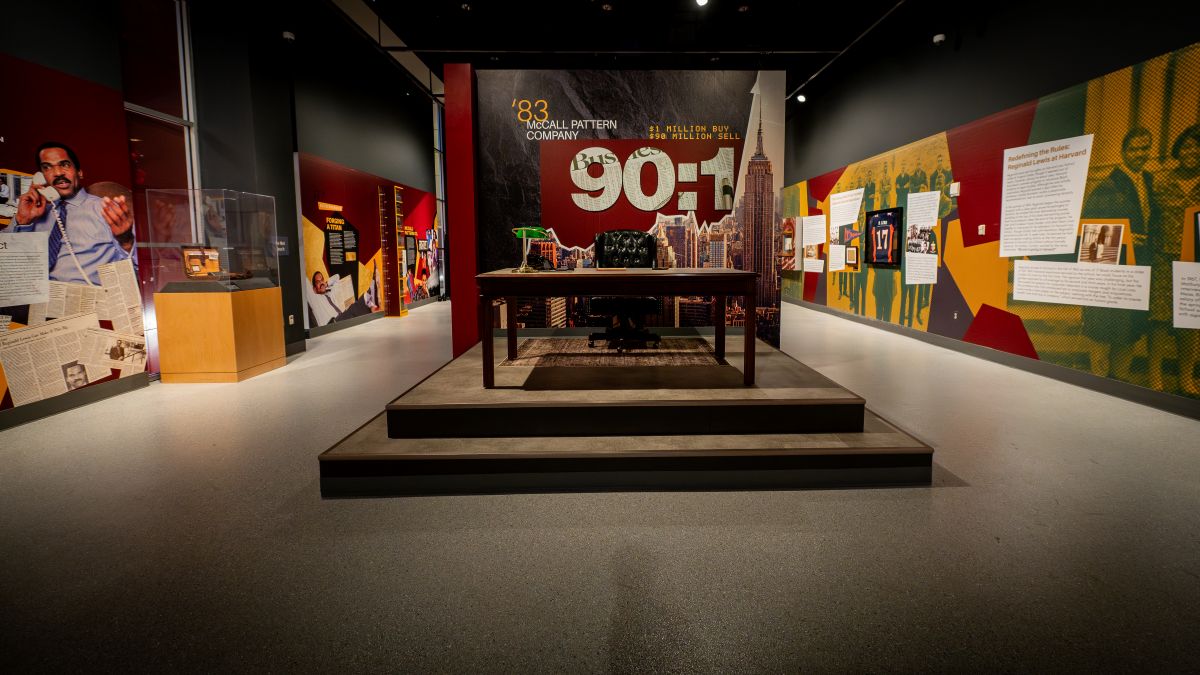
Installation view of TITAN on opening day
The Reginald F. Lewis Museum of Maryland African American History and Culture
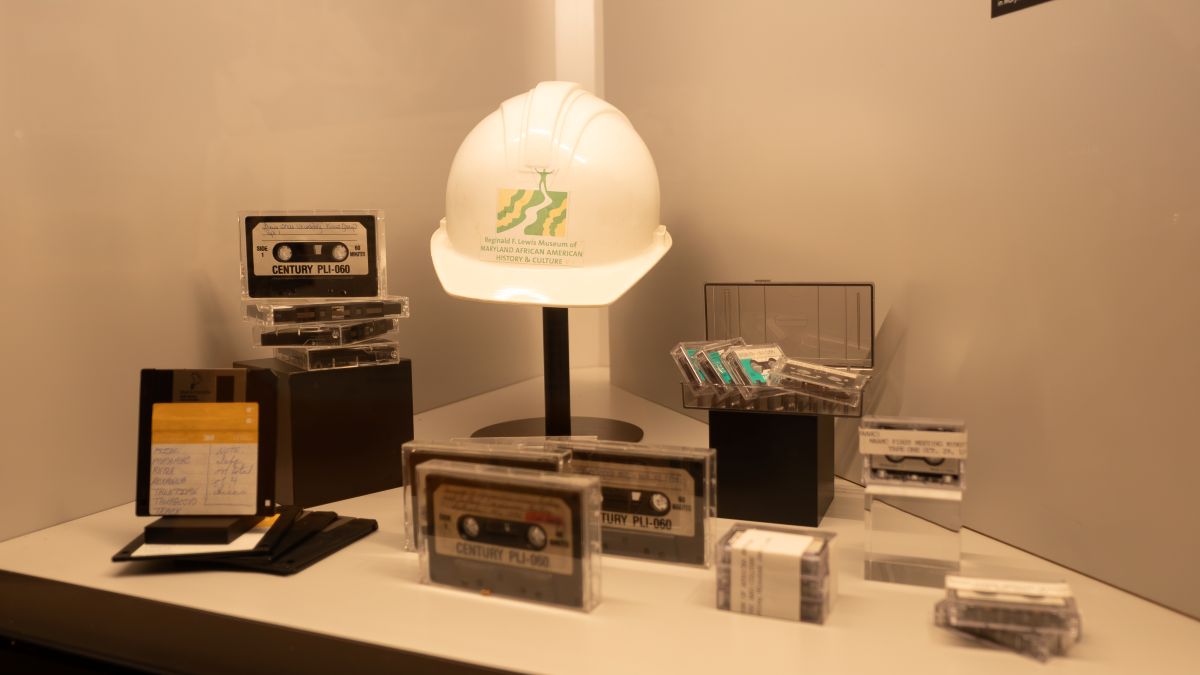
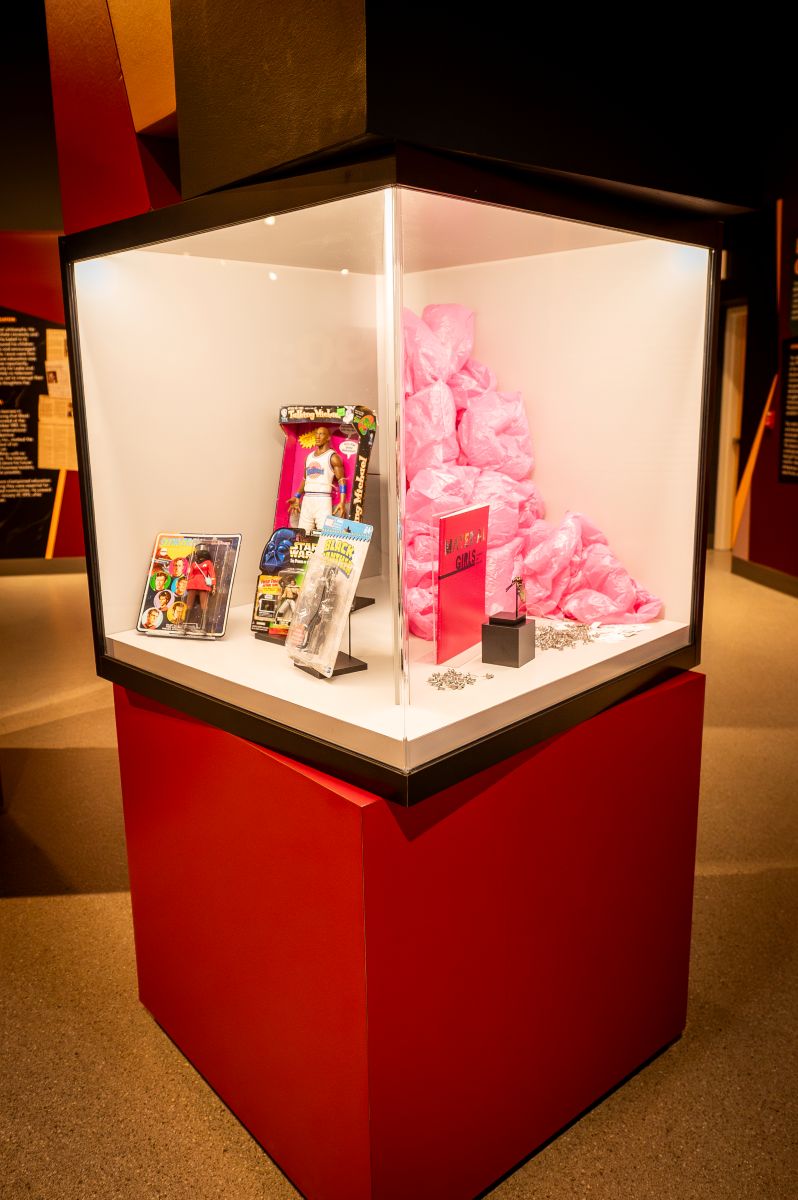
The goal was to transform the life of Reginald F. Lewis into something people can not only relate to, but also experience—by using immersive storytelling and the very objects and tools he once used.
Imani Haynes, Curator

“The goal was to transform the life of Reginald F. Lewis into something people can not only relate to, but also experience—by using immersive storytelling and the very objects and tools he once used,” says Imani Haynes, curator at the Reginald F. Lewis museum. 

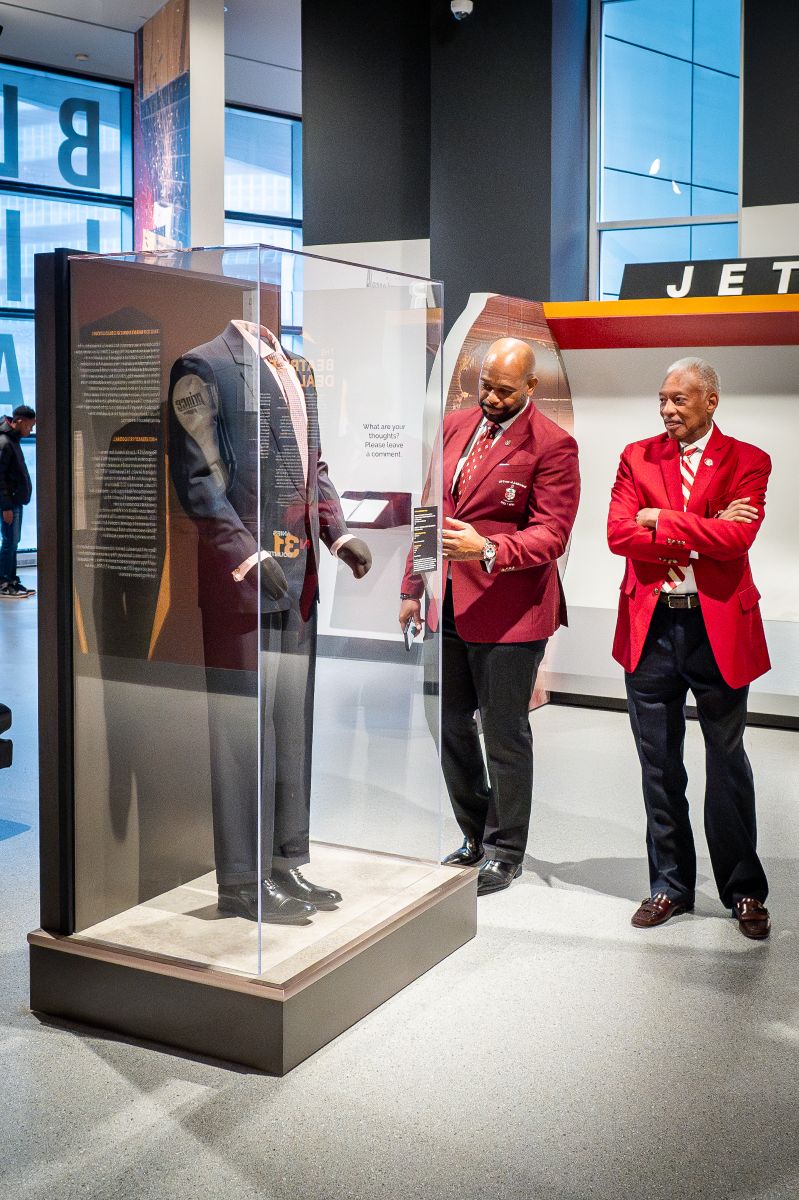
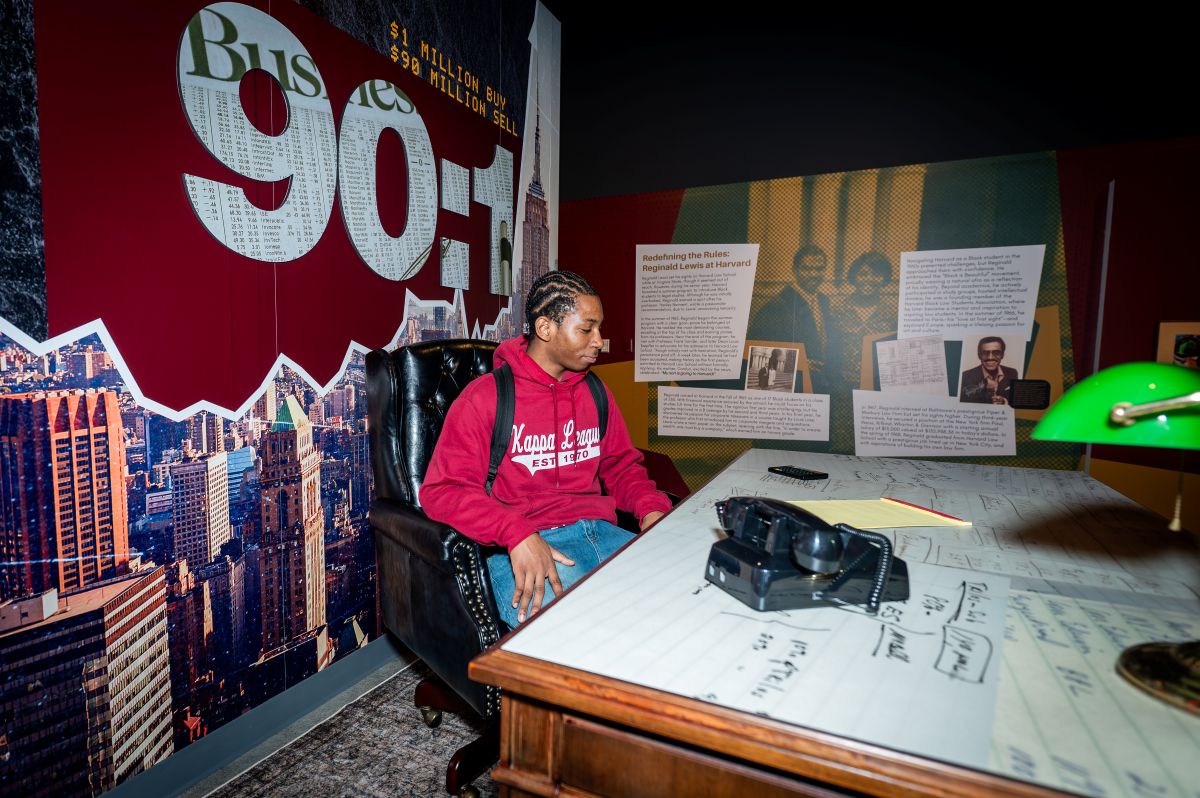
To further this goal of the exhibit, several community events have been planned around TITAN. Lewis was a brother of Kappa Alpha Psi fraternity and a proud alumnus of Virginia State University, a Historically Black College. On March 29th, 2025, the Lewis Museum hosted HBCU Day inviting several HBCU’s and offering workshops and panels encouraging youth to follow in Lewis’ footsteps by considering an HBCU. 

“I saw the TITAN exhibit put starch in the backs of those who observed it. It has the power to elevate the spirit,” says Jessea Gabbin, Northeast Baltimore resident. 

Putting together an exhibit of this scale requires planning several months, even years, in advance. One must create a vision for the exhibition and the impact on the audience. The labor of mounting TITAN was a team effort, including Terri Lee Freeman, President of the Reginald Lewis Museum; Robert T. Parker, Chief Curator and Director of Interpretation; Visitor Experiences, and Education; Imani Y. Haynes, curator; Jose Alvarado, Exhibition Designer and Preparer; Emily Davidson, Collections Manager and Registrar; Terry Taylor, Education Programs Manager; and Arthur Brown, Interpretive and Technical Support Coordinator. Not to mention the collaboration and support of the Lewis family. 

“The challenge with this exhibit was capturing the legacy of a business icon in a space traditionally known for showcasing abstract, visually engaging art,” said resident curator Imani Haynes. “Business, by contrast, can often seem rational and black-and-white. So the question became: how do we present this story in a way that engages and inspires young people.” 

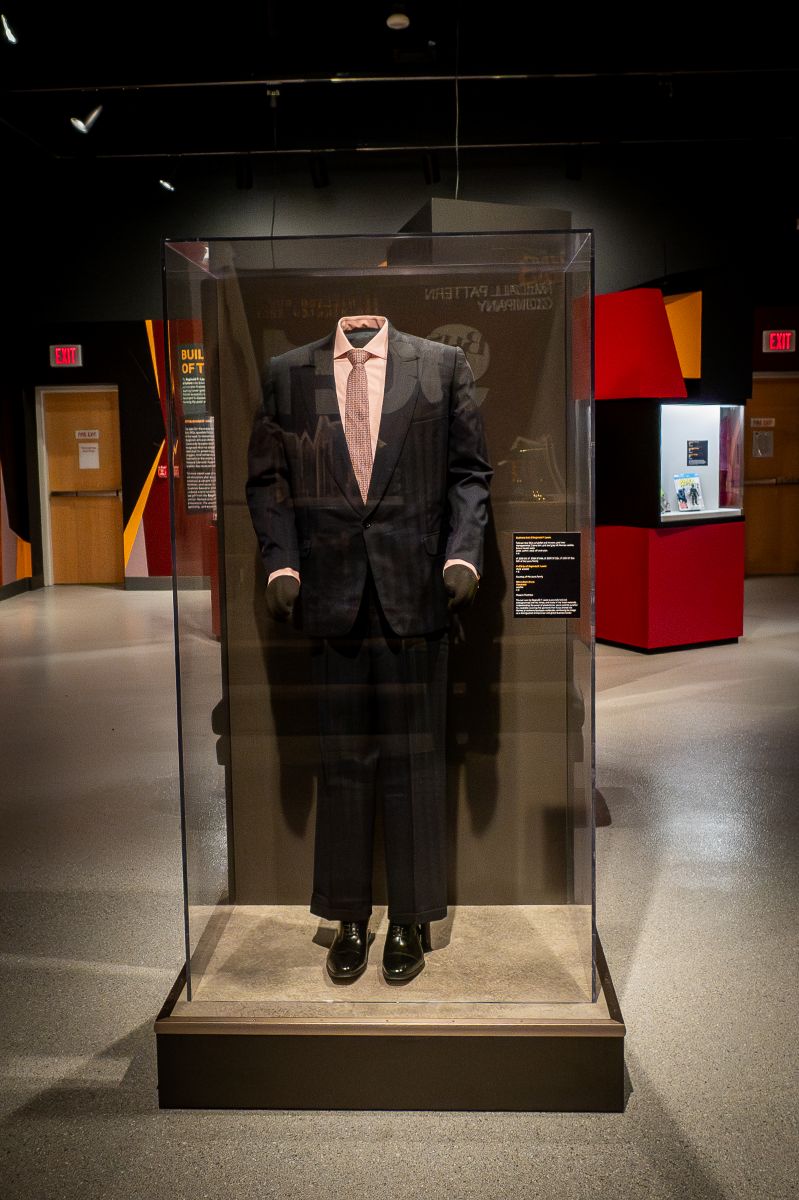
Installation view of TITAN exhibit at the Reginald F. Lewis Museum

At the beginning of the exhibit we see a photograph of a young Reginald Lewis alongside his mother and grandparents. Lewis was born on December 7, 1942 and grew up in a segregated Baltimore that had little expectations for little Black boys. It would be his family who would nurture and help him navigate the social customs of Baltimore during the Jim Crow era. 

In the next panel, we learn that his parents divorced when he was very young, prompting him and his mother to live with his grandparents. What follows is a report card revealing a solid B student who needs to improve his penmanship, a gym locker that actually opens and shuts, his high school jersey. The juxtaposition of seeing his report card and the athletic paraphernalia subtly shows Lewis as an All-American scholar-athlete. The title of the panel is: “Game Changer On and Off the Field” signaling that Lewis wasn’t simply a performer on the football field, he also excelled academically. There’s an open yearbook revealing a dapper young Lewis. 

Soon after, we see that Lewis attended Virginia State, an HBCU followed by photographs of him with his mother, adorned in cap and gown. As fate would have it, Lewis did a summer program at Harvard and impressed the faculty so much that he got admitted into the law school without having officially applied. This is a rarity in the history of Harvard Law admissions. In 1992, a building at Harvard was renamed the Reginald F. Lewis International Law Center, a first for an African American in the history of the school.

Tragically, Lewis passed away a year later, in 1993, at the young age of fifty. 

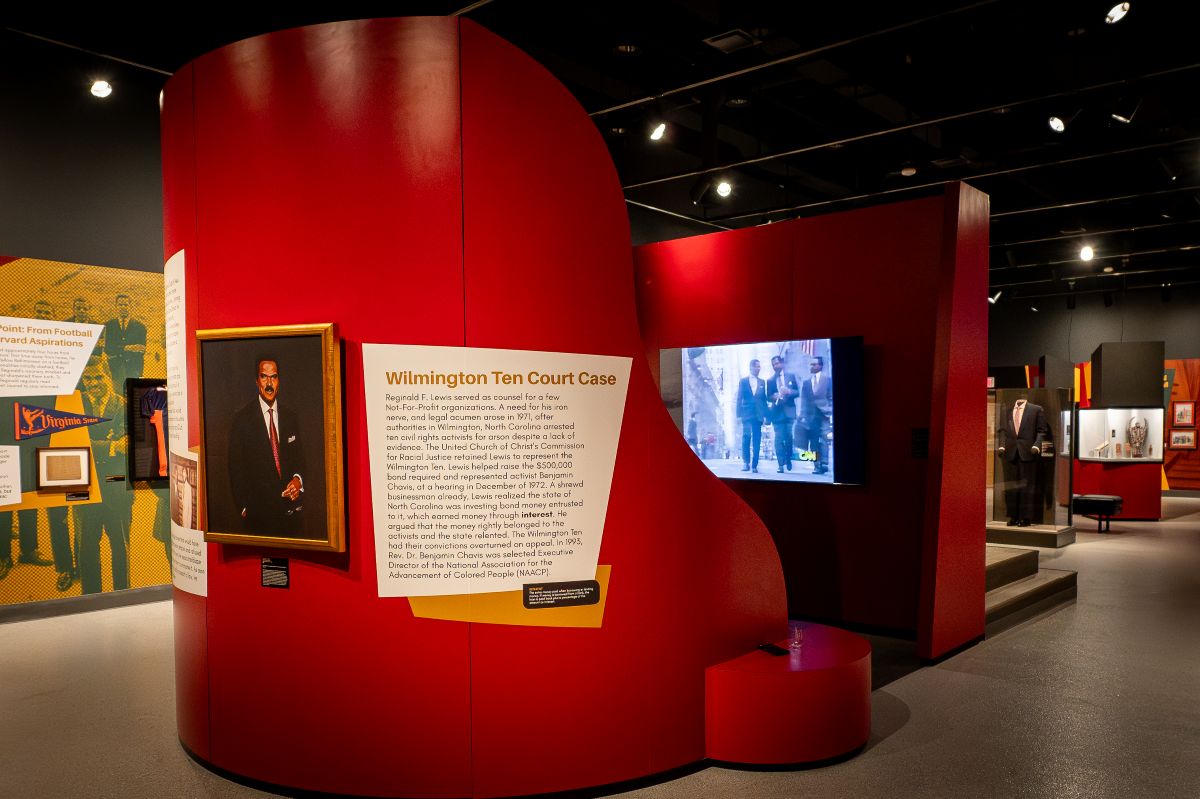
At the center of the gallery is a miniature theater where an interview of Lewis is recorded and on a loop. The oversized screen and chairs give audience members a sense that they are in conversation with Lewis—listening to him recount the importance of family, what kind of boss he was, and his ideas about responsibility to the Black community. 

His biography, Why Should White Guys Have All the Fun (1994), published posthumously by local publisher, Black Classic Press, was co-written by Blair S. Walker, also a Baltimore native and accomplished journalist and Reginald F. Lewis. The story is required reading for anyone interested in entrepreneurship who doesn’t come from wealth and wishes to beat the odds. The key to Lewis’ success: relentlessness and self-determination. 

Installation view of TITAN
TITAN is a masterclass in defying expectations and charting one’s own path.  
Abdul Ali

Of all of the physical objects that make up TITAN, the stand-outs include a grand mahogany desk symbolizing Lewis’ elevated status as a power broker with a rare business acumen. The other would be a tower of books that represents all of the legal cases that Lewis was involved in. The books are a record of Lewis’ legacy as a brilliant legal mind. 

One of the more innovative objects in the exhibit is a simulation of an airplane representing the astronomical heights of his professional career. Each window gives the audience a view into a milestone success of his company including record breaking earnings due to Lewis’ leadership. The next window reveals a globe-like figurine representing the global presence The Lewis Company had and the rarity this was for an American company, let alone a Black owned one. The final window showcases all of the smaller companies acquired by The Lewis Company. 

An important part of Lewis’ story that isn’t included in the exhibition is his work as a philanthropist and behind-the-scenes activist. When Jesse Jackson ran for president in 1984, Lewis handed him a check for $100,000, unsolicited. He founded the Reginald Lewis Foundation in 1987, as a platform to address issues that are dear to the mogul, including social justice, education, youth programming, and the arts. 

“The TITAN Exhibit was extraordinary,” said Sheila Dixon, former Mayor of Baltimore City.I saw in this exhibit that Reginald Lewis had a revolutionary spirit that guided him throughout his life. His story still remains as a light for excellence and a spirit of hope for our young people in Baltimore.” 

If there is a common theme throughout the exhibit and related programming, it would be inspiration. Everything that we learn about Lewis upends historically negative narratives of growing up a Black boy in Baltimore. TITAN is a masterclass in defying expectations and charting one’s own path.  

When I asked Haynes what she would like visitors to take away from the exhibition, she paused, then recalled an expression that Lewis was fond of saying, “Keep going, no matter what!” 

TITAN: The Legacy of Reginald F. Lewis is exhibiting at the Reginald F. Lewis Museum from February 8th, 2025 through April 2026. 

Installation view of TITAN exhibit at the Reginald F. Lewis Museum
Installation view of TITAN exhibit at the Reginald F. Lewis Museum on opening day
Installation view of TITAN exhibit at the Reginald F. Lewis Museum
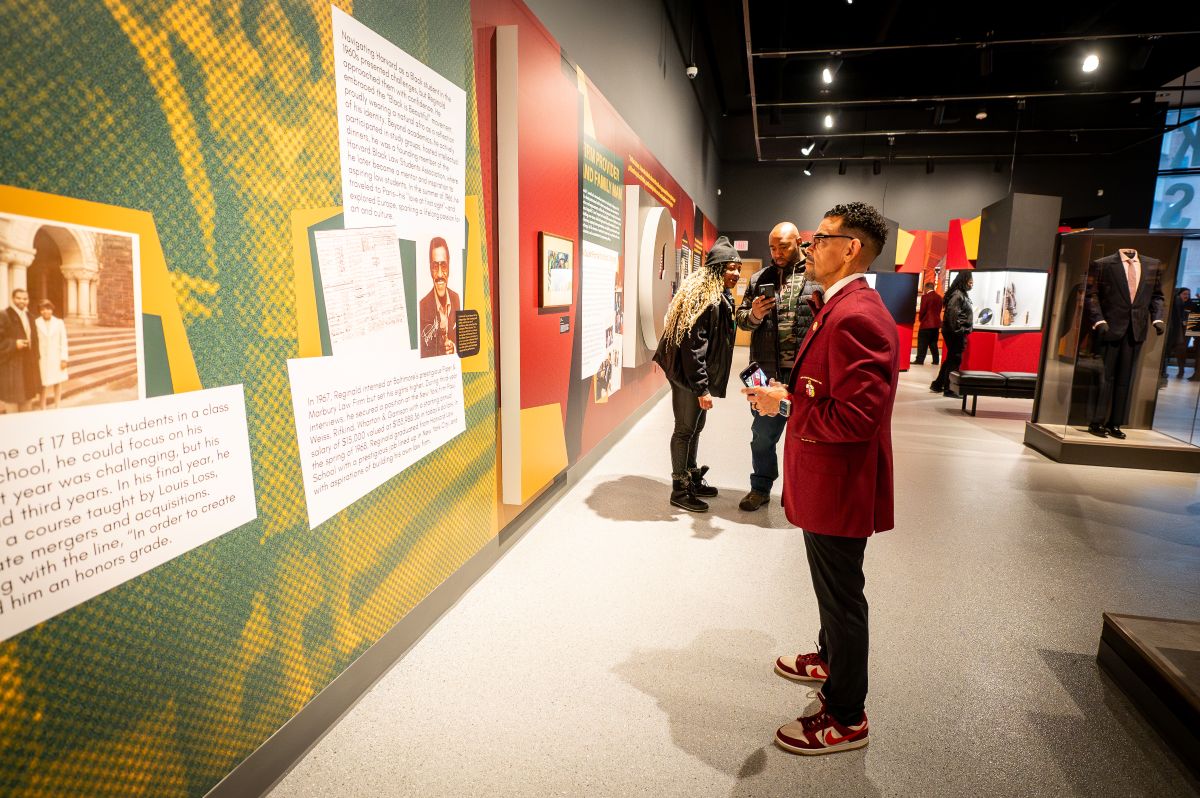
Young visitor to the TITAN exhibit at the Reginald F. Lewis Museum

Header Image: Installation view of TITAN exhibit. All images courtesy of the Reginald F. Lewis Museum | Photography by Jae Sip Photography

Related Stories
The best weekly art openings, events, and calls for entry happening in Baltimore and surrounding areas.

This Week: Soft Gym celebration at the new YNot Lot, screening of "Without Arrows" at The Walters, artist talk with Jaz Erenberg at Loyola University of Maryland, Baltimore Clayworks Winterfest, Rooted in Joy reception at Coppin's Cary Beth Cryor Art Gallery, Arts for Learning celebration, and more!

Baltimore art news updates from independent & regional media

This week's news includes: Amy Sherald shines brightly in Baltimore, Hilton Carter makes his house a home, Inviting Light returns with a Wickerham & Lomax, John Akomfrah moving image + sound installation opens at the BMA, mayorial portraits unveiled at City Hall, Maryland Film Fest is here, and more

The best weekly art openings, events, and calls for entry happening in Baltimore and surrounding areas.

This Week: Jayme McLellan at UMBC, Maryland Film Fest at the Parkway, SPARK VII opening reception at The Peale, In the Stacks celebrates the 100th anniversary of The Great Gatsby, Cordially Invited opening reception, Submersive Productions opening reception at Creative Alliance, and more!

Baltimore art news updates from independent & regional media

This week's news includes: BMA receives largest gift in its history from Amy and Marc Meadows, BOPA becomes Create Baltimore, Driskell Center adds to its archives, Amy Sherald excitement, AVAM celebrates 30 years, MICA announces a new MPS degree, Academy Art Museum, and more!