
Reading

Honey Bee Baby at the Strand Asks How/What/When We’re “Expecting” in an Uncertain Future

Previous Story
Article Image

BmoreArt News: Shawn Chopra, Hip Hop BachelorR [...]

Next Story
Article Image

Art of Leadership: Nurturing Creativity and Commu [...]

Over the past 50 years or so dystopian stories are becoming more and prominent on stages around the world. And while there is nothing all that new about plays that deal with these themes, writers continue to explore new variations. Such is the case with Honey Bee Baby, presented by Rapid Lemon Productions at Strand Theater.

In Erlina Ortiz’s post-apocalyptic future, procreation has become a government-regulated activity. Aspiring parents must pass stringent tests to earn a permit to have children. Those who defy the system face severe penalties, and children born outside the system are deemed defective. Such children must pass a test to determine their worthiness to be part of society—though it’s unclear if this applies to all children. It is into this tightly controlled reality that Melisa and Ray, a middle-class couple, strive to bring a child of their own.

Melisa is a kind-hearted woman who desperately wants to have a baby with her husband. Relentlessly studying in order to pass the required test of her worthiness to become pregnant, she is riddled with doubt about her ability to pass. Ray, her steadfast husband, is encouraging and supportive. One of her friends who is pregnant, also offers their support. Upon finding out that she is indeed pregnant, Melisa is encouraged by her doctor to abort the child. There is no definitive dialogue one way or the other, but it appears she follows through.

While at the clinic, she meets a precocious little girl named Clarisa. Clarisa has a temper tantrum and runs away from her controlling mother and then follows Melisa home. Complicating the action is an impending hurricane. How the situation resolves itself forms the climax of the play, which includes a dramatic helicopter rescue.
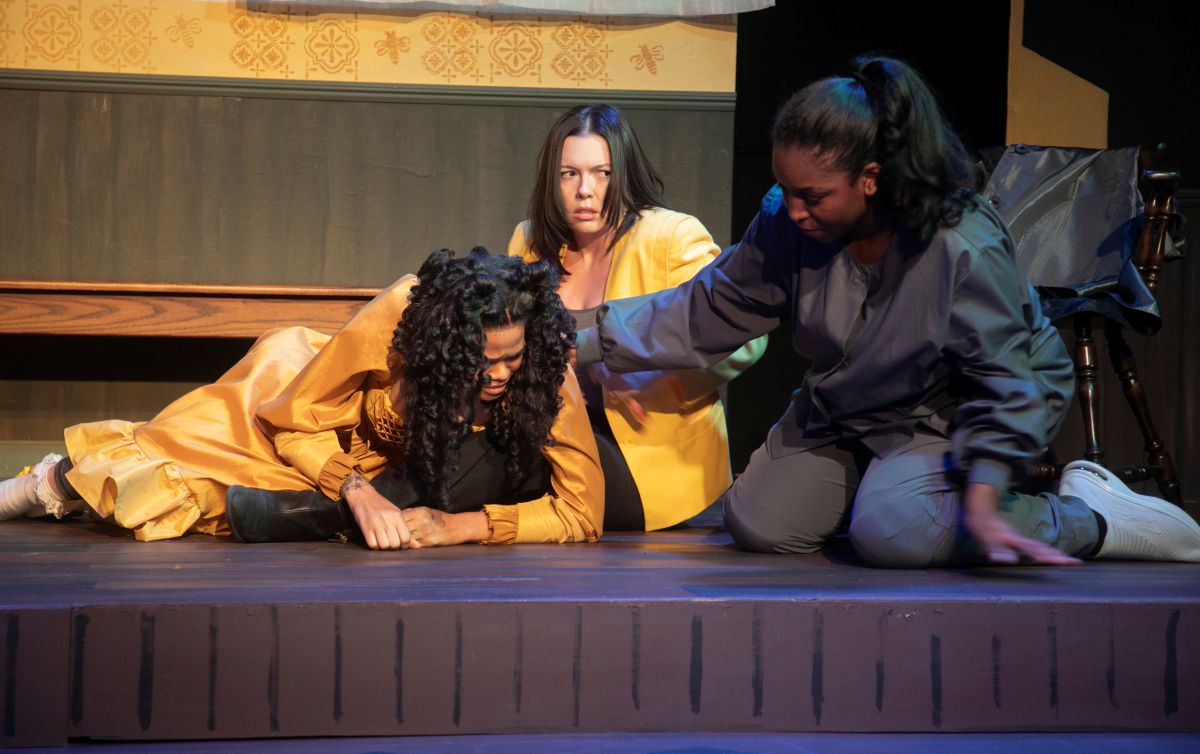

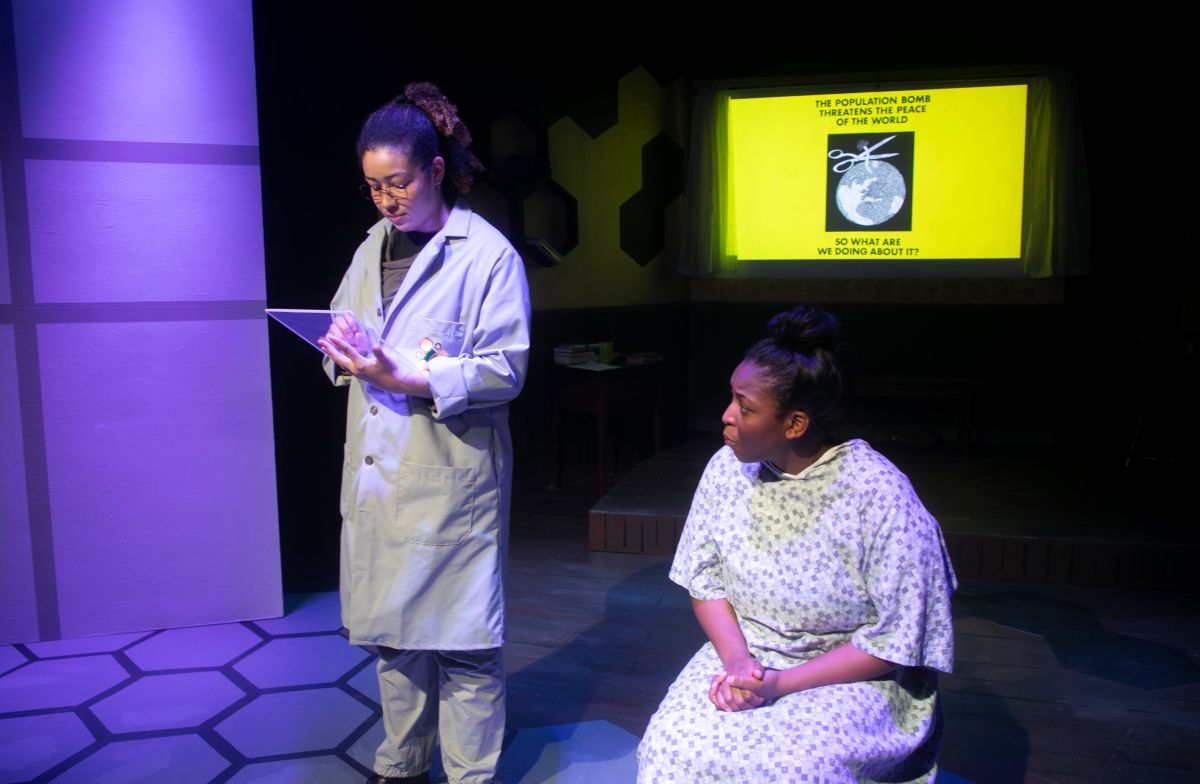
K.S. Garner, Sharon Maguire, Rakell Foye
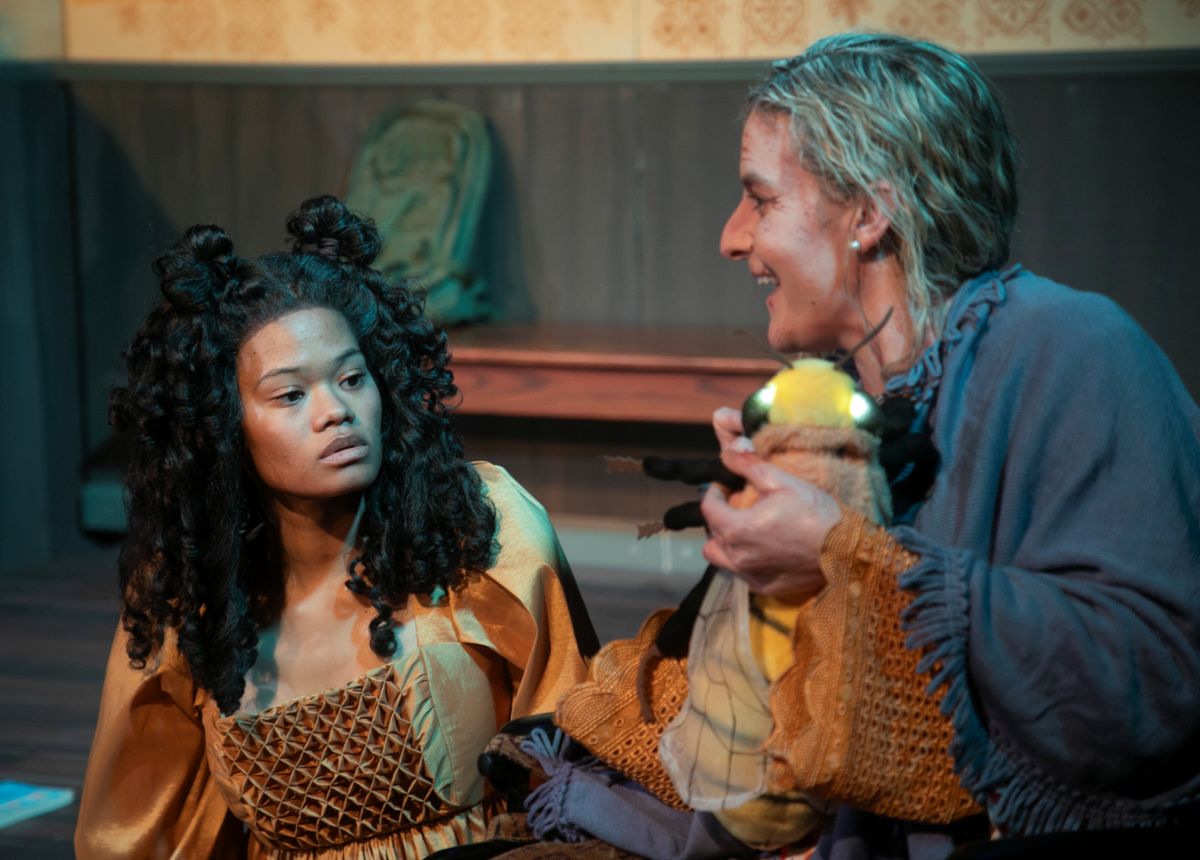
Isaiah C. Evans, Rakell Foye
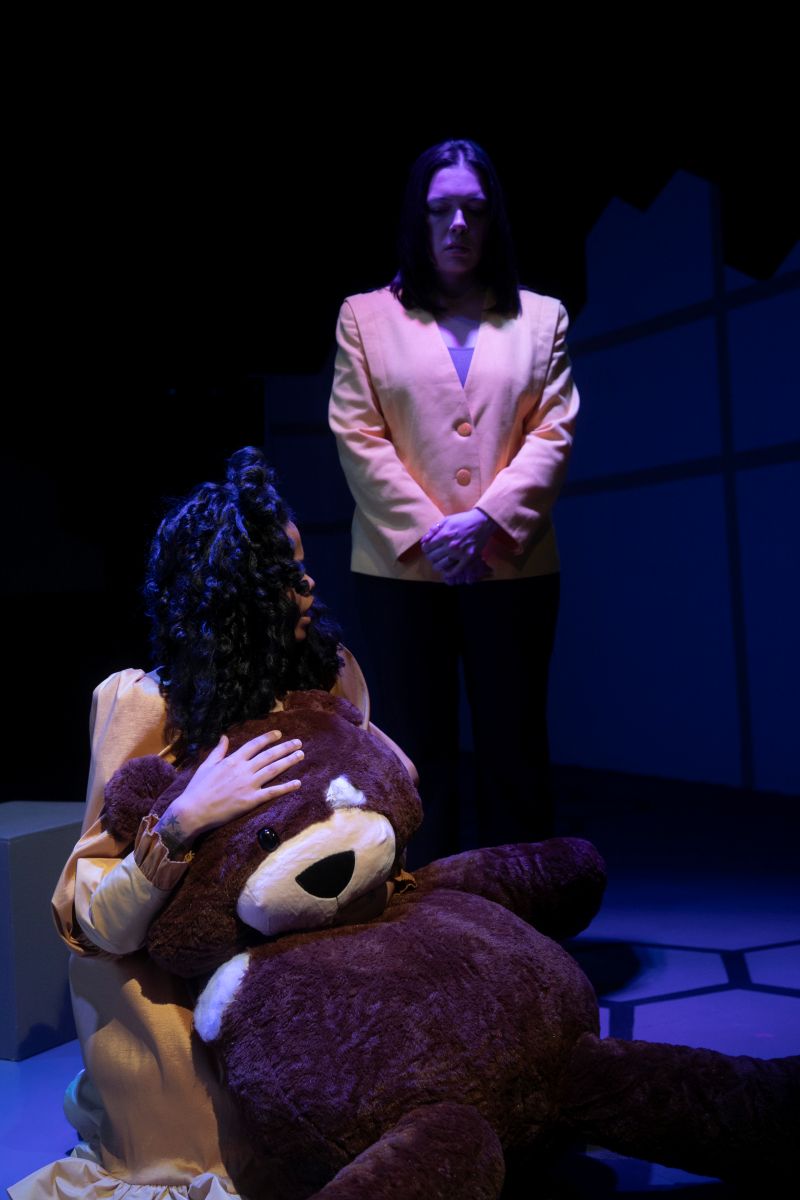
Adanya Koger-Hobson, Rakell Foye

But what about those bees in the title? Well, I’m glad you asked. I had to do some searching around to find out about the author’s motives. The disappearance of the bees in this dystopian world is a metaphor for the loss of natural procreation, and the severe consequences of human intervention by controlling a population based on the government’s mandates.

For me, that’s a bit of a stretch. But I get it. With a future world that has exploded with overcrowding due to the sheer numbers of people inhabiting it, the play delineates human intervention in the process of procreation. The control of pregnancies has nothing to do with the individual’s right or desire to have a baby, and everything to do with controlling the population and, therefore, the populace. 

It is a scathing indictment of the overreach into the reproductive rights of women. The destruction of the bees in our real world is alarming in itself. When used as a metaphor for the destruction of our world as we know it due to ecological and environmental choices we have unwisely made, Honey Bee Baby takes this scenario to its futuristic extremes. 


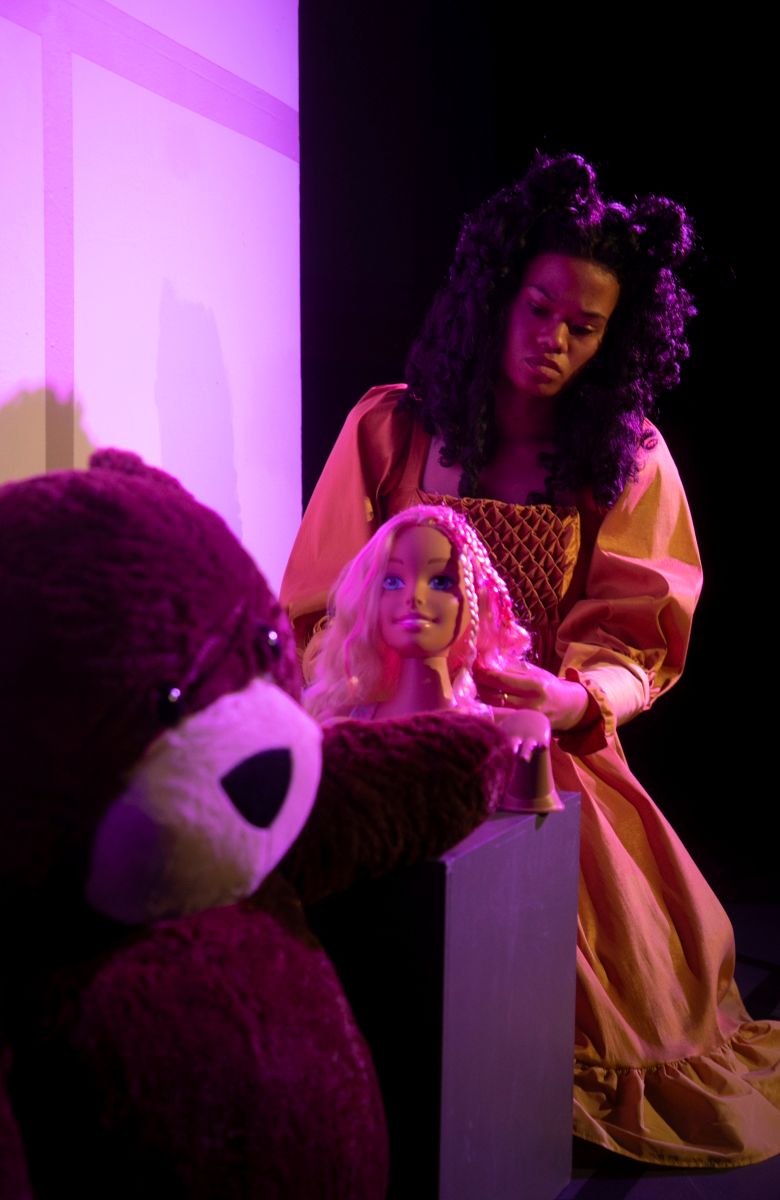
K.S. Garner, Kaitlyn Fowler
K.S. Garner, Sharon Maguire
K.S. Garner

Rapid Lemon Productions, under Max Garner’s leadership, has built a reputation for delivering bold and thought-provoking productions that tackle timely and relevant themes. This one is directed by Jalice Ortiz-Corral with what presents as a firm comprehension of the script and its messages. Using a child’s stuffed bee makes a nice nod to the bee concept. And the opening montage of projections designed by Garner himself, as well as the accompanying soundtrack, dovetails perfectly with the script and story line. That montage was as enlightening as it was entertaining and concludes with the proverbial mushroom cloud of destruction. 

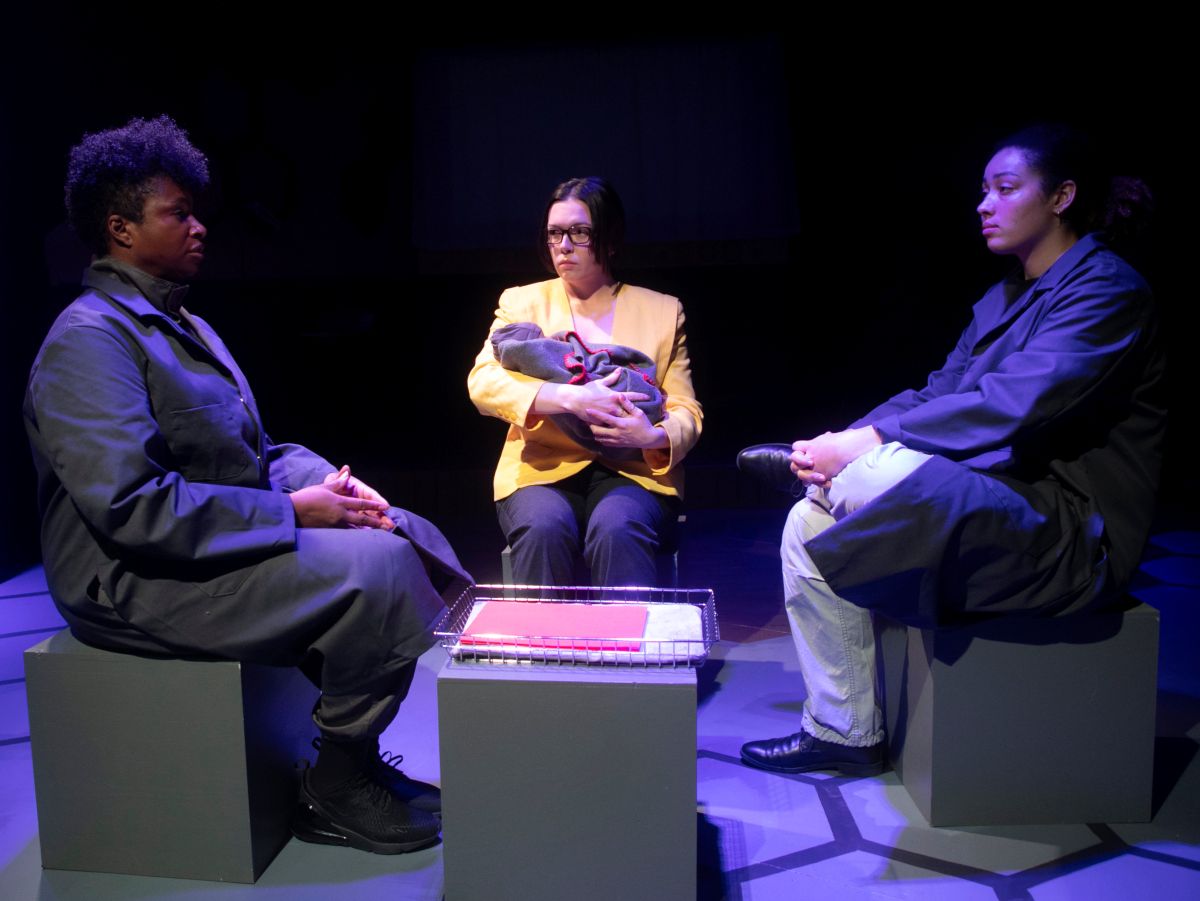
The set, designed by Justin Nepomuceno and the lights provided by Martin Smith are well suited to the action, displaying a variety of minimalist layouts conveying a number of locations. 

I was impressed with most of the cast. Several actors played multiple roles and while they didn’t seem to do a lot to differentiate themselves from one character to the next, they were well suited to their parts within the context of the material. I especially enjoyed Kaitlyn Fowler and Isaiah C. Evans, both of whom seemed quite comfortable with their characters. 

K.S. Garner did a fine job portraying Clarisa at the age of—I’m guessing—maybe five or six, though I would have liked to see her have a little more fun with the part of the sullen child. Sharon Maguire’s portrayal of Mother was slightly robotic, fitting the character’s constrained existence but leaving little room for emotional complexity until the story’s final moments. Rakell Foye shines as Melisa, skillfully balancing her character’s rule-abiding nature with her compassionate humanity, creating a protagonist worth rooting for.

Post-apocalyptic dramas are far from new. From Fahrenheit 451 to Soylent Green and Mad Max (though the latter is a movie), such cautionary tales have long warned of the dangers of bad governance and environmental neglect. Ortiz’s Honey Bee Baby continues this tradition, challenging audiences to reflect on what might happen if we don’t watch out.

Honey Bee Baby runs through January 26 at Strand Theatre, 5426 Harford Road, Baltimore, MD 21214.

Photos courtesy of Rapid Lemon Productions, by Shealyn Jae Photography. Header Image: Valerie Lewis, Sharon Maguire, Adanya Koger-Hobson in Honey Bee Baby.

Related Stories
"You, Me, The Reign" is a Soulful Album with Decades of Influences but Very Much of Baltimore 2025


Where Archive Meets Queer Magic

For me, going to the archives is a mental health and wellness practice. Seeing queer memories feels really healing.

A Photo Essay of Baltimore's Free Underground Music Festival

This October 10-12th, Subscape showcased experimental and genre-defying music from punk and noise to electronic and indie rock with a strong emphasis on local and regional talent. 

How a Silly Idea Evolved into the City's Beloved Competition

"In 2025, we were proud to return for the second straight year as presenting sponsor of the Kinetic Sculpture Race Powered by PNC," says PNC Regional President for Greater Maryland Laura Gamble.