Reading

Structurally Sound: Neil Feather in Skizz Cyzyk’s ‘Sound Mechanic’

Previous Story
Article Image

BmoreArt’s Picks: June 28 – July 4

Next Story
Article Image

Baltimore News: ‘Great Migration’ Exh [...]

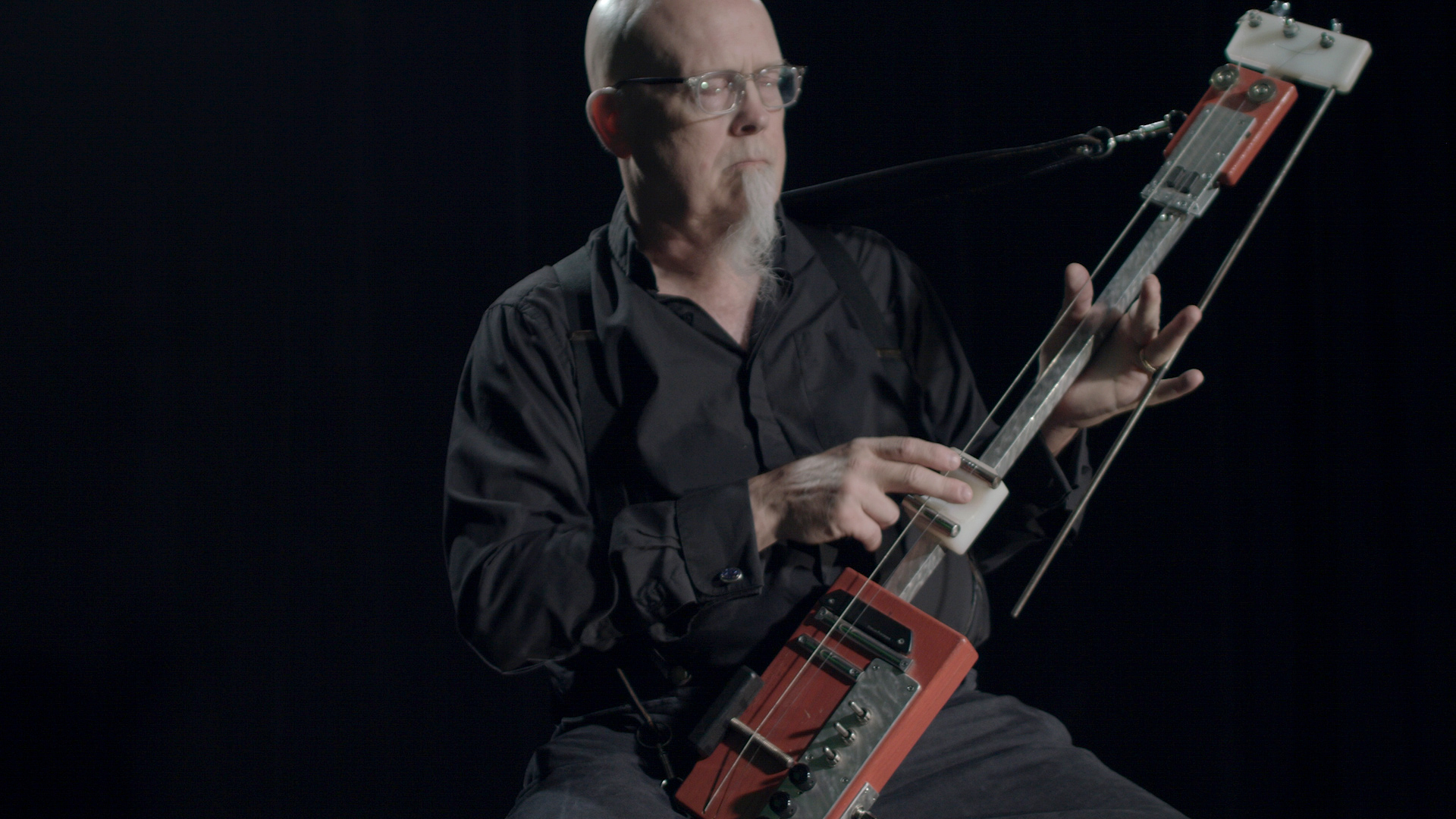
Neil Feather doesn’t listen to music. Not as background when the artist is working, anyway. “Clouds the mind,” he says.

It may seem funny for a sound sculptor to say, but as you spend time with the provocative insights Feather shares in the new documentary film Sound Mechanic, it makes sense. Feather is an artist for whom sound is very much a conscious engagement; it is not meant to be relegated to the background.

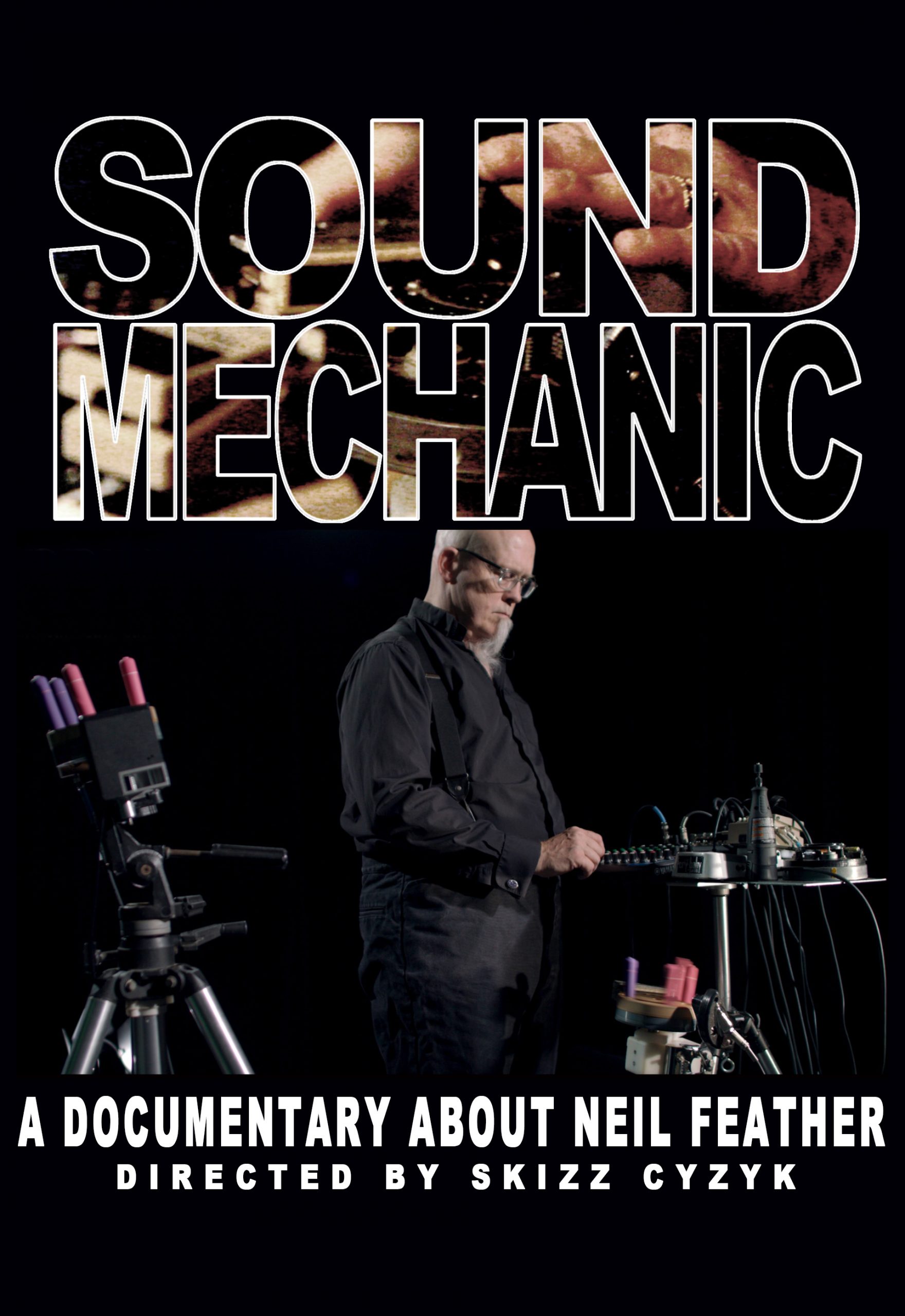
Sound Mechanic, directed by Skizz Cyzyk, is a verité journey into Feather’s world, filled with imaginative musical performance and Goldberg-esque contraptions bent on changing the ways audiences engage music-making. 

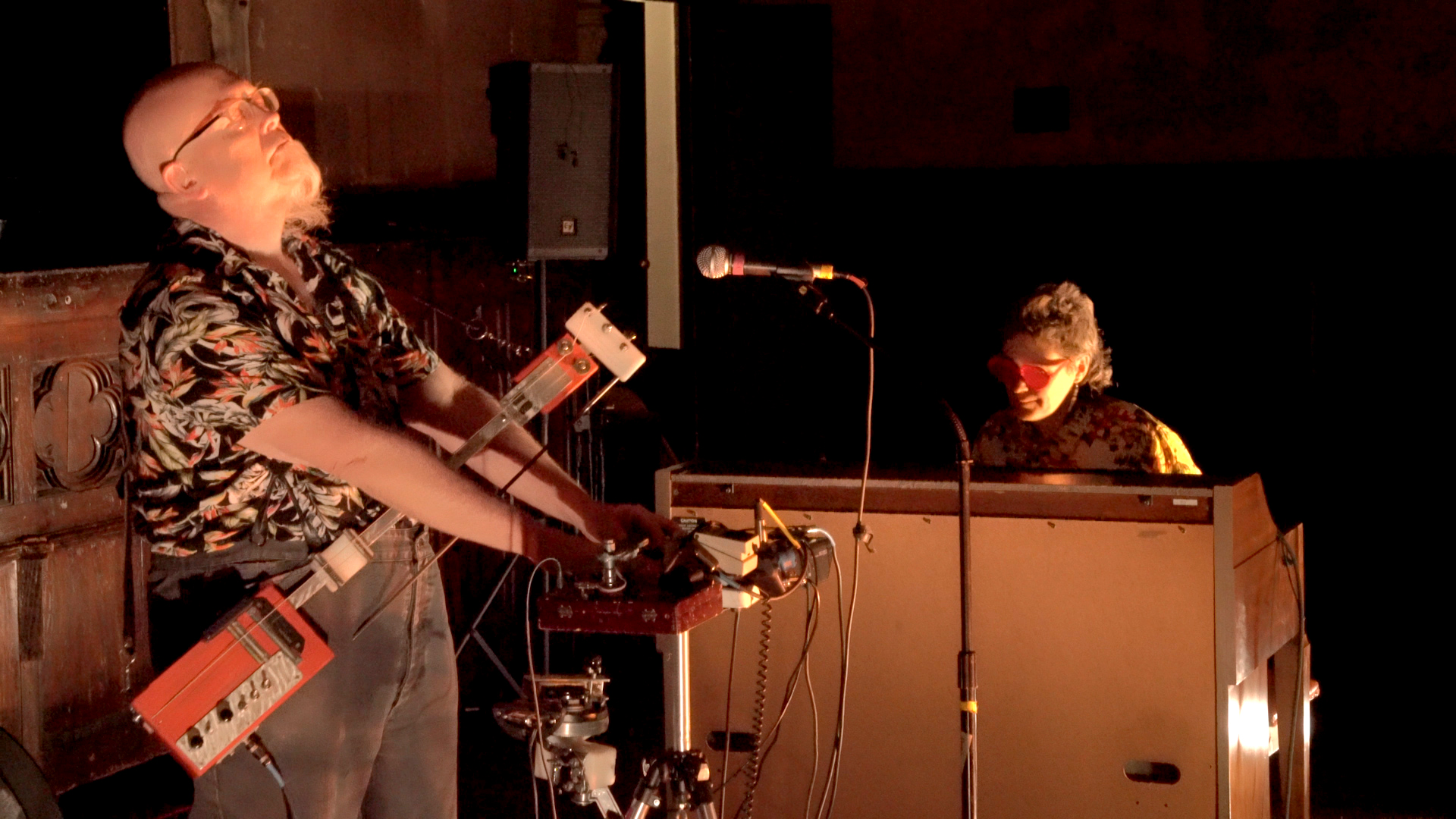
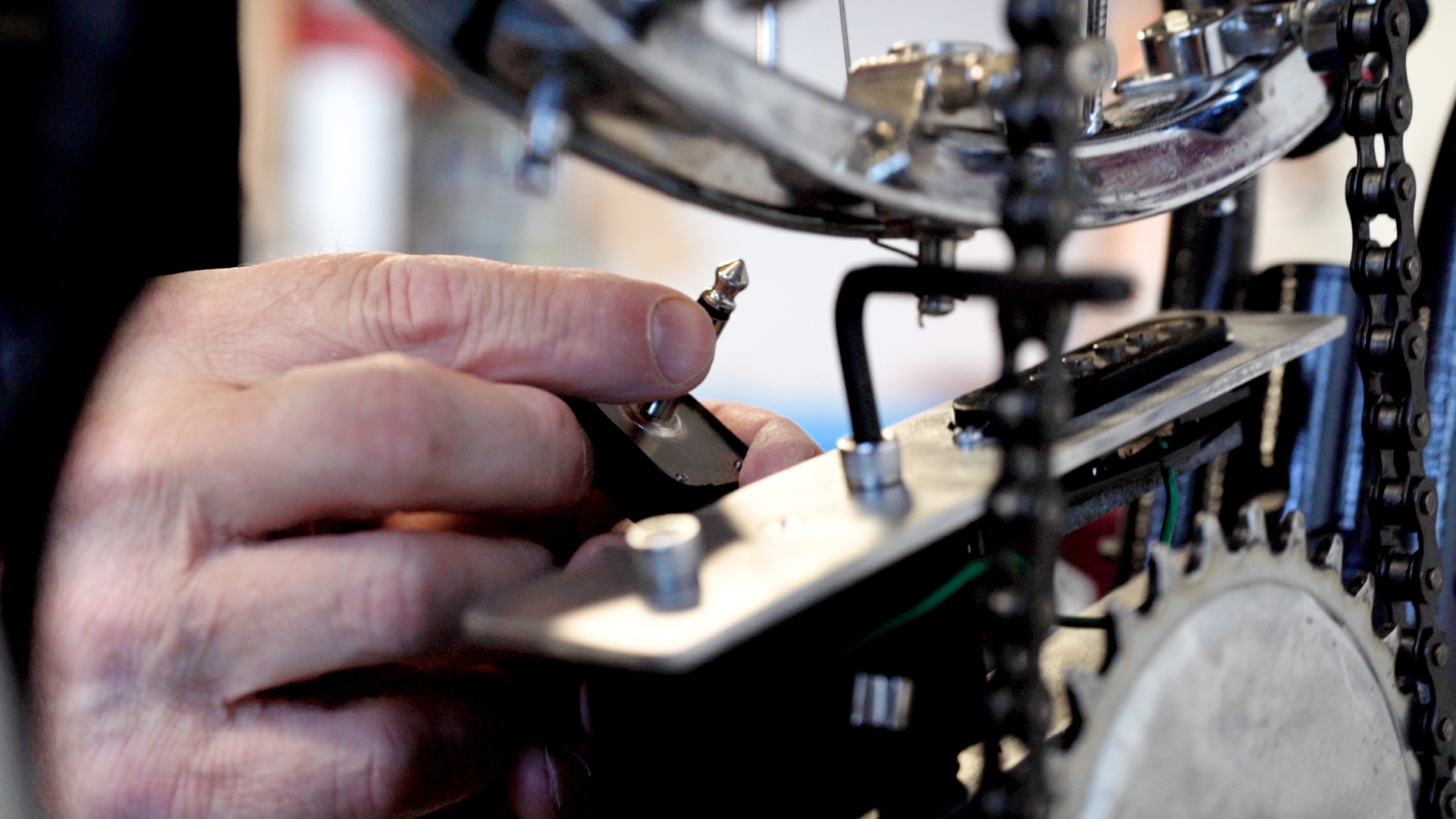
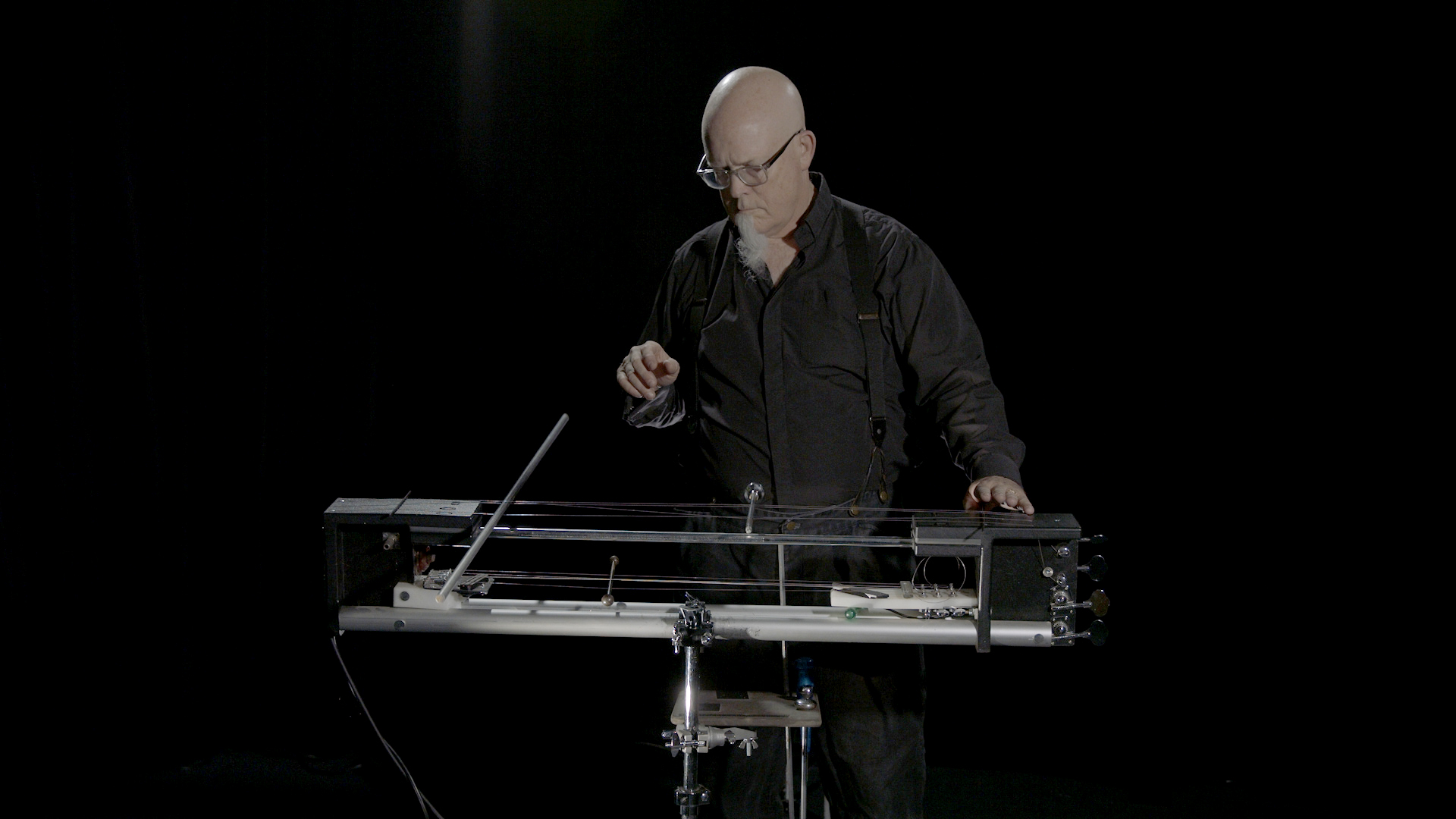
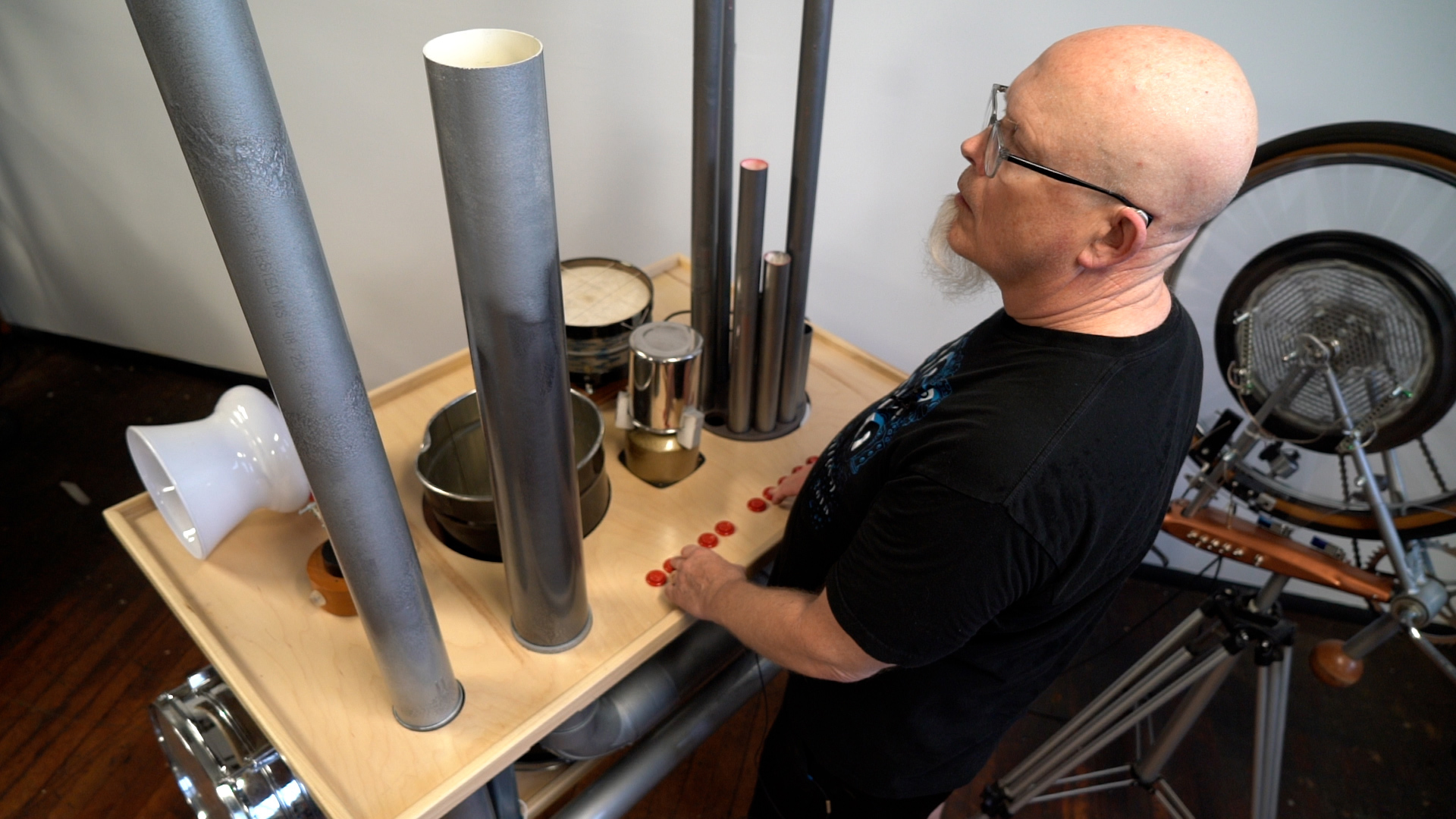
Feather’s instruments, crafted from magnets, guitar strings and pickups attached to bowling balls, bicycle parts and hobby horses, are given names as fantastic as the sounds they produce: the Vibrowheel, the Wiggler, the Contraction, the Former Guitar.  And over the years, Feather’s invented instruments have not only made him a staple of Baltimore’s experimental music scene, they have helped him garner numerous prizes, including both the Sondheim and the Trawick prizes in 2014, and a Guggenheim in 2016. 
 

Cyzyk, a prolific musician and filmmaker who has been a champion of underground and esoteric culture in Baltimore and beyond for decades, first encountered Feather’s work in the ‘90s, creating live music for a tENTATIVELY, a cONVENIENCE film

“I thought it was one of the coolest things I had ever seen or heard, and from that moment on, I was a fan,” Cyzyk says. 

Sound Mechanic devotes equal time to Feather’s studio practice as it does his performances. 

“I want to give the audience a chance to hang out with Neil Feather, to learn something about him, see what he does and experience his performances,” says Cyzyk. “I want to give a fly-on-the-wall view of Neil’s world, circa now.”


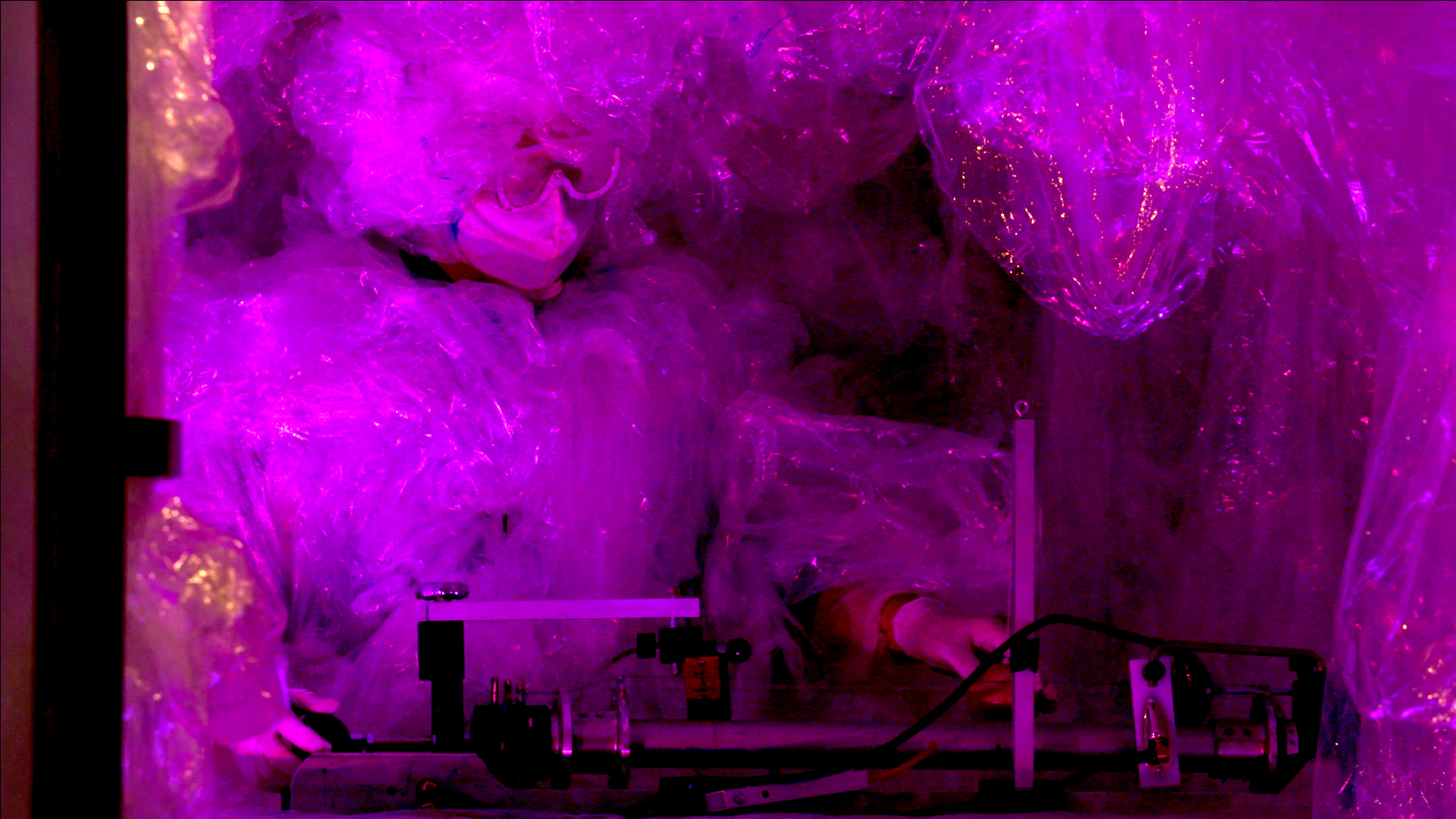
Cyzyk’s camera crew tours us through an open studio tour, offering deep dives into Feather’s materials and motives, and then provides extended showcases of those instruments in action. We’re treated to a mystical bath of sound and light with Laure Drogoul, Joe Meduza, and Jake Bee at Current Space, and an intense rock show with Zula Wildheart and Robert Beamer amidst the record bins at True Vine. We get delightful duets with Kristen Toedtman at the Red Room and Rupert Wondolowski at Black Cherry Puppet Theater. And the end result is more than a portrait of the artist at work; it’s a document of the uniquely collaborative spirit for which Baltimore is, and should be, known. 

Sound Mechanic is the latest in Cyzyk’s extensive filmography, including Hit & Stay, an examination of the lasting impact of the Catonsville Nine, which he co-directed with long-time collaborator Joe Tropea. 

“My themes are outcasts and underdogs, and my aesthetic is rough-around-the-edges,” Cyzyk says. “I’m drawn to my subjects because they’re doing something different that I find appealing. They are outside looking in, but in my opinion, they are better than what’s in. I guess I see a lot of myself in them.”

His most recent documentary, Icepick to the Moon, which explores the career of the Alabama-based avant-garde artist and musician Reverend Fred Lane, took 20 years to complete. 

“I stressed over how to fit all of the necessary story into the running time of a feature-length documentary,” Cyzyk says. “After Icepick, I knew I wanted to take a different approach on my next film. I had the idea to simply find an interesting person and follow them around with a camera for one year.”


Inspired by the restrictions of Dogme 95 filmmaking, Cyzyk went on to create a set of rules for Sound Mechanic:

1). As much as possible, be productive without funding/budget.

2). As much as possible, be productive without additional crew.

3). Do not set out to tell a story unless one unfolds during shooting.

4). No talking head interviews.

5). No archival materials.

6). No more than a two-year filmmaking process: shoot for the first year, and post-production for the second year.

The result of these rules, combined with Feather’s on-camera warmth and accessibility, is a film that is artistically generative and inspiring, even for the filmmaker. 

“I treat my filmmaking as if I’m making music: finding the right structure, finding the right rhythm and pace for the editing, saying what I want to say,” says Cyzyk. “Making this film reinforced something I’ve felt for a long time: anything can be music.” 


****

Sound Mechanic screens for one night only at 9 pm, June 30, at the Charles Theatre, and a soundtrack album will soon be available from VG+ Records


Images courtesy of Skizz Cyzyk

Related Stories
MDFF Celebrates the 55th Anniversary of "Multiple Maniacs" with a Special Friday Night Screening at the Parkway

As America deindustrialized, John Waters and his keen observations of Baltimore's decadence have become a chief export. What more content can be extracted? Refined?

A Case for Why Maryland's Version of the Cinema Olympics is Unique... and Better for Film Artists

Since its inception in 1999, the MdFF has always defined itself as a discovery festival, a place to see films you might not see anywhere else. This year's Festival pivots to fall, running November 5-9.

"You, Me, The Reign" is a Soulful Album with Decades of Influences but Very Much of Baltimore 2025


Where Archive Meets Queer Magic

For me, going to the archives is a mental health and wellness practice. Seeing queer memories feels really healing.