Reading

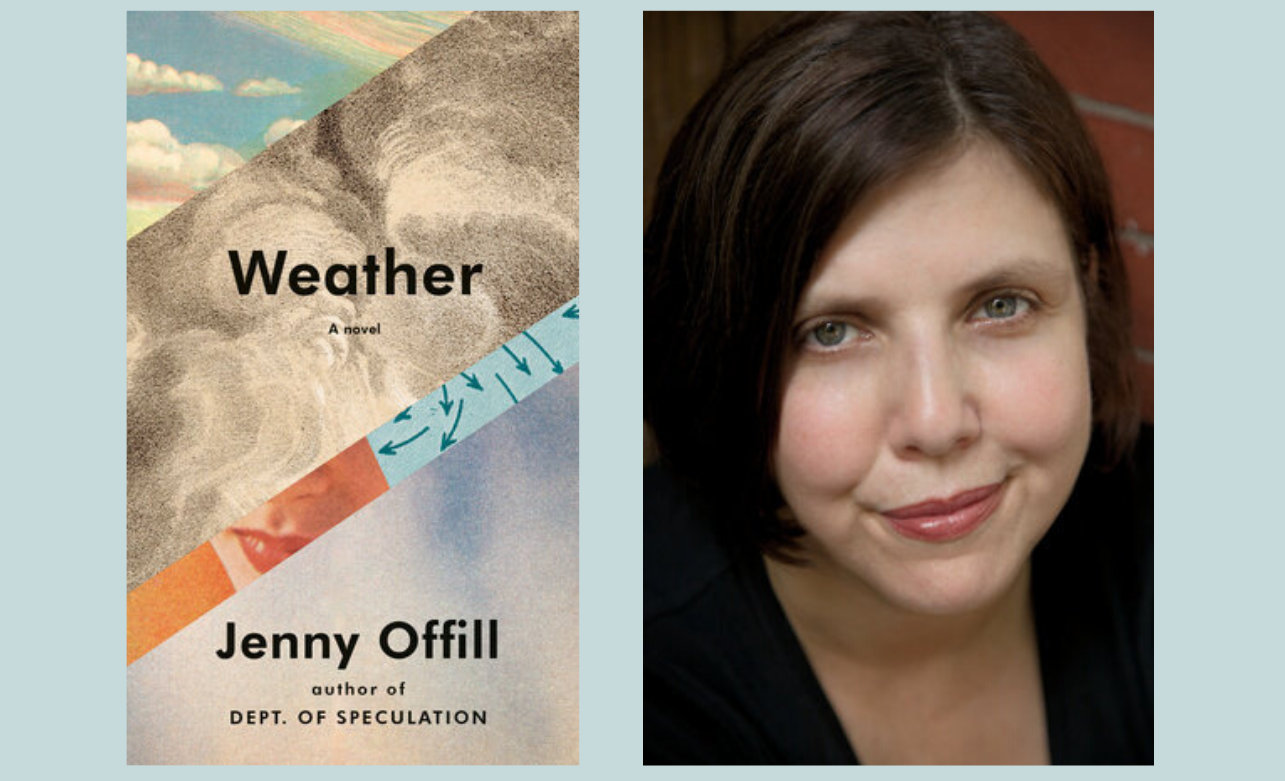
The Climate Is Dreadful in Jenny Offill’s ‘Weather’

Previous Story
Article Image

BmoreArt’s Picks: April 14-20

Next Story
Article Image

Collecting from the Comfort of Home Via Innovativ [...]

Just a few weeks ago, on a rainy Lyft home, I was sitting passenger side to an older Pakistani driver, eavesdropping on his conversation with the Dutch newlyweds in the backseat, when news broke about a New Rochelle man testing positive for coronavirus. The driver quipped about the couple’s ill-timed honeymoon and we laughed. We shared our amusement at the novel sight of face masks and offered up theories on “community spread.” At the red light after the couple’s drop-off, the driver took a used Clorox wipe to his steering wheel while I suppressed a cough left over from a recent cold. The rain had stopped, but the skies would remain gray into the evening.

Dreary is the forecast for most of Jenny Offill’s third novel, Weather. Yet Offill delivers news of the coming doom in clear, piquant prose, arranged as glimmering diaristic fragments akin to her previous novel, Dept. of Speculation. Entries spanning no more than a page set the everyday against scholarly dispatches from scientific history, theology, and folklore. Where Speculation explores the interiors of a troubled marriage, Weather takes an atmospheric view of dread, from domestic to existential, that is particular to our 21st-century life.

In 2016, the impending apocalypse preoccupying the narrator, Lizzie Benson, is not ushered by human disease but by climate change. Years after giving up on grad school, Lizzie signs on as part-time assistant to her former mentor, Sylvia, a celebrity amongst climate activists and doom preppers alike. Her job mostly entails responding to listener emails for Sylvia’s podcast, Hell and High Water, a title “guaranteed to attract the end-timers.”

Offill props character neuroses against the backdrop of a world in turmoil, one that nags us from the palm of our hand. With our devices, we’re hyperconnected yet physically distant, shackled by our plain mortality, our corporeal selves.

Collective dread creeps into Lizzie, despite being armed with an exacting, sardonic voice that made me snort aloud in several instances. Of late, listener questions have grown desperate, from “What is the philosophy of late capitalism?” to “What are the best ways to prepare my children for the coming chaos?” Lizzie’s reply to the latter: “You can teach them to sew, to farm, to build. Techniques for calming a fearful mind might be the most useful though.”

Sure, the planet is in trouble, but the demands of daily life continue. As a librarian in the university where she squandered her doctorate, Lizzie pulls books for the likes of a “doomed adjunct” who “has been working on his dissertation for eleven years.” In the mornings, she goes to battle against “the woman with the bullhorn” barring parents from entering her son Eli’s school building, and wonders what the other mothers think of her “drab clothes and fancy glasses.” At night, she and her husband, Ben, a Classics PhD turned video game designer, contrive intimacy by buoying made-up proverbs such as “Married sex is like taking off your own pants.”

Offill props character neuroses against the backdrop of a world in turmoil, one that nags us from the palm of our hand. With our devices, we’re hyperconnected yet physically distant, shackled by our plain mortality, our corporeal selves. There’s always a faraway genocide, an endless war, a social cause to stand for. Yet how absurd to imagine that sipping from a single plastic straw has ramifications beyond us. “There are fewer and fewer birds these days. This is the hole I tumbled down an hour ago,” Lizzie muses in a rare moment of peace. “I finally stop clicking when my mother calls.”

Lizzie is most burdened by these earthly concerns when coming to the aid of her brother, Henry. An obsessive viewer of refugee crisis videos and the TV show My Strange Addiction, Henry’s anxieties range from the self-deprecating to the deranged. He’s convinced he signed his soul to the devil as a child, and cleans his newborn daughter with a squirt gun to avoid hurting her. Every some-odd month, Henry misses how drugs make “the world stop calling to him,” and compels Lizzie to pull him from the depths of relapse.

Clinging is a running motif in Weather. Lizzie lingers at her former university, and haunts the neighborhood bar where she once worked. The owner of a bodega she frequents fosters a street cat because “his wife no longer loves him.” Lizzie’s aging mother, a dependent of the crumbling American welfare system, nourishes herself with “the light, the vine, the living bread.” A woman in Lizzie’s meditation class counts down her steps toward enlightenment. She’s on her second to last, described by a Japanese word that means, “bucket of black paint.”

Do our fixations prepare us for disaster, or just fill the time until it comes? Offill eschews any satisfying answer. A six-month sobriety chip, a mouth guard for nighttime grinding, will have to do for now. Elsewhere, Lizzie wonders if there’s higher good in our devotion to each other. “The core delusion is that I am here and you are there,” is her shrewd parting thought. Perhaps it is not so radical to say we are all we need.

“Of course, the world continues to end,” Sylvia says to Lizzie after a long hiatus from the podcast. Then she gets off the phone to water her garden.


To order locally, head to Greedy Reads online.

Related Stories
The Definitive Design Textbook's Seventh Edition Diversifies the Canon

The idea of a master narrative and the Eurocentric bias of earlier editions of this text have been pressured, and forced to make room for multiplicity and inclusivity. The history of graphic design appears here fresher, livelier, and more relevant.

MDFF Celebrates the 55th Anniversary of "Multiple Maniacs" with a Special Friday Night Screening at the Parkway

As America deindustrialized, John Waters and his keen observations of Baltimore's decadence have become a chief export. What more content can be extracted? Refined?

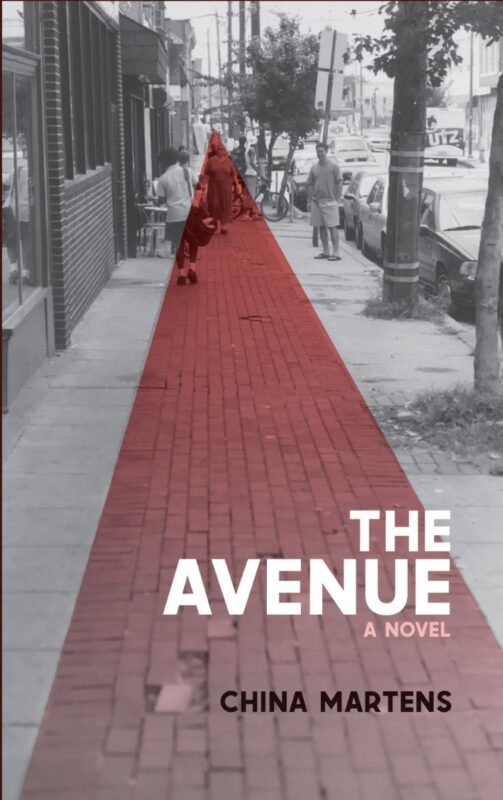
China Martens' Debut Novel is a Striking Polaroid of Early Noughties Mayhem and Motherhood in Baltimore

Martens is a focused storyteller who delivers a strong narrative. The book is achingly heartfelt yet a whole lot of fun, a heady read by a writer who knows her craft and lets it fly.

BmoreArt’s Not to Miss List

This weekend, September 12-14, indulge in your lit-love with the return of the Baltimore Book Festival. With over 80 authors and six stages, the sheer number of events, readings, and panels on the itinerary could fill a library in itself. Here are a few recommendations from our team.