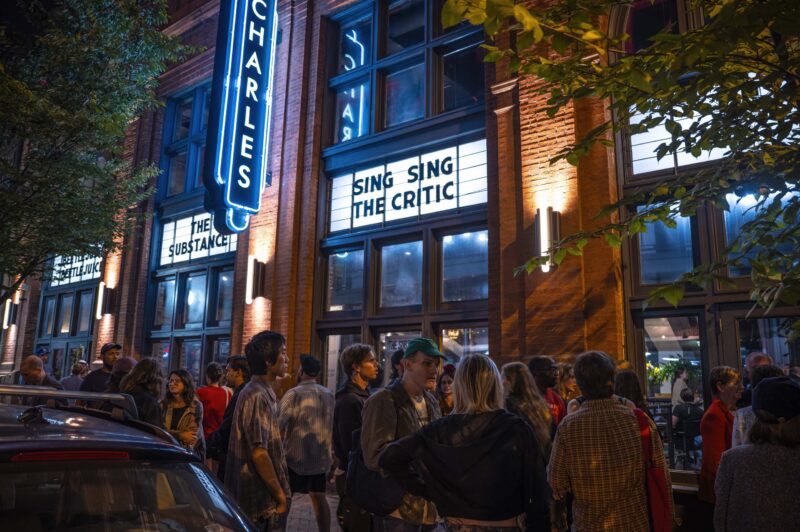
While the festival is rooted in Baltimore, the Parkway’s new Executive Director Nancy Proctor, who started in August, states its mission is to think well beyond city limits.
“This is the Maryland Film Festival,” Proctor emphasizes.
In the late 1970s and 80s, Maryland significantly boosted its film production profile after creating the Maryland Film Commission and Film Office. Baltimore even briefly branded itself as “Hollywood East” in the 1980s, leveraging its cost advantages.
But over time, the state lost ground as other regions ramped up their incentive programs. Georgia, Louisiana, and New Mexico namely, putting money into building infrastructure and offering generous tax credits, drawing the kinds of big-budget projects that once looked to Maryland. While in recent years Baltimore remained a location for iconic productions like “The Wire,” “House of Cards,” and “Veep,” the volume of large-scale film and TV work has since slowed.
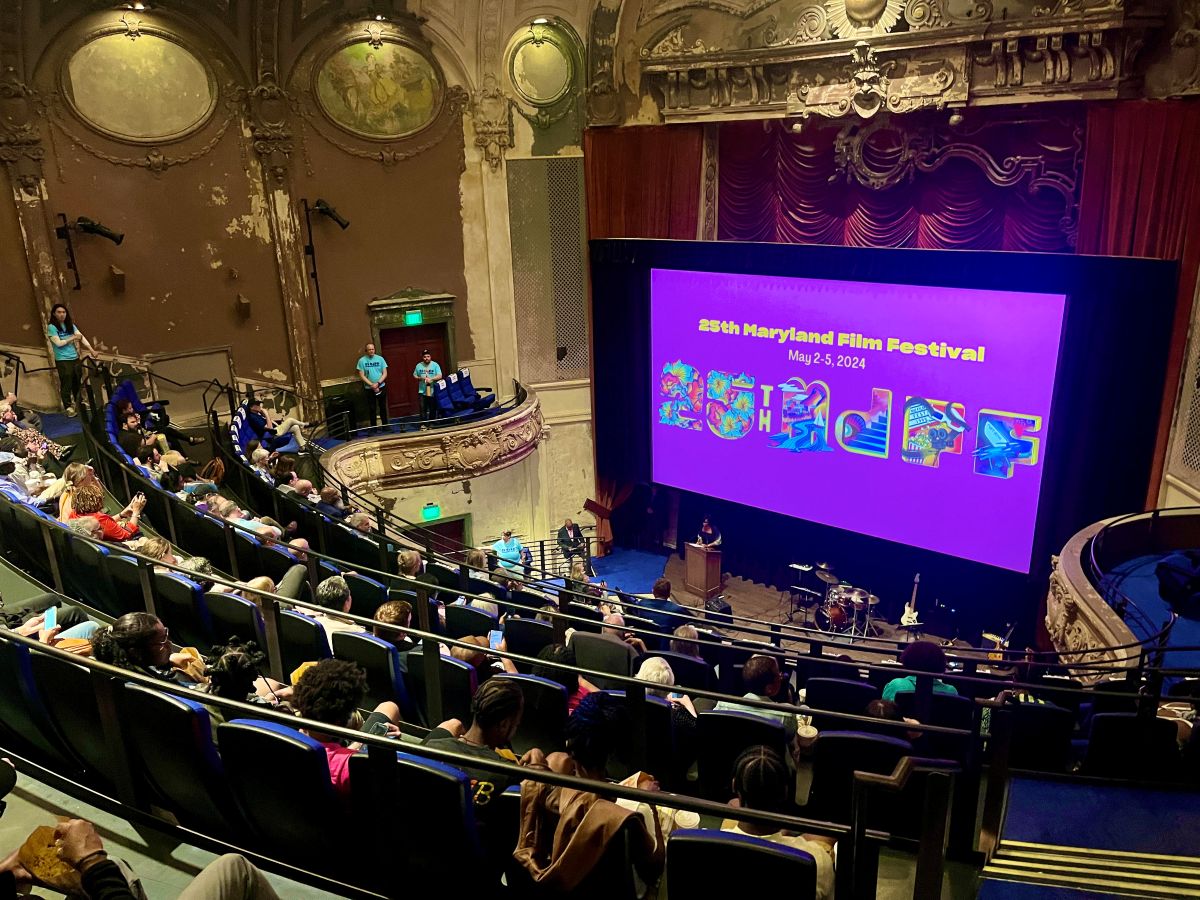
Today, with the Parkway and the Maryland Film Festival, leaders see an opportunity to revitalize the state’s place in the industry—not just as a backdrop, but as a hub for both production and exhibition on the East Coast. That momentum was reinforced last year when Governor Wes Moore officially declared May 2 as Maryland Film Festival Day, honoring the festival’s 25th anniversary and cementing its role in the state’s cultural landscape.
Proctor also sees an opening, stating Hollywood’s major studios have grown increasingly risk-averse, outsourcing work to smaller production houses across the country, creating opportunities for cities like Baltimore—if the infrastructure is in place.
“Baltimore and Maryland with the range of geography here is an excellent place for location scouting,” Proctor explains. “But when those smaller studios get here, they need to be able to access the equipment and crews for the shoot. The Parkway can play a role in connecting those who need resources with the universities and sound stages that already exist in the city.”
Already, universities like Morgan State—with its new sound stage—and Johns Hopkins and MICA Film Center have assets to offer. The Parkway’s role, Proctor argues, is to serve as both a hub for screening and a connector for production.