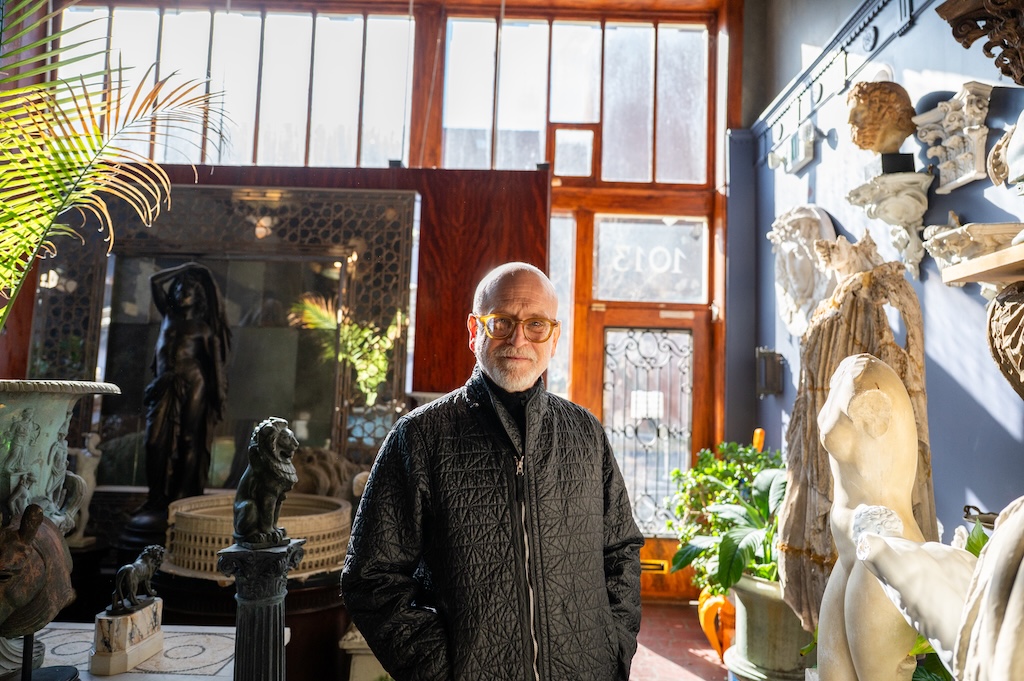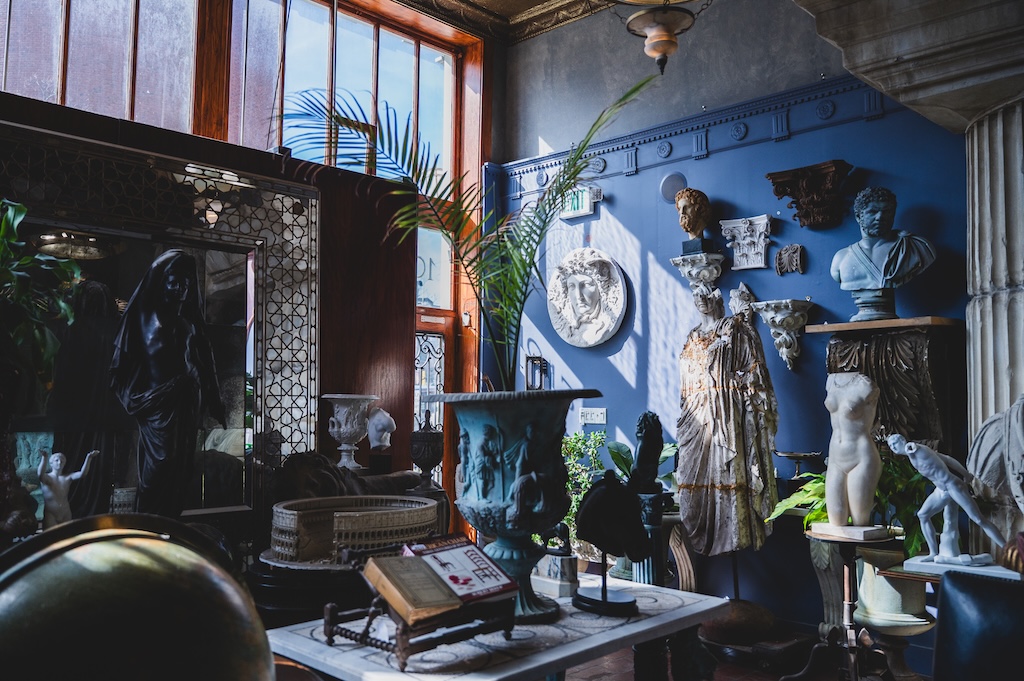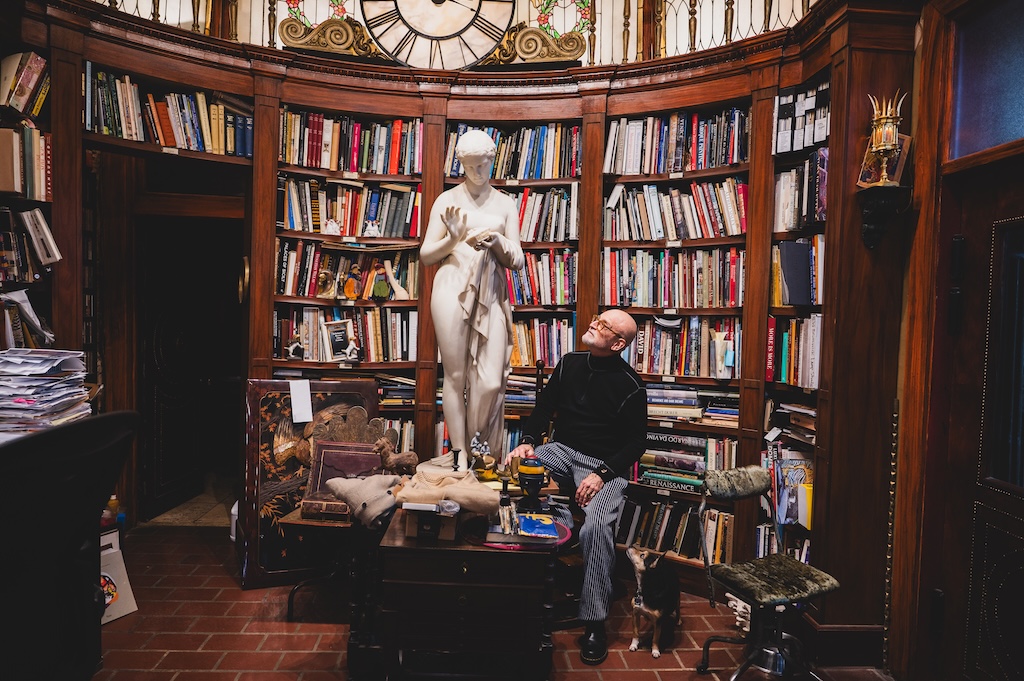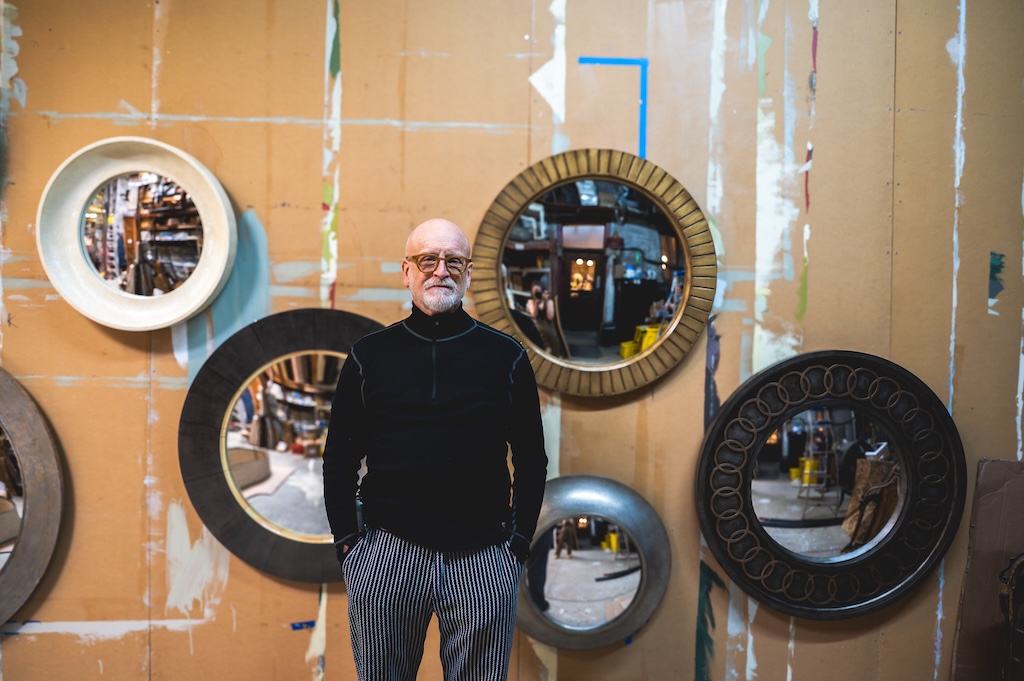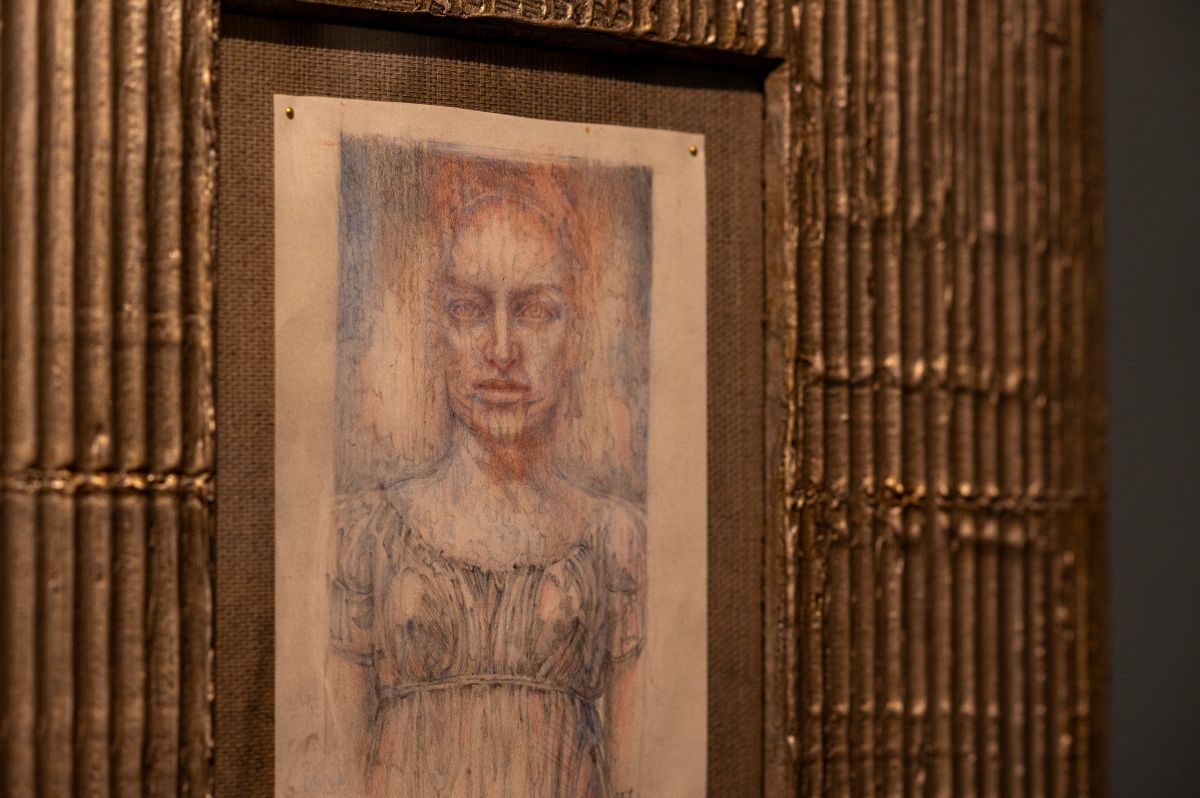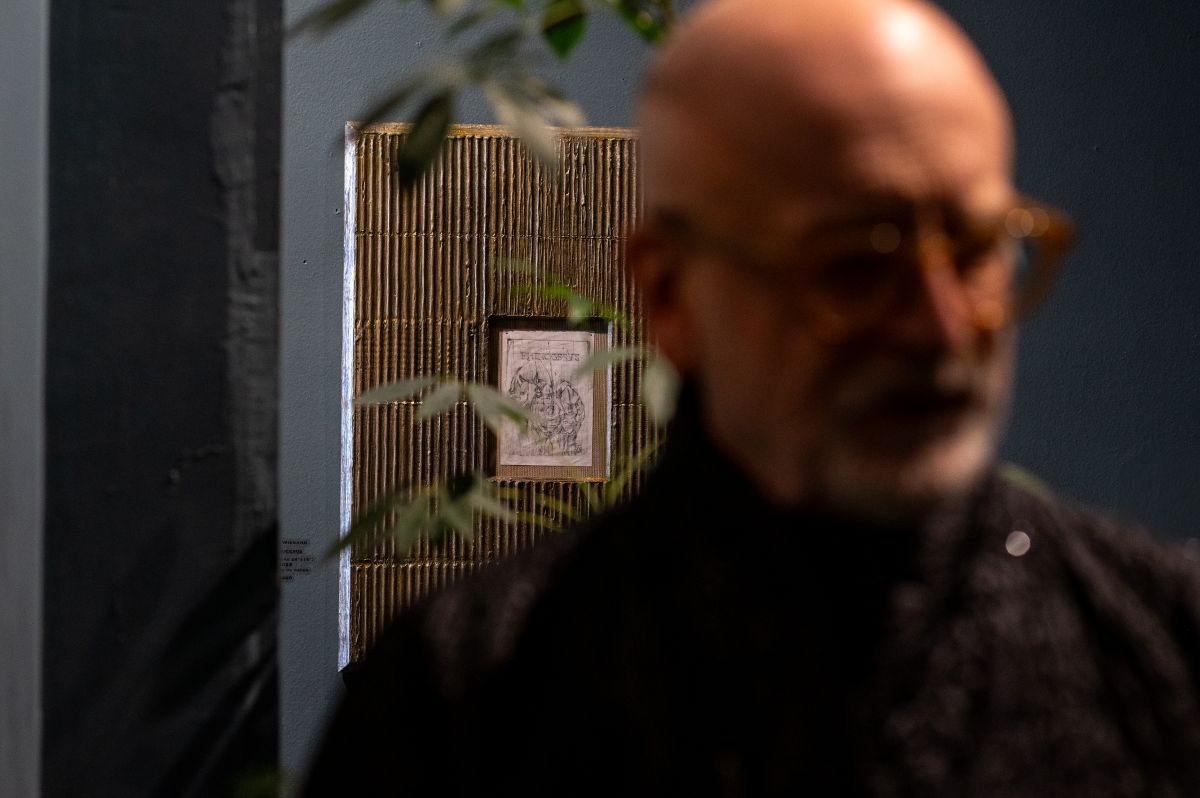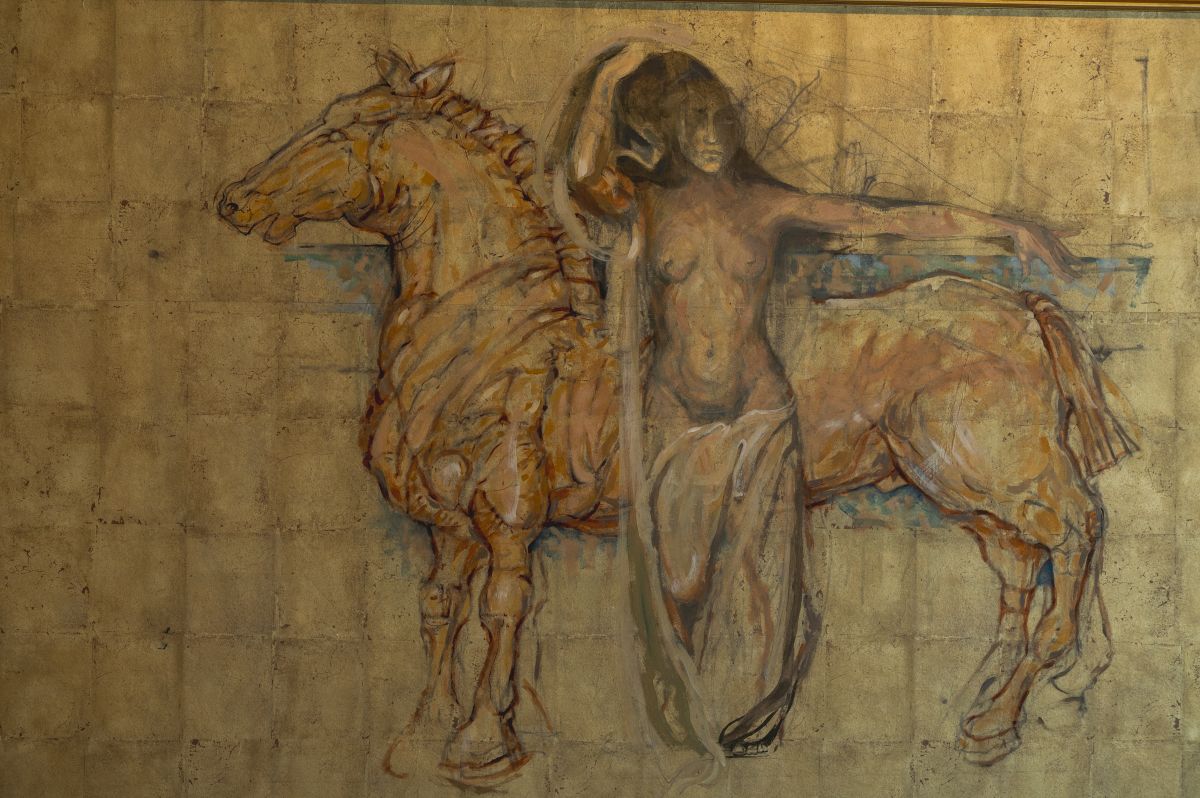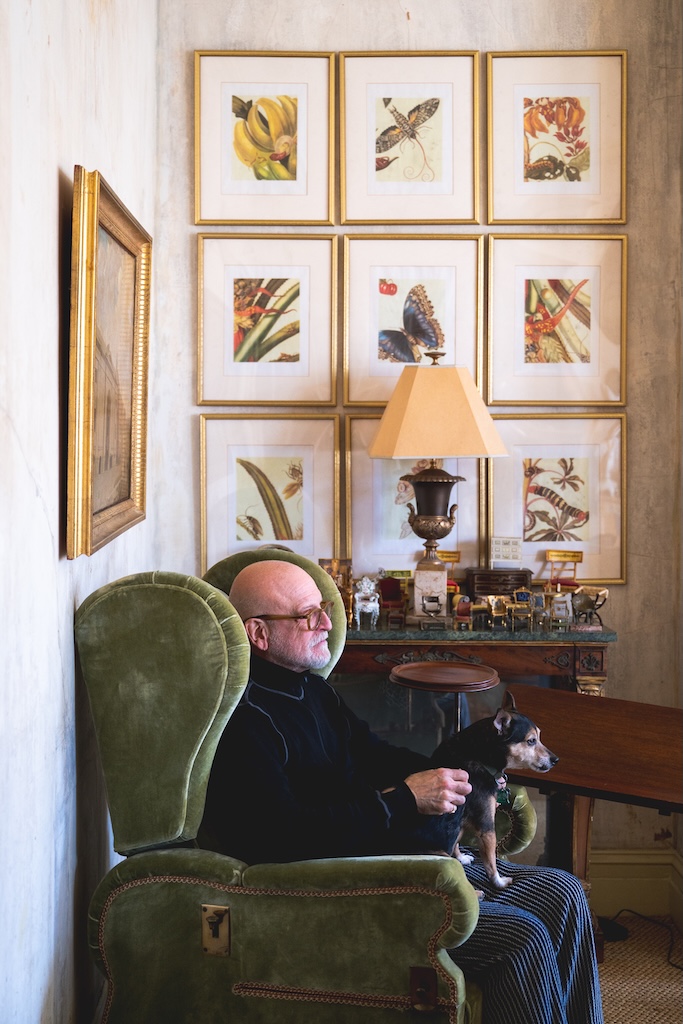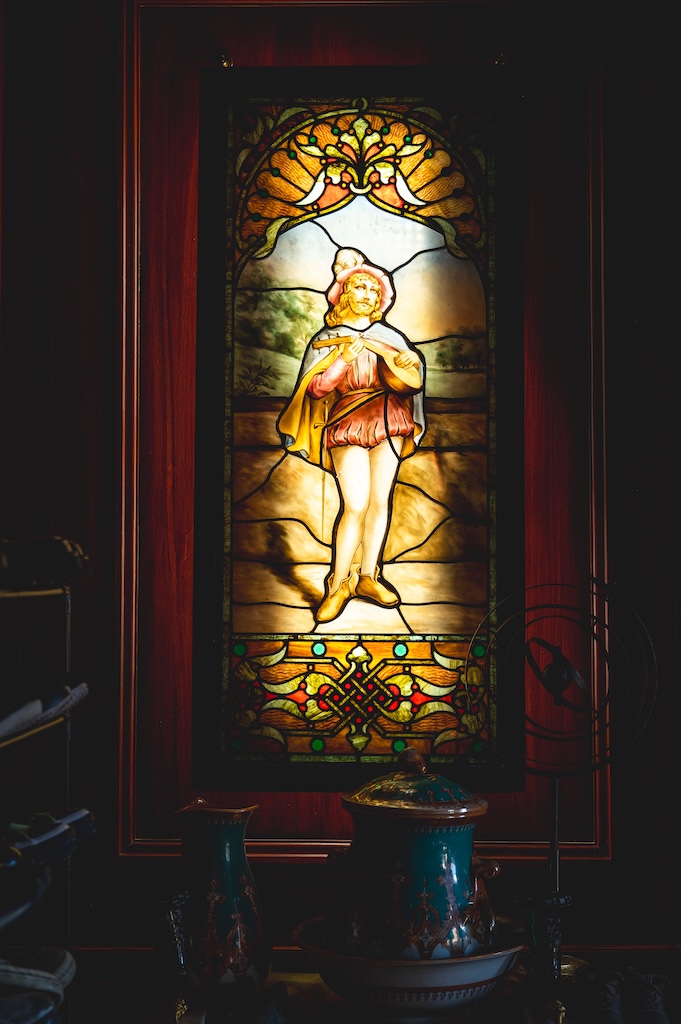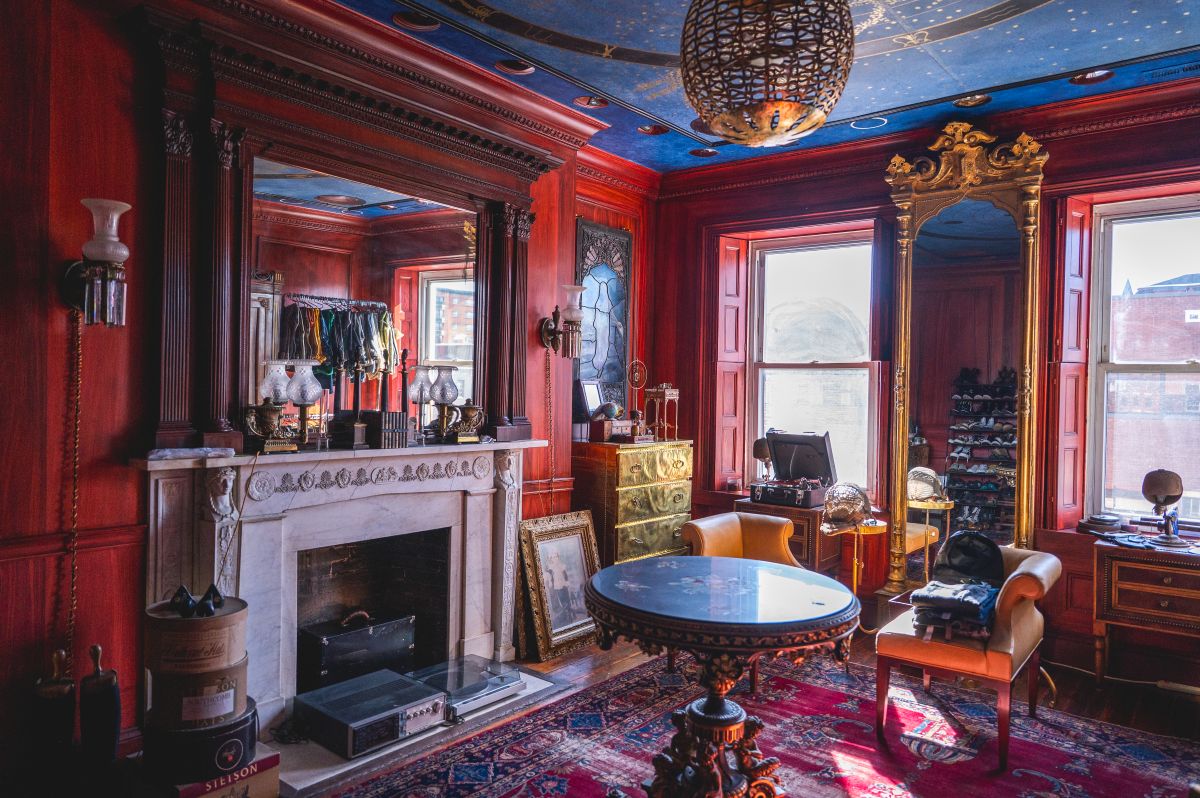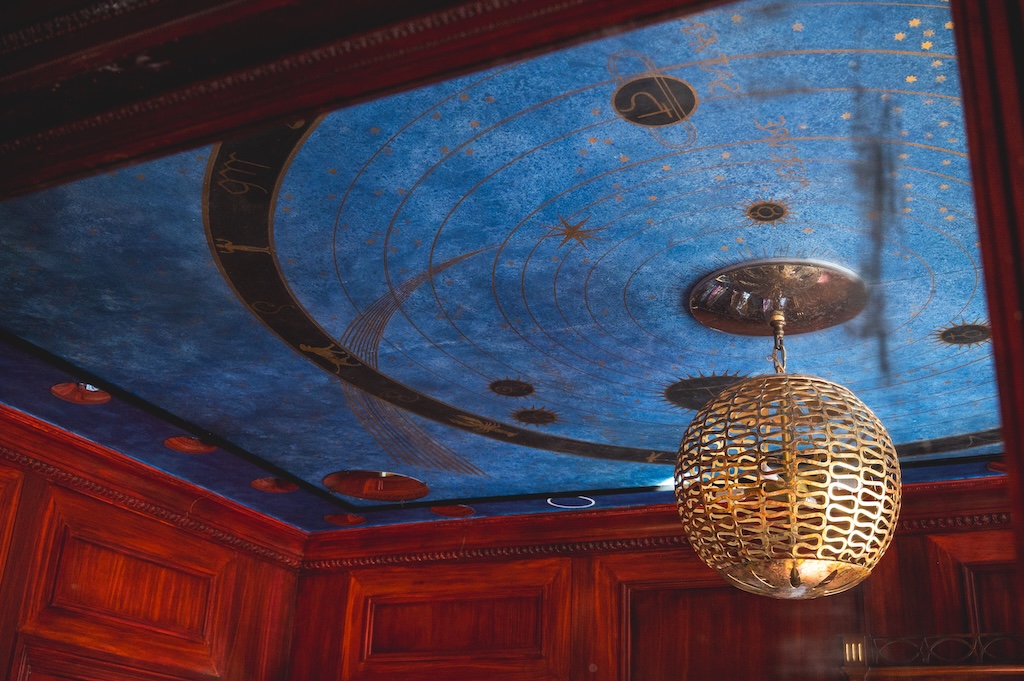

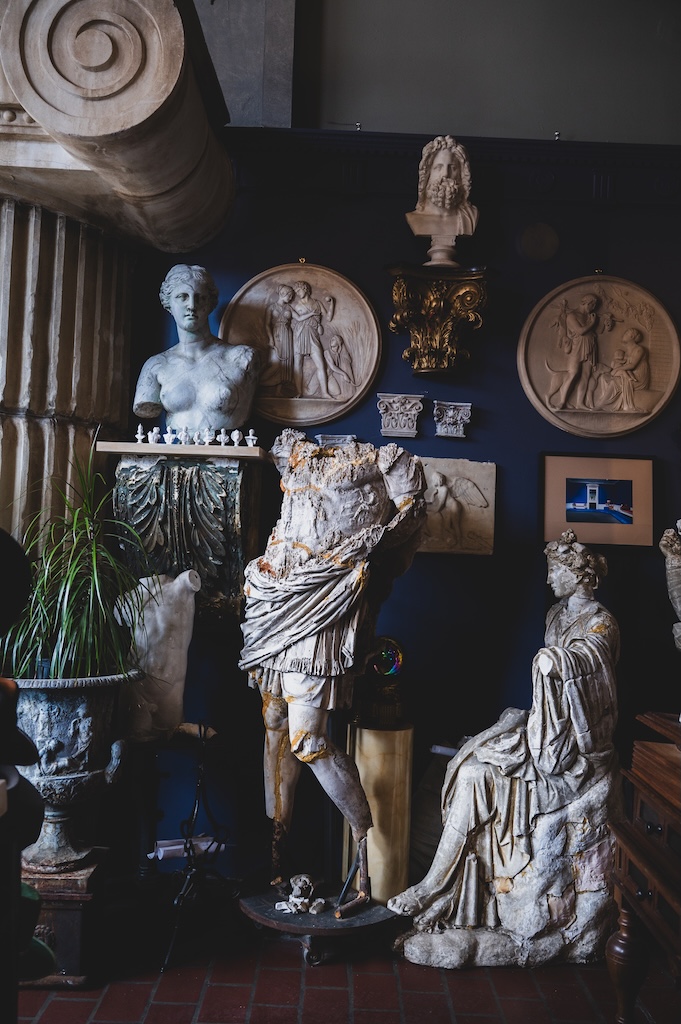
The McLain Wiesand studio on Cathedral Street is a kind of heaven for aficionados and connoisseurs of beautiful neoclassical inspired objects. Located in a 19th century townhouse in Mount Vernon and operated by artist David Wiesand since 1986, the custom built furniture workshop and showroom hosts an enthralling mix of original historic objects, lovingly created reproductions, and elegant adaptations where art history and technical expertise go hand in hand.
Over the course of a forty-year career devoted to restoring, reproducing, and interpreting beautiful things, the McLain Wiesand operation has grown to include 4,500 square feet of workshop, a showroom, and offices as well as a beautifully appointed living space. Originally, the business focused on 18th and 19th century art, antiques, and decorative objects but Wiesand redirected the focus in the early 90s to the design and manufacture of original furnishings and decor with a strong neoclassical influence. Their offerings include painted and finished wood, wrought iron, and cast decorative elements made from in-house molds. The business is known throughout the region for its decorative painted finishes for interior spaces including consoles, beds, chairs, cocktail tables, cabinetry, lighting, and architectural elements.
It makes perfect sense that a classically trained visual artist sits at the helm of this organization. That artist is David Wiesand, a Baltimore native whose creativity remains grounded in an active drawing practice inspired by history. During a recent visit, he joyfully showed me a charming and accurate drawing of a tall, antique case clock. Made when he was just ten years old, the model, his grandfather’s clock, exists as a harbinger of the rich artistic life he has manifested. Both the clock and the drawing now sit side by side, keeping one another company in his home above the shop.
We discussed other examples of his earliest influences, opportunities that empowered him to intentionally design every element of his environment. That same child wanted a belt just like one worn by Lowell Nesbit, a visitor to his parents home. It was a revelation to Wiesand when Lowell told him he’d made the belt himself. He remembers wanting toy soldiers like those he saw in a children’s film. At age seven, he was not prepared to carve them, so he set about making a set of paper cut-outs of the army.
Looking back even further, Wiesand shared that his father was a collector with a construction company, Atlas Contractors, and a formative influence upon Wiesand’s understanding of craftsmanship, historical reproduction, and collaboration. His grandfather had the collector’s gene as well, and many of the sculptures, dishes, and paintings that Wiesand still cherishes were acquired first by him.