Reading

Litscope: Sagittarius and Accidentally Wes Anderson

Previous Story
Article Image

Baltimore News Updates from Independent & Re [...]

Next Story
Article Image

BmoreArt’s Picks: December 8-14

Whew. We’ve finally made it to the last month in a truly challenging year. And just like the fireworks we’ll watch on New Year’s Eve (at home or socially distanced with masks on), the planets can’t help but to go out with a bang. November 30 brought us a full moon eclipse (the Moon appears to disappear) in Gemini, the sign of the mercurial thinker; December 14 will give us a total solar eclipse (the Moon covers the Sun) in the sign of fiery and adventurous Sagittarius. Think of eclipses like a big jolt of energy, a cosmic shot of espresso that forces us into necessary change. While eclipses aren’t always comfortable, they do immediately clear out the old and usher in the new. 

As the eclipses shake us up, we welcome lively Sagittarius season. Ruled by Jupiter, the planet of luck, Sagittarius is a complex fire sign. Symbolically represented by the archer, Sagittarians can be optimistic, enthusiastic, intellectually engaging, and witty. They can be happy glamping outdoors or sitting next to a fireplace discussing Kierkegaard. Maybe this is why they are also symbolized by the centaur, or Chiron, from Greek mythology. This half-man, half-horse works well as a metaphor for Sagittarians because they harness an animal-like drive and clever curiosity at the same time. Sagittarians can be verbally blunt to a painful point and impatient as hell, but as friends they’re loyal to the end. Last but not least, they love being on the go! This month’s book selection salutes this restless spirit.


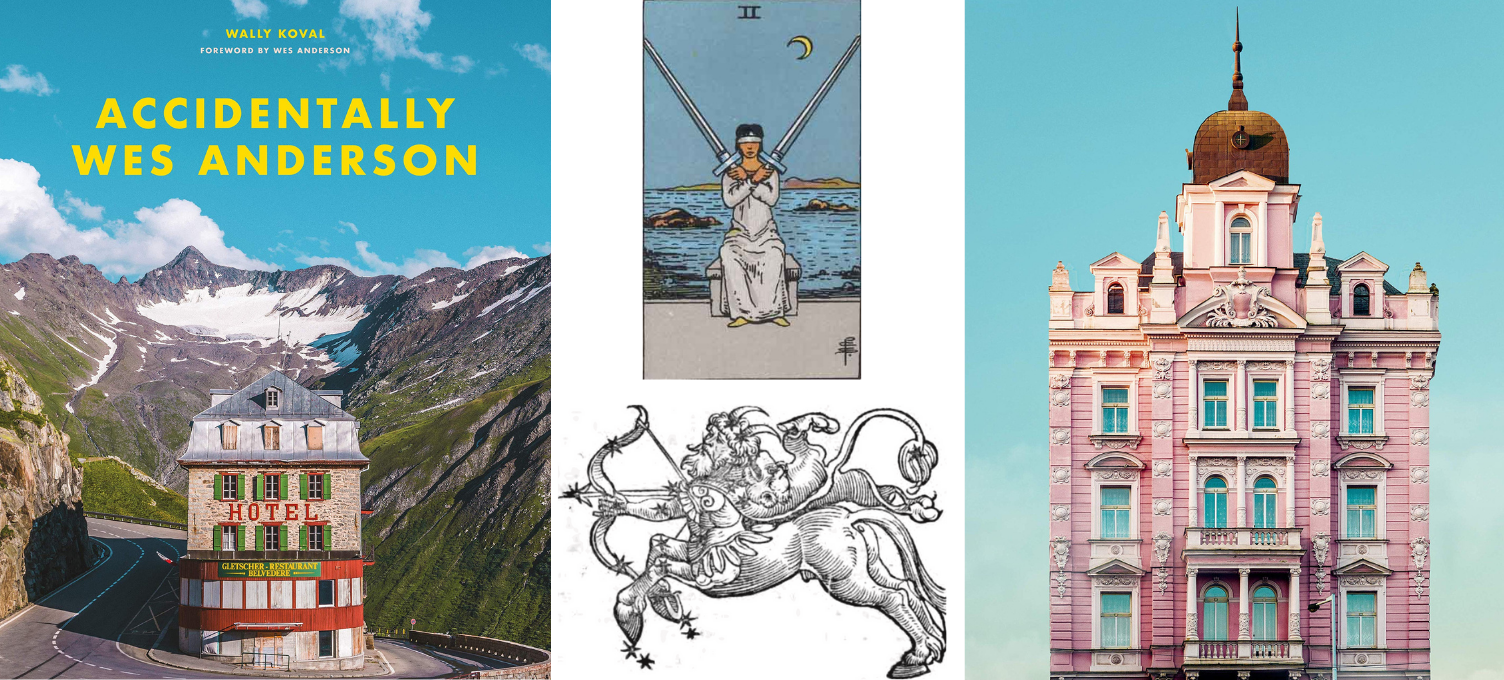
Accidentally Wes Anderson, published this year, by Wally Koval is a gorgeous book that feeds your eyes as well as your brain—a great split in true Sagittarian spirit. But before we crack open those pages, it’s helpful to know that the title hails from an Instagram account (@accidentallywesanderson) created by Koval. With more than 1 million followers, this account boasts stunning images from all over the globe that seem as if they stepped right out of a Wes Anderson movie. The images in the book, just like those on the IG account, are submitted by everyday travelers. 

Now on to the book: the variety of images and geographical locations would keep any Sagittarian happy. Readers can jump back and forth exploring each section (which includes the US and Canada, Latin America, Africa, Europe, Asia, Antarctica, and Oceania). One of my favorites from the Middle East and Africa section is the town of Kolmanskop in Karas, Namibia. This photo by Alina Rudya looks surreal; the doorways of a seafoam greenhouse are spilling over with sand. If you were standing in front of this doorway, the sand would leak out over your feet. Restless Sagittarian minds will agree that the captions throughout the book are as engaging as the vivid images. Once you read Kolmanskop’s caption you discover it’s a ghost town (founded in 1908) that was once a thriving center because of the diamond industry. But after the Germans colonized Namibia, and after a brief economic boom, the town was abandoned in 1956. Now a private company shows Kolmanskop as a tourist attraction.  

Marshall Street Baths, London, England, featured in Accidentally Wes Anderson. Photo by Soo Burnell

This book contains images from every corner of the world, and showcases churches, mosques, fire and train stations, wood shops, gondolas, theaters, and even silos that hold the ingredients for chocolate. No culture is overlooked in this book. And with true Sagittarian honesty, Koval doesn’t mince words when relaying the history of a place. In the Middle East and Africa section, for example, there sits a lovely little picture of two tiny sailboats cruising peacefully under an azure sky. Koval admits that this idyllic-looking Old Jaffa Port in Tel Aviv is “drenched in bloody history.” 

While I am enthusiastic about this book, I admit I was a bit disappointed that the Antarctica section was so small, with only one entry. I also didn’t find the US and Canada section (which heads the book) as impressive as the other sections, but readers will be happy to see metropolitan sites like Chicago’s Navy Pier as well as small locales, like the Central Fire Station at Marfa, Texas, represented.

I tend to be fairly reserved about suggesting holiday books for a loved one. But if you aren’t going to buy a literary gem from a small/independent press (which I strongly recommend), Accidentally Wes Anderson is the ideal book to gift. The vibrant pictures and captions will give you a history lesson and provide great conversation once the pandemic’s over. Honestly, you could gift yourself with this. Why not dream a little and plan your future vacation while thumbing through this book?

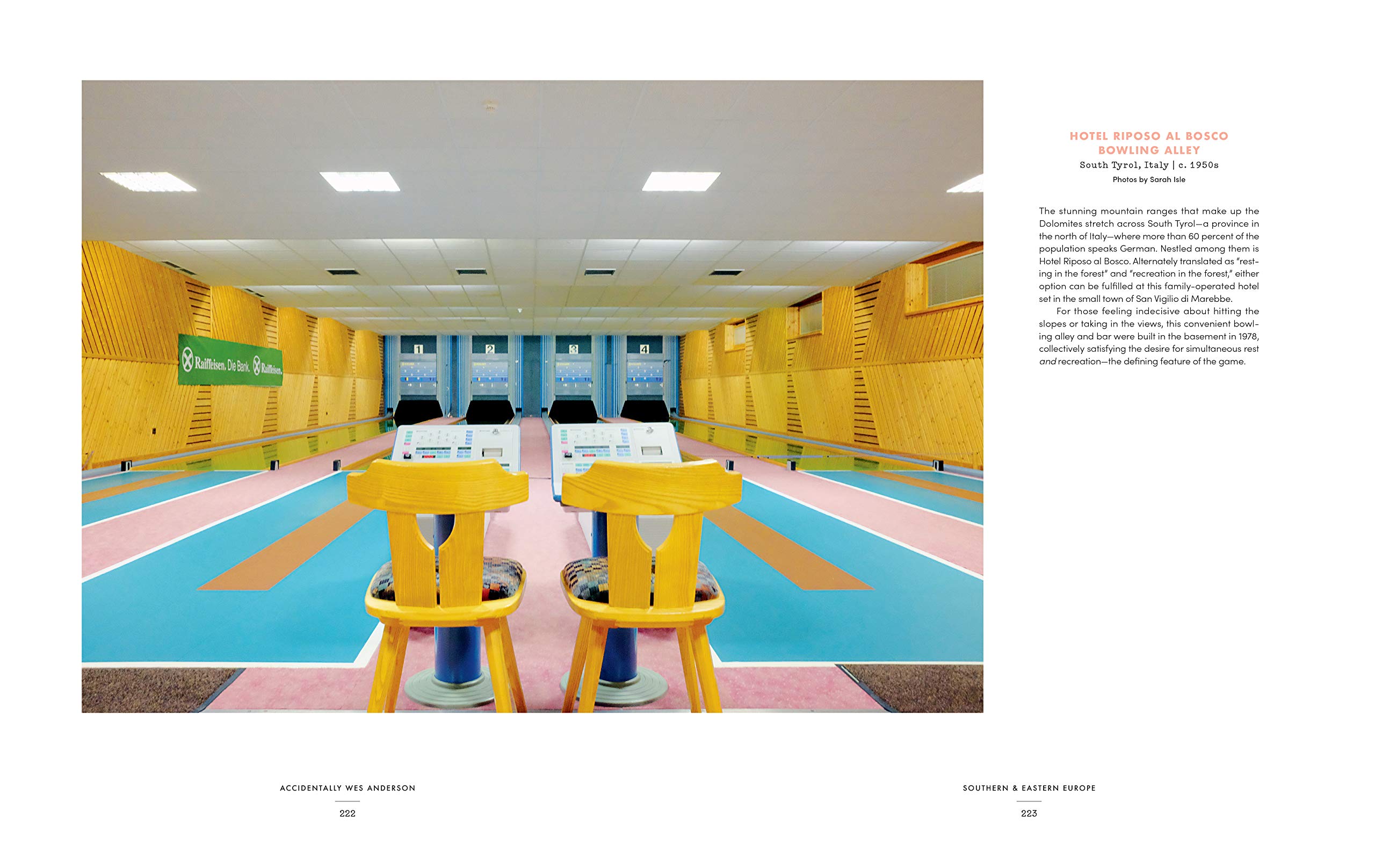
Hotel Riposo Al Bosco Bowling Alley, South Tyrol, Italy

This month’s tarot card for the collective is the Two of Swords (signifying mental ideas or thoughts) reversed, from the Rider Waite Deck. Typically, the Two of Swords, when upright, represents a person who is weighing a decision but is unclear as to which option is best. The individual on the card is blindfolded holding two swords crossed over their chest. However, since the card is upside down, or in reverse, we are at a stalemate. We are immobile. Or, as the blindfold from the person on the card falls off, lies are being exposed. It can also allude to being at an impasse between two competing sides.

Either way, it is crucial for us to stop and look at our situation from another angle in order to gain perspective to move forward. In the background of this card, a crescent-shaped moon looms, indicating that emotional knowledge is available to us; we simply need to tap into it. As we close out 2020 and evaluate how we have evolved as a society, it’s important to let our own internal wisdom guide the way for any important decisions. Now that the blindfold is no longer obstructing our view, it’s time to heal and move on.

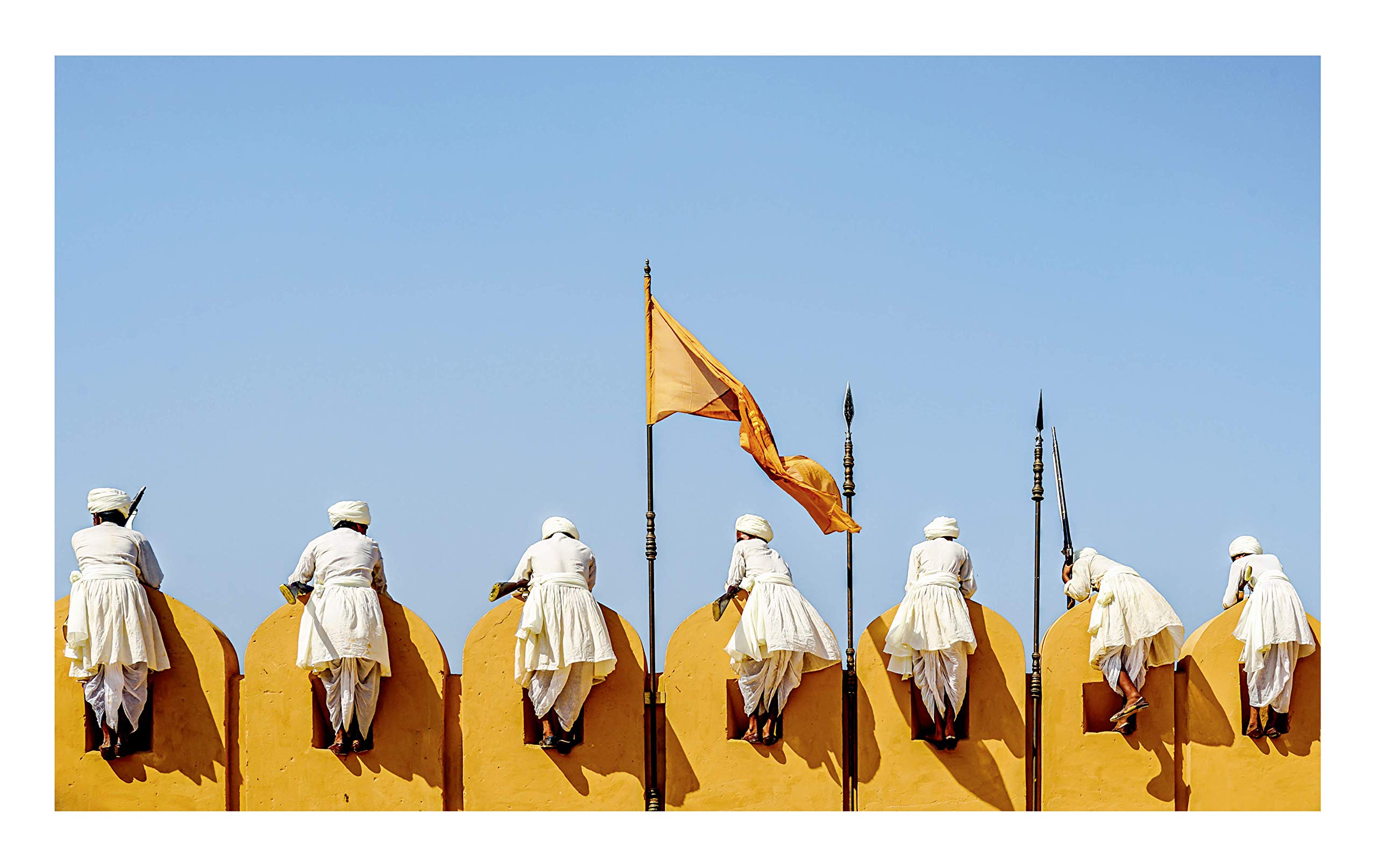
Amer Fort, Rajasthan, India, featured in Accidentally Wes Anderson. Photo by Chris Schalkx
Related Stories
The Definitive Design Textbook's Seventh Edition Diversifies the Canon

The idea of a master narrative and the Eurocentric bias of earlier editions of this text have been pressured, and forced to make room for multiplicity and inclusivity. The history of graphic design appears here fresher, livelier, and more relevant.

MDFF Celebrates the 55th Anniversary of "Multiple Maniacs" with a Special Friday Night Screening at the Parkway

As America deindustrialized, John Waters and his keen observations of Baltimore's decadence have become a chief export. What more content can be extracted? Refined?

China Martens' Debut Novel is a Striking Polaroid of Early Noughties Mayhem and Motherhood in Baltimore

Martens is a focused storyteller who delivers a strong narrative. The book is achingly heartfelt yet a whole lot of fun, a heady read by a writer who knows her craft and lets it fly.

BmoreArt’s Not to Miss List

This weekend, September 12-14, indulge in your lit-love with the return of the Baltimore Book Festival. With over 80 authors and six stages, the sheer number of events, readings, and panels on the itinerary could fill a library in itself. Here are a few recommendations from our team.