Reading

Book Review: Time’s Breath by Deborah Brown English

Previous Story
Article Image

BmoreArt News: Amy Sherald at the BMA, Rabkin Pri [...]

Next Story
Article Image

Art, Style, & Swagger: Photos from the 2025 [...]

When I was a child, many high-quality, large-format books for young readers explored foreign lands and told detailed tall tales. They were big, beautifully bound, designed with gold embossed lettering, every interior detail was fine, and all the text was vividly illustrated.

These books weren’t affordable for a working-class, prairie-bound family like mine, but they were available at the local library and many at school. Illustrators such as Arthur Rackham, Maxfield Parrish, Edmund Dulac, N.C. Wyeth, E.H. Shepard, Beatrix Potter, and Norman Rockwell, to name a few, added a new dimension to these books. They expanded the stories, adding depth and wonder that appealed to readers of all ages, prompting revisits to marvel at the imagery.

When I received a review copy of Deborah Brown English’s new book Time’s Breath, An Odyssey in Words and Pictures, it transported me back to that golden age of publishing. As I sat down with the book and flipped through its pages, I discovered something more intricate—a modern reinterpretation of this genre. It’s both a deconstruction and a reconstruction of the classic illustrated fantasy fiction books of the past.

Time’s Breath boasts a sturdy cover with gilt debossed lettering for the title, tight, durable professional binding, heavyweight paper, and over 140 exquisitely printed full-color illustrations—drawings and paintings. The story it conveys is captivating and layered, tugging for repeat reading.

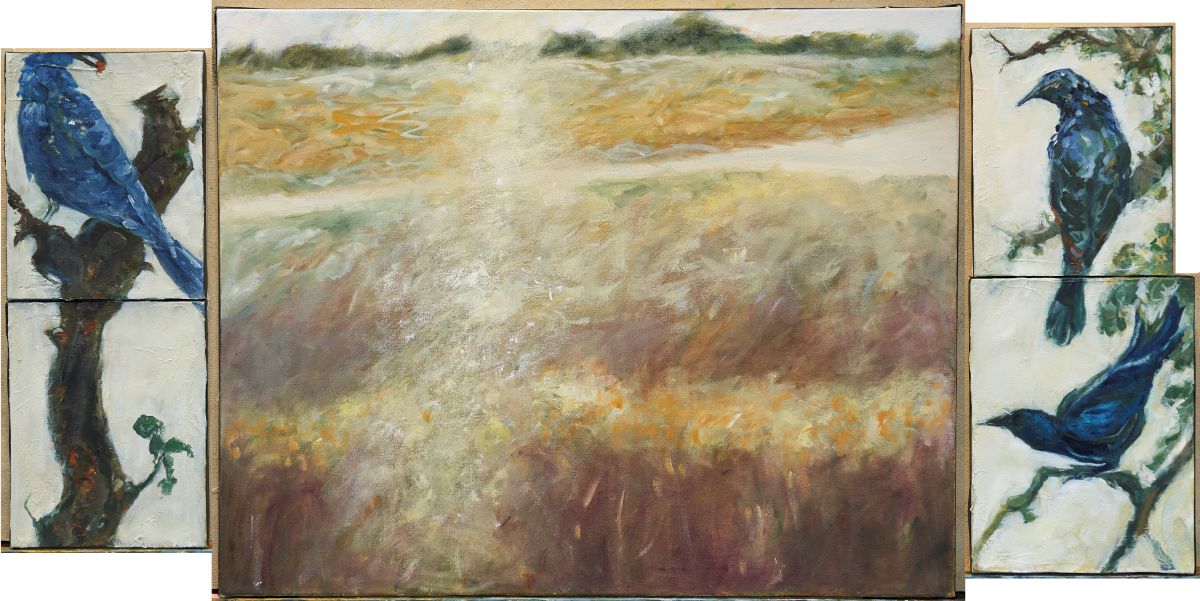
The View from Ismitta’s Window, oil on canvas. From Time's Breath by Deborah Brown English.
There is a utopian rise and an inevitable fall from grace, storykeepers, storytellers, mysterious lost languages, mythic creatures. The book is rich with a joyful sense of weirdness, of life.
Jack Livingston

There is a meta-level to this work. English created many of the paintings first, gave them titles, and then started to write short, improvised stories that move back and forth in time, mainly set on a fictional island in the North Atlantic. These merge to form a long, interconnected narrative. However, as the preface explains, the paintings in the book are by the author “Deborah Brown English”—in response to the text. While all other written parts are supposedly transposed by different characters, some may be unreliable narrators, but all are actually written by English. 

The main protagonist is a man named Thomas, who, the book tells us, provided the many detailed, captivating drawings of maps, animals, done in dark ink on tan Arches paper. While this might sound as complex as some dense post-modernist works, a William T. Vollmann project, or one of David Foster Wallace’s novels, it ultimately offers an engaging deep dive into a mythic journey that resembles classic origin stories like The Iliad or Atlantis. Like those tales, Time’s Breath is filled with detailed mythic Jungian-like archetypes. There is a utopian rise and an inevitable fall from grace, storykeepers, storytellers, mysterious lost languages, mythic creatures. The book is rich with a joyful sense of weirdness, of life.

English grew up on a dairy farm on the outer banks of Chesapeake Bay in northern Maryland. She was a self-described isolated middle child with an interest in nature and the family’s farm animals, especially cows (which are featured in her book). Her extended family included numerous visual artists and avid readers. Although the artists weren’t successful professionally, they inspired her.

Her parents had been English majors in college and met at a poetry conference. Her father had even considered becoming a novelist, and her mother had wanted to be a poet. The family owned many books, including Treasure Island. Although it was too boy-centric for English’s tastes at the time, it made an impression and is a touchstone when understanding Time’s Breath.

After attending Saint Timothy’s, an all-girls boarding school in Stevenson, MD, English decided to become a writer. When it was time for college, she enrolled in Southern Methodist University in Dallas, focusing on English and creative writing.

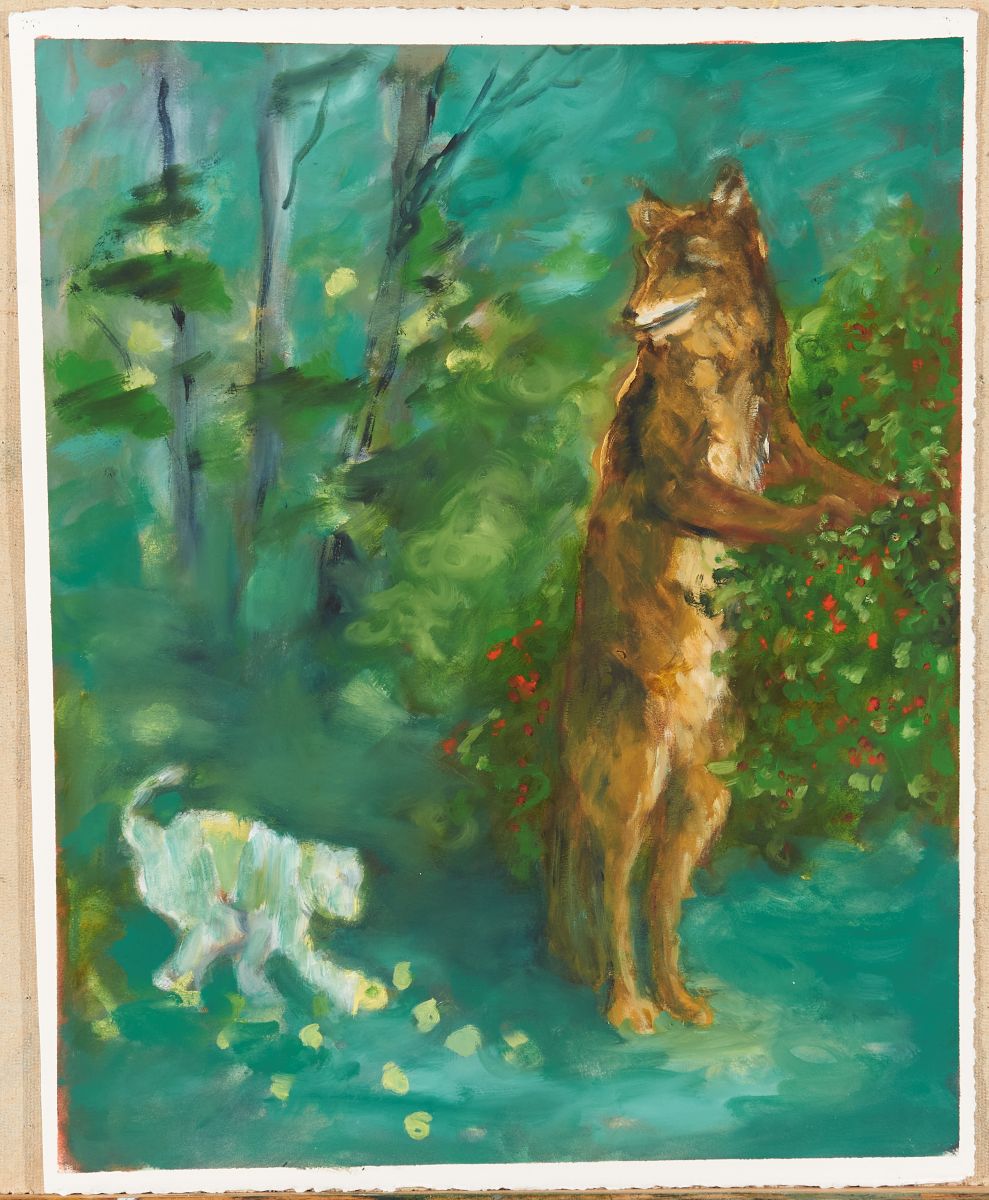
The Trickster as Fox, oil on paper. From Time's Breath by Deborah Brown English.
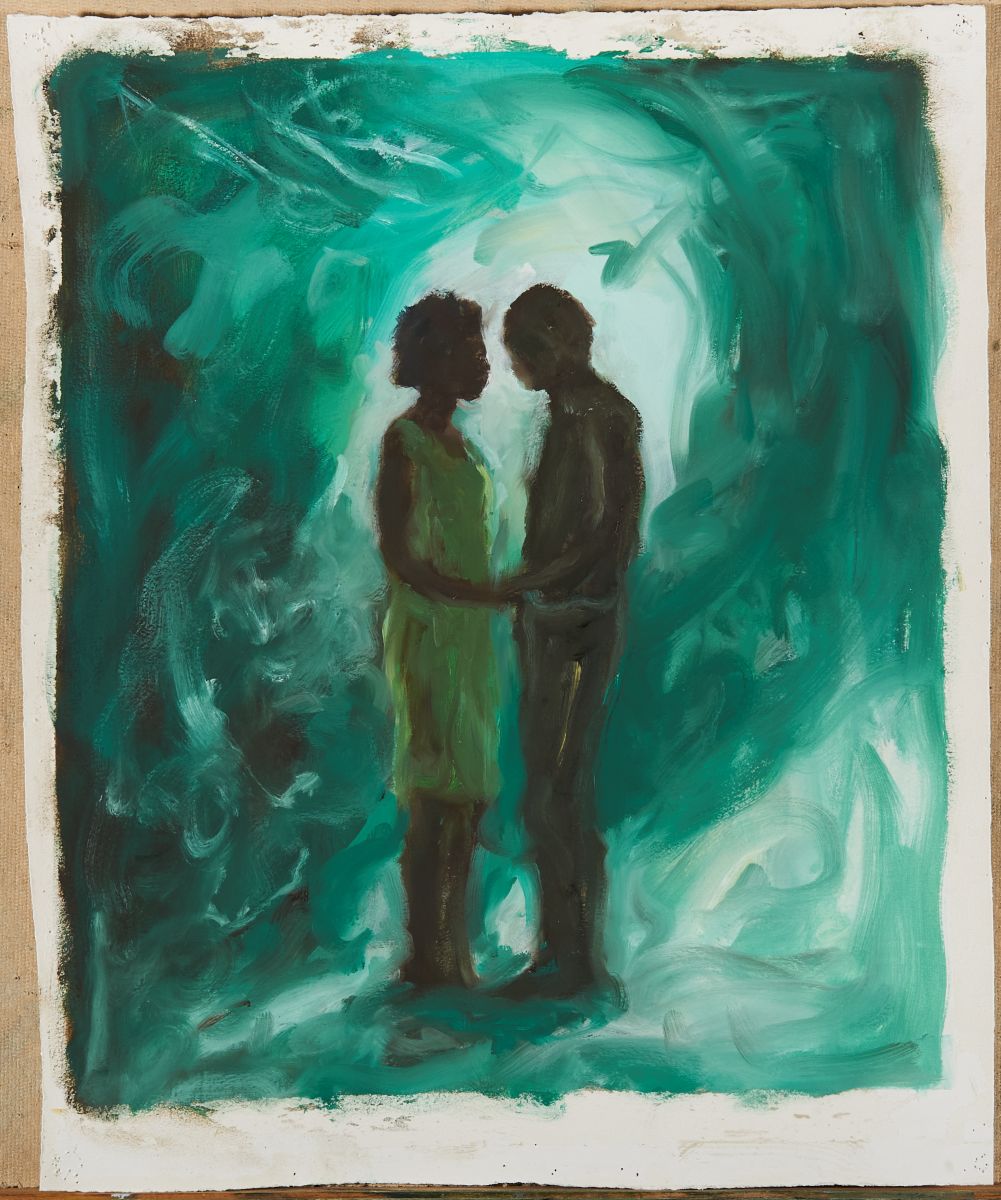
Thomas and Ismitta in the Cave, Oil on paper, from Time's Breath by Deborah Brown English

At SMU, she enrolled in all the relevant classes she could find. She was attracted to German authors, including Herman Hesse. She also admired T.S. Eliot, whom she still considers her greatest literary influence (there are echoes of his wild poetic sensibility in her work). English attended college from 1966 to 1970 but left before earning her bachelor’s degree after failing a math class she found impossible. That prevented her from getting the credits she needed to finish. It was the 60s, she admits, and she was eager to move on. Many of us from that generation (as I am) can relate to that! 

She set her writing aside, too—for a while, as she married and raised children. Over thirty years ago, she and her family moved to Baltimore after her husband took a job there. Eventually, while doing some craft and needlework, English, seeking a new artistic direction, decided to “attempt” to enroll at the Maryland Institute College of Art. She was surprised they accepted her, given that she had no previous training. However, as a child, she was obsessed with creating small, horse-themed, farm-inspired “installations” and enjoyed scattering them across the floor of the family home, much to her mother’s annoyance. 

At MICA, English thrived. There, she met an inspiring professor, Barry Nemett, who was then the head of the painting department. He encouraged his students to try a method he called “improvisational painting.” He had them move across their paintings, dancer-like, perhaps listening to music and applying paint in various ways, all the while letting go and allowing the work to emerge spontaneously. English began to create both image and non-imagist work, refusing the pressure to stick to a recognizable style. Nemett became her mentor. 

In 1985, English graduated with honors and remained dedicated to her new calling. Although parts of the automatism approach her professor taught were not new—they are central to the development of much contemporary modernist art, including strains of Impressionism, Surrealism, and Abstract Expressionism— it resonated with English in a new way. She could create without restrictions. She had once been a dancer, and the idea of embedded movement came naturally to her. It brought an inherent personal “swing” to her work. She used this core approach as a guide for creating all the color paintings shown in the book. 

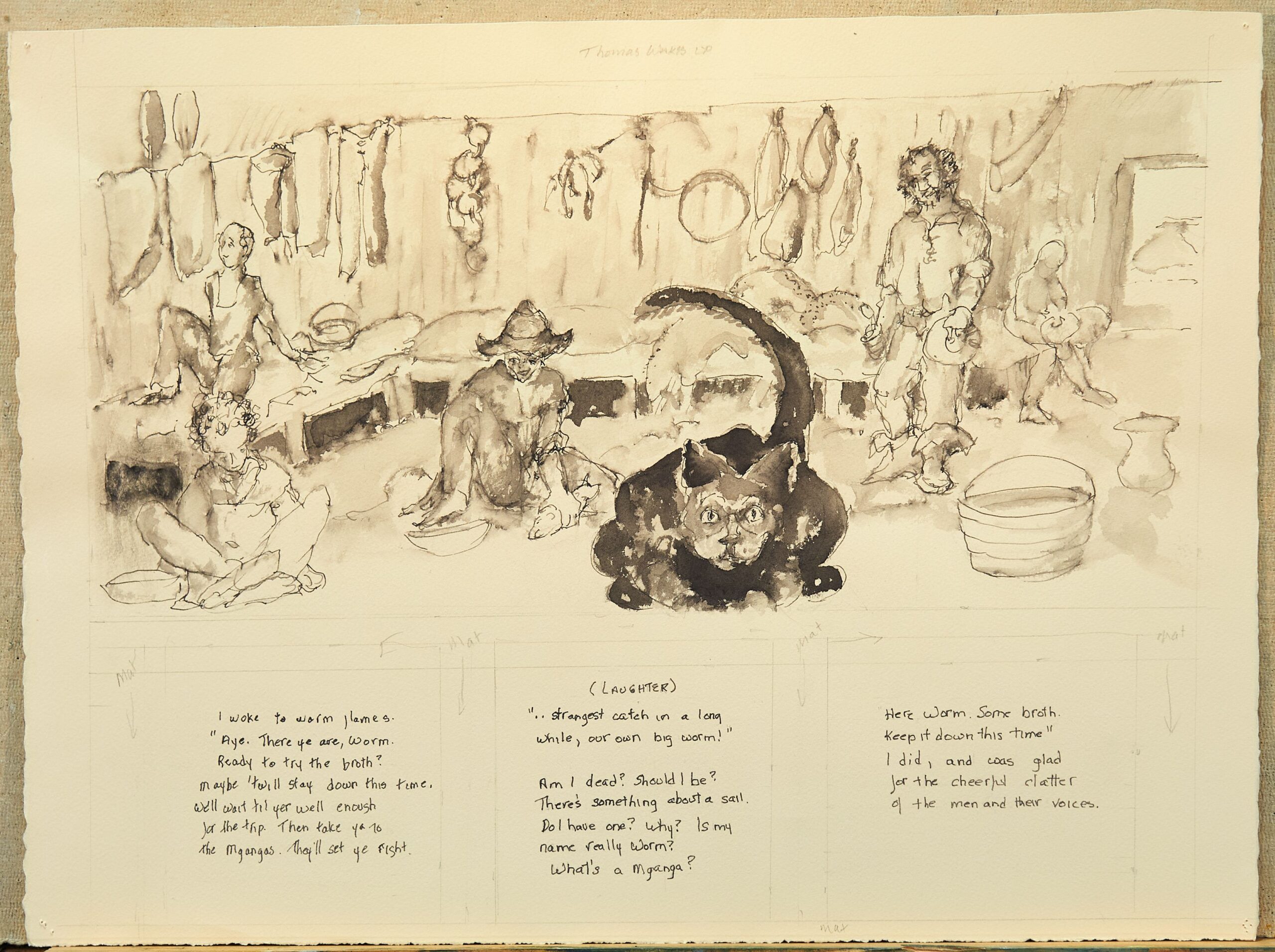
Inside the Cabin, ink on paper. From Time's Breath by Deborah Brown English.
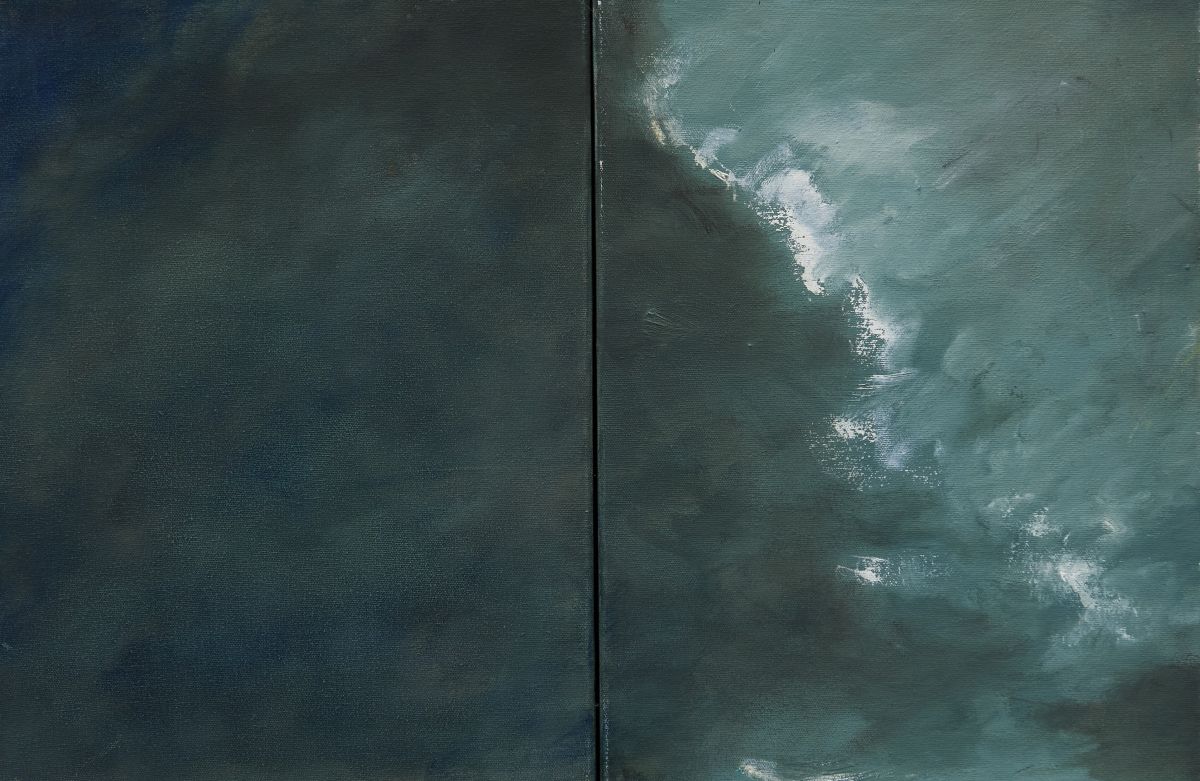
Some of Our Gods Were Born Here, from Time's Breath by Deborah Brown English.
It’s both a deconstruction and a reconstruction of the classic illustrated fantasy fiction books of the past.
Jack Livingston

English begins with a quick, flowing charcoal sketch as a base and then allows herself the freedom to paint over it improvisationally, letting whatever emerges guide her. Then she refines the paintings until they fit into the storyline (or exist outside of it, shown elsewhere).

Time’s Breath, as a project, began in 2020 during the COVID-19 shutdown.

Initially, the author/artist created a mysterious, somewhat Turner-inspired, brushy landscape-oriented abstraction in shades of pink, blue, brown, and green. “Some of Our Gods Were Born Here” appeared as a title or caption, like a voice from the subconscious. At first, its meaning was unclear; this painting served as a mysterious portal—an inciting event for the book that encouraged her to explore its deeper meanings.

English began producing other works in dialogue with this theme. “The Trickster as Fox” brought to life a sly brownish furry creature standing on hind legs grinning beside a blur of green bush with berries. “The View from Ismitta’s Window” is a stunning five panel oil painting referencing a main female protagonist. It portrays sundrenched fields of wheat colored grasses with four side panels of deep blue where inquisitive birds form a decorative enchanting chorus.

Soon, the series was flowing. English began reading about volcanic islands that once existed in the North Atlantic, which inspired her further. With the location becoming more vivid, she started building an interconnected set of short stories around it. It was a blend of Treasure Island-like myth/fantasy and sea lore, likely influenced by her upbringing near Chesapeake Bay. Characters emerged from the work, which started to take on a life of its own. 

The story opens in a decommissioned lighthouse in Norway, where a crumbled small sailboat is found along with “a mysterious old volume” of vellum pages covered in sheepskin. It’s the “Chronicles of Thomas,” that tells a story set in a place called Tokket Fjall, a once-thriving island now a sunken volcano, according to the preface. 

The preface of the book is said to have been written by Deborah Brown English, who we are told not only transcribed the works but also admits to having added the illustration paintings. Again, quite meta. Authors from Philip K. Dick to Stephen King have inserted themselves into their fiction, but none quite like this. Here we are in an all-encompassing world, enchanting and loaded with dramatic turns. The story unfolds as a complex arc, told through a series of short, detailed vignettes, arranged in five sections. 

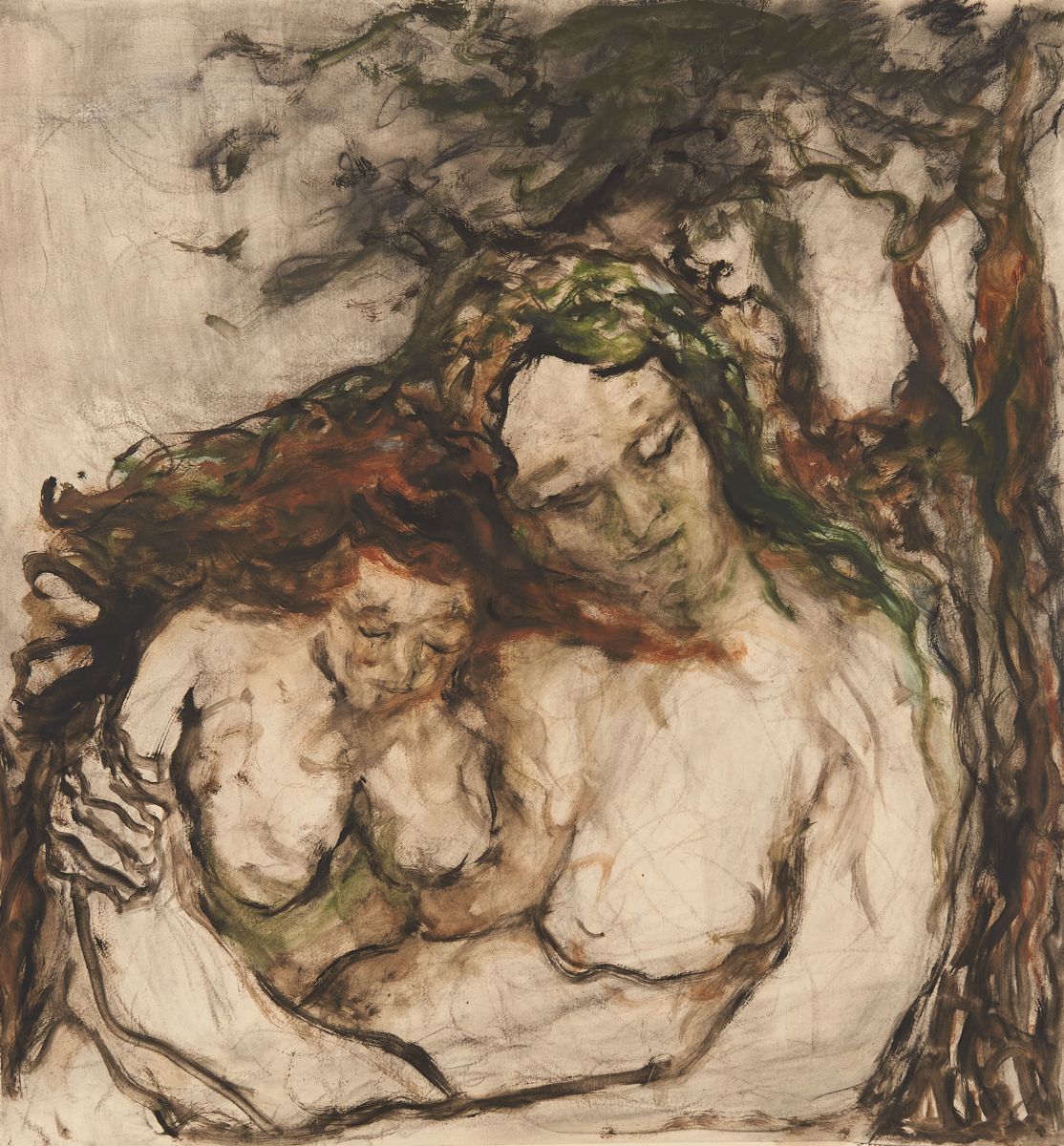
The Peace of Sleep, oil and pastel on paper. From Time's Breath by Deborah Brown English.
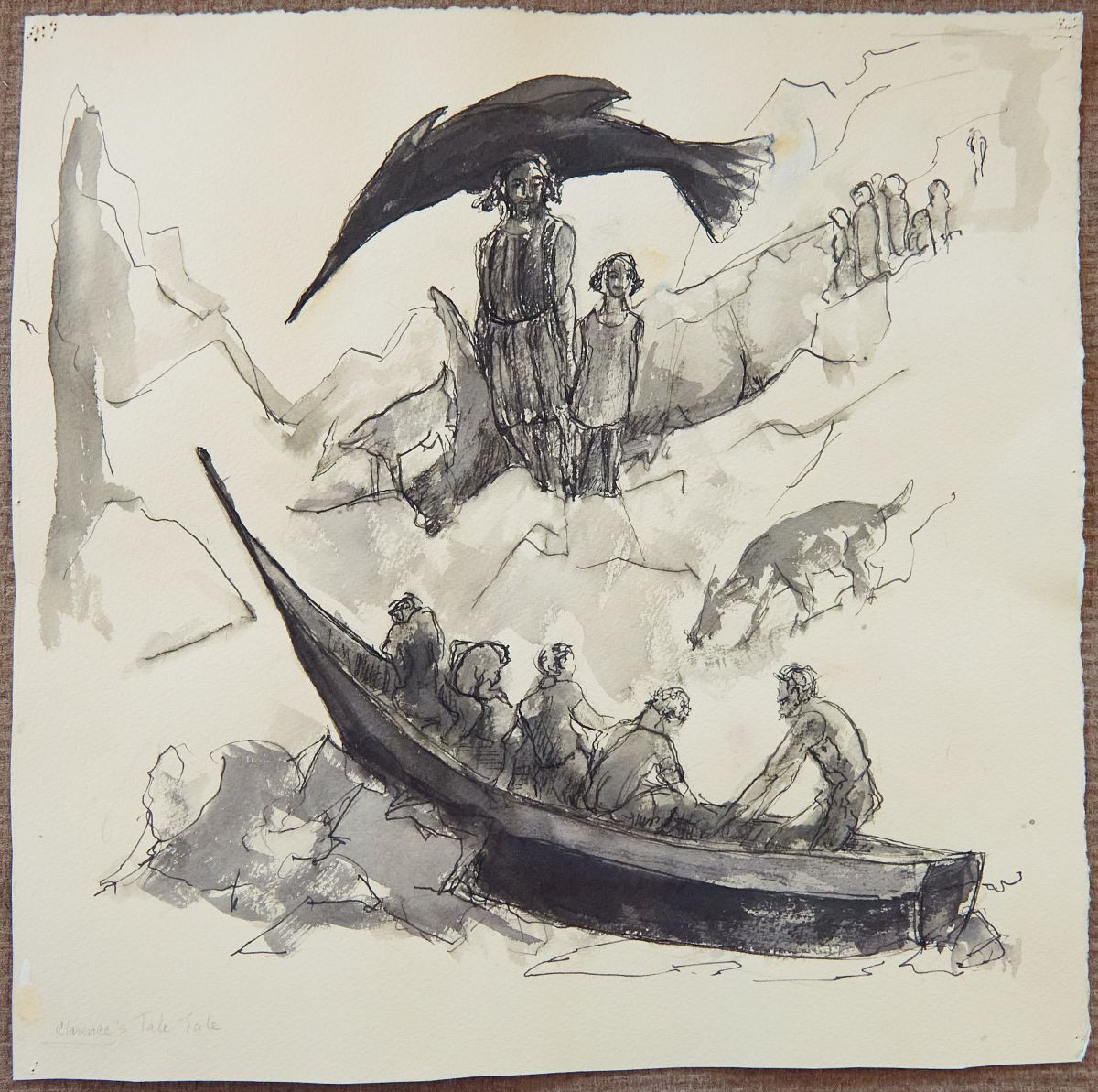
Clarence's Tall Tale, ink on paper. From Time's Breath by Deborah Brown English.

The writing is solid and sticks to a fabulist form while shifting point of view, time, and place seamlessly. English told me she relished writing this way and approached it similarly to her improvisational painting style—inspired by oral history and its natural evolution. Much like the original stories of The Odyssey, The Bible, and other spiritual texts from cultures around the world—she considers this book an artifact, something created and transformed through passed-down oral tradition. To English, although it is fictional, it still functions as a collection of works she has channeled. 

After the Time’s Breath was outlined and drafted, English worked closely with the independent editor Eleanor Hughes, a former Deputy Director for Art & Program at The Walters Art Museum, who has the Metropolitan Museum of Art among her clients. English credits Hughes with helping her shape the final version of the book. 

Hughes also brought in book designer Miko McGinty, who has designed numerous high-end art books. McGinty guided the process through the carefully selected Italian printers, Trifolio SRL. Their exceptional printing techniques enable the highest quality image reproduction on premium stock, along with other superb craftsmanship. The book is built to last for generations—refreshing in an age of fast digital printing and the abundance of disposable paperbacks.

Sky and Water, from Time's Breath by Deborah Brown English
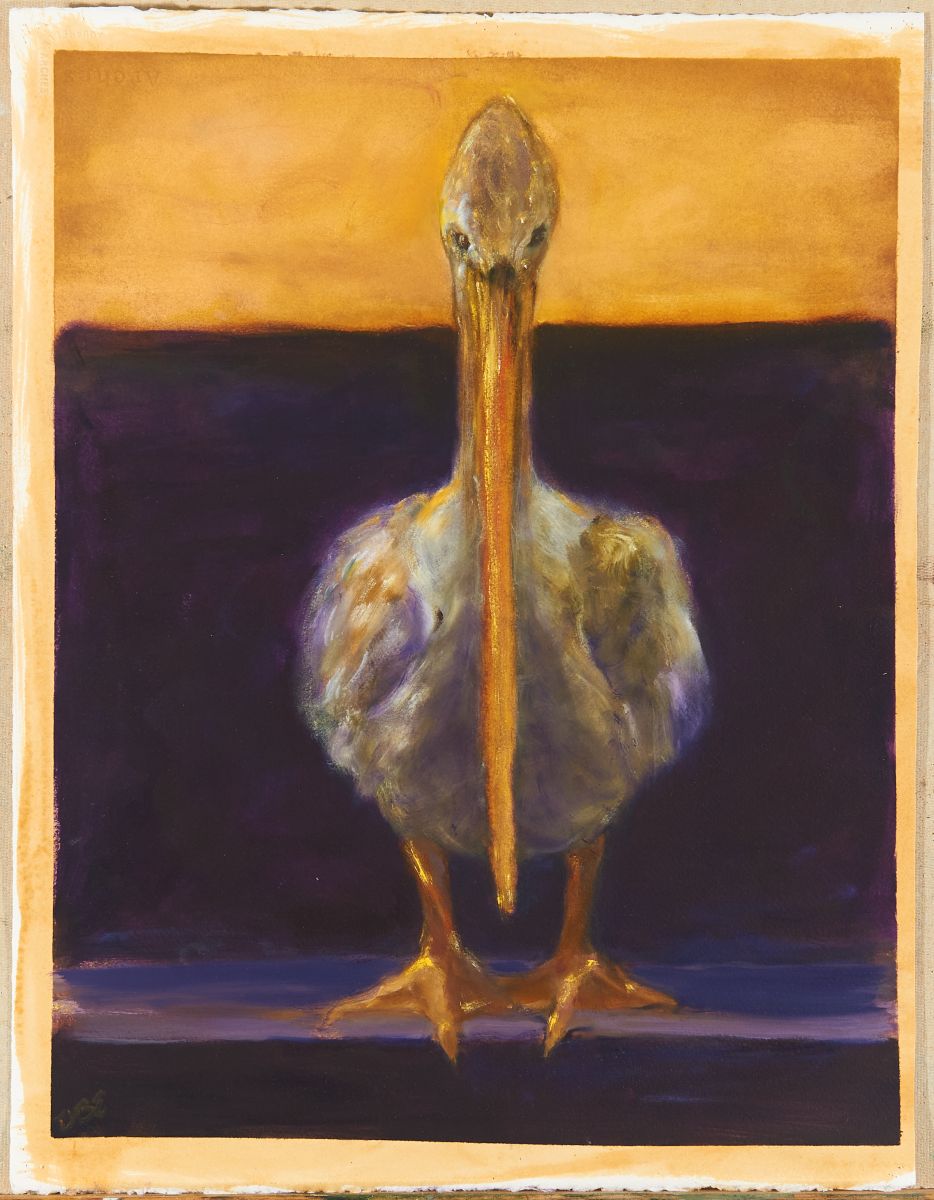
TAC, Oil on paper, from Time's Breath by Deborah Brown English
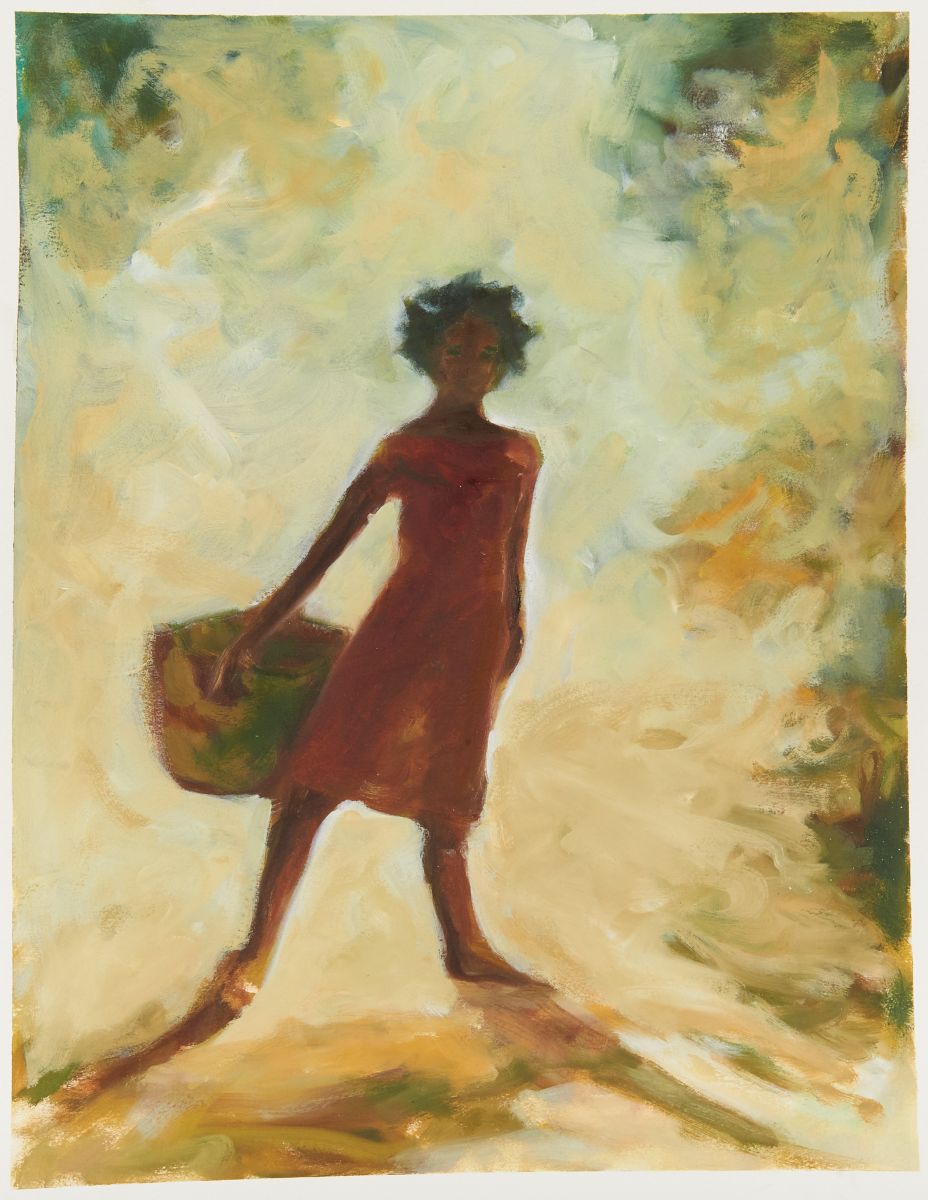
Ismitta, oil on paper. From Time's Breath by Deborah Brown English.

Though English describes the book as illustrated fiction, her multi-layered hybrid style surpasses that label and evolves into a unique form. It is more high art than a graphic novel and more expansive than an illustrated work. (There is a trend in contemporary books for authors to break traditional forms and adopt new methods like this.)

Just as many contemporary young artists refuse to be confined to a single “style” and challenge labels, English blends various painting and drawing styles and formats. Some paintings are pure abstraction, while others are imagist or animal/figurative—often blurred into a slurry of bliss. The sea and landscape mentioned in the text appear and fade in the paintings, conveying mysterious emotion beyond words. 

English says she is influenced by artists like American abstractionists Mark Rothko, Joan Mitchell, Cy Twombly, as well as the grand British atmospheric painter J.M.W. Turner, Baroque artist Caravaggio, as well as artists from ancient Greece. Not all of her works are rectangular; some, like the “Site of the Ritual Bath Pool,” a lush blue piece reminiscent of Monet, feature extra panels. Other pieces were repainted from older works in her studio, which sits on the grounds near her home in Baltimore County. 

English continues to explore blending all the forms she values—writing, painting, drawing, and now creating books as art objects. The books expand her work beyond the traditional art world, making her work more affordable and accessible —available through bookstores and libraries. 

Her intentional return to the era of high-end illustrated books, reminiscent of those from the last century, invites us to revisit a slower, more meaningful analog experience in storytelling—an essential slower-paced break in an age dominated by intrusive digital consumerism, screen and audio reading, and low-cost reproduction, the print equivalent of “fast fashion.”

With Time’s Breath, many more people will be able to access English’s work, than previously with her painting. Imagine a young person discovering the book in their parents’ home or at school in the future, and feeling inspired, as English was, to create their own version of the world and share it. 

When I asked the author/artist what’s next for her, she told me that a new book, using similar techniques, is already underway; it will feature a fictional artist living in Sicily. Personally, I am hoping for a series—including one that’s a hybrid memoir, chronicling English’s inspiring, decades-long personal story.

Time’s Breath releases September 16, 2025 and is available for preorder and purchase here.

A launch event will take place at The Ivy Bookstore in Baltimore on Thursday, September 18, 2025, from 6 to 8 pm. There, Deborah Brown English will be in conversation with noted author and critic Martha Anne Toll.

An exhibition of the paintings and drawings from Time’s Breath is scheduled to run from March 6 to April 11, 2026, at Creative Alliance

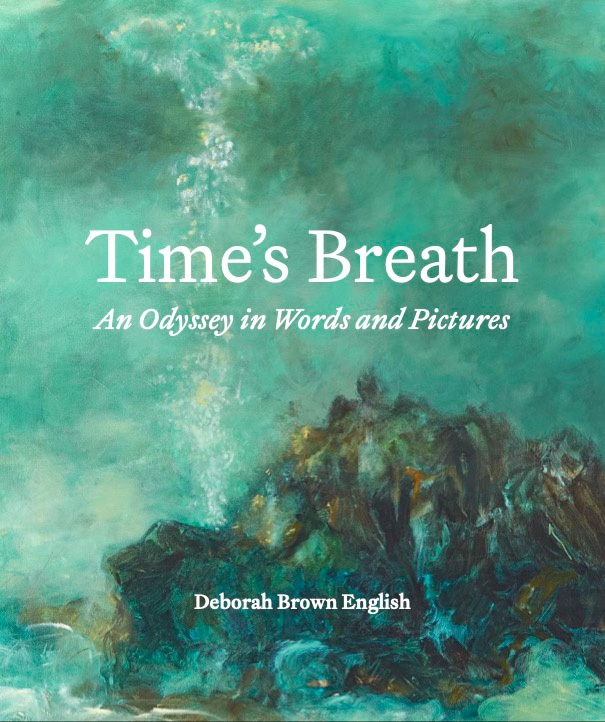
Header Image: Time's Breath Book Cover All images courtesy of Deborah Brown English.

Related Stories
Ikhide's "Tales From Future Past" is on View through November 22 at CPM

CPM Gallery recently announced that the run of Richard Ayodeji Ikhide's solo exhibition "Tales from Future Past" would be extended to November 22 by appointment. At the opening on September 27, the British-Nigerian artist was interviewed by luminary art historian, curator, and educator Lowery Sims.

The Definitive Design Textbook's Seventh Edition Diversifies the Canon

The idea of a master narrative and the Eurocentric bias of earlier editions of this text have been pressured, and forced to make room for multiplicity and inclusivity. The history of graphic design appears here fresher, livelier, and more relevant.

In "Pandarayuhan: Home is a Memory" Divinagracia Explores Immigration and Identity at Creative Alliance

"One of my biggest intentions with this show was to really spotlight Filipino presence in Baltimore and specifically immigrant lives and journeys.”

Baltimore art news updates from independent & regional media

This week's news includes: Amy Sherald shines brightly in Baltimore, Hilton Carter makes his house a home, Inviting Light returns with a Wickerham & Lomax, John Akomfrah moving image + sound installation opens at the BMA, mayorial portraits unveiled at City Hall, Maryland Film Fest is here, and more