Reading

Friction and Frustration: Wickerham & Lomax at Current Space

Previous Story
Article Image

BmoreArt News: BMA Acquisitions, Carla Hayden, Gr [...]

Next Story
Article Image

The Shape of Power at SAAM: the Exhibition the Tr [...]

Perhaps every once in a while you notice that most of our daily experiences are designed to minimize resistance and proceed smoothly. Every financial transaction is streamlined with all obstacles removed, so you can buy immediately without thinking or questioning or waiting. It’s why you don’t even have to click a button to watch the next episode on streaming, with hours of your life scrolling by automatically. It’s why you don’t have to get up off a chair to purchase a gift, or your groceries, or a new car; and you can do most of it without putting in a password, credit card number, or looking at your bank account. We click the button, we like the thing, our algorithm takes note and sends us more of the same.

If you work in sales or marketing, I am sure that you are familiar with the phrase “reducing friction.” Now that I am aware of it, I’m seeing it everywhere. This is the modus operandi of late stage capitalism, the most successful sales technique expanded to exponential and devastating consequences.

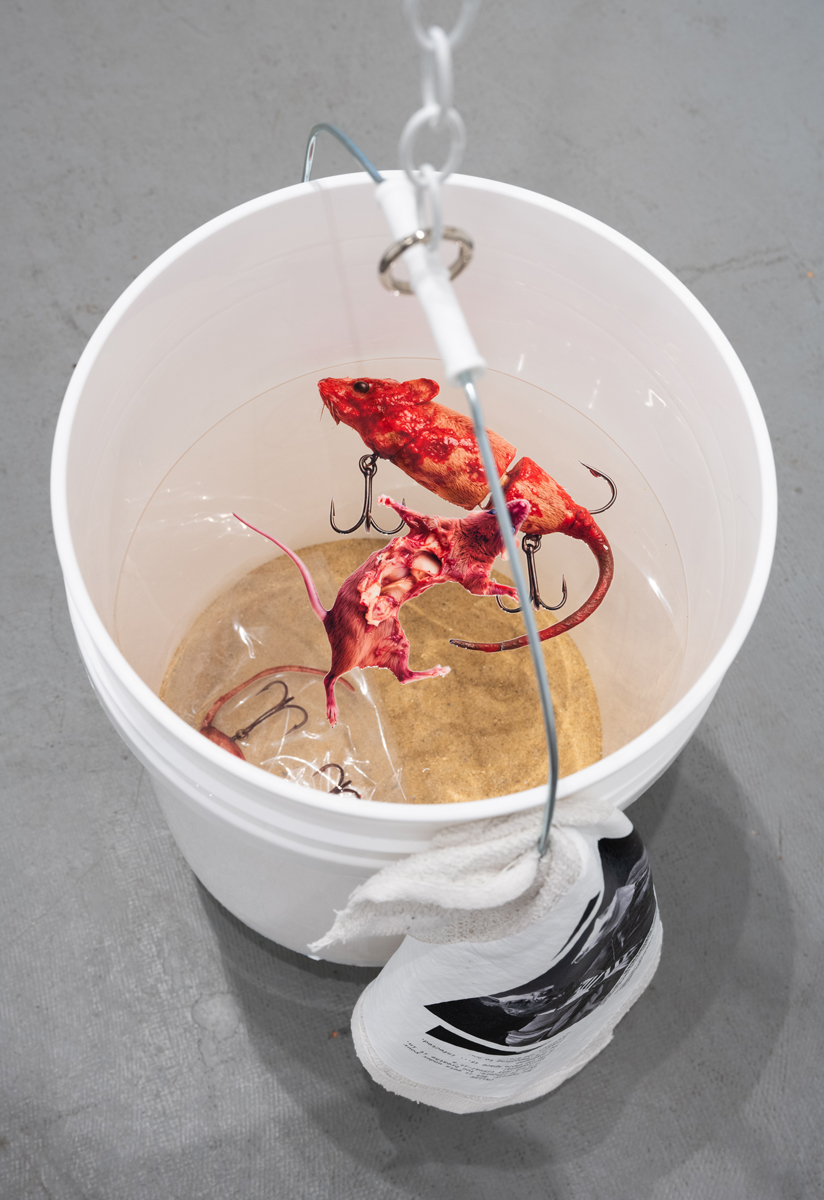
As I stepped over the red, white, and blue floor littered with overturned tables and chairs, hanging buckets of dead rats, and walls of electoral T-shirts, I kept looking for MY politics—everywhere. I was looking for a reflection of my own political biases, because everything I read in every source confirms that I am right and they are wrong.
Cara Ober

Being unsure or uncomfortable or inconvenienced used to be a normal part of daily life, but now we live a mostly frictionless experience, like rich people. When we are physically, emotionally, or intellectually challenged—forced to be uncomfortable—we get angry. This is not right! It’s unfair! We want our experiences to be easy, simple, with no unexpected surprises. We want our biases to be confirmed at all times. We want to feel in control in every scenario. But this is a sales tactic, a facade. While luxurious, it’s not real and it’s not healthy.

How do we keep ourselves from becoming mindless blobs floating around with our brains plugged into screens designed to distract and sell and swipe right and slowly kill us? I know that you know what I am going to say next, but I am going to say it anyway. Great art of all kinds—especially that which confuses us and requires us to interact with other humans—is the answer.

Unlike sitting at the Department of Motor Vehicles, where friction abounds in a torturous, Kafkaesque way, the best artists deploy friction within seductive, compelling, and downright demanding creations. By jamming our senses with images so fantastic, beautiful, mind-boggling, and strange, artists induce friction. When done right, they jolt us awake and force us to confront confusing and uncomfortable ideas, and this is essential to our survival.

One aspect of discomfort is navigating within a state of not knowing. Great art requires decoding. It is not immediate or direct. It requires effort. This can feel daunting, like attempting to translate a foreign language. It’s that feeling of waking up in the middle of a dream, where everything made sense one moment ago but suddenly it’s bizarre, elusive, nonverbal. You know the artist is trying to tell you something, often many many things, but you’re struggling to make the puzzle pieces fit together. It’s annoying. It’s irritating. Your frictionless brain hurts. Who do these artists think they are?

One aspect of discomfort is navigating within a state of not knowing. Great art requires decoding. It is not immediate or direct. It requires effort.
Cara Ober

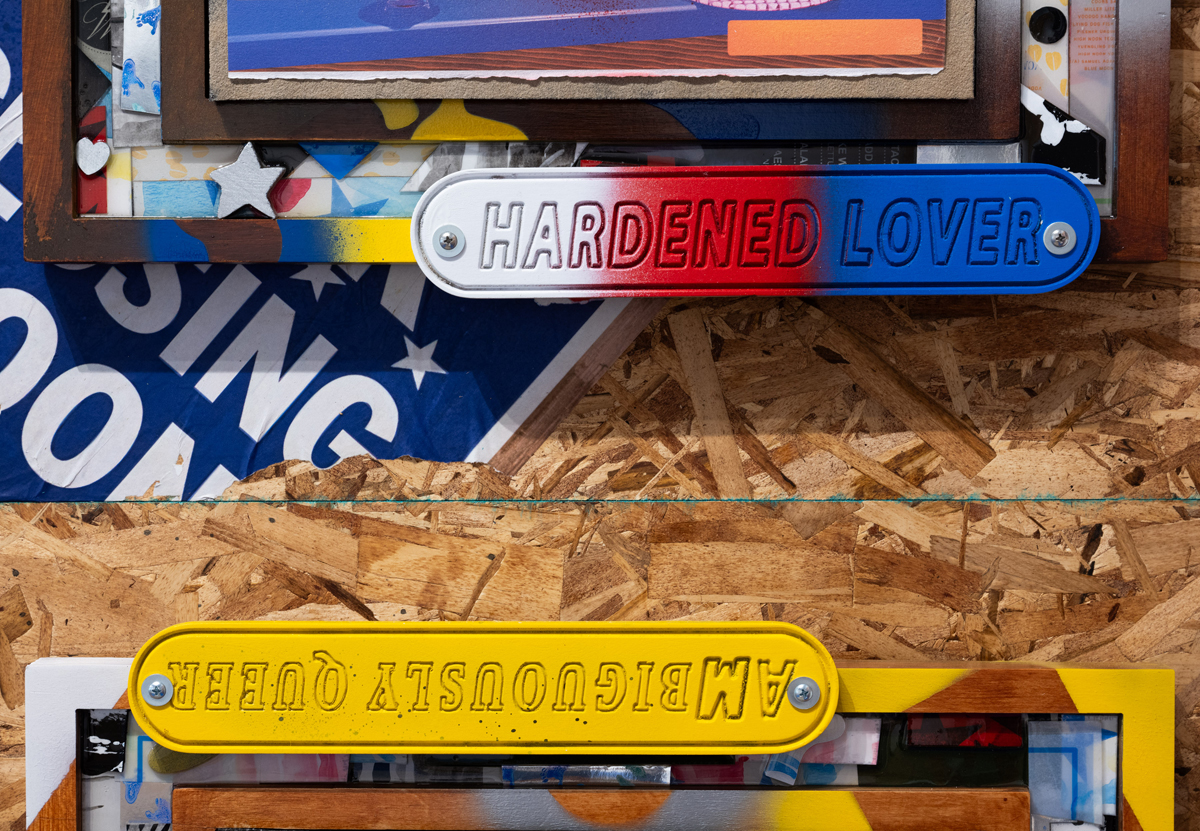
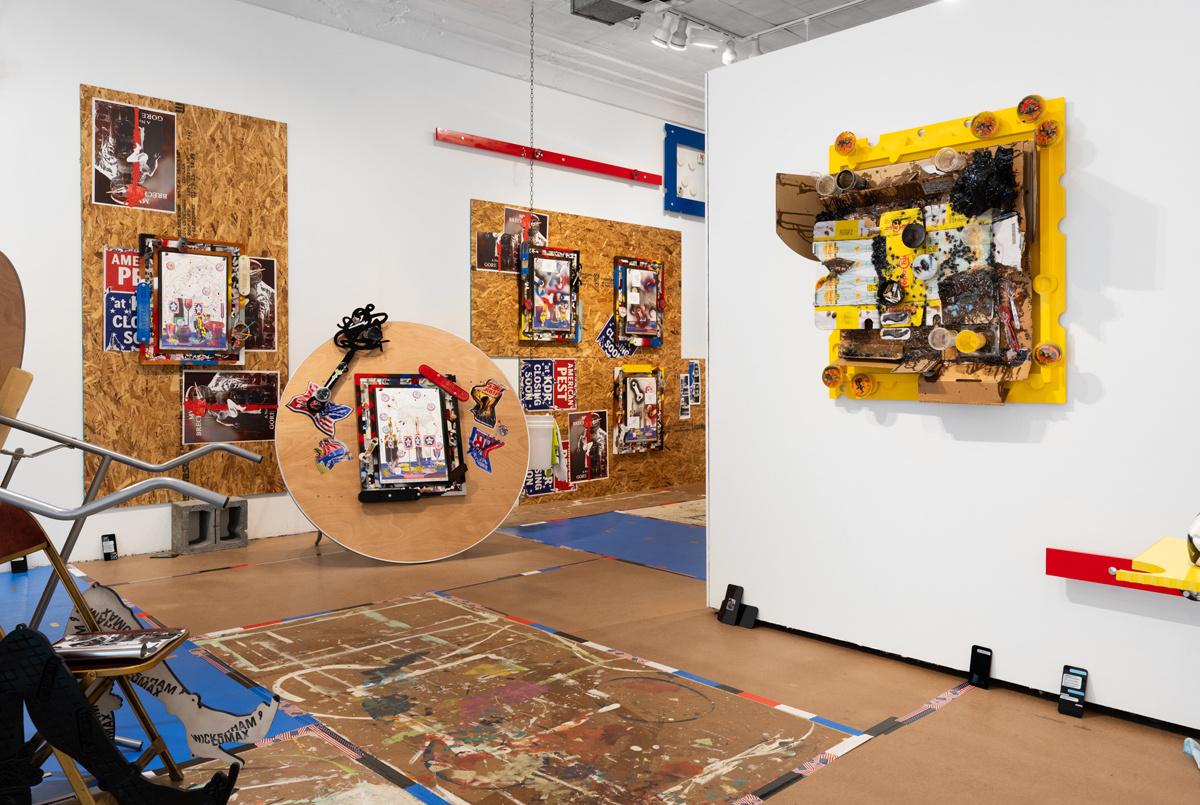
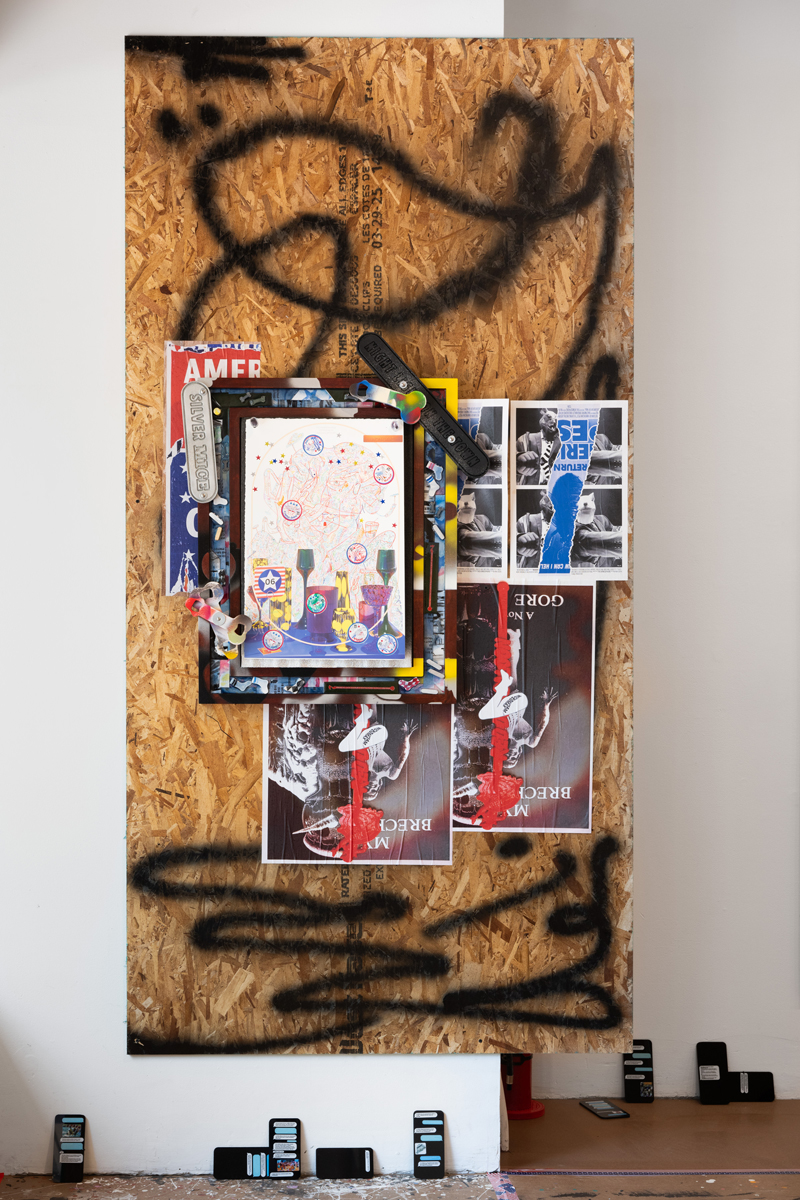
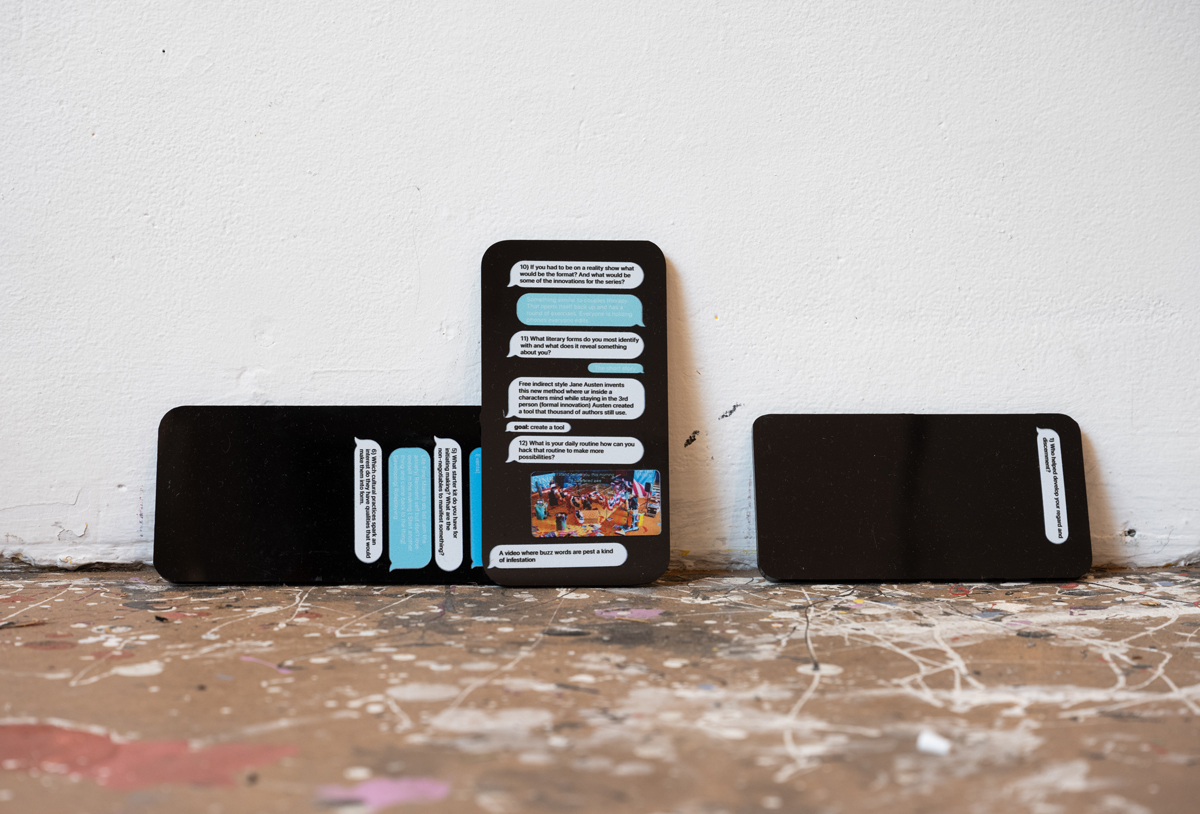
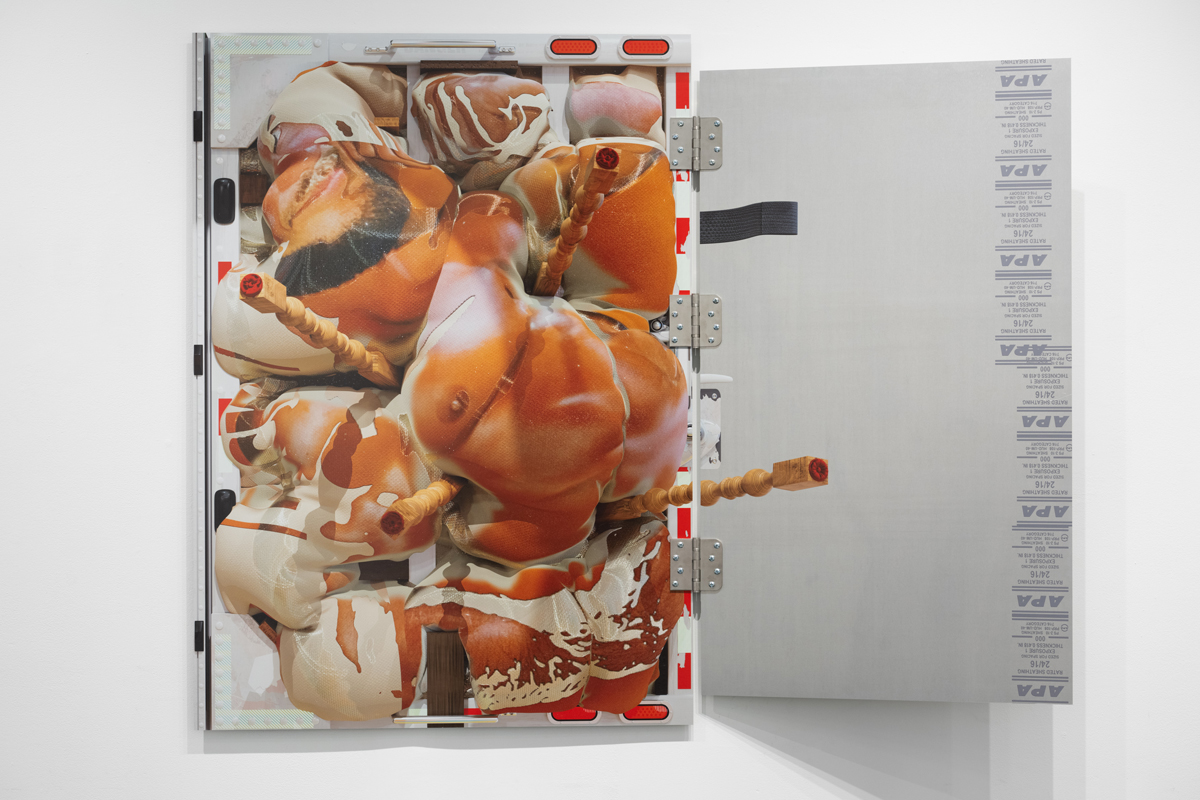
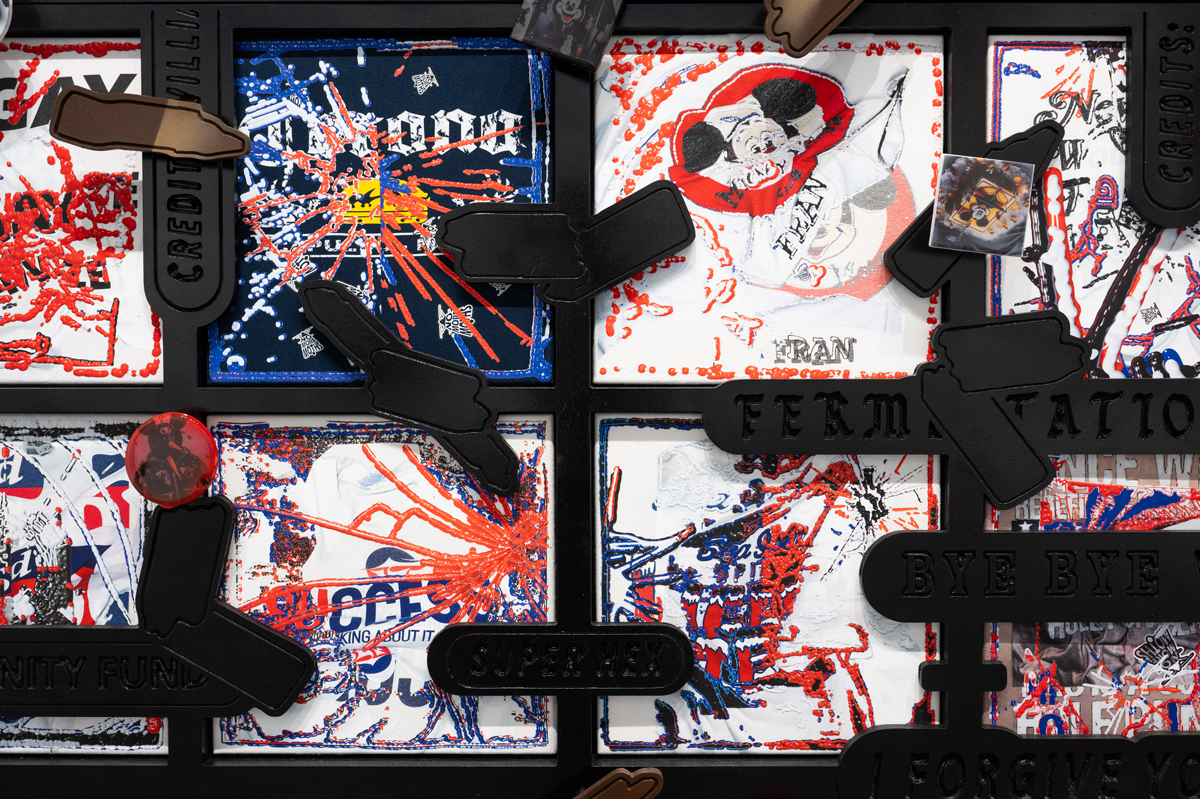
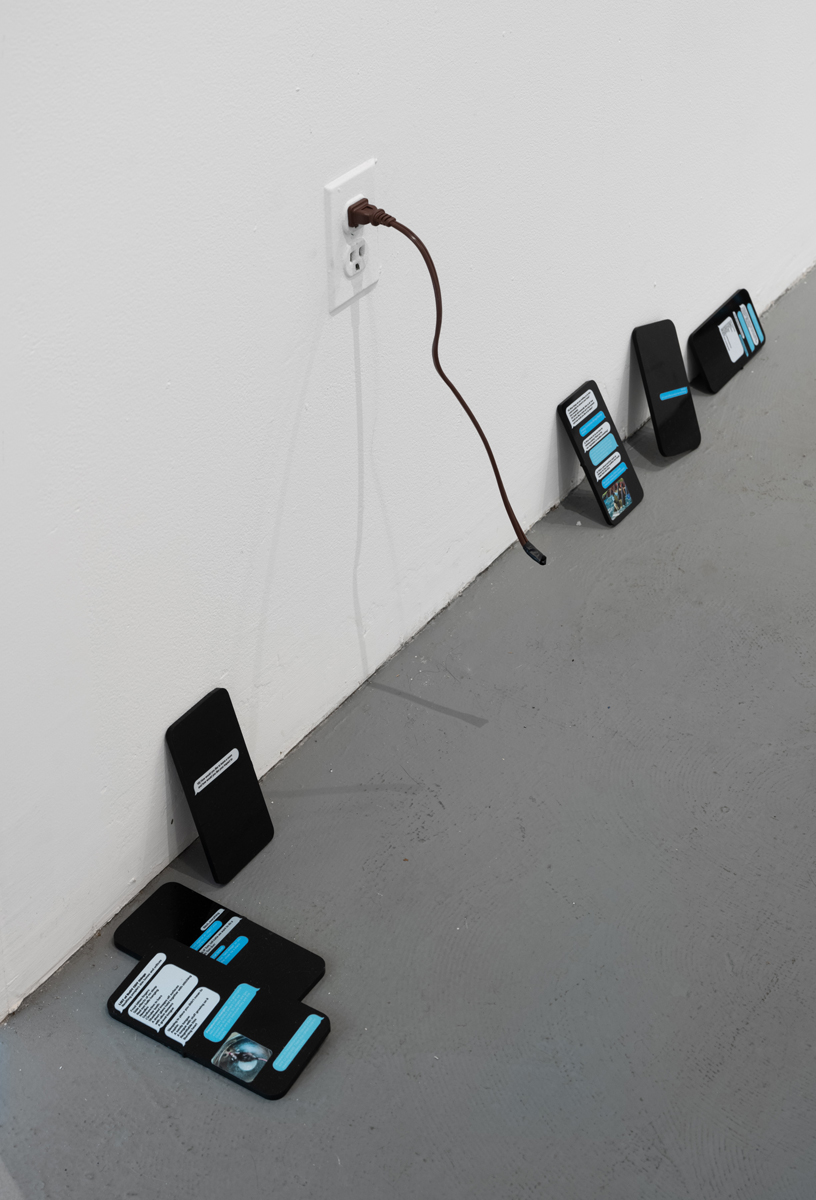
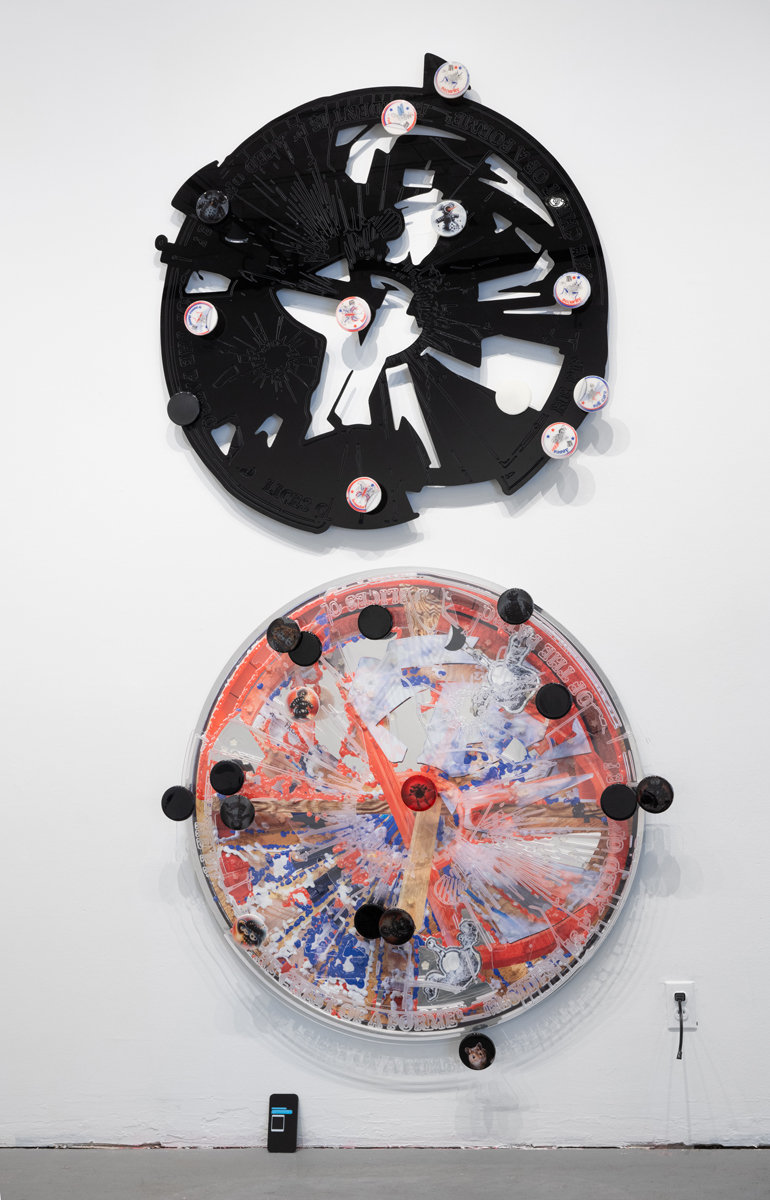
Wickerham & Lomax’s The Return of American Pest at Current Space is an intelligent, weird, beautifully crafted, poetic, crass, immersive, maximalist, bombastic sensual romp. It’s also about the most toxic and divisive issue of our time—American electoral politics, but it somehow manages to completely sidestep the minefield of partisan messaging while luxuriating in its language and rich symbolism.

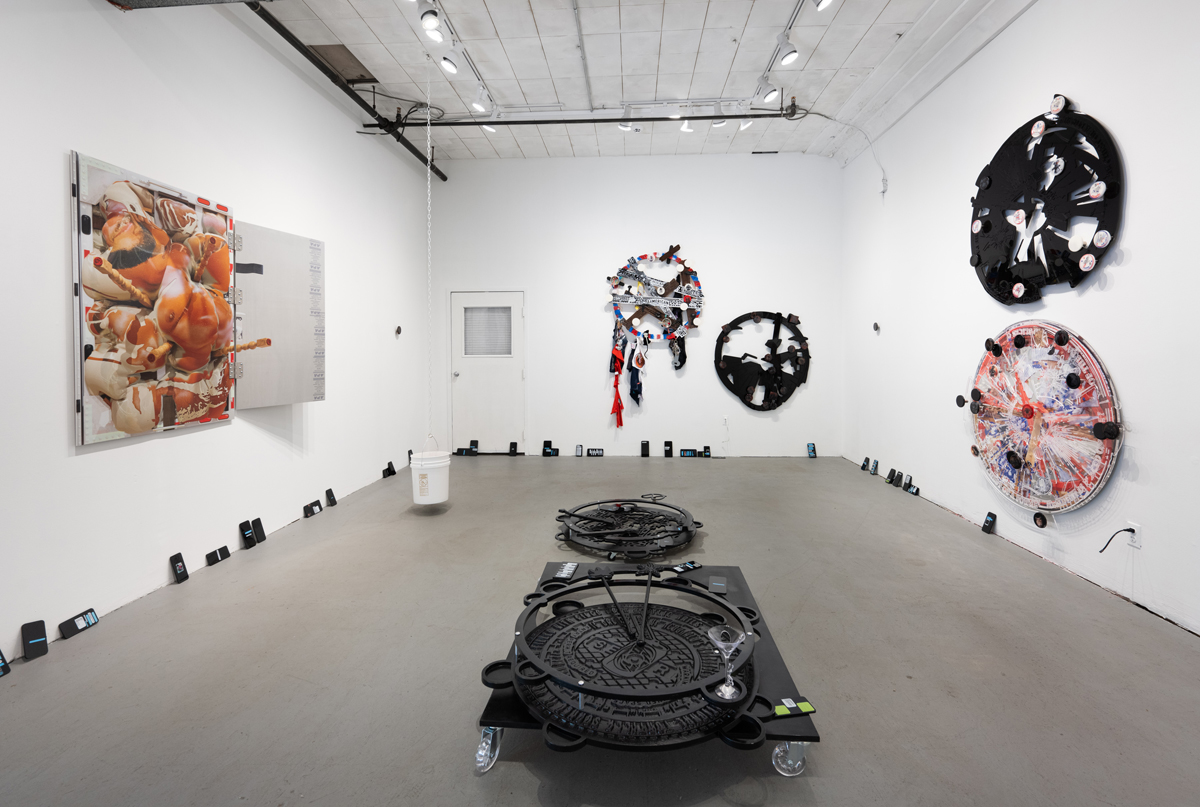
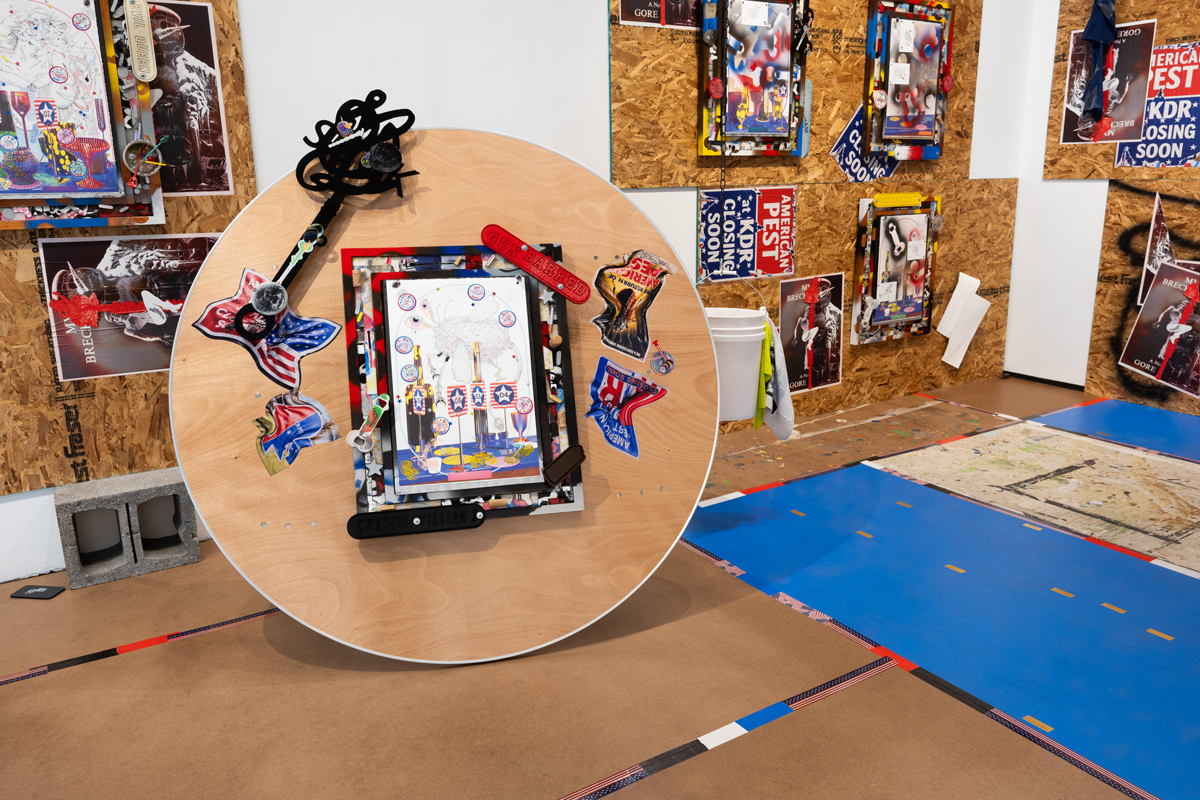
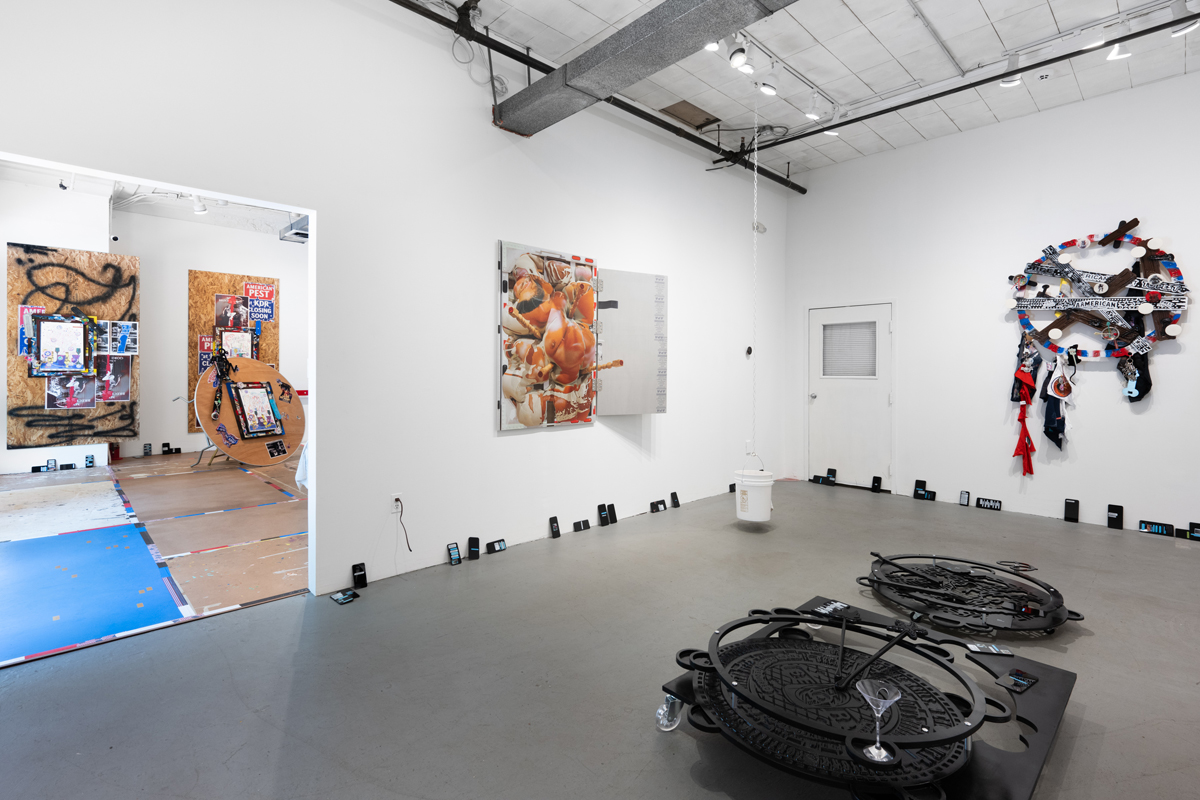
American Pest channels political symbols and chaos, waste and fraud, showmanship and sales, but there is no sense of partisan allegiance or outcome. Honestly, this is the strangest part of this show, the utter lack of connection between political language and outcome in our collective daily lives. As I stepped over the red, white, and blue floor littered with overturned tables and chairs, hanging buckets of dead rats, and walls of electoral T-shirts, I kept looking for MY politics—everywhere. I was looking for a reflection of my own political biases, because everything I read in every source confirms that I am right and they are wrong.

When I didn’t find this here, I immediately felt betrayed. How dare they? However, the exhibit is just so overwhelmingly detailed and lovingly, intentionally crafted, I put my politics aside for the moment. It hurt to do this, but I wanted to understand and my personal framework was inadequate for the job. I was forced to let curiosity lead me into new places.

What I find most compelling is how these artists integrate site-and-time-specific metaphorical images into an over-the-top, over-produced dystopian but beautiful funhouse mirror world where nothing is as it seems. The familiar becomes arcane. The obscure becomes vernacular. Like Kendrick Lamar’s halftime show, the red, white, and blue provides a baseline for the story, but whose story is this?

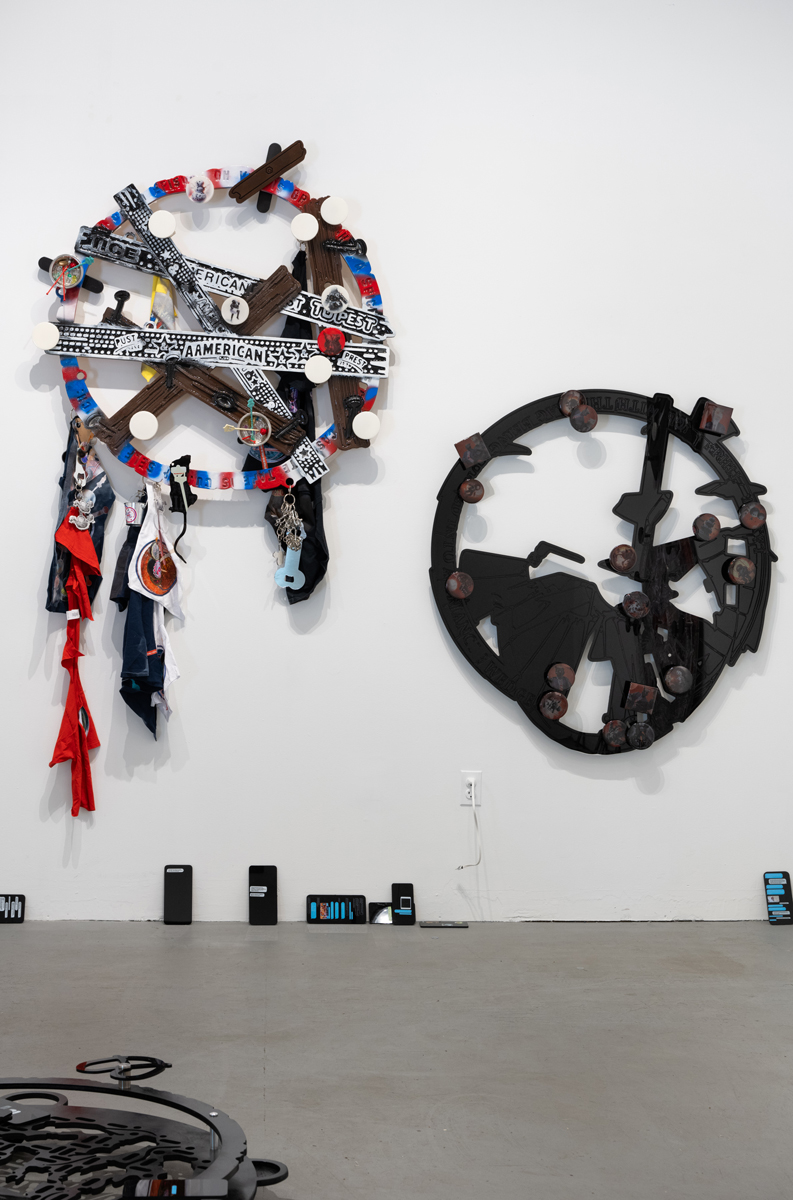
American Pest feels intensely familiar and specific, yet it reflects nothing from my highly partisan social media feeds. It feels like entering into an America that exists, because there are T-shirts and swag and plywood and giant dream-catchers made of resin emblazoned with chains and rats and penises, but I’m seeing it as if under water or on some other plane of reality that I have never visited before.

Does American Pest reflect the traumatic election hangover of the entire country? Or does it reflect the political reality of the majority of Americans who chose not to vote for either president this last election cycle? When completely surrounded, literally every inch is filled with intricate, intentionally-made objects and images. My only choice was to simply observe, rather than think.

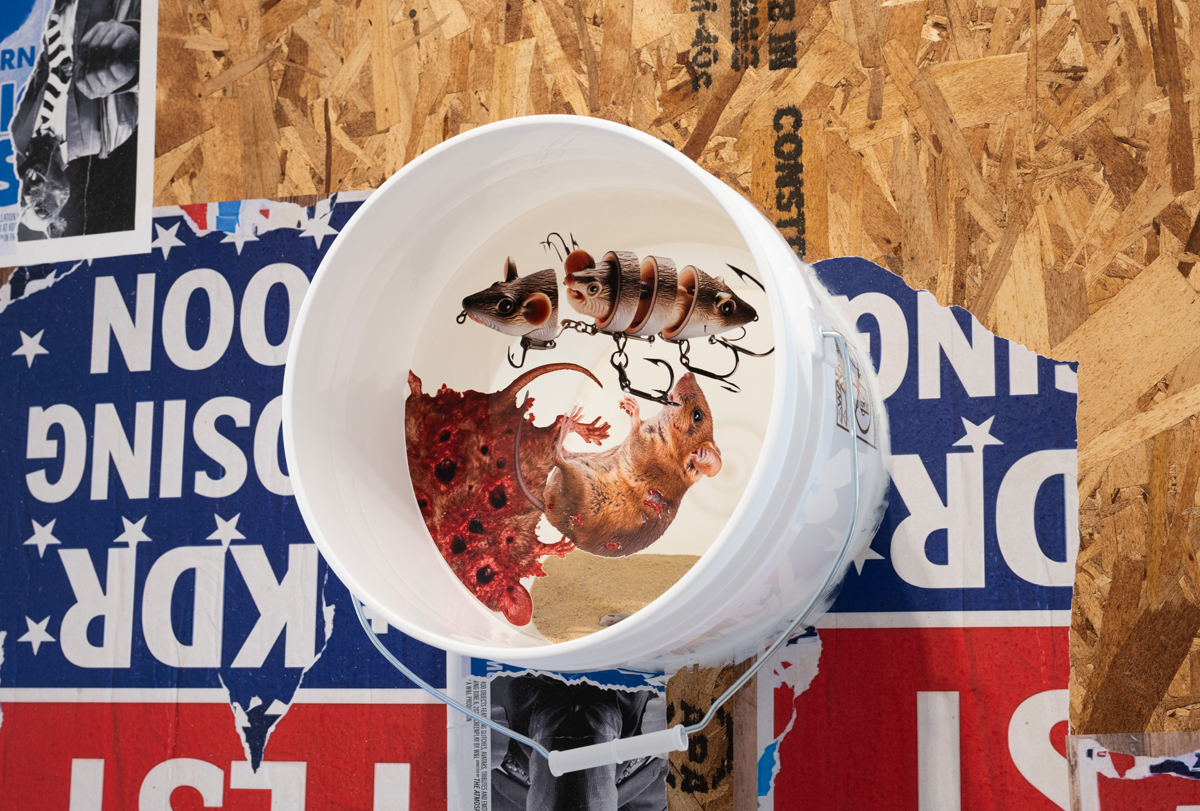
American Pest makes no sense to my logical brain. I’m annoyed by this red, white, and blue art that surrounds and enfolds me, these flattened rats in buckets and Topo Chico bottles and crushed beer cans, these artists who clearly know what they’re doing and what they’re saying, but within a code I cannot completely crack. Or, their ideas simply are too complicated for words.

We live in a time where we expect there to be text accompanying every piece of visual art. We expect a simple A.I. summary, a translation for everything we see. We want to be able to stick a flag into a work of art, and triumphantly proclaim comprehension. But the reality is this: visual art is mostly nonverbal. It’s intended this way.

Sometimes the art insists on this, and when it does, you can react one of two ways. You can get mad and reject the experience for making your brain work too hard and making you feel dumb, or you can suspend judgement and simply float in a visual space where pictures contain their own power and words are inadequate for experiencing them.

The only way to process this kind of art is to let it be poetry. You have to lie down, supine, and let it wash over you, waves of contradictory feelings and nonsensical nonsense, before you can arrive at, if not a “comprehension,” a sensation, a feeling of wonder and inadequacy.

Wickerham & Lomax’s artistic practice centers around historic and contemporary social research, with an emphasis on obscure fabrication techniques and objects. This artist duo is obsessed with accumulating beautiful things, cramming them all together in a space where they are too big and too intricate to be ignored.

While their interpretations challenge definitions of beauty and taste, the craftsmanship and monumentality goes far beyond most of the big budget museum exhibits I have ever seen. Talking directly to the artists is helpful in decoding their densely crammed work, but teaching yourself to navigate a friction-filled land mine of American political symbolism is a much greater gift.

The reality is, we are not happy living in a frictionless world. Friction sharpens a blade. Friction yields energy. Friction creates fire. Friction builds to a climax, slowly but surely. And, who would ever want a frictionless fuck? Or, for that matter, a frictionless life? Living on our screens is making us dumb and soft and slow, intolerant and easily manipulated. In contrast, great art is contradictory, irritating, difficult, and confusing.

Are we all just American pests, a pestilence upon the earth? Are we destined to be like these exquisitely rendered rats, floating in buckets that Wickerham & Lomax have created? Or is there hope for us to craft a new existence that requires vigilance and a perception informed by all of our senses, living in the material world?

If we can lean into the friction generated in this monumental and bizarre and beautiful art exhibit, if we can familiarize this sensation in other aspects of our lives, perhaps we can learn to see truth beyond the endless barrage of clever memes and tweets and sound bites designed to keep us divided and on the path of least resistance.


Wickerham & Lomax: The Return of American Pest closes Saturday, July 12 with a reception from 6-9 PM and an artist talk at 7 PM.


This text was originally published via the Substack Art + Ideas: Cara Ober, a reader-supported publication. To receive new posts and support my work, consider becoming a free or paid subscriber.

Related Stories
Ikhide's "Tales From Future Past" is on View through November 22 at CPM

CPM Gallery recently announced that the run of Richard Ayodeji Ikhide's solo exhibition "Tales from Future Past" would be extended to November 22 by appointment. At the opening on September 27, the British-Nigerian artist was interviewed by luminary art historian, curator, and educator Lowery Sims.

In "Pandarayuhan: Home is a Memory" Divinagracia Explores Immigration and Identity at Creative Alliance

"One of my biggest intentions with this show was to really spotlight Filipino presence in Baltimore and specifically immigrant lives and journeys.”

Baltimore art news updates from independent & regional media

This week's news includes: Amy Sherald shines brightly in Baltimore, Hilton Carter makes his house a home, Inviting Light returns with a Wickerham & Lomax, John Akomfrah moving image + sound installation opens at the BMA, mayorial portraits unveiled at City Hall, Maryland Film Fest is here, and more

Swagger and Style at the BmoreArt Release Party for Issue 20

On Saturday, November 1, BmoreArt hosted 400+ guests at the Icons Ball & Benefit at the Lord Baltimore Hotel.