The Baltimore Museum of Art has opened its doors to past recipients of the Greater Baltimore Cultural Alliance’s prestigious Baker Artist Awards for an exhibition celebrating the diversity of artistic practices supported and recognized by the program. This survey show of five awardees features materially innovative works by Selin Balci (interdisciplinary, 2019); Kelley Bell (interdisciplinary, 2024); Oletha DeVane (interdisciplinary, 2023); Jordan Tierney (visual arts, 2023); and Stephen Towns (visual arts, 2024) in thoughtful dialog. This exhibition is rich in storytelling, unconventional media, and textures—showcasing the artists’ individual practices and the variety of themes explored, from biology to mythology, forgotten histories to potential futures, and more.

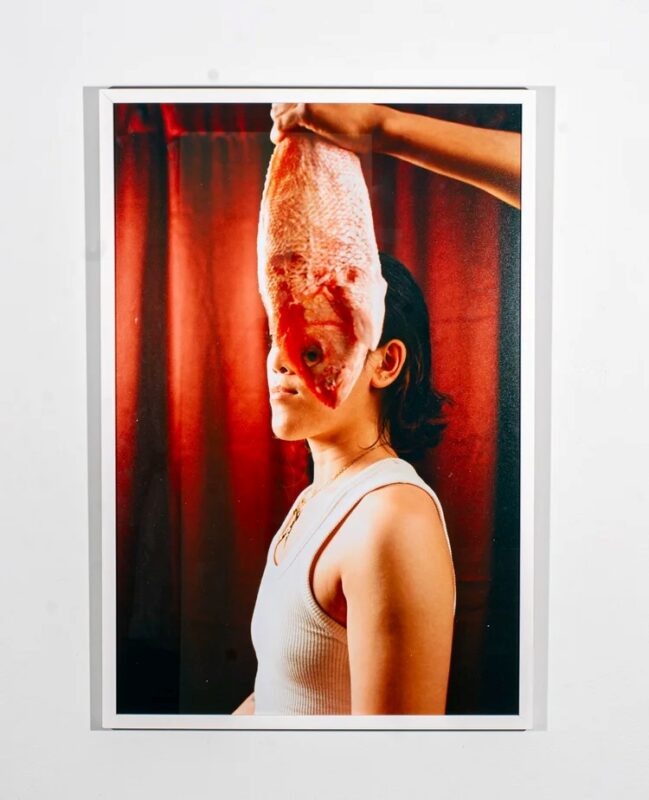
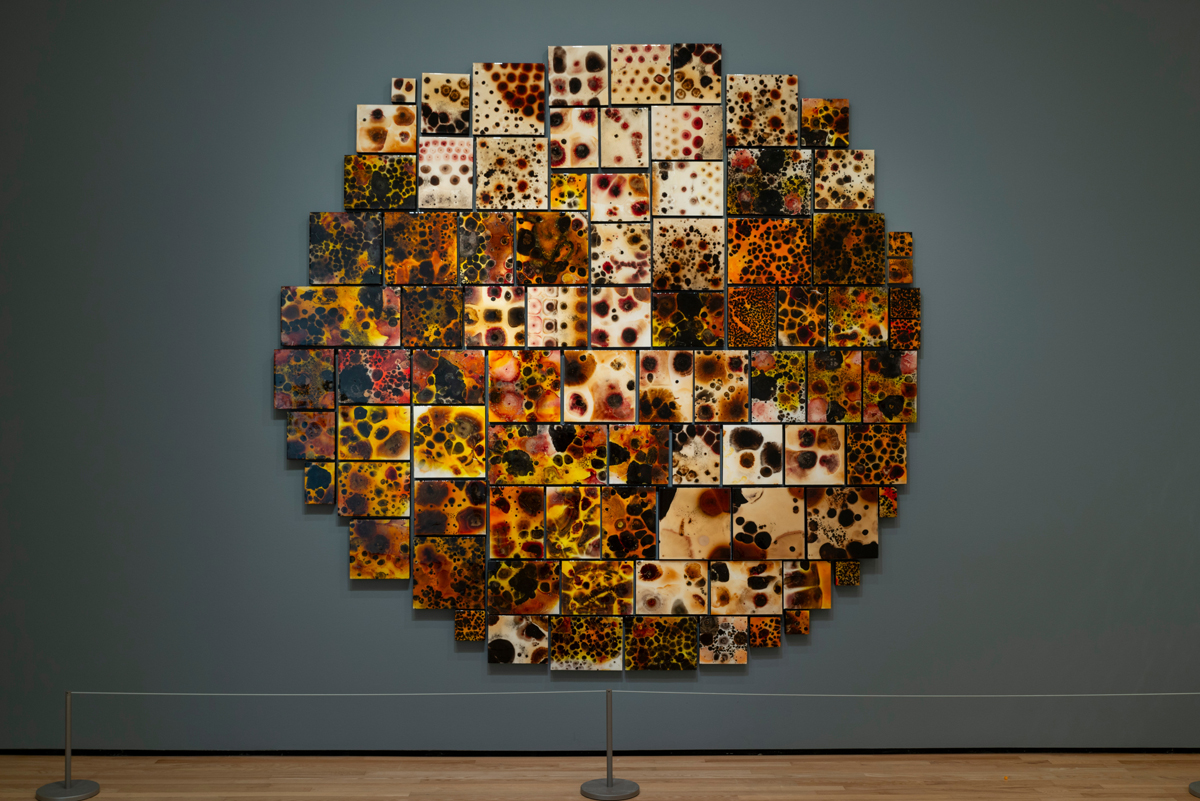
I sat with Selin Balci’s collage-like mural-sized works, taking in the grandiosity of the scale and idiosyncrasy of each piece. Balci’s artistic practice lies between “the intersection of biology and art through the collection and cultivation of mold spores.” These mold spores are encapsulated in epoxy resin and preserved in her series “Contamination” and “Faces,” both of which explore different facets of the natural world.”
“Contamination” is circular in form, with shades of yellows, brown, and orange spheres making the piece reminiscent of the sun’s surface. It represents a microcosm of Baltimore’s Wyman Park, each square board containing mold spores found at the park and incubated until they formed intricate and colorful patterns. Its companion, “Faces,” is composed of Polaroid pictures packed and organized together in long rows, like auditorium seats. Diving into the complex and unique world that is within our personhood, this portrait installation utilizes the BMA’s staff and Balci’s friends and family as its subjects. Obscuring their faces are mold spores cultivated from the microorganisms found in each person’s body, making their portraits a representation of themselves from the inside out.
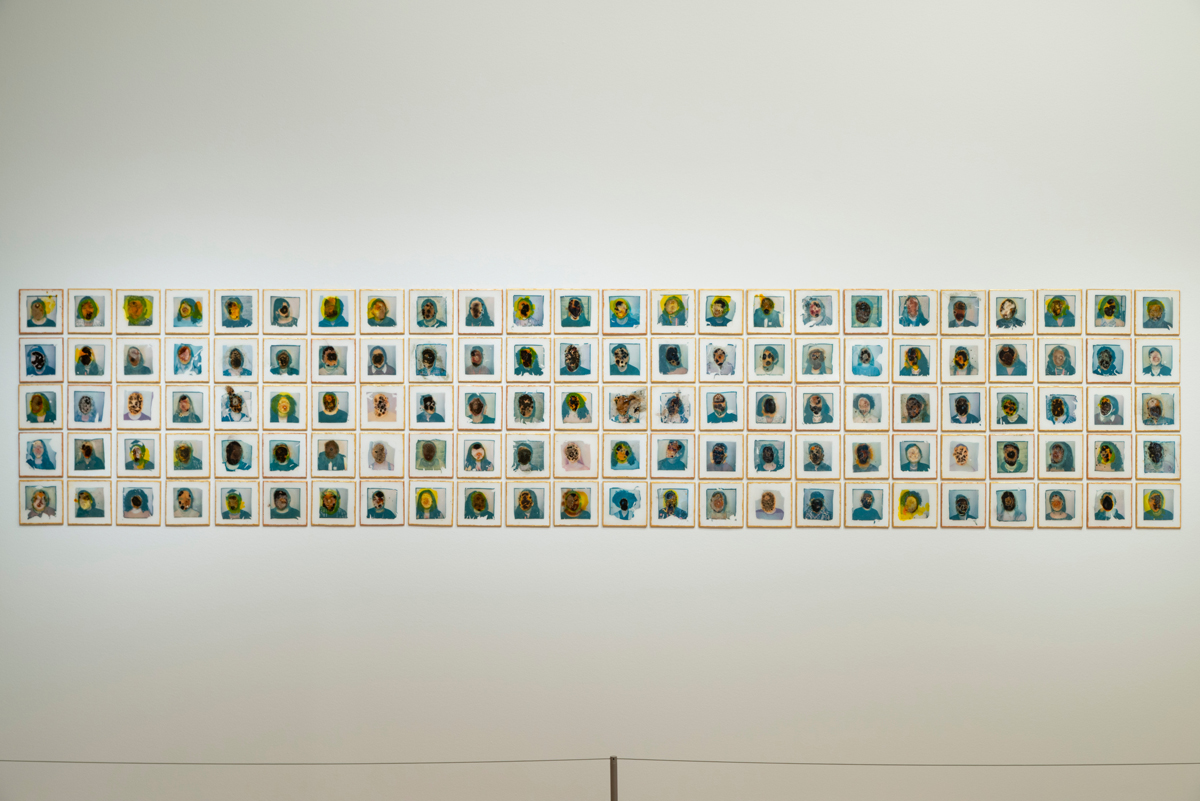
Looking at each of the pieces that composed “Faces,” I was fascinated by how the mold spores had developed so differently from one another and created designs that are truly as unique as each person. As I finished my walk around the space, I felt in awe of the simultaneously controlled and unpredictable nature of Balci’s work, the ways in which she brought to light a vibrant world that is invisible to the naked eye, allowing us to view a world unknown.
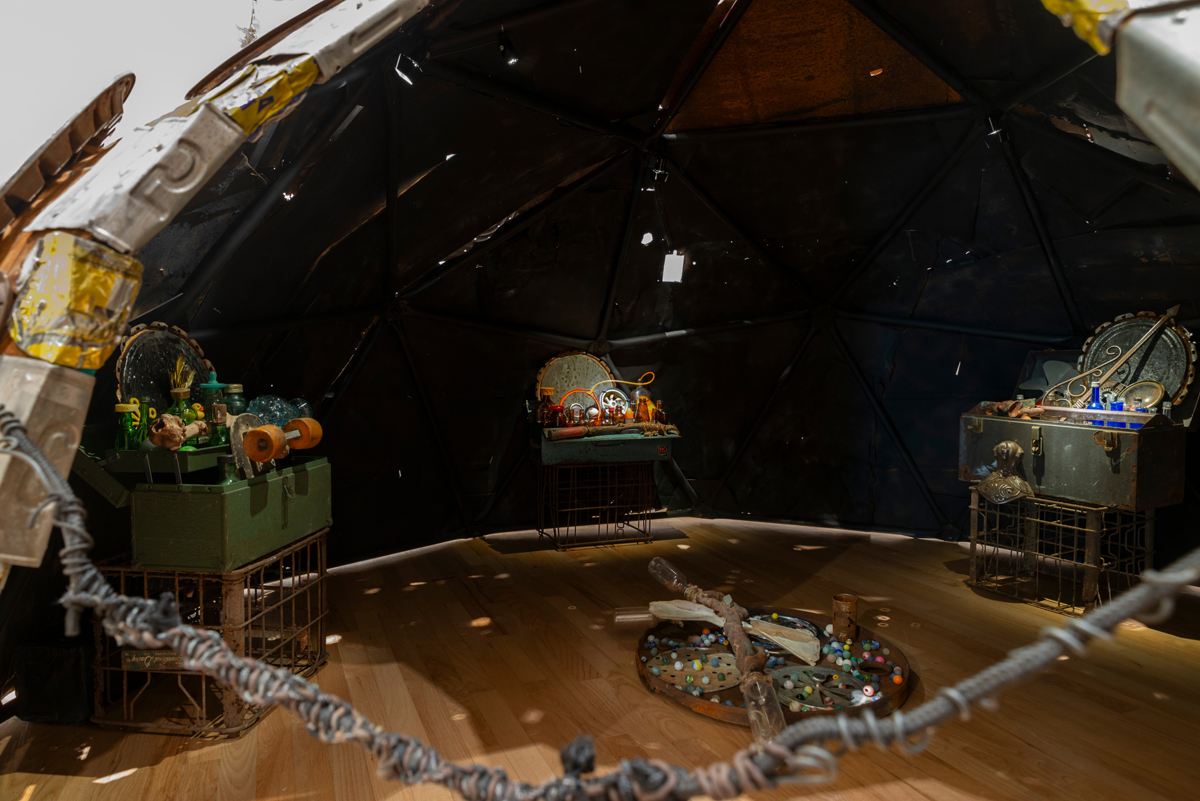
Alongside Balci’s work, Jordan Tierney’s assemblages also explore nature in the urban landscape, albeit through the accumulation of discarded objects found in Baltimore City parks. Tierney’s assemblages are crafted with patience and dedication, as she willingly surrenders to the elements and what they bring with them. Her pieces are composed of both natural debris and polluting man-made objects collected during daily excursions to Baltimore’s Jones Falls, demonstrating the variety of items found at the site and others like it. Her pilgrimage is a refusal to feed into the doom and gloom of climate change, instead creating fantastical reimaginings of what the future can look like.
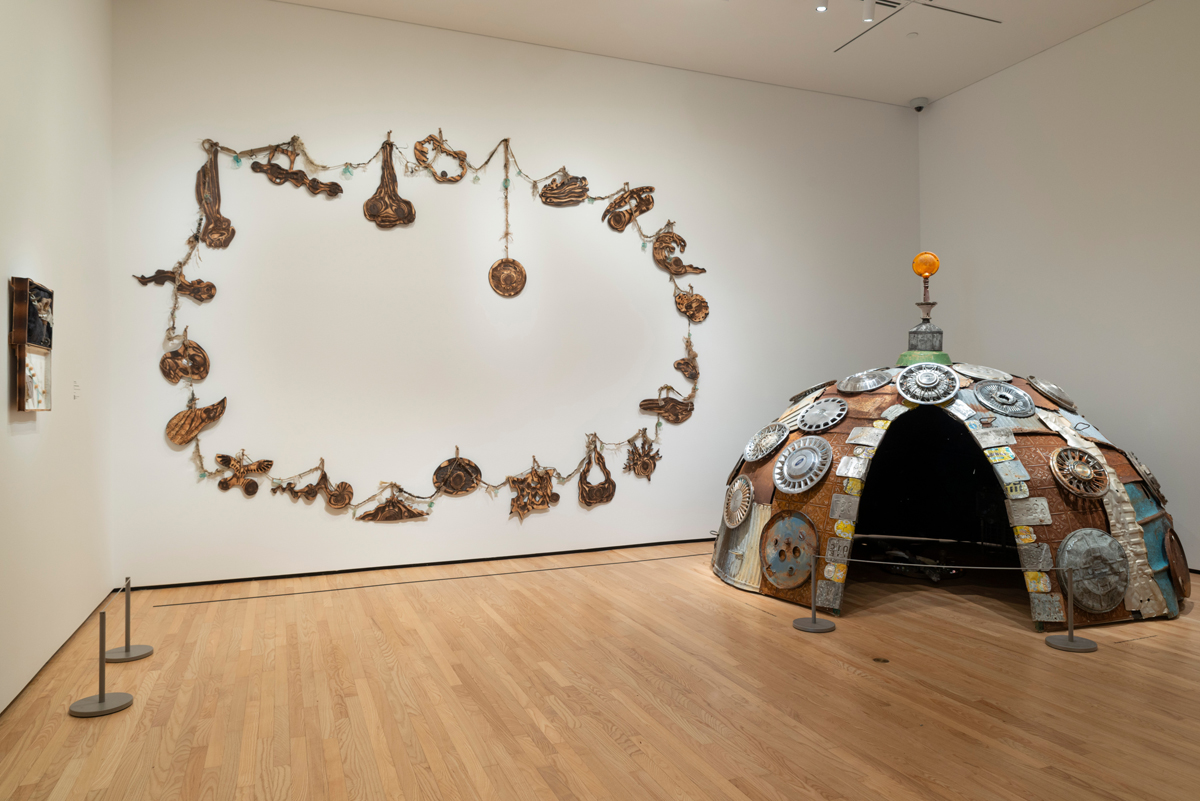

“Waystation for Future Migrations, Late 21st Century Jones Fall Watershed,” an installation constructed in the image of a camping tent, gives us a peek into the possibilities of the future. The installation is equipped with makeshift versions of amenities a traveler may need, such as a camping stove and chests full of miscellaneous artifacts. Atop the tent is an antenna, which we can imagine provides access to radio waves and internet connection to the future migrants. Constructed with salvaged materials such as oil drums, a geodome climber, metal milk crates, and more, “Waystation for Future Migrations” reuses discarded items and assigns them a new purpose. Tierney’s visual parable is not dissimilar to the reality houseless people face today: the need to create temporary housing. With the rise in global warming and its many impacts on the environment, we must take into consideration our most vulnerable populations when discussing these topics.
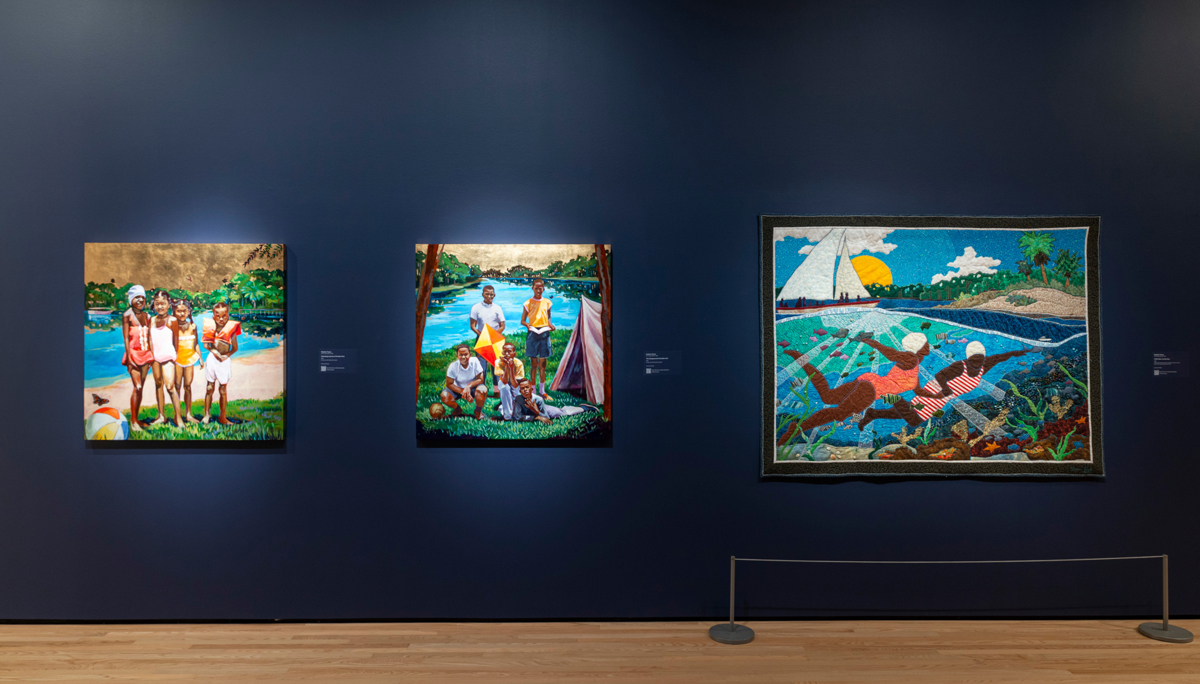

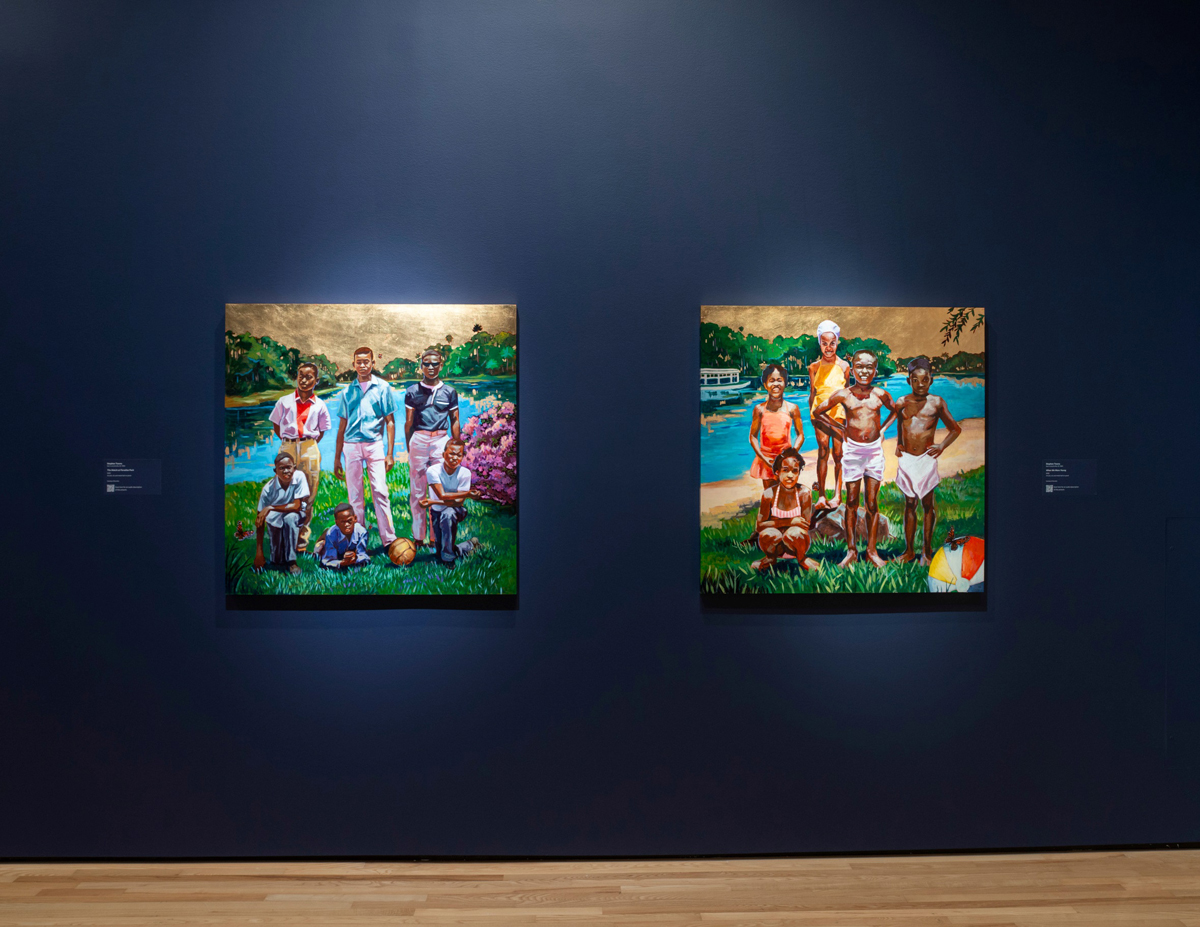
Paradise Park in Ocala, Florida—one of the only vacation spots open to African Americans at the time of its opening during segregation in 1949—is the topic of Stephen Towns’ work. His collection includes acrylic paintings and embroidered quilts, which are inspired by Towns’ research of the park. Depicting children and young adults enjoying the sunshine, pools, and Floridian beaches, Towns’ work feels like taking a trip down memory lane with the family scrapbook. It is warm and comforting, effectively transmitting the unbridled joy and fun the subjects feel in this tropical paradise, which we so rarely get to see in other depictions of this time period.
“I Will Follow You My Dear” is a classic beach adventure. The embroidered quilt depicts two women swimming underwater, surrounded by fish, corals, and maritime life. Sunlight illuminates the aquatic scene, while above a sailboat full of passengers approaches a sandy coast, the horizon line full of palm trees and greenery. The piece is enhanced by Towns’ three dimensional touches. Seashell, acrylic and glass beads make “I Will Follow You My Dear” a vibrant visual delight, which can be said about all of his pieces.
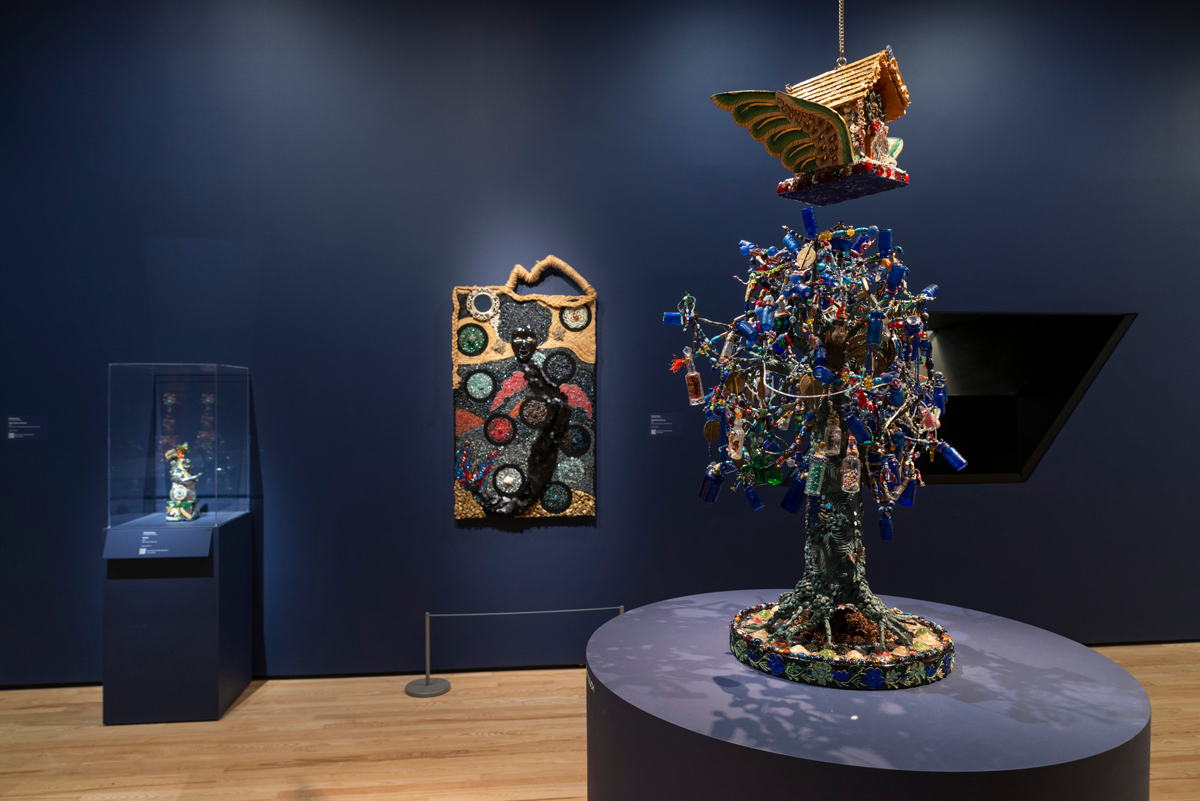
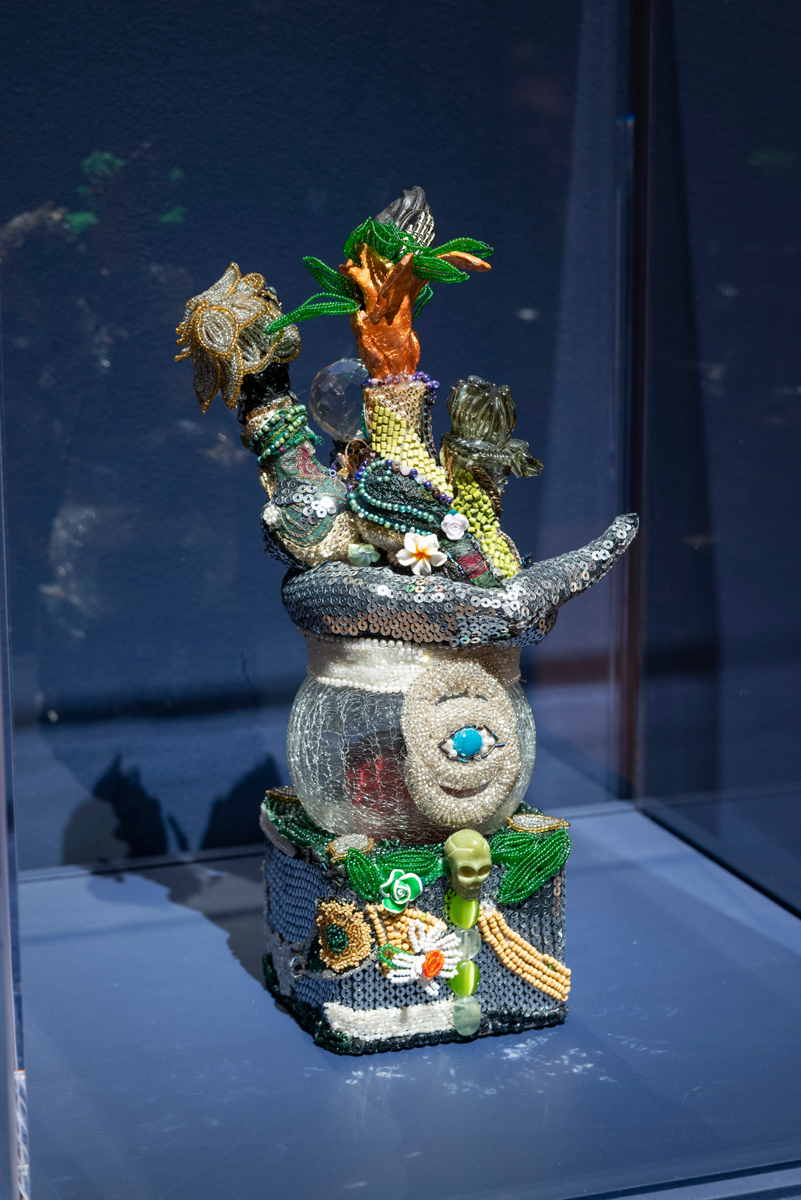
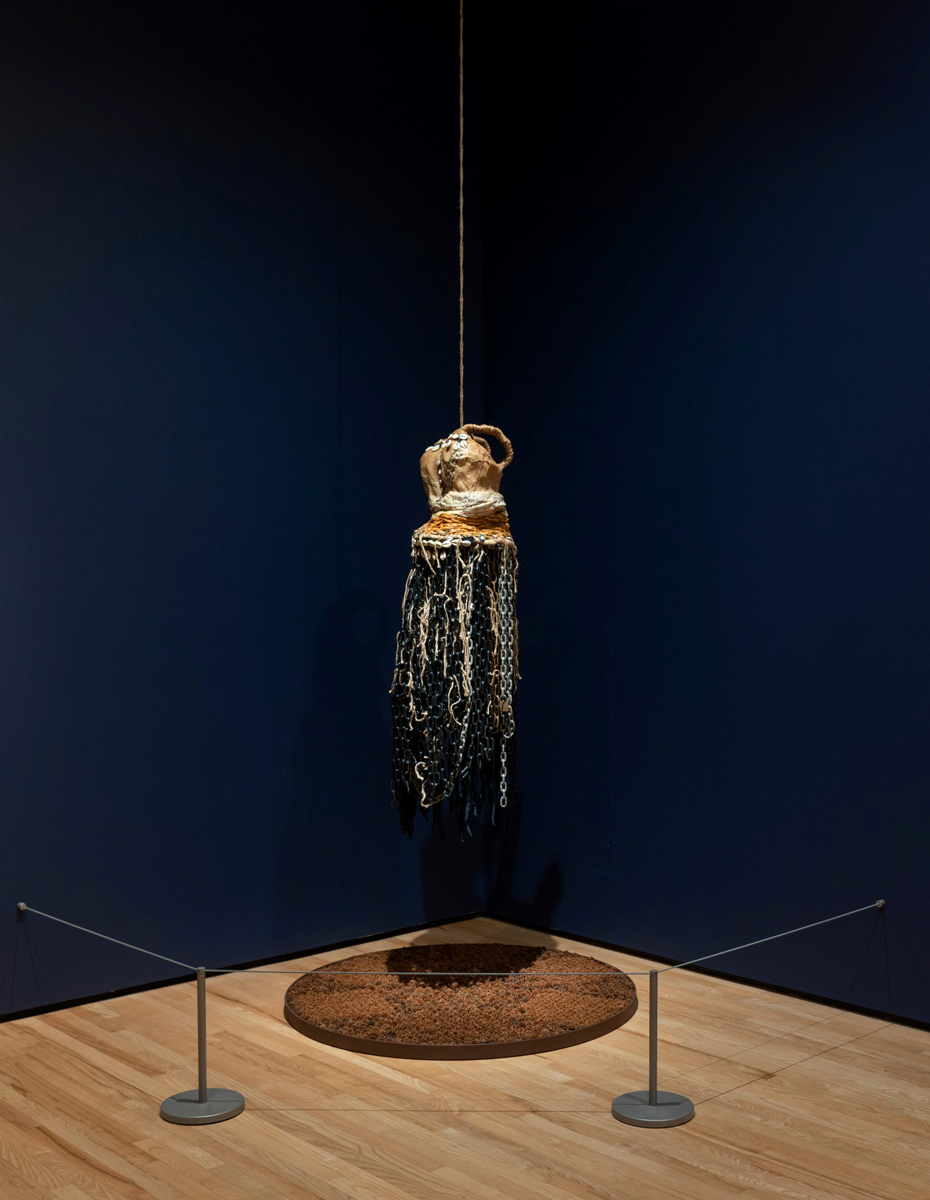
Oletha DeVane brings forth conversations about transformation and mysticism in her multimedia work. Utilizing sequins, stones, cowrie shells, beadwork, and more, each of DeVane’s pieces are bejeweled like treasures. Her sculptural pieces are connected by the theme of femininity, communicated through the various mythological symbols depicted.
“Hagar’s Dress in her Exile,” a multimedia sculptured dress displayed hanging from the ceiling, references the biblical story of Hagar, a servant who was impregnated by Abraham and later exiled with her son. “Mamawata’s Earth Song” depicts a female water spirit of African mythology via a mosaic of geo stones, the mermaid’s tail shimmering as brightly as the rest of her environment.
DeVane’s immersion into a fantastical, whimsical world continues in “Spring (Sohappyitsspring).” The sculpture is composed of beaded flowers and greenery, each one more colorful and delicate than the next. At the top of the tower-like piece, a flower with a face at its center stares back at me, reminding me of a shrunken Alice and the flowers in Wonderland. DeVane’s artwork is enhanced by its storytelling component, each one referencing a story in which women go through a transformative experience.
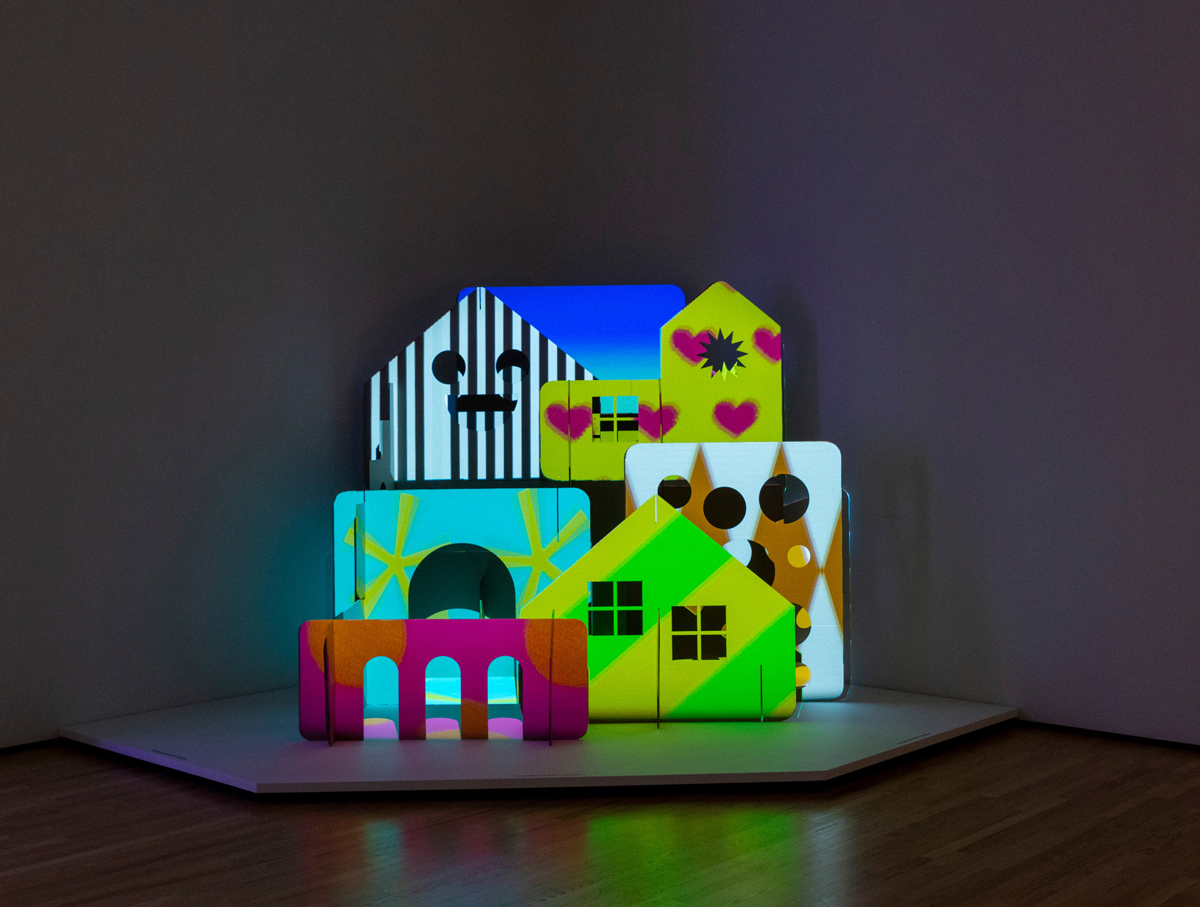
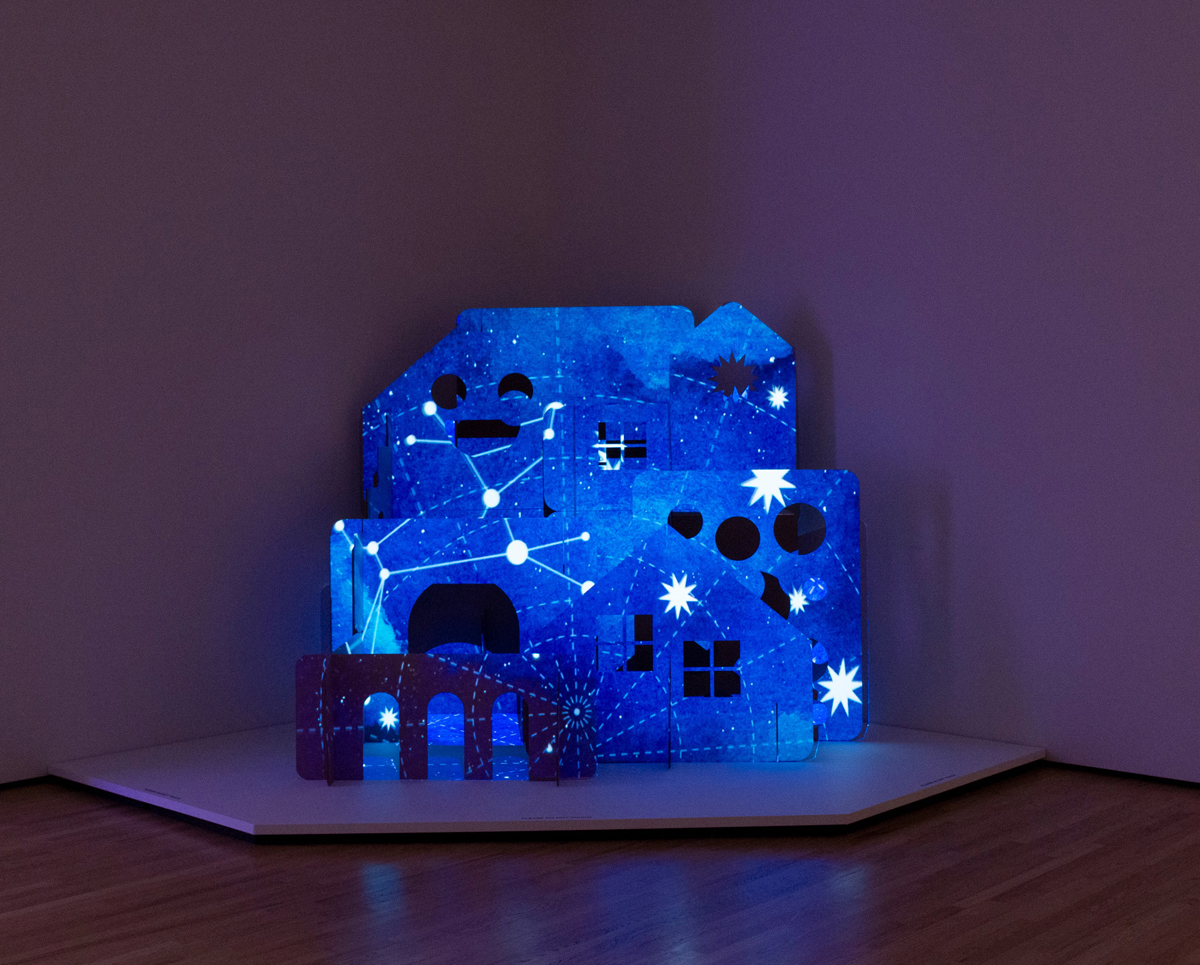
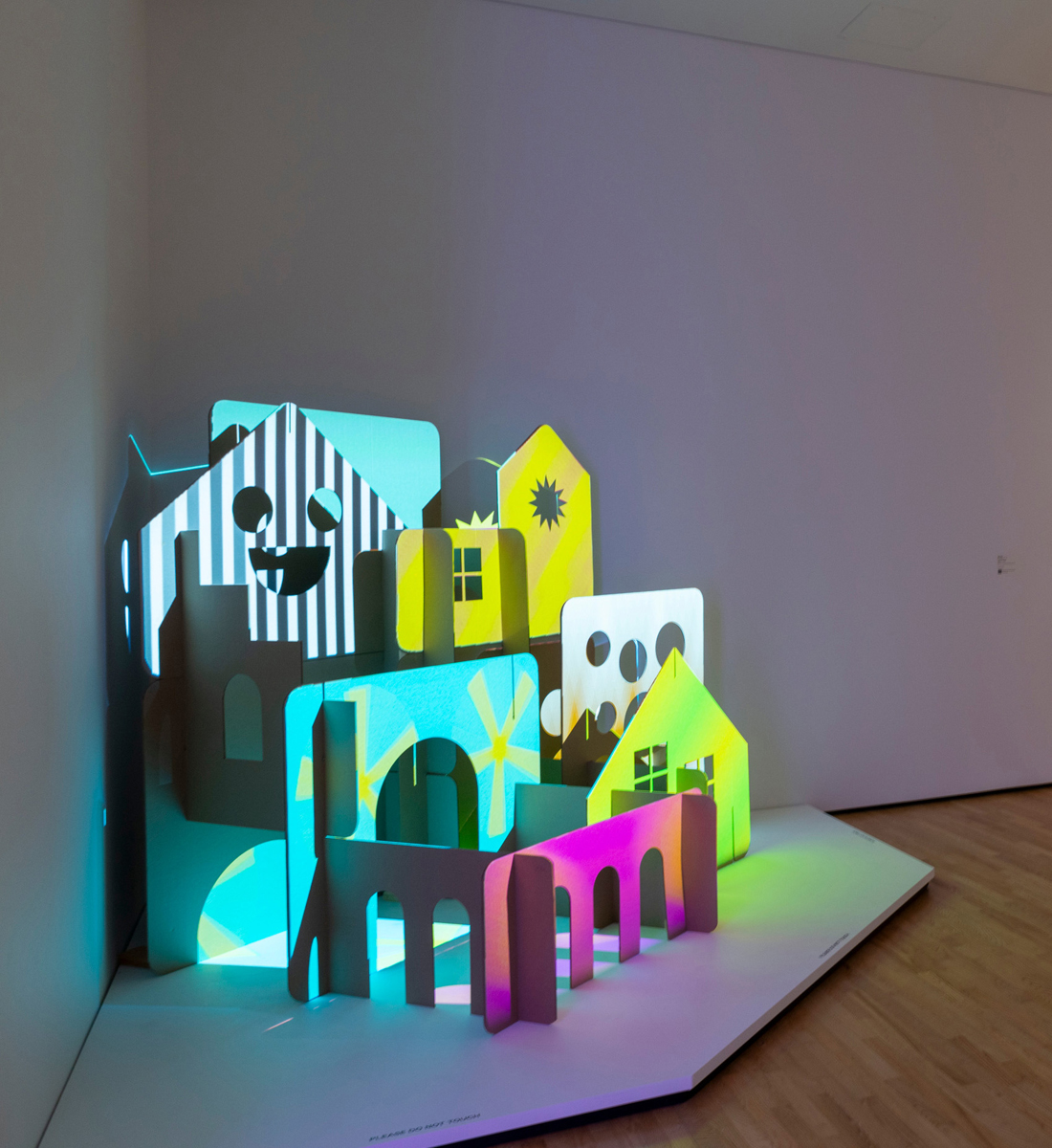
Whimsical is also the name of the game with Kelley Bell’s “Fantastic Village”—a tribute to Virginia Dotch Dorazio, another artist who won a playground-design contest and whose submission was constructed in parks across the nation, including Washington D.C., Bell’s hometown. Dorazio’s playground serves as Bell’s inspiration for the sculpture, as do Baltimore’s rowhomes, making “Fantastic Village” a true homage to the landscape of the DMV’s children.
Colorful, bright, and dynamic, the multimedia installation reminds me of shape puzzles and morning cartoons. Bell’s inspiration stems from her own childhood memories playing in Dorazio’s design, which makes the piece feel like we’re looking at the playground through a kid’s eyes. The cardboard sculpture’s geometric shapes are rounded and inviting, a safe environment designed to avoid the bumps and bruises that come with children’s clumsy falls. The constantly-changing video projection-mapped onto the sculpture is almost hypnotizing. The different shapes and colorful patterns in the projection enliven the piece, transforming it from distinct characters projected on individual pieces to unifying them and forming a sunset sky.


By the end of my walkthrough, I felt like I had traveled through time, to a land faraway, and then back to myself. The 2025 Baker Artist Awards exhibition dives into such a variety of different themes, all the way from biology to mythology, yet the curation of the exhibition feels like a cohesive journey. As Selin Balci explores an individual’s microbiome, Jordan Tierney takes us to the potential future, and Stephen Towns brings us to the past. Oletha DeVane then coaxes us to imagine a world full of mysticism, and Kelley Bell continues guiding us into our most playful memories. This group of artists showcase a holistic and exciting future for the arts—one that reminds us of the importance of institutional support for risk-taking and innovation—and I can say I’m so excited to see what’s next now that they are part of the Baker Artists family.
The Baker Artist Awards exhibition is on view at the BMA until July 27, 2025.
The exhibition was curated by Katie Cooke, BMA Manager of Curatorial Affairs, and Antoinette Roberts, BMA Assistant Curator of Contemporary Art.