Reading

Anna Divinagracia: a Bridge from the Philippines to Highlandtown

Previous Story
Article Image

BmoreArt News: Amy Sherald, Hilton Carter, Inviti [...]

Next Story
Article Image

The Body as Manifesto: Merkin Dream III at Maryla [...]

Filipino Americans are the third-largest Asian origin population in the US but are markedly underrepresented in the art world. As a Filipina American and an avid arts consumer, I have been to countless museums and galleries and I’ve grown begrudgingly accustomed to a lack of representation of my culture, even in museums with substantial Asian art collections. So when I heard about Anna Divinagracia’s solo exhibition, Pandarayuhan: Home is a Memory, at Creative Alliance, I marked my calendar immediately.

I visited the exhibition on a quiet Friday afternoon, comforted by Tagalog words interspersed between English and a roomful of works that tell a story mirrored by so many of my relatives. Pandarayuhan: Home is a Memory comprises mixed media works and photographs that capture Divinagracia’s journey of migration from the Philippines to Baltimore.

“Pandarayuhan” means migration or the act of moving away, but as described on Creative Alliance’s website, it “is not just about departure. It’s about the emotional labor of building something from fragments, and the quiet resistance in claiming space while also tethered elsewhere.”

"Philippines / Baltimore" series, installation view
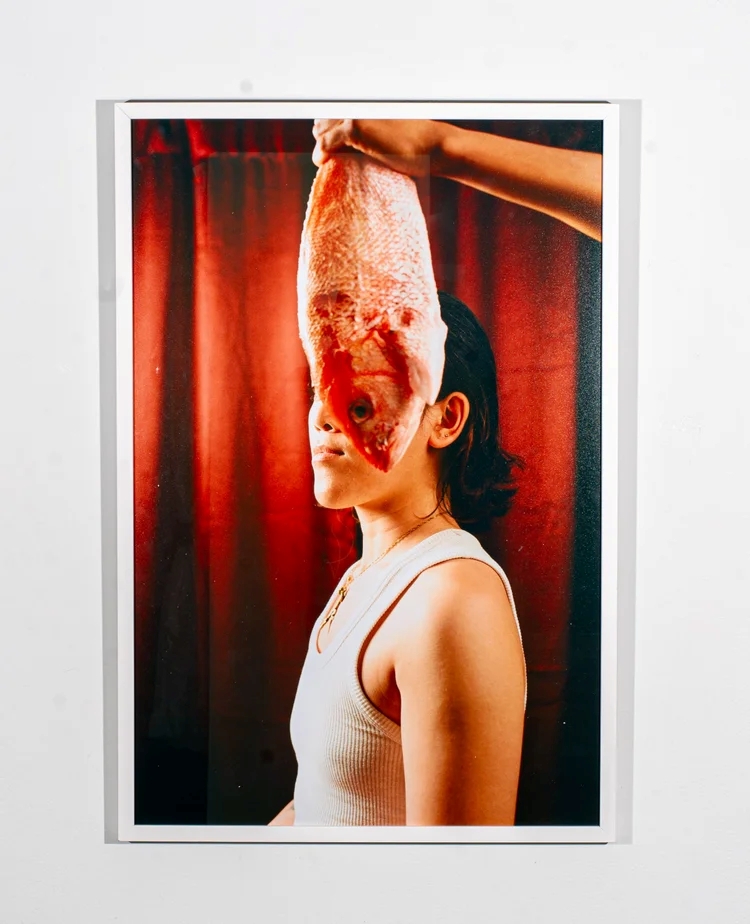
"Saan Ka Man Naroroon, Carry Me Across the Sea"
"Rambutan St. / Lola's Door"
Prior to being here [at Creative Alliance], I feel like I’ve done a lot of telling other people’s stories, and I think being in here and working for the past few years helped me tell my own story in the way that I would like.
Anna Divinagracia

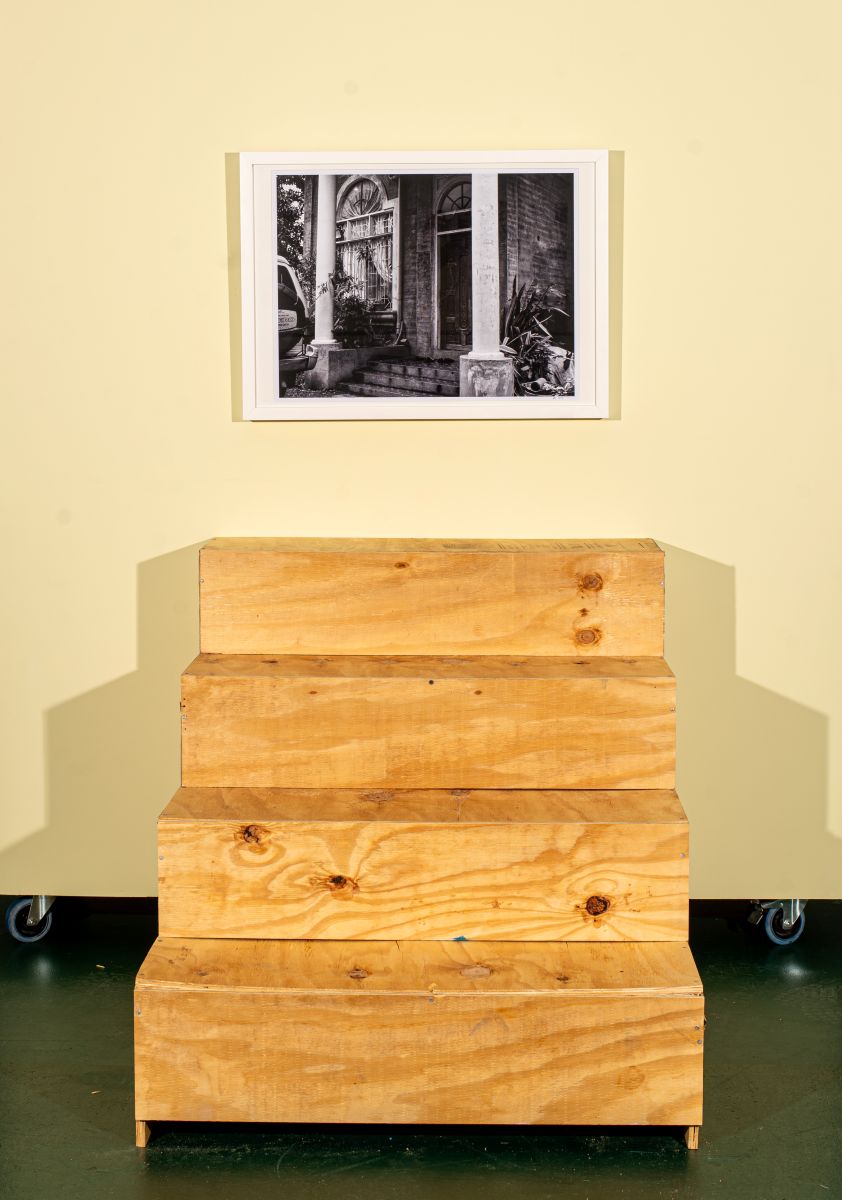
The layout of the exhibition makes the competing pull of two places obvious for the viewer. On one side of the gallery are a series of photographs shot in the Philippines; on the opposite wall are works created in Baltimore. Throughout the center are three-dimensional works, most of which have a photograph as the central image with elements that extend out from the wall, such as a staircase, connecting a photo taken in the past to viewers in the present.

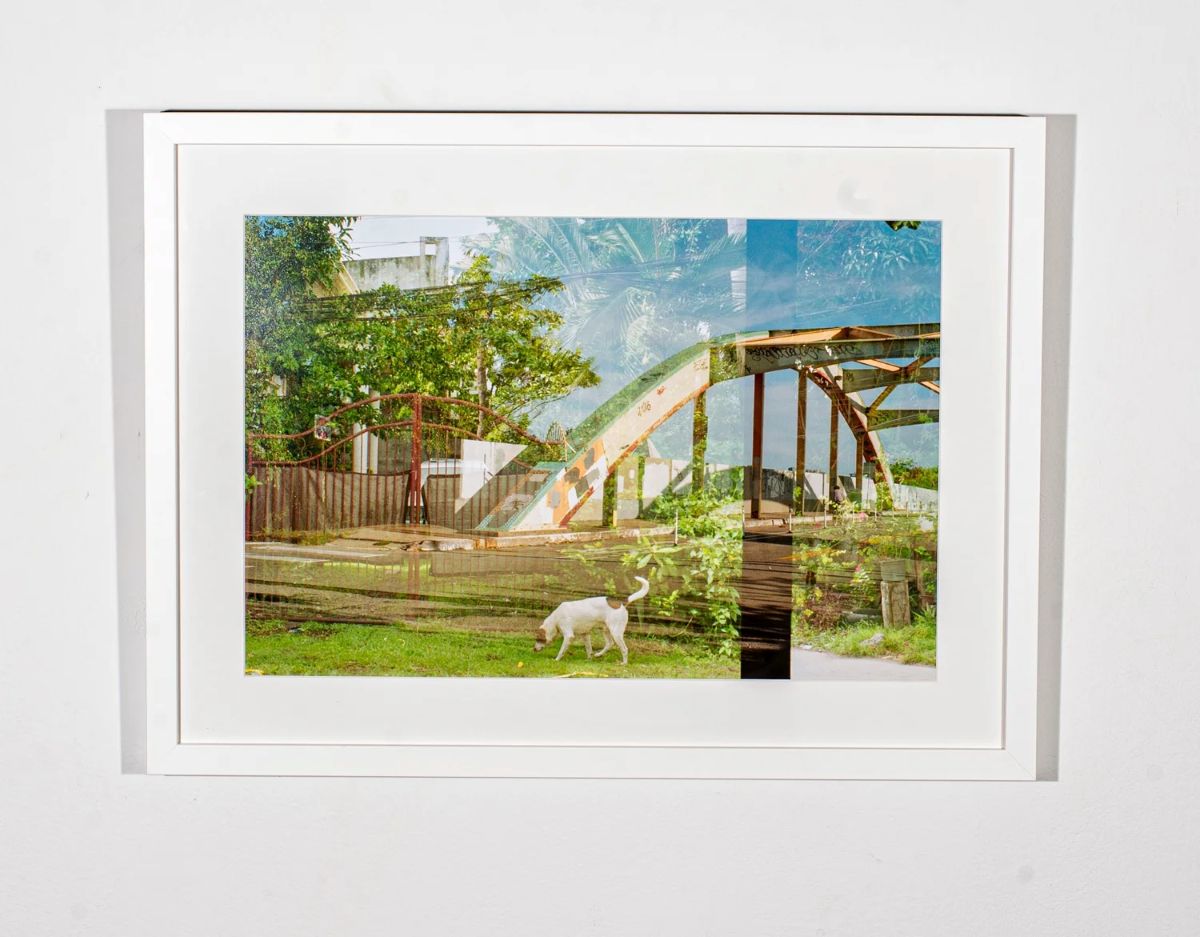
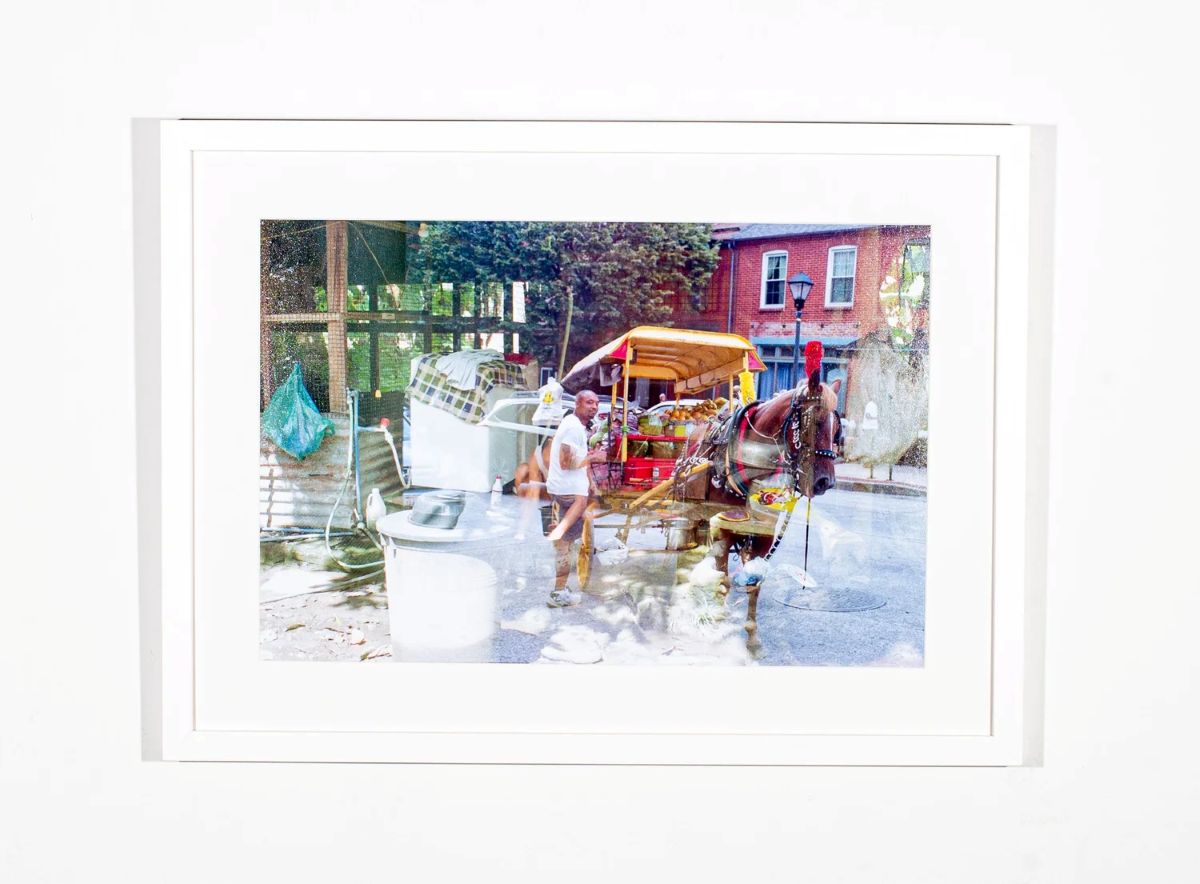
The images I was most drawn to were displayed along the back wall, a connecting line between both worlds. In these photographs, Divinagracia’s ties to two disparate places are literally and metaphorically merged in a series of dual exposure images shot on 35mm film in both the Philippines and Baltimore. I have never seen works of art that speak so specifically to the duality of my lived experience. As a second generation immigrant who grew up in Baltimore and with formative albeit distant memories of visiting the Philippines, my home is unquestionably Baltimore, but my Filipino roots run deep.

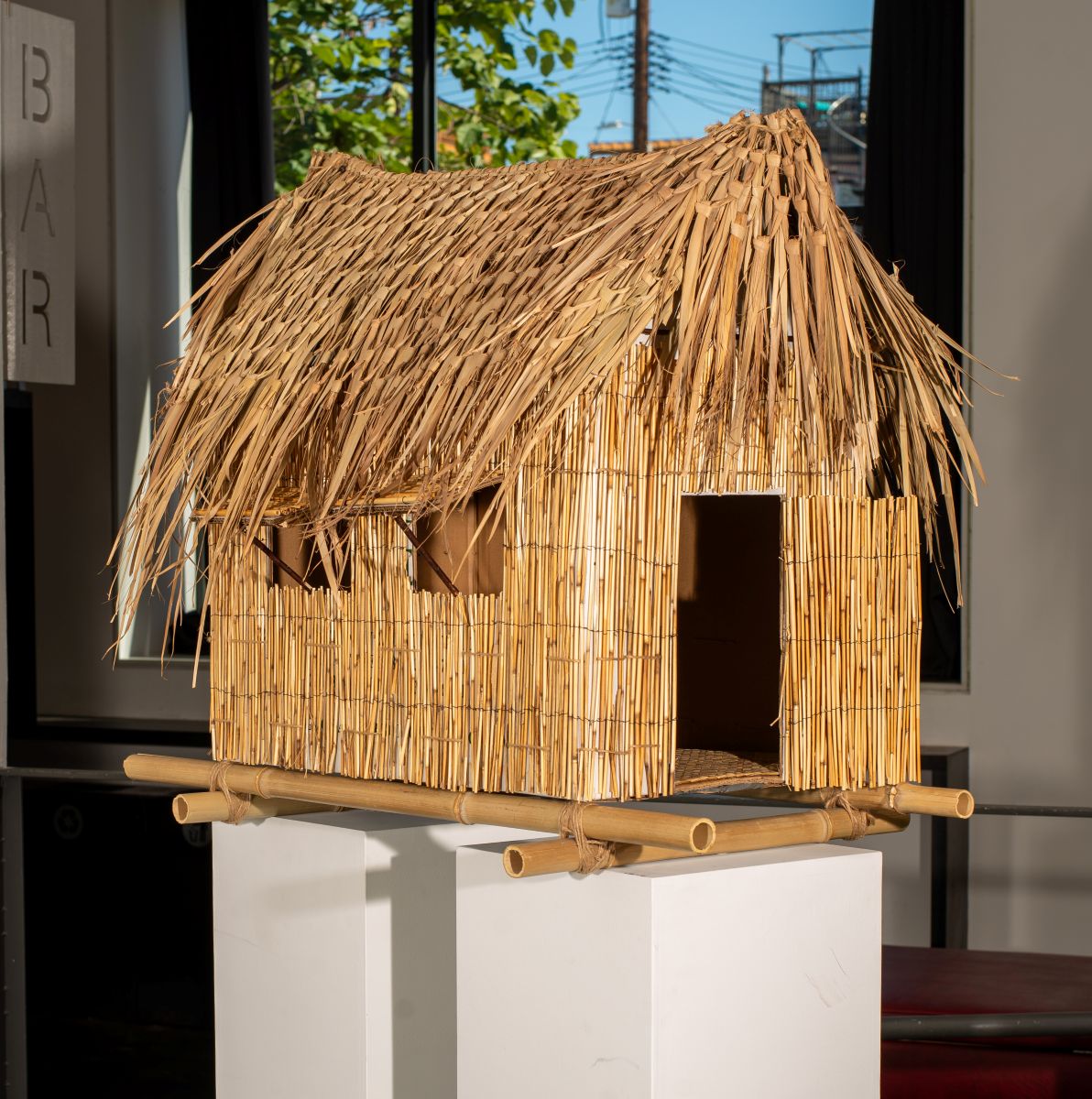
Divinagracia visited the Philippines in March of this year, taking two film cameras with her—a 35mm Minolta and a medium format Mamiya. There she shot photographs that she planned to overlay with Baltimore street scenes. She captured a chicken being plucked, the chaotic jumble of power lines, a motorized tricycle (a common form of transportation in the Philippines), a thatched roof hut, and along the way, she jotted down notes about each scene. When she returned to Baltimore, she put the undeveloped roll back in her camera and shot scenes from her daily walks around the city, making sure to orient her camera from horizontal to vertical as reminded by her notes. Although impossible to line up each frame precisely, there are happy formal accidents. Rooflines from two cities in different parts of the world overlap and meld into one another. A curving gate in the Philippines lines up gracefully with the steel arches of the Howard Street Bridge.

"Philippines / Baltimore 4"
"Philippines/Baltimore 7"
"Philippines/Baltimore 5"

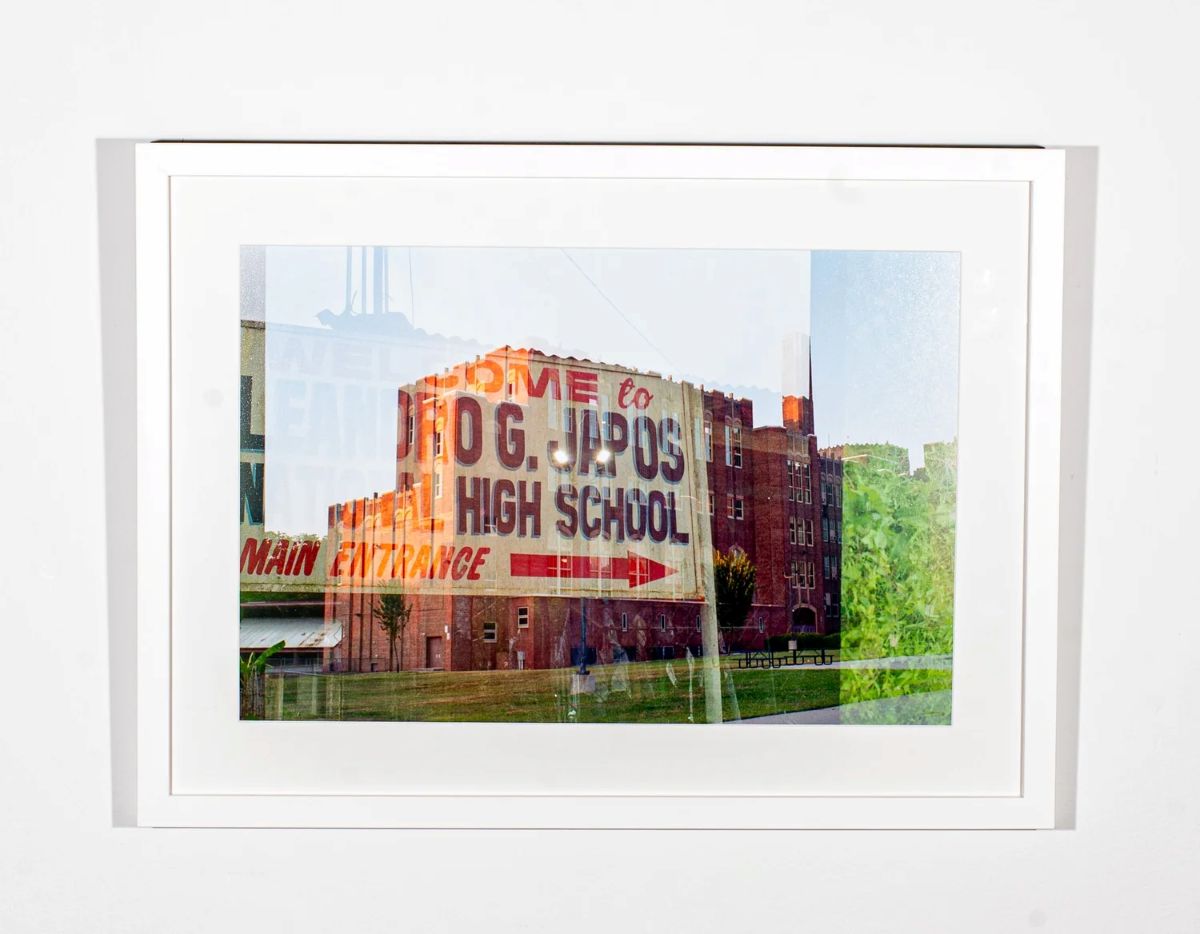
I spoke with Divinagracia, along with Joy Davis, Visual Arts Director at Creative Alliance, a few days after my initial visit to the exhibition. Divinagracia shared with me that she intentionally paired two sites of personal significance in an image that represents building one’s livelihood and home on new land: a school her great grandfather built and founded after moving south to Mati to avoid warzones in northern parts of the Philippines during World War II, and the school where her mother teaches in Maryland.

Divinagracia’s mother is one of many Filipino teachers who migrated to the US to teach in public schools with the promise of increased salaries. The challenges faced by teachers recruited from the Philippines to teach specifically in Baltimore are captured in a documentary titled The Learning, which will screen at Creative Alliance in conjunction with the exhibition on November 12. 

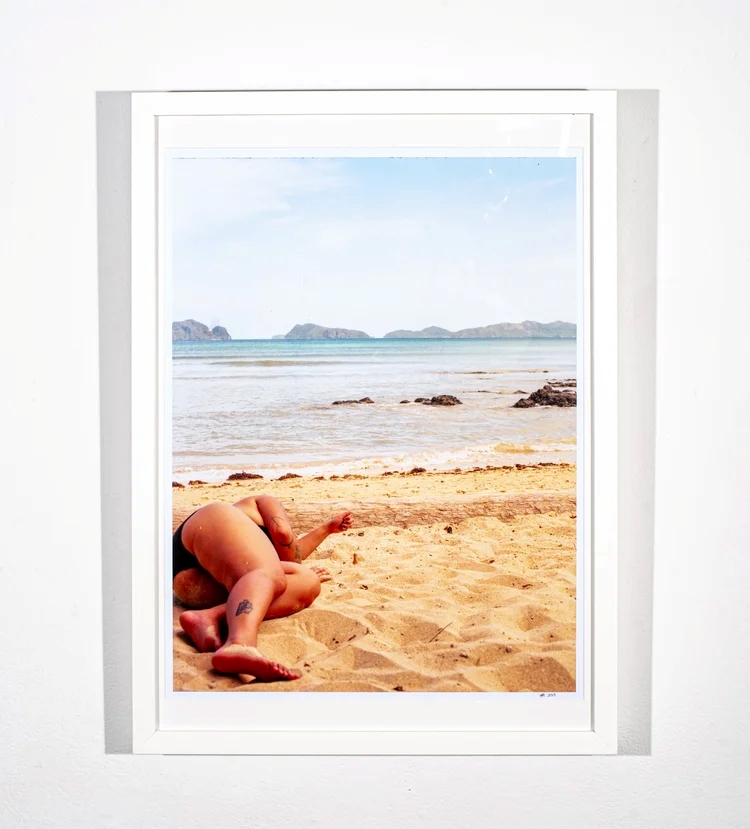
Divinagracia’s visit to the Philippines took place in the final year of her three-year artist residency at Creative Alliance. During her visit, she spent most of the time with family, although that isn’t evident in the photos she chose to display. Photos of her grandmother’s house do not include her Lola. Beach scenes appear empty except for a couple images where the artist is on the sand.  “When I think of the Philippines, I think of land—the land that was left behind,” Divinagracia said. “I really like the thought of it being barren.” When we see the artist in the images, Divinagracia explains that it’s “the action of returning to the land.” This is a land refracted through memory then reclaimed.

Davis noted that this visit was pivotal for the artist because it shifted her artistic output. Divinagracia added that she did not intend to make this body of work when she applied to the residency. That year she had also embarked on the long and arduous task of obtaining a green card to be able to live and work permanently in the US. “I think the government here really wants to make it hard for you to figure out how to be here,” she shared. “Basically everything about my everyday life became about that, and naturally all of my work became about that.”

"Everybody is an Island"
"Hiraya"

Divinagracia’s work during the residency was also influenced by the community of artists that Creative Alliance puts in proximity to one another as well as through Davis’ guidance. Divinagracia had started the residency with an interest in moving beyond photography in her practice and she would bat ideas off of other artists. Davis had encouraged Divinagracia to start experimenting on a small scale and to think about material and how the work will eventually be presented. Of Divinagracia’s culminating exhibition, Davis says, “she took it far beyond what I was expecting.”

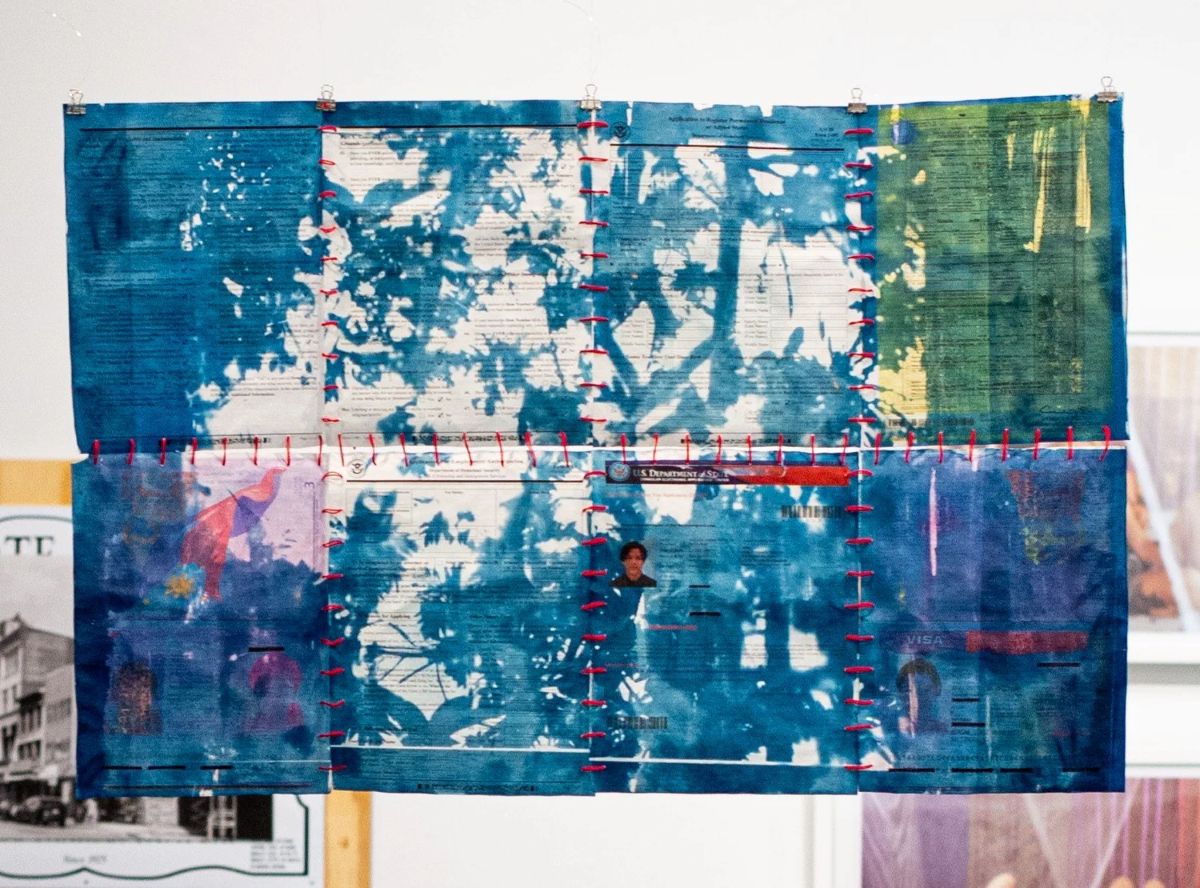
Evidence of both the artist’s experimentation and the mounds of paperwork necessary to obtain a green card are visible in two works in the center of the gallery. Hanging from the ceiling is a self-portrait, but perhaps not the type of portrait a viewer might expect from a photographer. Pages from her I-485 form, the application to register permanent US status, became the foundation of a cyanotype in which square images of Divinagracia’s serious expression (akin to passport photos) emerge and disappear among silhouettes of leaves and branches. Below the self-portrait is a small pool of water surrounded by sand, a kind of inverted island. Documents and correspondence from the green card application process float in the water alongside images of family. Divinagracia exposes the challenges of getting the federal government to rubber stamp her “American-ness” despite feeling like an American.

Divinagracia, who moved to Baltimore when she was 12, describes her migration experience as a “journey of coming up with an identity at a very impressionable age.” She was navigating culture shock, a perceived need for white assimilation, and confusion caused by not understanding English spoken with different accents despite having learned English in the Philippines. (English is one of the official national languages in the Philippines, along with Filipino.) At this point, Divinagracia has lived in the US longer than she has lived in the Philippines. “I’m grappling with this, but I have an American identity now,” Divinagracia said.

"Self Portrait I-485"
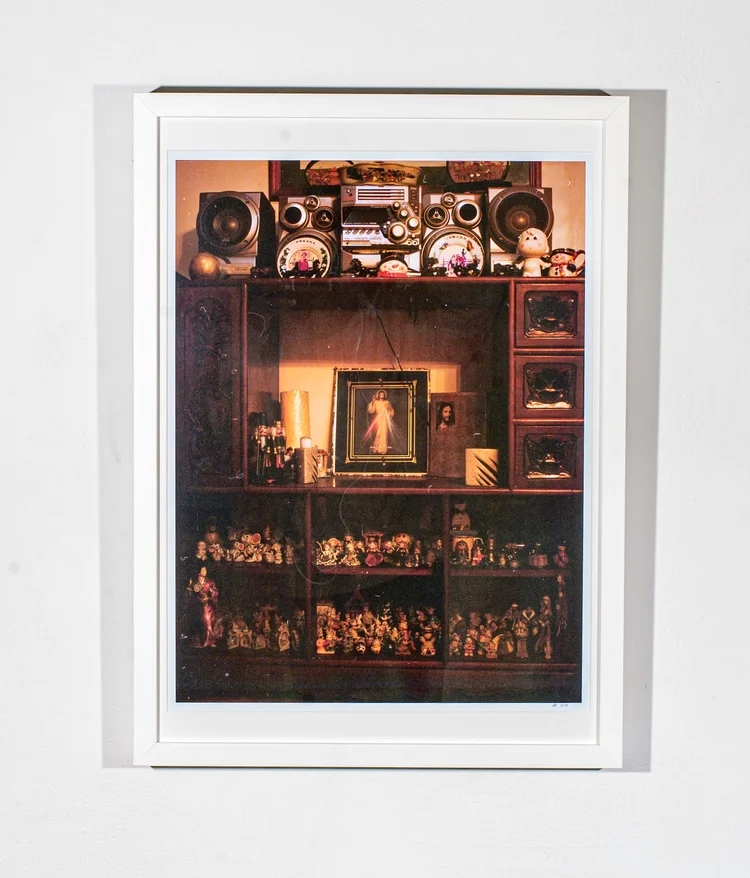
Precious Moments on the Console
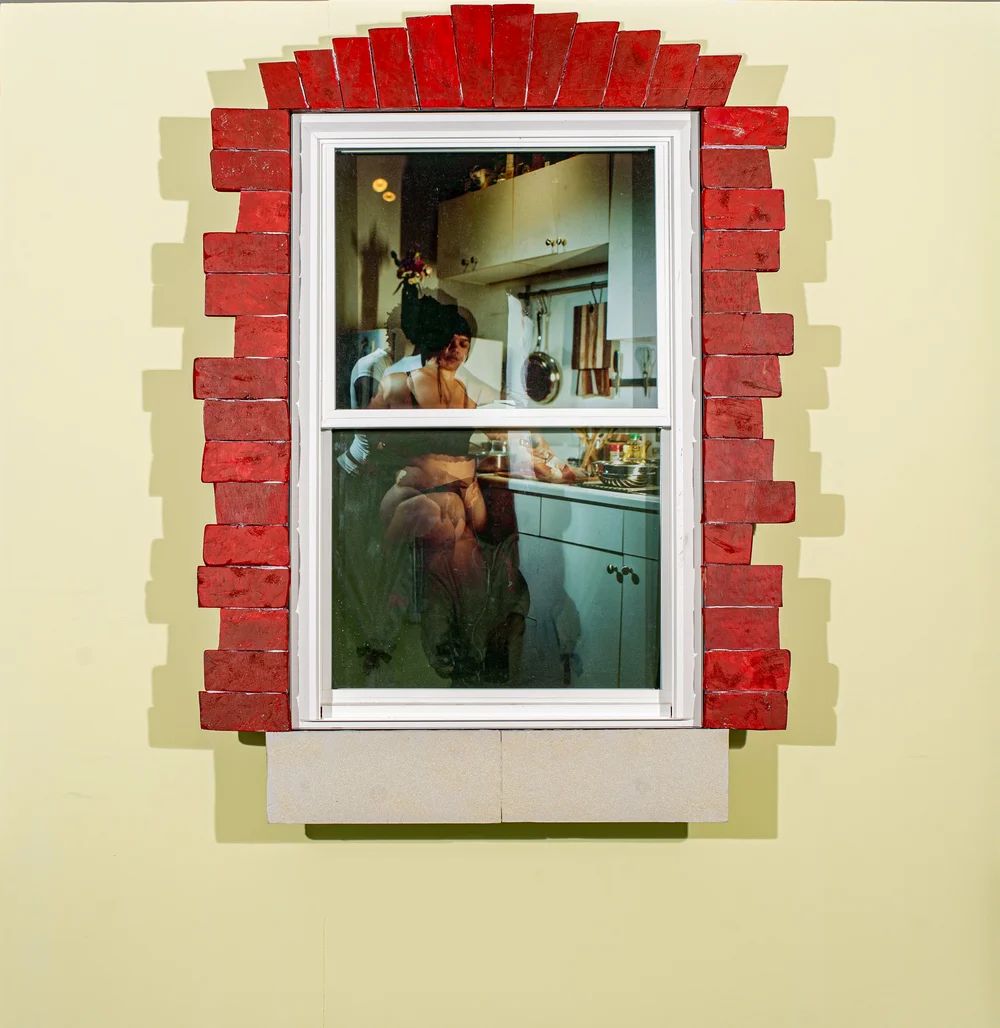
"This Must Be The Place"
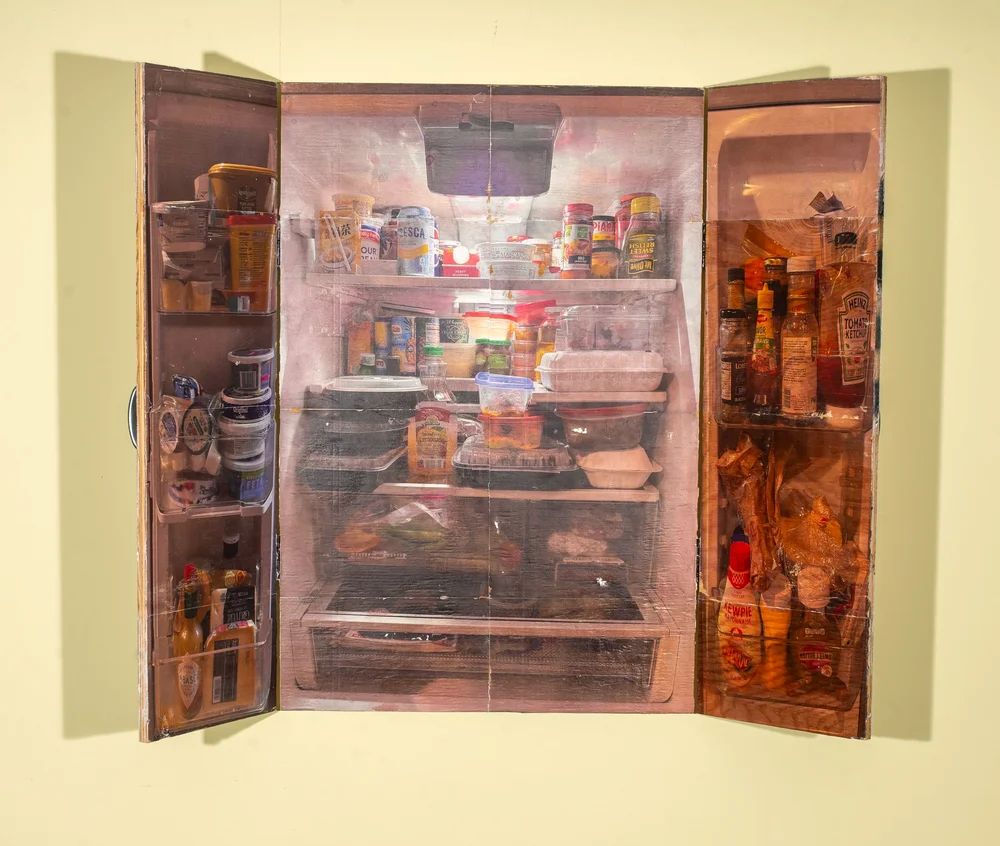
"Mom's Ref" (interior detail)

The photographs the artist shot in Baltimore provide glimpses into her home in the US—a voyeuristic peek into her kitchen, her mom’s fridge, and the feeling of home that’s created with chosen family. The fridge is particularly effective in telling a Filipino-American immigrant’s story. Titled “Mom’s Ref,” this interactive work invites viewers to open the doors as you would a fridge and observe what’s inside. A phototransfer of her mom’s actual fridge is affixed to the doors: a riot of souvenir magnets from her mom’s travels, evoking a mix of pride and nostalgia for where she has been able to go. When you open the doors, shelves overflow with stacked tupperware, condiments, tubs of cream cheese, a bottle of calamansi extract, and more.

Open a fridge in a Filipino home and there’s a good chance it’s full to the brim like this. Food is often the love language of Filipino families; the more there is, the more that can be shared. Divinagracia attributed the accumulation of souvenirs and food to what she described as immigrant maximalism. “As soon as you get to a land that has a lot for you, you take a lot for yourself,” she said.

“Mom’s Ref” is one of the artist’s personal favorites—both for what it represents and how it was made. She recalls being in high school and feeling embarrassed when friends came over and wanted a snack, because she feared things would fall out of the fridge when opened. Now she feels a sense of pride and comfort for these details of her lived experience. “That lunch you don’t want to bring to school is the lunch you will end up craving,” she said. Divinagracia constructed this piece with wood, a medium that the artist enjoyed exploring for the first time during the residency, an experience she credits with “unlocking a new level of storytelling that I didn’t know I could have.”

“Prior to being here [at Creative Alliance], I feel like I’ve done a lot of telling other people’s stories, and I think being in here and working for the past few years helped me tell my own story in the way that I would like.” For many first and second generation immigrants, Divinagracia’s story is a deeply relatable one, and in this way, she can feel accomplished in achieving one of her goals: “One of my biggest intentions with this show was to really spotlight Filipino presence in Baltimore and specifically immigrant lives and journeys,” she said. “I want people to feel represented in this body of work.”

Pandarayuhan: Home is a Memory is on view at Creative Alliance through November 22.

Film Screening: The Learning: Wednesday, November 12 at 7 p.m.

Artist Talk & Closing Reception: Friday, November 21, 7–9 p.m.

Header Image: "Thalia" by Anna Divinagracia. Images of artwork courtesy of Creative Alliance.

Related Stories
Ikhide's "Tales From Future Past" is on View through November 22 at CPM

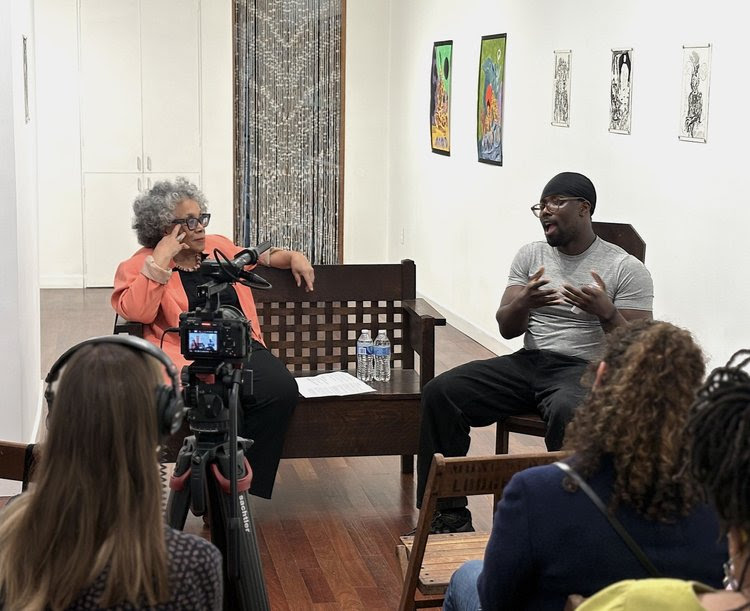
CPM Gallery recently announced that the run of Richard Ayodeji Ikhide's solo exhibition "Tales from Future Past" would be extended to November 22 by appointment. At the opening on September 27, the British-Nigerian artist was interviewed by luminary art historian, curator, and educator Lowery Sims.

Baltimore art news updates from independent & regional media

This week's news includes: Amy Sherald shines brightly in Baltimore, Hilton Carter makes his house a home, Inviting Light returns with a Wickerham & Lomax, John Akomfrah moving image + sound installation opens at the BMA, mayorial portraits unveiled at City Hall, Maryland Film Fest is here, and more

Swagger and Style at the BmoreArt Release Party for Issue 20

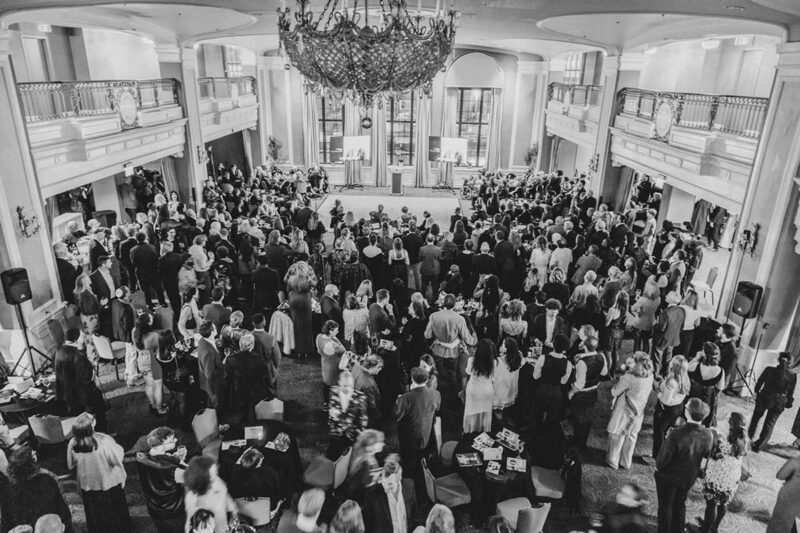
On Saturday, November 1, BmoreArt hosted 400+ guests at the Icons Ball & Benefit at the Lord Baltimore Hotel.

A Baltimore context imbues the exhibition with the feeling of an ecclesiastic gathering of old friends, a family reunion, a sacred circle.

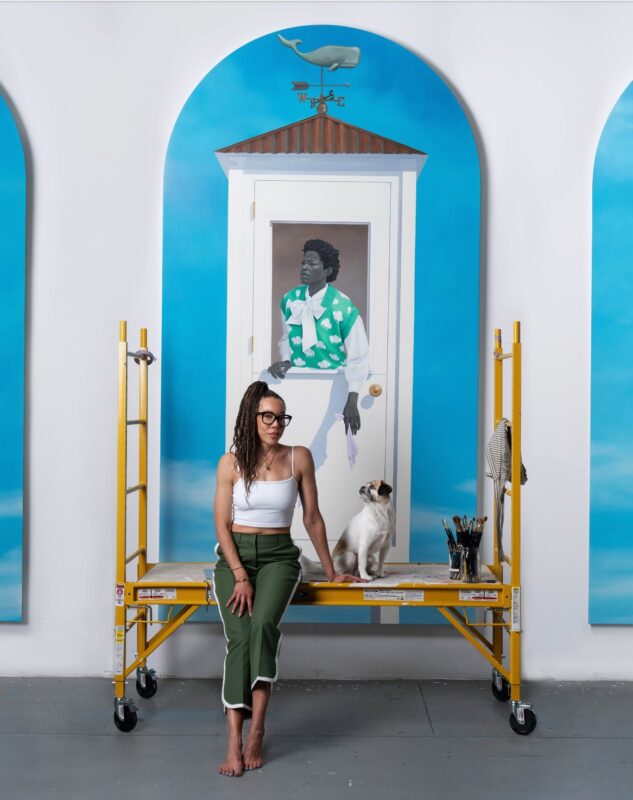
A quintessentially modern American painter, Sherald employs centuries-old painting techniques in order to arrive at images that belong in the art historical cannon