BmoreArt is a creative and critical daily online journal. We believe that Baltimore’s creative class deserves to be discussed, critiqued, and well-informed.
Rain began to fall over Mount Vernon moments after I asked Alexander D’Agostino: Are you a witch?
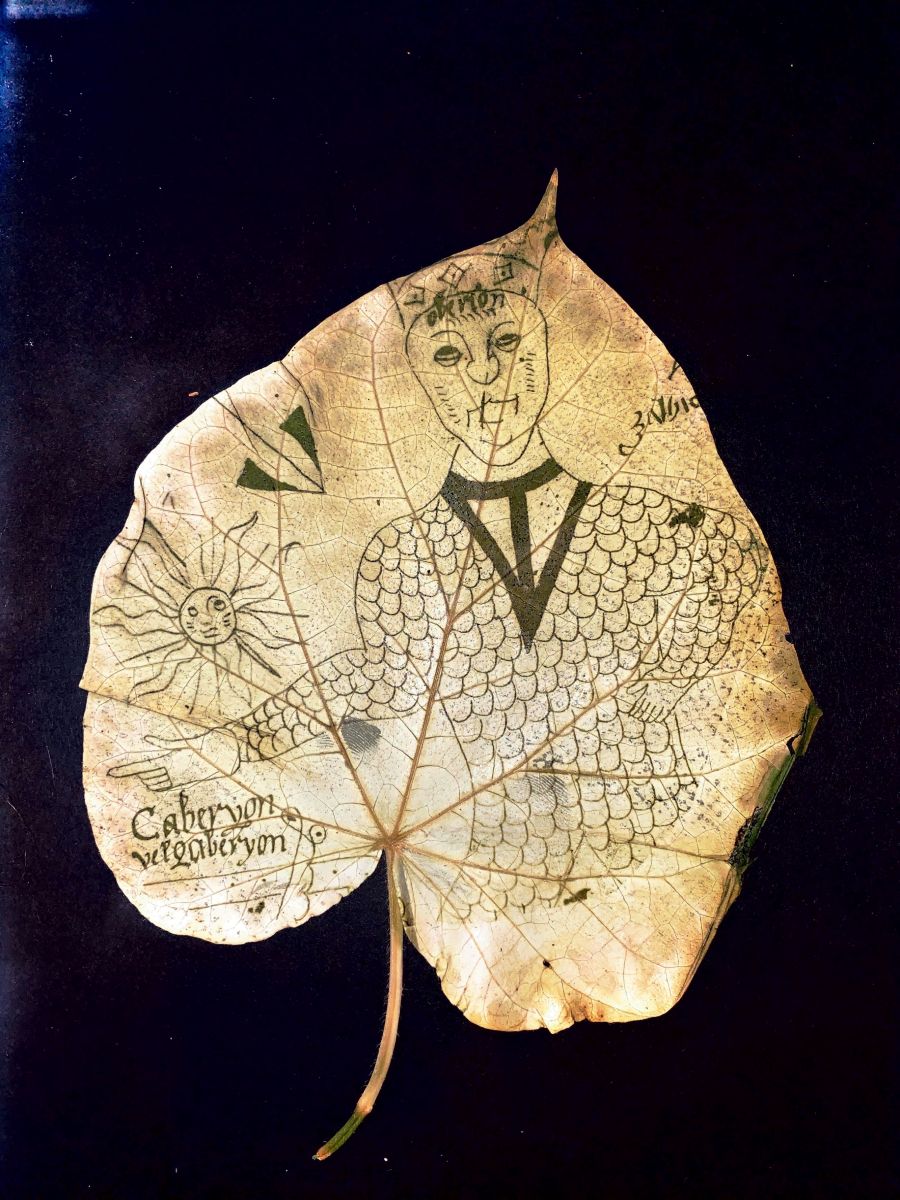
The black-cat-owning tarot reader, yoga instructor, and visual and performing artist sometimes markets himself as one. He used sunlight-imprinted leaves and rain-soaked paper charged under the moon to create a queered spellbook for the King of the Fairies. And his spellcasting (and spellbinding) stage persona goes by The Glitterwitch.
As a child, D’Agostino attended Wonderful Wizard of Oz parades in Chittenango, NY, birthplace of author L. Frank Baum. “In my mind, I thought the Wicked Witch must be real,” D’Agostino said. “I think I never shut off that sort of belief in magic or witchcraft.”
For centuries, the word “witch” has been wielded to persecute nonconforming women. But some modern feminists have cast the identity in a new light, finding empowerment in its symbolism or practices. D’Agostino channels a similar reclamation; he engages with archival materials related to the historic marginalization of LGBTQ+ people, using ritual, myth-making, and dance to posthumously liberate past generations.
He is deeply interested in animism—the idea that everything, from stones and starfish to weather systems and even words, carries a spiritual essence. “That’s sort of how I was raised,” he said. “It was a post-Catholic way of materializing objects and playing with belief and magic in the way you would with faith and prayer.”
In Baltimore, there’s an abundance of mica in the soil—a natural source of glitter. And I like the mercurial, fluttery nature of glitter; it’s there and not there. It feels like magic.
Alexander D’Agostino
Photo by Justin Tsucalas
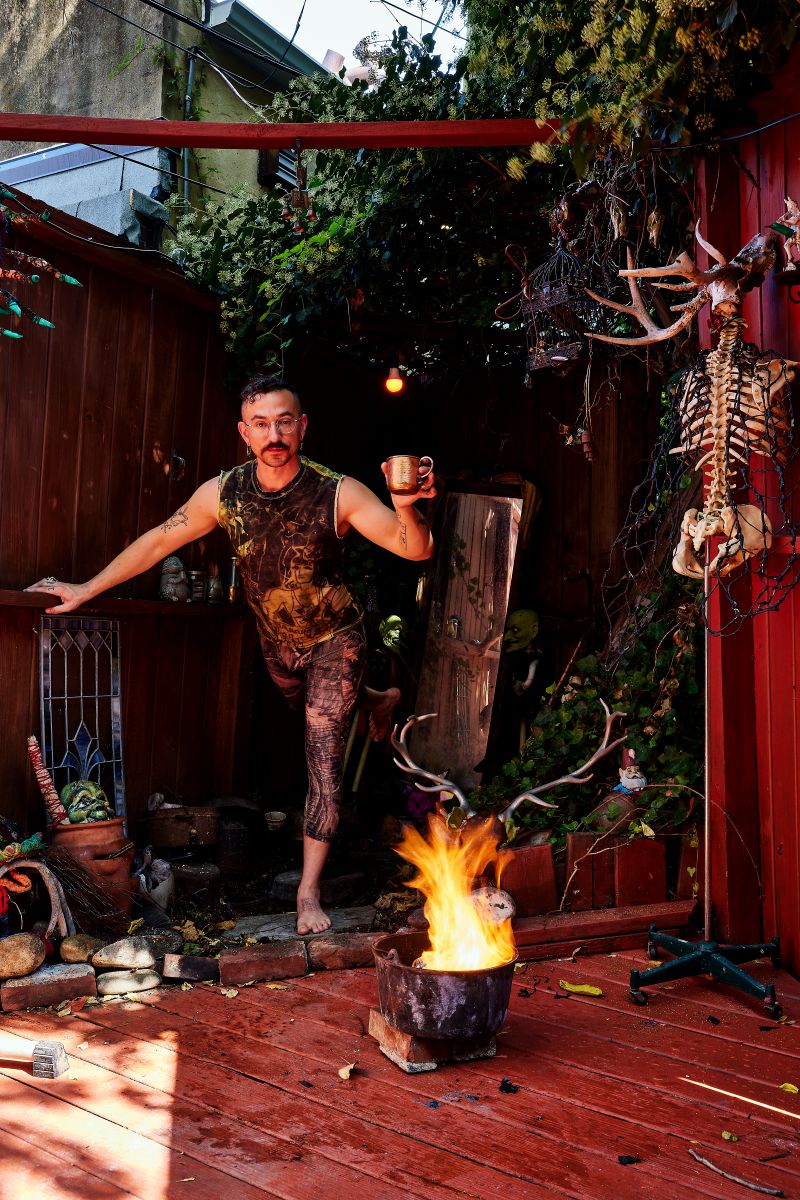
What’s in your cauldron?
Really, it’s just a big cast-iron pot, but I like the Shakespearean association and its playfulness. It also feels like a good way to put energy into something, set it on fire, and watch it climb into the sky as a sort of ritual approach, mental exercise, or just something that feeds the work. When I did the photographs for BmoreArt, I lit my cauldron on fire under my tree, and I was like, “This is where the magic happens,” because my studio—where I do a lot of my artwork—is an ethereal place that’s always shifting.
How’d you come up with the name “Glitterwitch”?
Years ago, I was in a burlesque troupe and did performance art workshops with a curatorial project that produced an expansive series throughout the city. That character continued through performance art and also as a go-go dancer and stripper at gay clubs, which led to this alter ego—really stagey, though not always a lot of glitter.
Why “glitter” then?
I always used a lot of glitter when I was making weird paintings. I also made a lot of sculptures with large quantities of glitter, and I even made projection screens and covered them with it. I’ve always enjoyed how glitter kind of reflects the energy you want and pulls the stuff you don’t—that playful push-pull of life. In Baltimore, there’s an abundance of mica in the soil—a natural source of glitter. And I like the mercurial, fluttery nature of glitter; it’s there and not there. It feels like magic.
Can you tell me more about your artist research fellowship at the Folger Shakespeare Library, which, as you write on your website, contains “instructions for invoking spirits… while considering the needs and beliefs of LGBTQ people today”? You add that “LGBTQ people have always used secret codes and magic to survive and exist.”
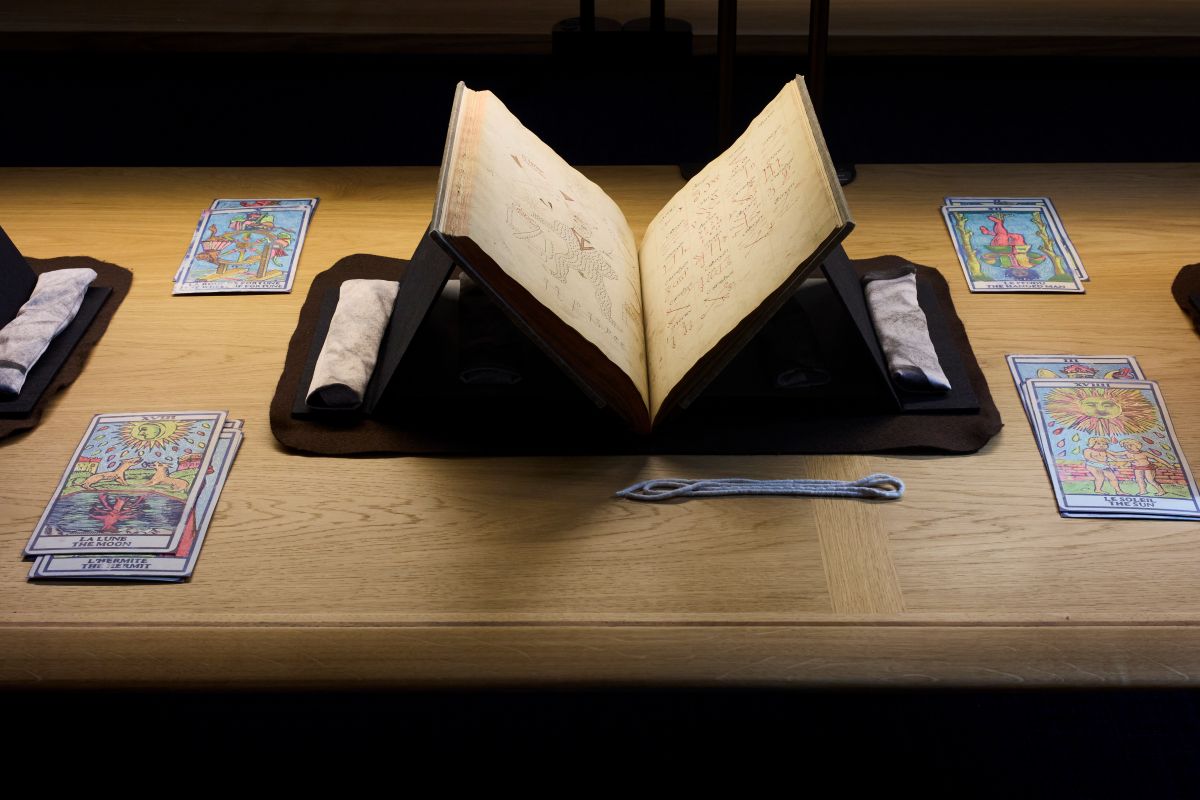
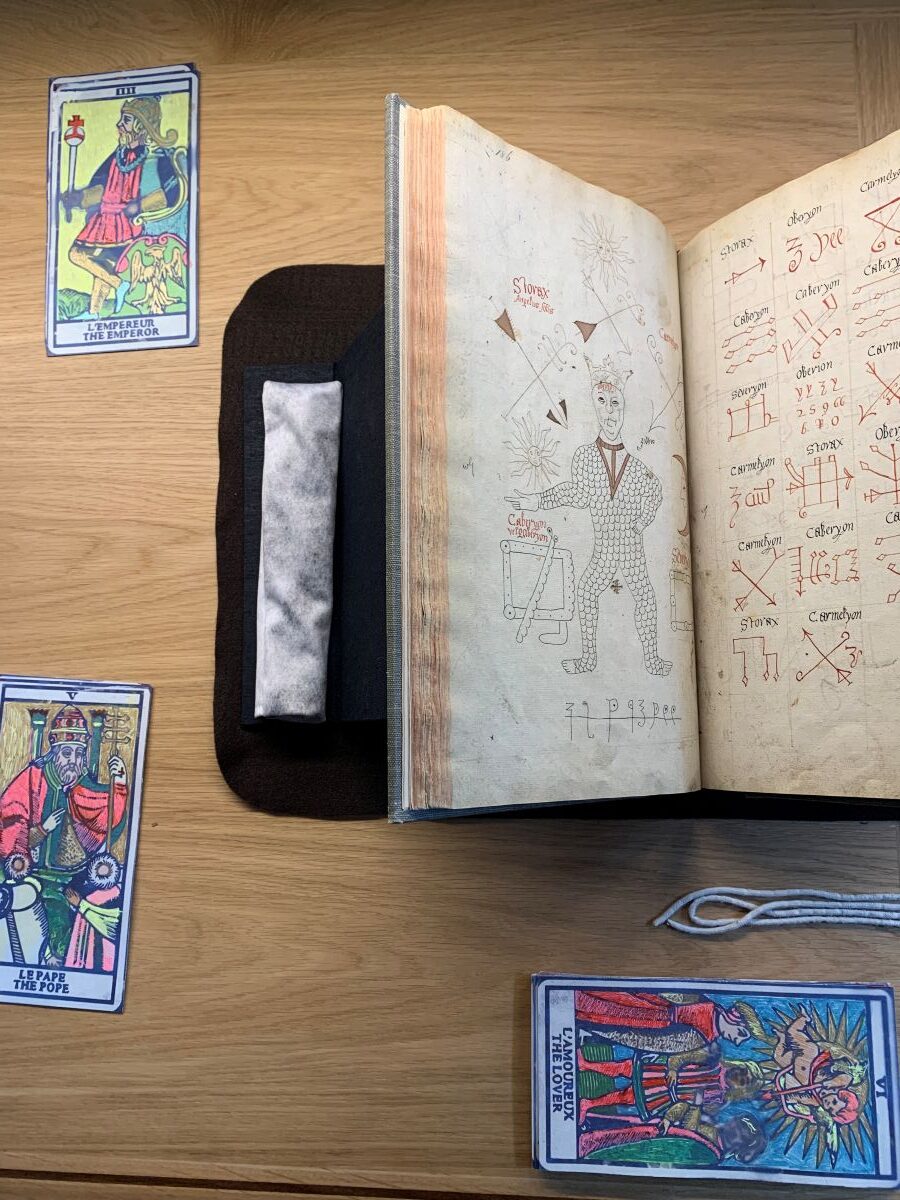
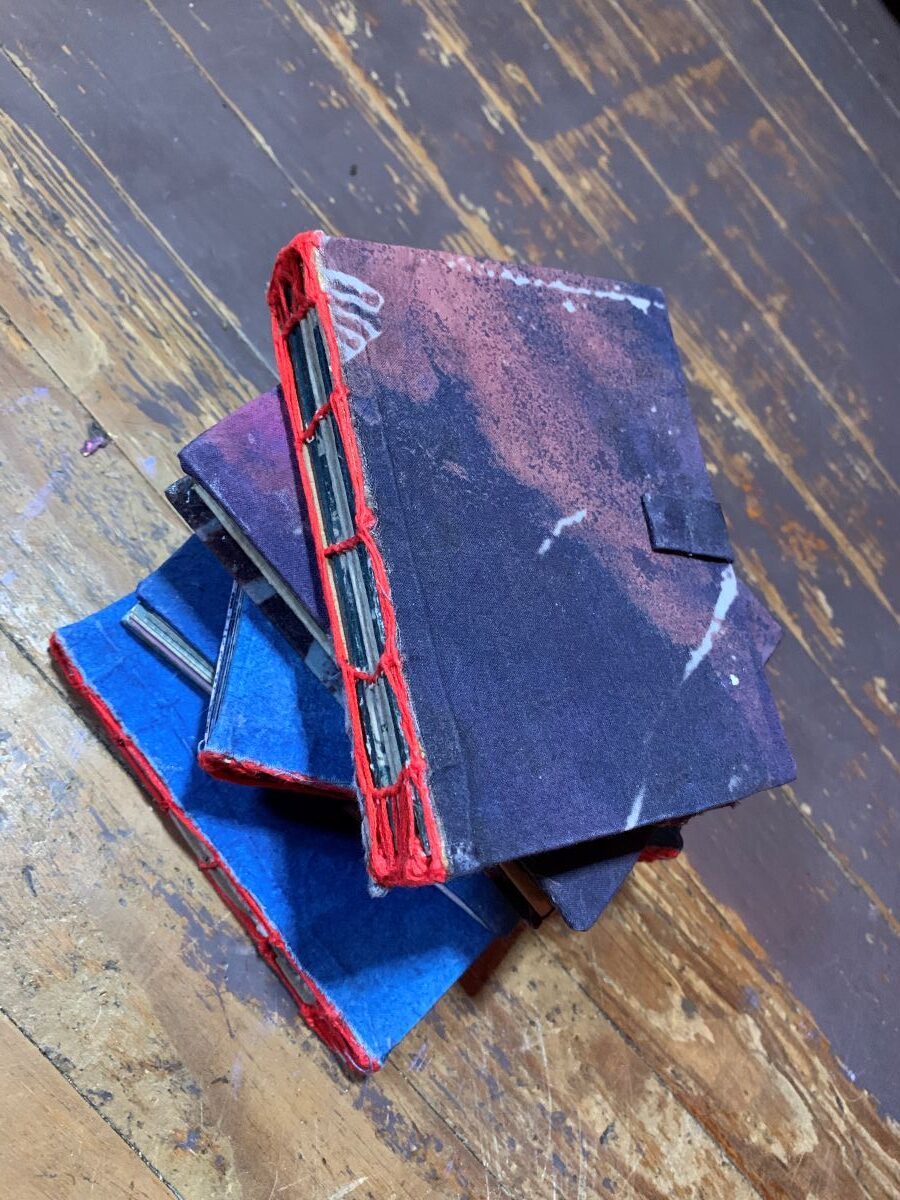
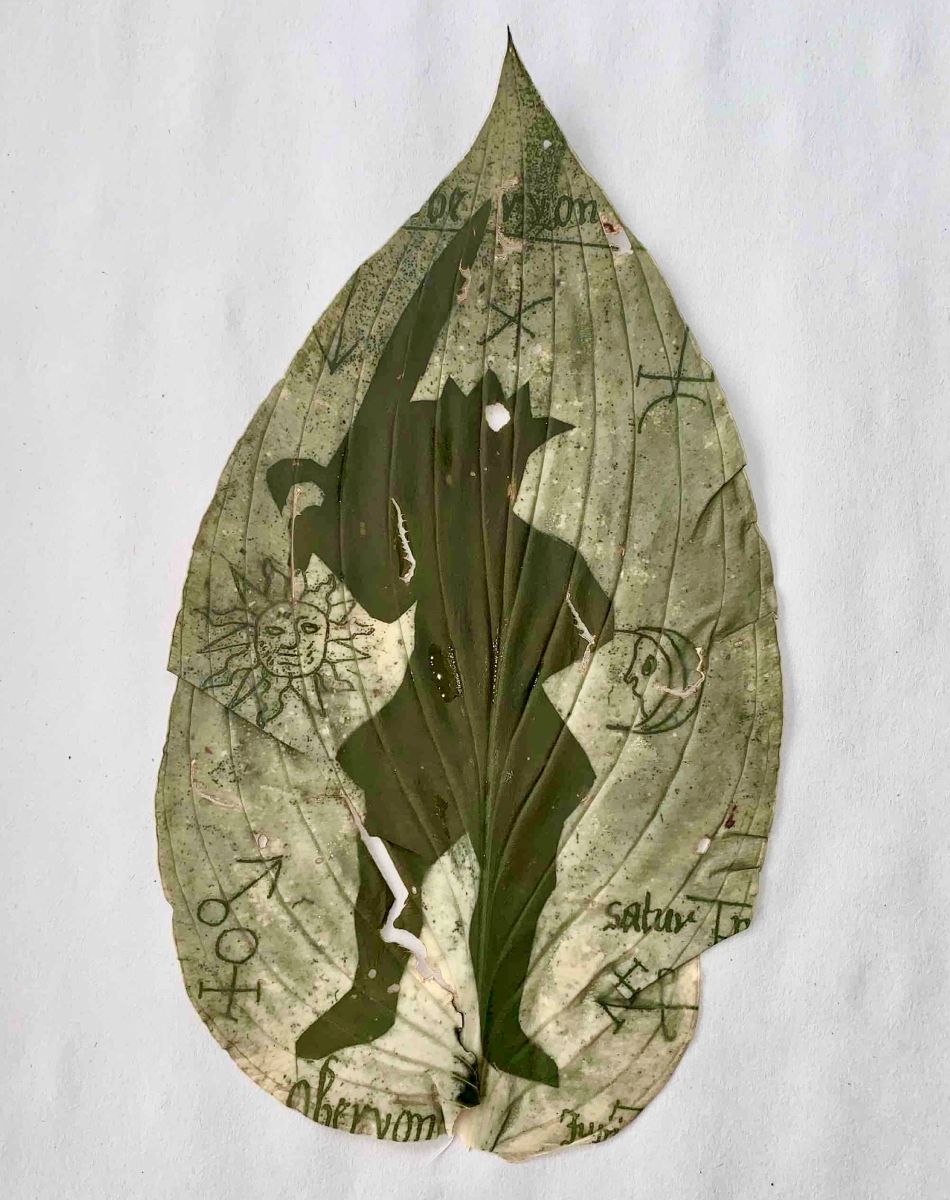
I worked with the Folger Institute’s digital archives of The Book of Magic and collaged that with this weird archive of vintage gay porn I got during the pandemic. I created this almost Ouija board of queer spirits, or this idea of invented—or real—queer mythology. The physical book was created using solar-reactive dyes, so it’s really colorful, and then it fed into performances where the book itself became both a prop and something to present in a gallery. It’s an ongoing project; I’m turning all of the research I’ve done and all of the magical connections I’ve made into an artist’s book while also developing an exhibition at Transformer about that process, scheduled for this March.
What I found particularly interesting about this collection was that my neighbor had discovered their late uncle’s box of porn in his antique store. We got to talking, and somehow I was like, “I love queer erotica,” so I got the collection, and that’s when I started making prints using cyanotype and SolarFast. What struck me was that the collection was discovered after the uncle had died. He wasn’t in the closet, but it’d been hidden. It’s similar to what happened with books of magic; if someone had a collection of magical books, there were incidents of people burying or hiding them so that the person’s name wouldn’t be tarnished.
Queer Tarot Research with Folger Manuscript vb26 (a book of magic with instructions for invoking spirits, etc)
Photo by Peggy Ryan for the Folger Institute,
2023
Queer Tarot Research with Folger Manuscript vb26. Photo by Peggy Ryan for the Folger Institute,
2023
Oberon Morning Glory, 2022, photo courtesy of Alexander D’Agostino
What else is in your cauldron?
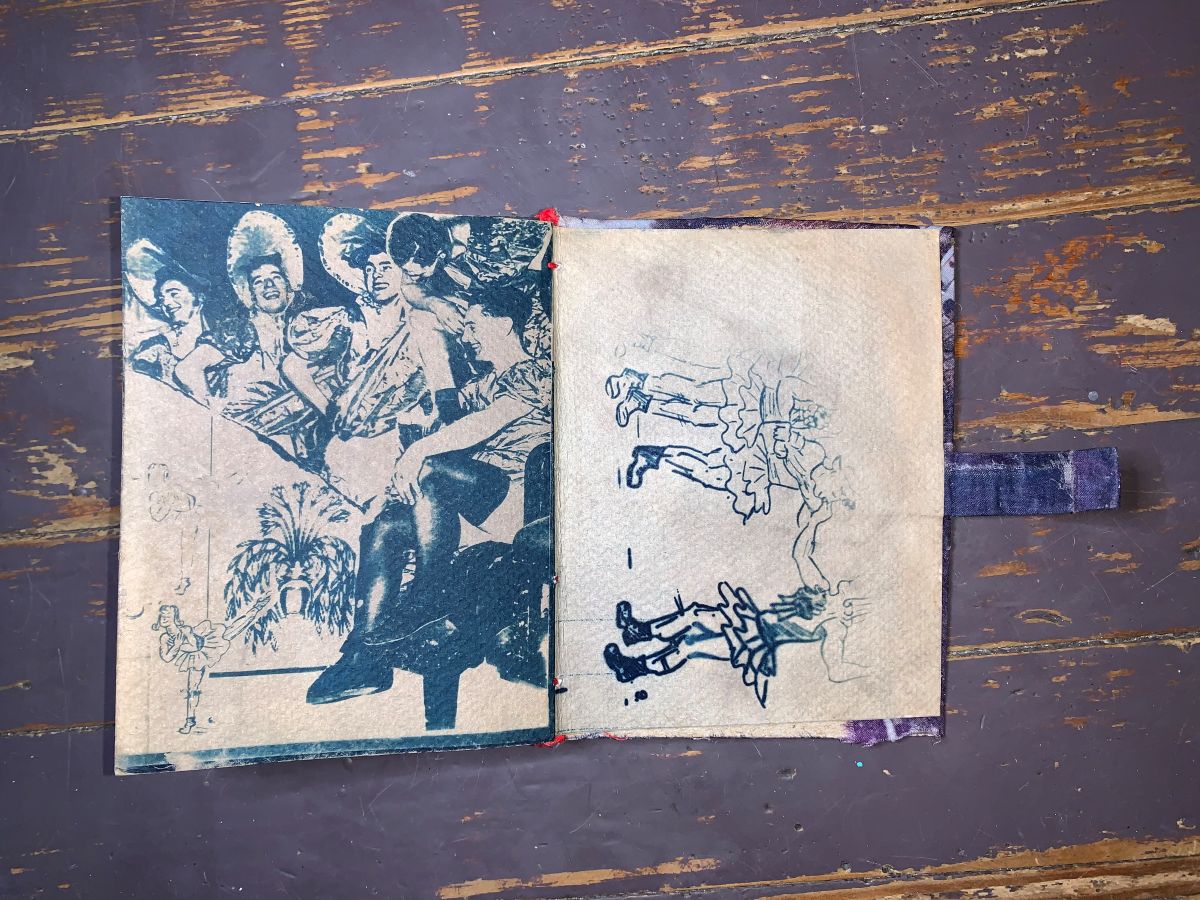
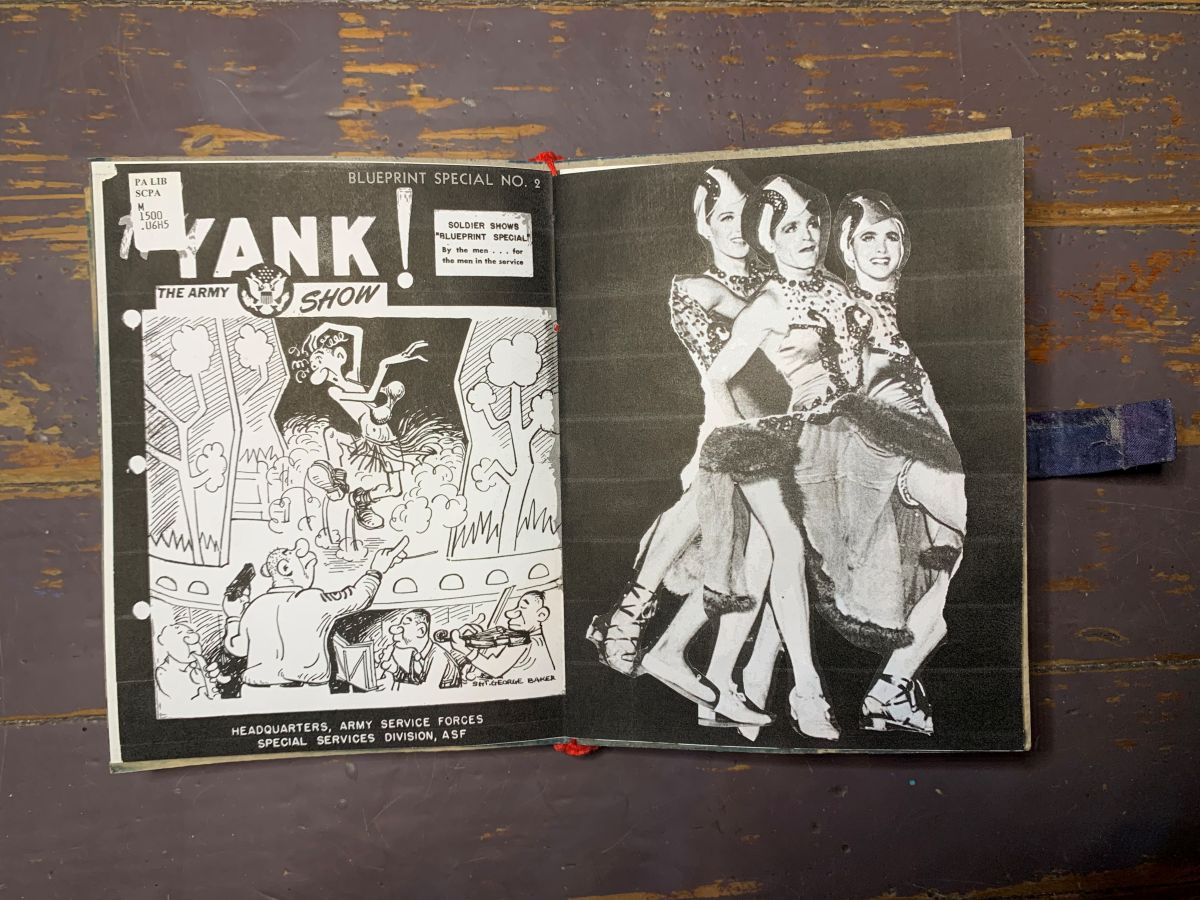
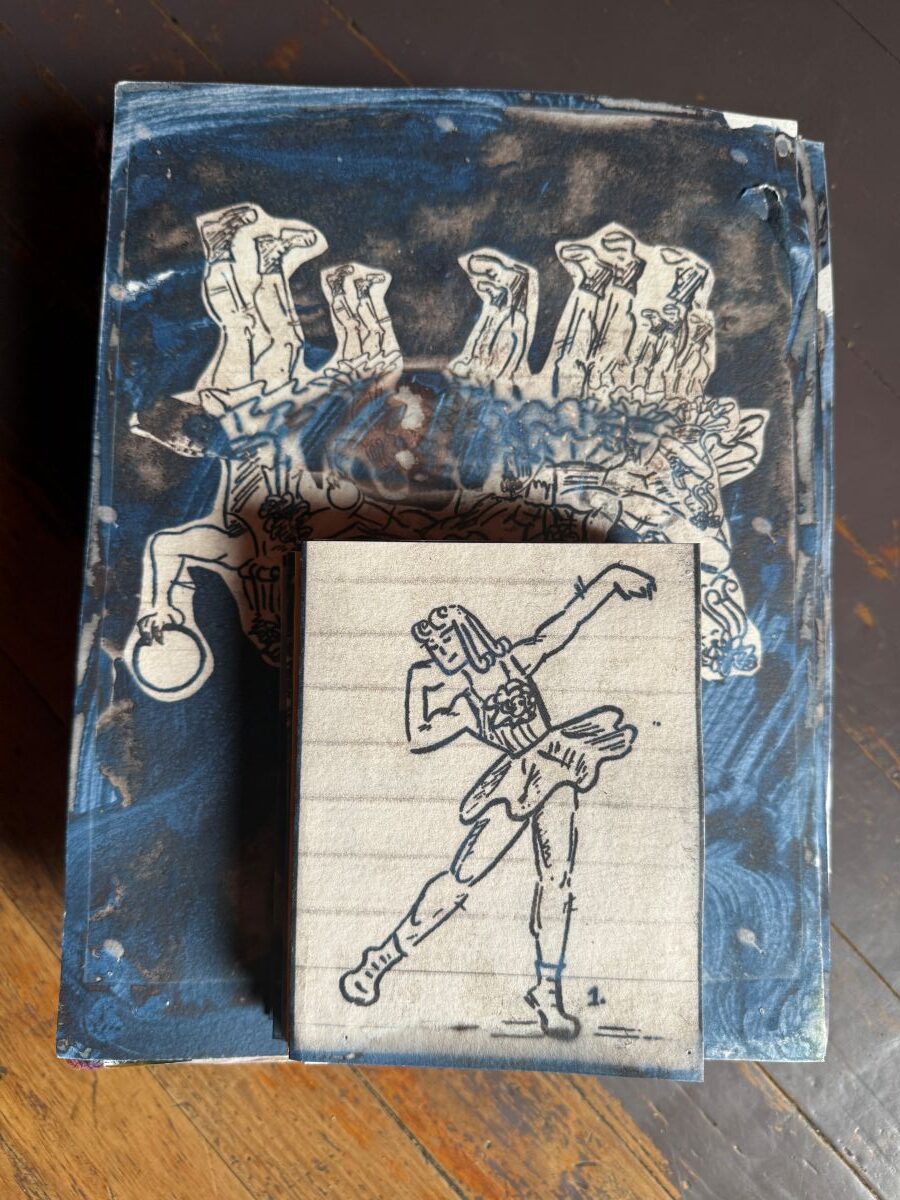
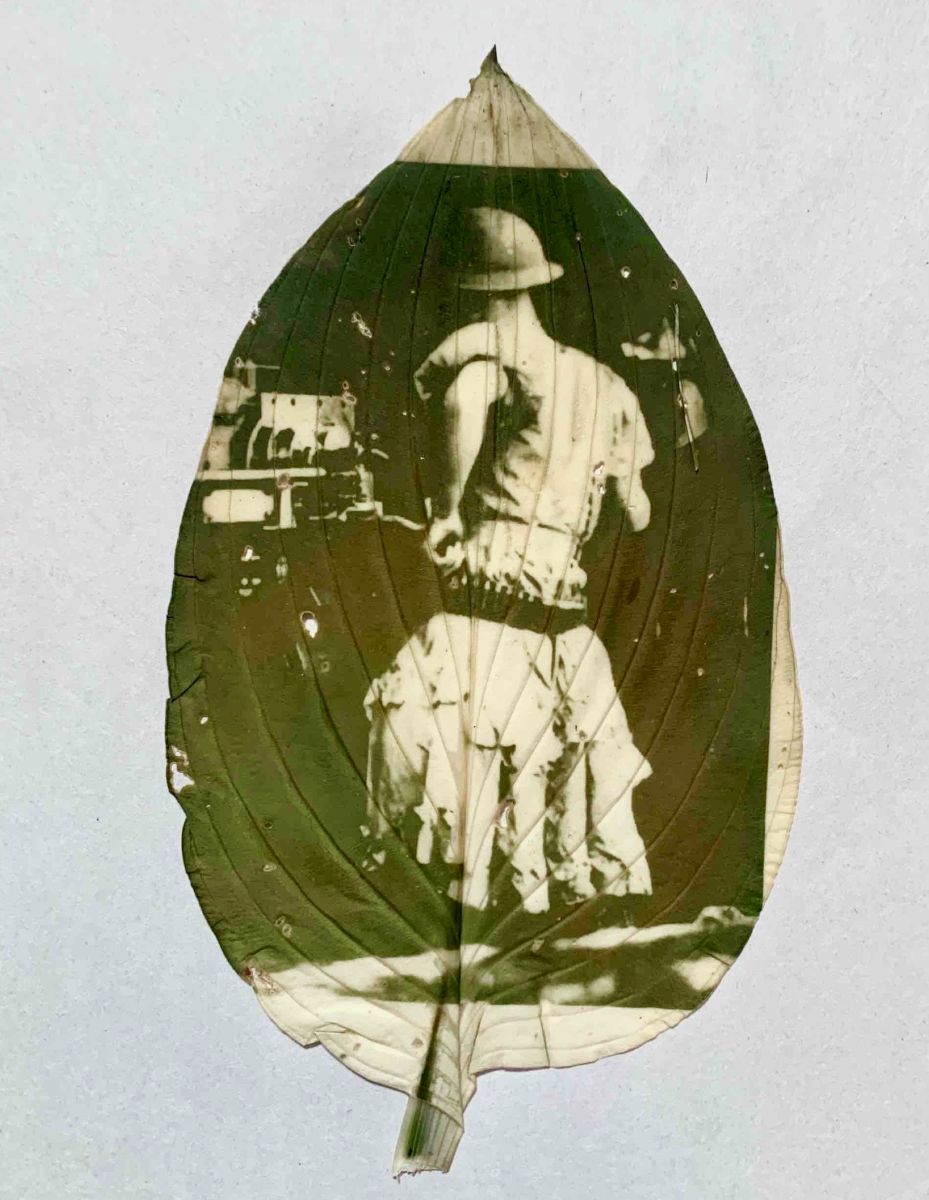
I’m working on Blueprint Specials: Battlefield Ballroom and Hidden Drag of WWII, a project funded by a Rubys Artist Grant. Blueprint specials were interesting little books with play and theater instructions for soldiers to put on. Many incorporated drag—not drag as we see it today as a celebrated, liberatory artform, but simply men dressing as women. Within that, there’s minstrelsy and racial appropriation, so there’s a lot to play with. It wasn’t just the United States; it was all over the Allied and even the Axis powers. During that period, drag seemed to be a tool to cut the tension of a global war.
I’ve already been working in the studio. I do a lot of dance en pointe; it’s going to be very campy—a fairy character, this queer spirit that flutters around these soldiers, but also relives the past of these letters and narratives that I create. All of this is informed by an artist’s book I’m currently working on. It’s very satisfying; when I get ADHD-restless from making things with my hands, I can go build this dance, and when that gets exhausting, I can return to creating and composing these other things.
Blueprint Specials, photo courtesy of Alexander D’Agostino
Blueprint Specials, photo courtesy of Alexander D’Agostino
Blueprint Specials Artists' Books, photo courtesy of Alexander D’Agostino
Blueprint Special Artist Books, photo courtesy of Alexander D’Agostino
I think queerness exists in the way that magic does—where, whether you say it’s there or not, it sort of permeates everything.
Alexander D’Agostino
Ostensibly, most of the soldiers didn’t see themselves as doing a queer thing. Would you say you’re “queering” it, or is that something you think you do in some of your archival work?
Yes. I could do a history report on these drag ballets, but for me there has to be something subversive or enchanting—or queer. The approach of looking at archives through a desire to see images that feel like they represent, or create, a sense of queerness is going to be in everything I do. It’s male bodies with these Popeye-like, muscly arms in tutus, and that feels uncanny to me for that time, whether or not the intention was for the photographs to be queer. Even just the way a camera can capture someone gracefully looking over their shoulder with makeup on while they’re in the trenches.
There are some from British troops who were literally in dress rehearsal and had to run to combat. Those images are a man in a dress fighting fascism, and, right now, that doesn’t seem to be something people can wrap their heads around. Or the idea that we look at queerness today as a man in a dress.
I think queerness exists in the way that magic does—where, whether you say it’s there or not, it sort of permeates everything. Chances are a few of them were queer, and art and performance helped connect them. Maybe these people were thinking, “This is humiliating; I’m not going to write about it in my letters home,” but others might have discovered a form of expression or art. Drag and queer culture weren’t nonexistent in the 1940s; they just weren’t presented in the military. For some people who were very isolated, living a traditional, straight, narrow path, which was most people, this might have been their weird hook into their queerness.
Army Drag Hosta, photo courtesy of Alexander D’Agostino
Oberon Hosta, photo courtesy of Alexander D’Agostino
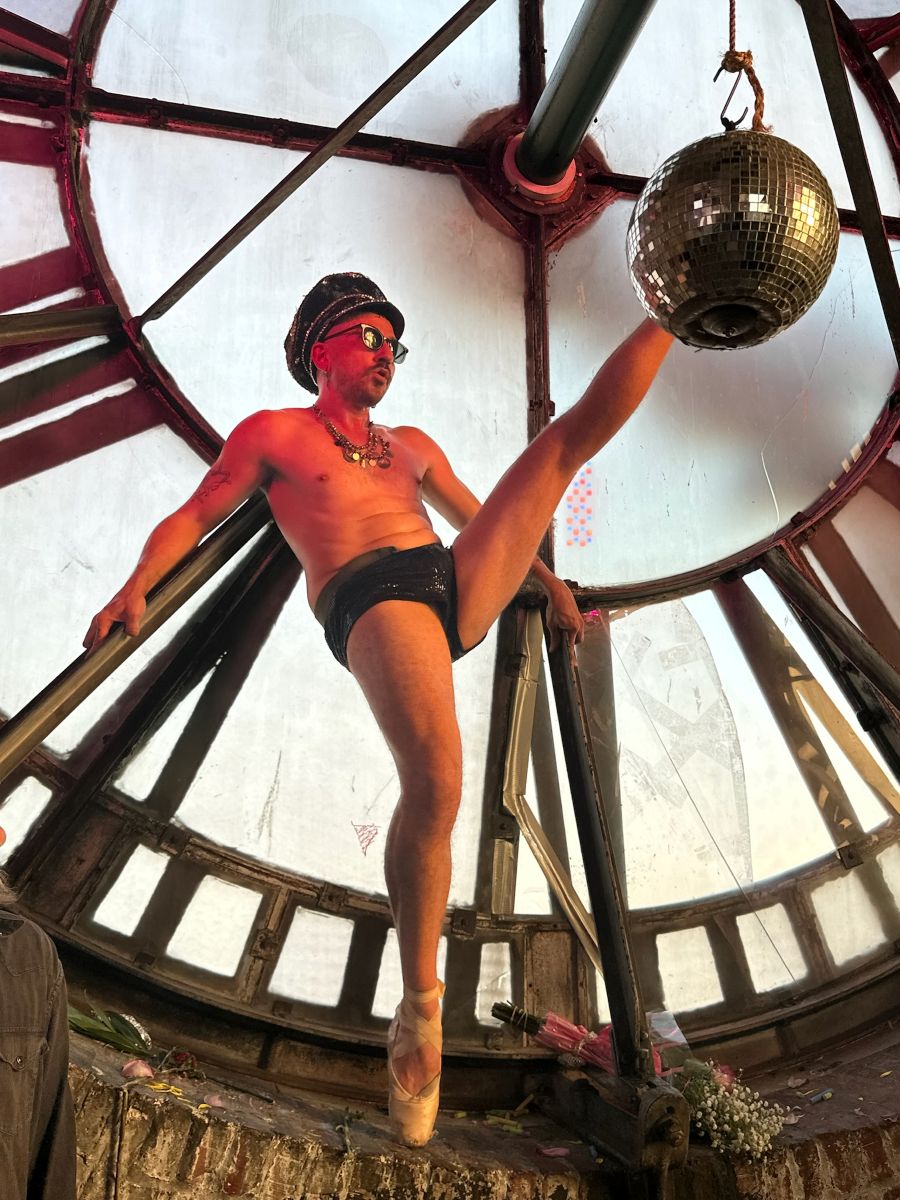
The Tower, Bromo Artist Tower 2023, photo courtesy of Alexander D’Agostino
Calm before the Storm: Prospero’s Last Spell.
Photo by Sarah R. Stadtmiller for Siren Arts
2022
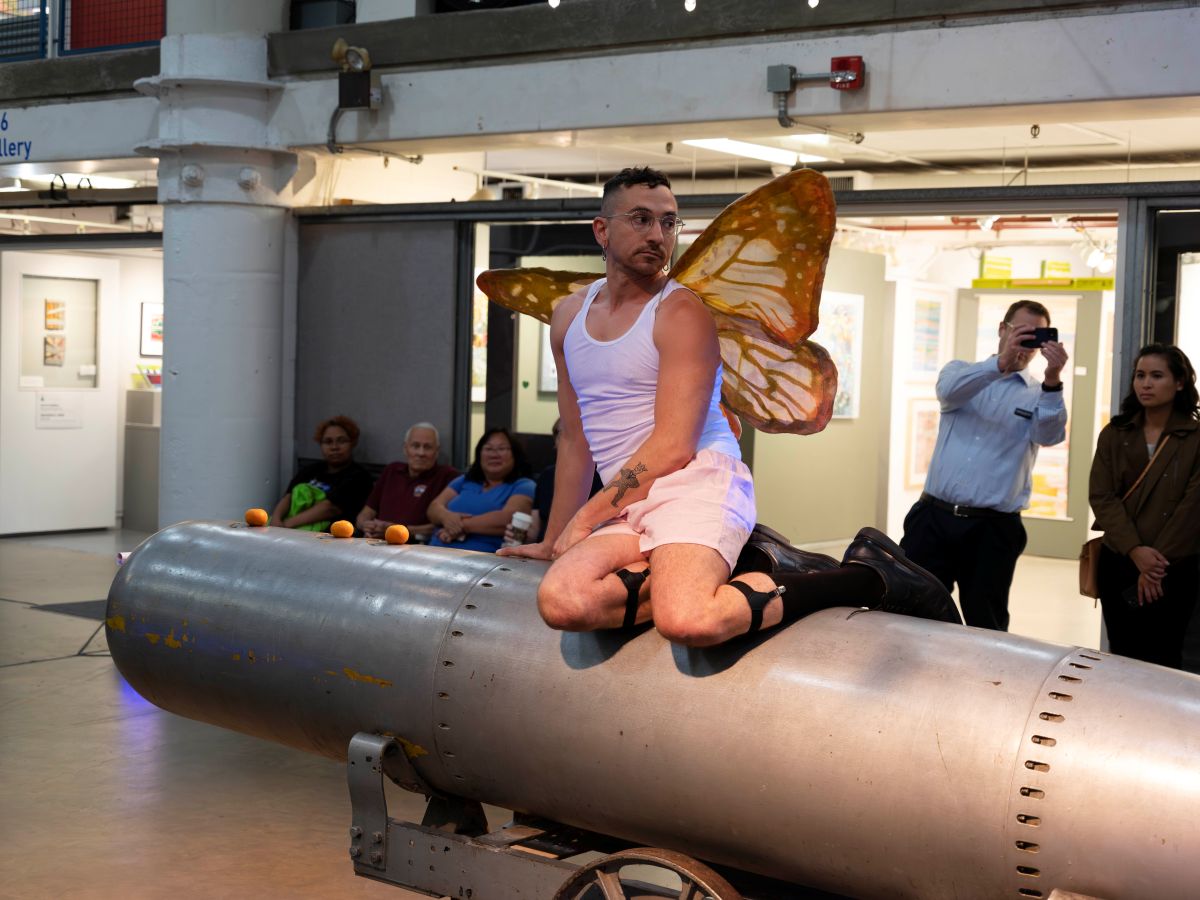
Torpedo Spell, photo by Catie Leonard for Target Gallery, 2022
What is your artistic process like?
I like to think of my practice as artistic research because, essentially, I’m digging for information that could inspire me and then creating from there. Collage is one of the most immediate ways to reimagine the images and content that I pull from; it helps me visualize compositions for body movements and think of what I want to pull out of myself. I might work on collages one part of the day, and other parts I might focus on body work—building, conditioning, and rehearsing—or working in Soulage, on both yoga and my own dancing. I also journal every day; it’s the first thing I do before even looking at my phone. It weaves my subconscious into the work and threads my entire practice together.
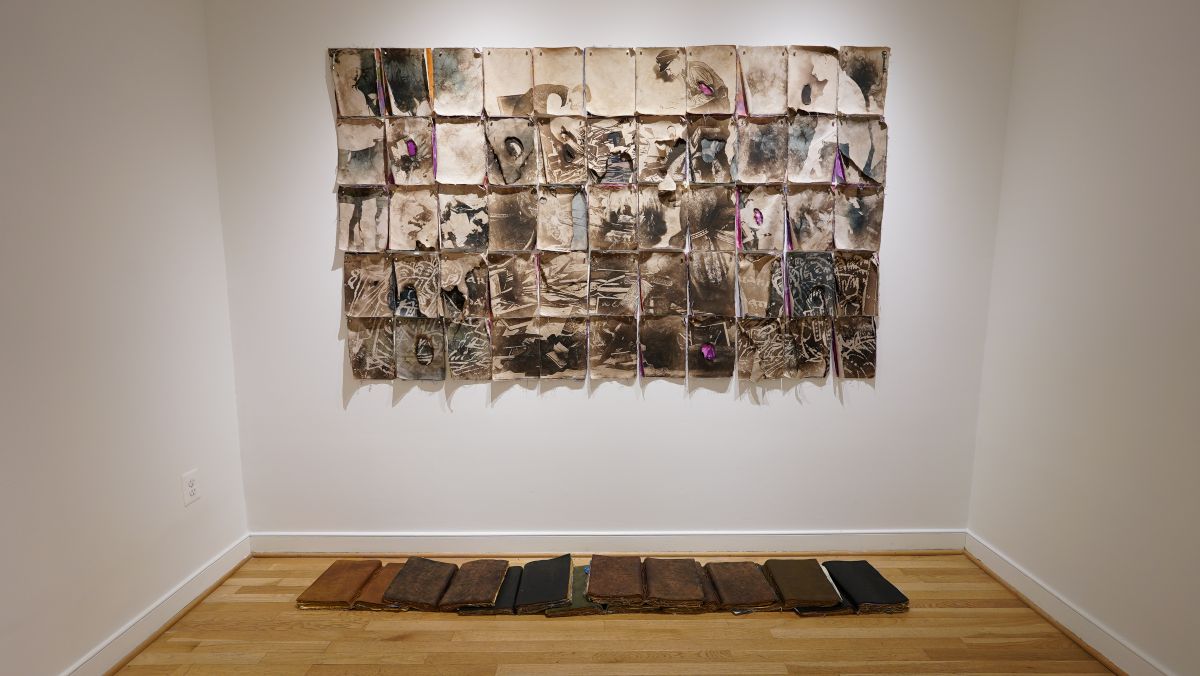
Queer Shroud Grid: Index of Fire, 2023
ICA Hillyer
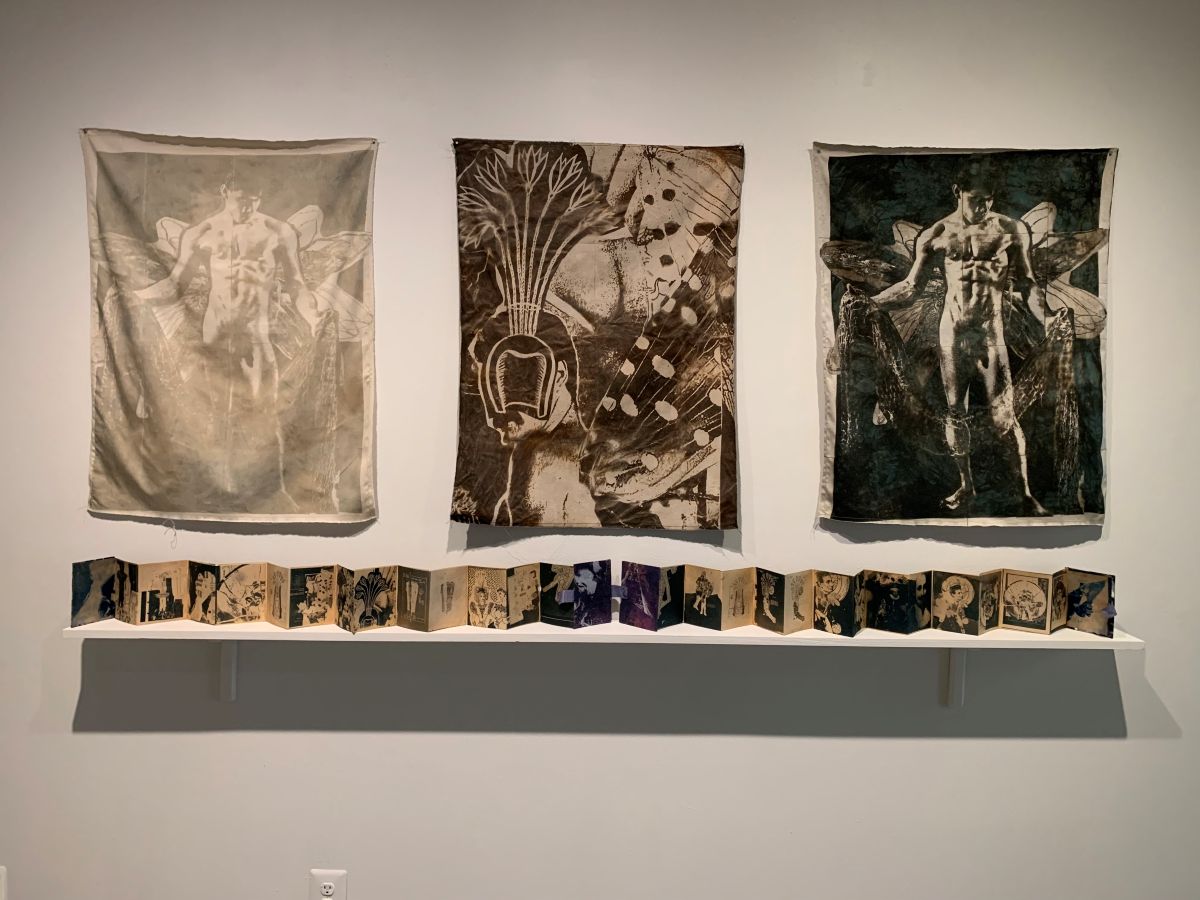
Triptych, photo courtesy of Alexander D’Agostino
Tarot Magic and the Fairy King
Folger Reading Room,
photo by Peggy Ryan for the Folger Institute,
2023
Fairy King Hosta, photo courtesy of Alexander D’Agostino
Art isn’t always trying to claim that it’s about grounding, cleaning, or regulating; it’s the residue of human chaos through a filter. At least that’s how I work with it.
Alexander D’Agostino
How does art relate to wellness and well-being?
I love wellness, and other times I feel this snake-oil component to it. That’s something I’ll always try to understand—within the context of the wellness industry and in my own experiences doing tarot readings, practicing witchcraft, or talking about spells or magic. As a money-making practice, the wellness industry is often very predatory, exploiting trauma and attachment and shame issues under the guise of “pay me, and I’ll heal you.” But, like art, it’s a never-ending process; if you’re on a healing journey, there doesn’t need to be a linear endpoint. I think the wellness industry itself is evil, but everything can be good and evil.
Art has no bounds in what it can be and how it can work. For me, going to the archives is a mental health and wellness practice. Seeing queer memories feels really healing, and making work about that gives you the happy feels that you might not have gotten in public schools in the late ’90s and early 2000s. Back then, I learned how to push against media portrayals of Matthew Shepard gay bashing and get a queer, punky energy through art.
I do a lot of public events during Pride and around Halloween. I’d feel disturbed by that, but I’m still paying my student loans. That’s where art makes the most sense or feels the most pure, even if it’s not. Art isn’t always trying to claim that it’s about grounding, cleaning, or regulating; it’s the residue of human chaos through a filter. At least that’s how I work with it.
What are your favorite Baltimore spots?
The Enoch Pratt Free library is incredible. I’m both enchanted and horrified by the Basilica. Druid Hill Park is one of my favorite places; I love riding my bike there and exploring the loop around the lake that just opened up. I love going to the Walters Art Museum—that place is always spooky.
Ikhide's "Tales From Future Past" is on View through November 22 at CPM
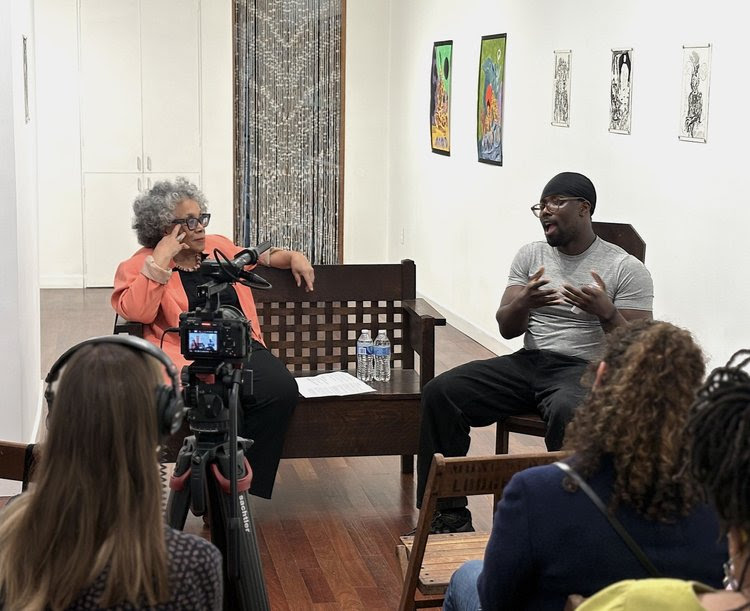
CPM Gallery recently announced that the run of Richard Ayodeji Ikhide's solo exhibition "Tales from Future Past" would be extended to November 22 by appointment. At the opening on September 27, the British-Nigerian artist was interviewed by luminary art historian, curator, and educator Lowery Sims.
Baltimore art news updates from independent & regional media
This week's news includes: Amy Sherald shines brightly in Baltimore, Hilton Carter makes his house a home, Inviting Light returns with a Wickerham & Lomax, John Akomfrah moving image + sound installation opens at the BMA, mayorial portraits unveiled at City Hall, Maryland Film Fest is here, and more