Reading

ART AND: Michael E. Haskins Jr.

Previous Story
Article Image

BmoreArt News: Grit Fund Grantees, Motor House, M [...]

Next Story
Article Image

Five Bromo Exhibitions for an August Staycation

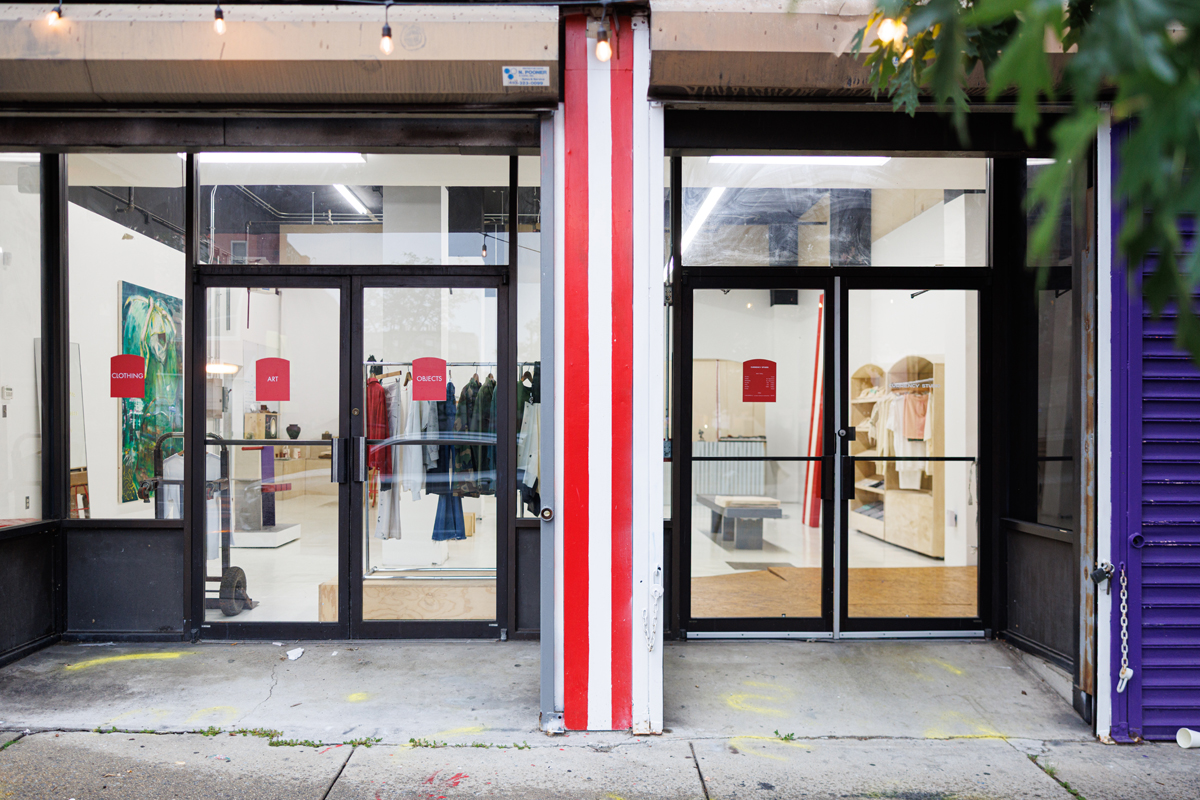
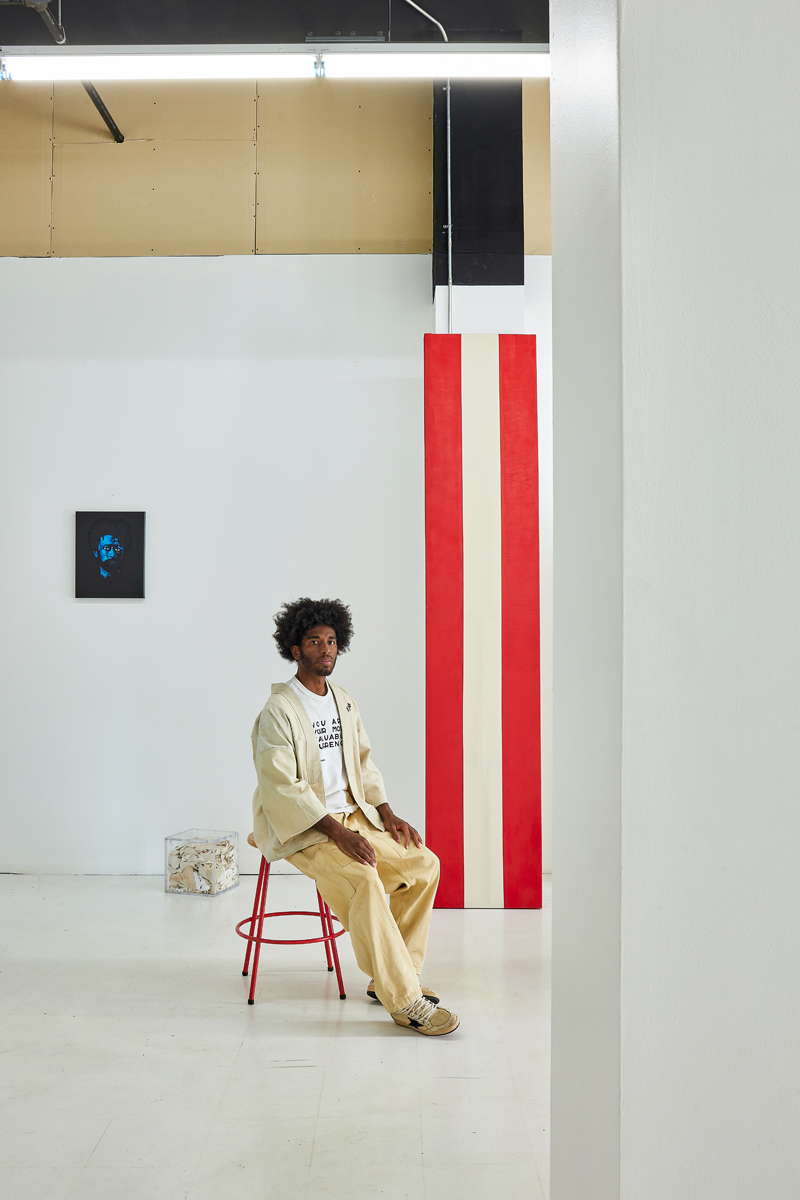
There’s nothing quite like Michael E. Haskins’ Currency Studio in the city. Looking around the space on E. North Ave, you’ll find everything from hats, baby vests, jewelry, stools, tote bags, speakers, to original artwork. The self-proclaimed visionary does it all: He paints, sculpts, makes furniture, clothing, works as a developer, and more. He first began in screen printing, and trained from there.

The aesthetic is driven by art and architecture, leaning toward a minimalistic design, showcasing his love of mid-century and Japanese culture. Speaking with Michael is calming. He’s confident yet low-key, and firm in what he says. I arrived a bit early for our tour and interview, and nearly missed him biking past me to open the shop. He’s inviting but also a mystery, until you peel back the layers, and there are many. As the old folk say, Michael is a renaissance man.

His journey has a lot of twists and turns. He grew up with parents on opposite ends of the fiscal responsibility spectrum. His mother, who worked at a bank, was intentional about money and spending—versus a father with more of a creative spirit who had an urban brand, purchased high end clothing and trinkets, and was affiliated with celebrities. That contrast is something that’s within him as he’s been able to merge both worlds to build Currency Studio and go through life appealing to various people.

Michael has always been a collector. If you look at the Currency logo, it’s reminiscent of what he was attracted to as a child: flags, the color red, and symmetry. He collected flags from all over the world at local gas station convenience stores and shops in Baltimore. The visionary describes his childhood bedroom as a hub of anything that captured his eye, including Coca-Cola cans and random pieces of furniture for which he’d beg his mom while out on shopping trips.
Let's start with talent. I know the talent is here. There’s talent in music, there's talent here in fashion, there are visionaries here, there are artists. It's insane. But there’s no infrastructure.
Michael E. Haskins Jr.

But he didn’t begin his travels until he was 19. At the time, he was a buyer for a boutique that sold streetwear. “I worked at that store for about a year, and as a manager one year, I got invited to go out to Las Vegas for a trade show, and I found myself in a room with other buyers and owners of boutiques. Through networking that way, I began getting invited to other trade shows or personal showrooms around the world, and it grew from there,” he explained. Growing up in the world of social media, it was also his opportunity to see digital profiles he followed come to life as he ran into friends or brands he’d followed on MySpace. Eventually, he moved to Vegas for work in the fashion industry.

“I was like, ‘Hey, I want to go and spend some more intimate time in Vegas because I built a relationship with a store out there called Fruition, which is a store that fuses fashion and fitness. So I went out there, spent a lot of time with them, and learned the day to day operations,” he recalled. “My now-wife came out there with me before we headed to New York.”

Why New York? A longtime lover of fashion, he wanted to create his own brand in America’s melting pot. But he quickly learned New York wasn’t the place he’d remain. He grew tired of the upper echelon attitudes of New York and decided his home was the place to build his own world, and not just in fashion.

“In New York, I liked the artwork, I liked the clothing, I liked to create, I liked to ideate, I liked to collaborate, but I didn’t like dealing with what New York offered in terms of people,” he asserted.

Haskins returned to Baltimore in March of 2017 and opened a studio/ coworking space in Greektown, where he stayed for four years, curated events, and ran an e-commerce business. He also allowed for people to use the space for screen printing for their own brands and invited friends and like-minded creatives to use their resources. But that wasn’t enough.

“One day, we woke up one day and decided that we wanted to potentially get back into retail again,” Haskin says, referencing the shop he ran in Fells Point from 2010 to 2012.

That desire led to the launch of a retail/gallery space called 0520 Concrete, which opened in the fall of 2021 in the former ICA Baltimore space at 16 W North Ave. In August 2023 they moved shop next door, opening Currency Studio’s present location at 18 W North Ave. This current storefront iteration allows for Haskins to fuse his passion for retail with gallery and studio space.

In the coming months, Currency Studio will expand across the street to 5 E North Ave. That location will serve as retail space and offer a specialty matcha ceremony to consumers as part of his desire to combine his love of Japanese culture with his brand. I spoke with Michael about his journey, expansion plans, and why being home is the right place for his brand.

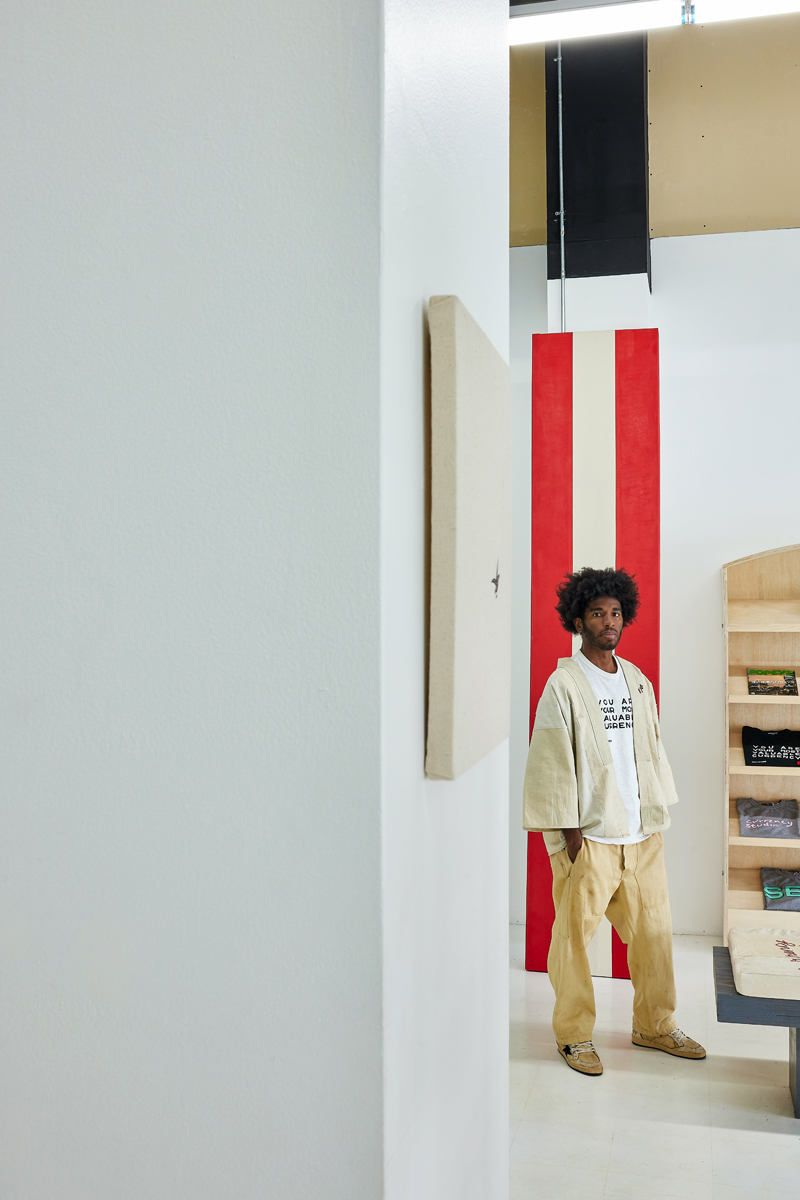
Currency Studio photographed by Brandon Towns

VISIONARY: Michael E. Haskins Jr.
STUDIO VISIT: July 18, 2025
PLACE: Currency Studio Retail Space – 18 W. North Ave, Baltimore MD
AGE: 34

Currency Studios is a unique name. Talk to me about how you chose the name for your brand?

The very first brand I ever used was Billions of Currency. And it was inspired by just growing up and being really interested in the billionaires boys club. But where really the name Currency came from is that my mother worked at a bank growing up. And when I was about 10, 11 years old, I overheard the word currency by way of me napping in the break room. I woke up to the trucks full of money being transferred into the bank. I said to a woman, ‘That’s a lot of money.’ And this woman says to me, ‘Honey, this is not considered money. This is currency. It has not yet been put into circulation.’ And that term always stuck with me.

When I got older, and saw the differences in the way my parents viewed money, the idea of kept coming back to me. So the first t-shirt that I ever created and I ever sold and made money off of was a T-shirt that said “Respect your wealth” as the tagline. I was always trying to put that term out as a positive message of respecting the things that you’re able to accumulate, whether it’s art or a vehicle or a relationship. And I look at all the things surrounding us as they make up our environment as our wealth.

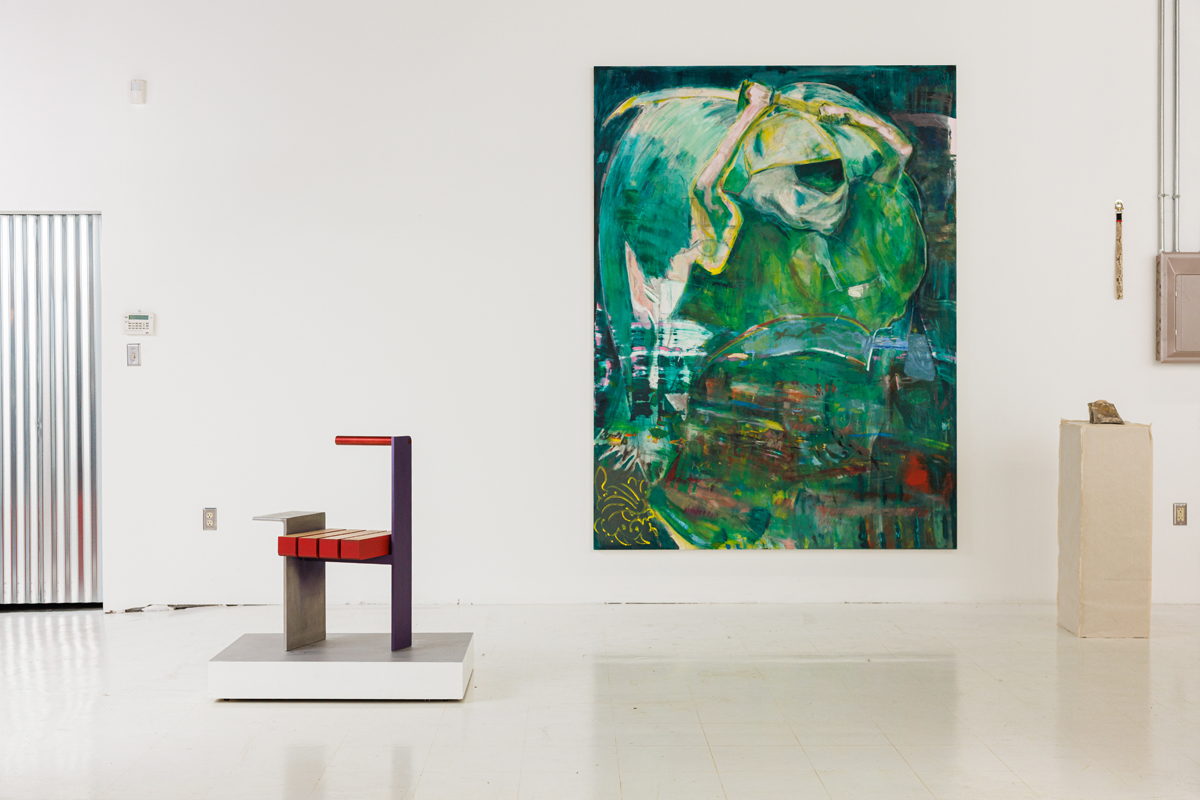
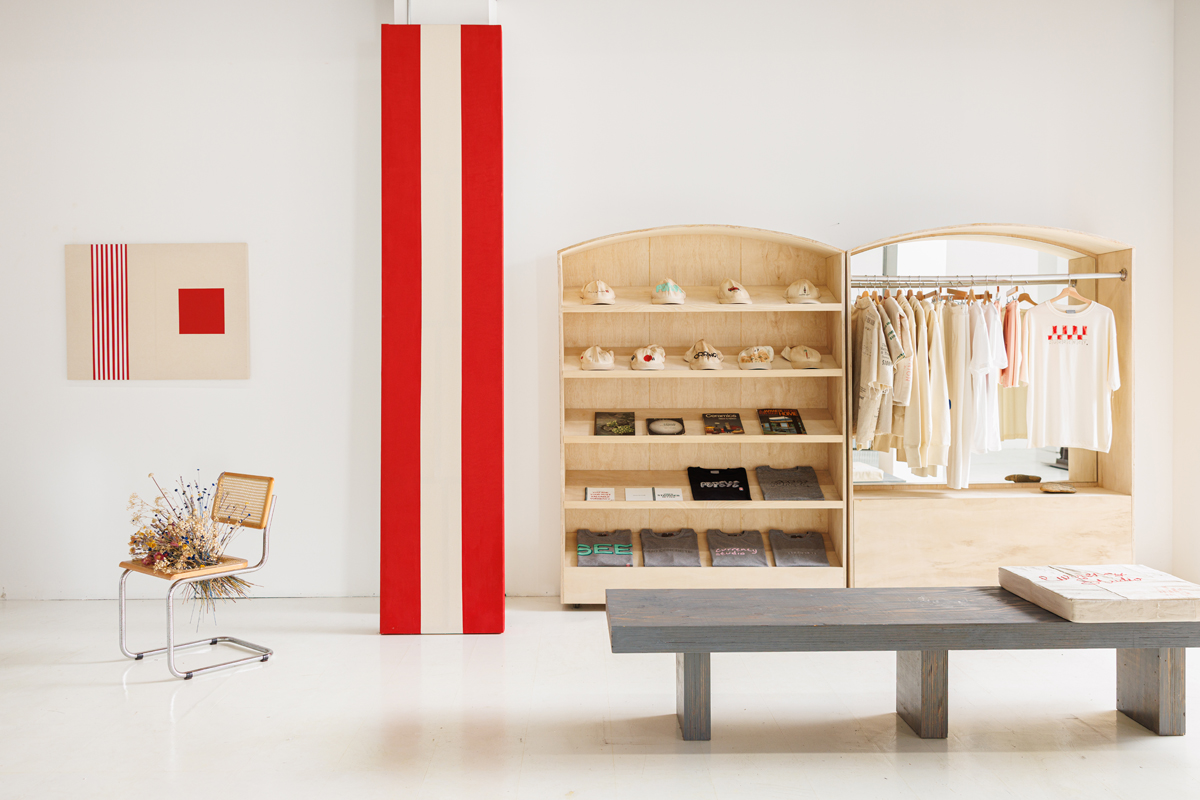
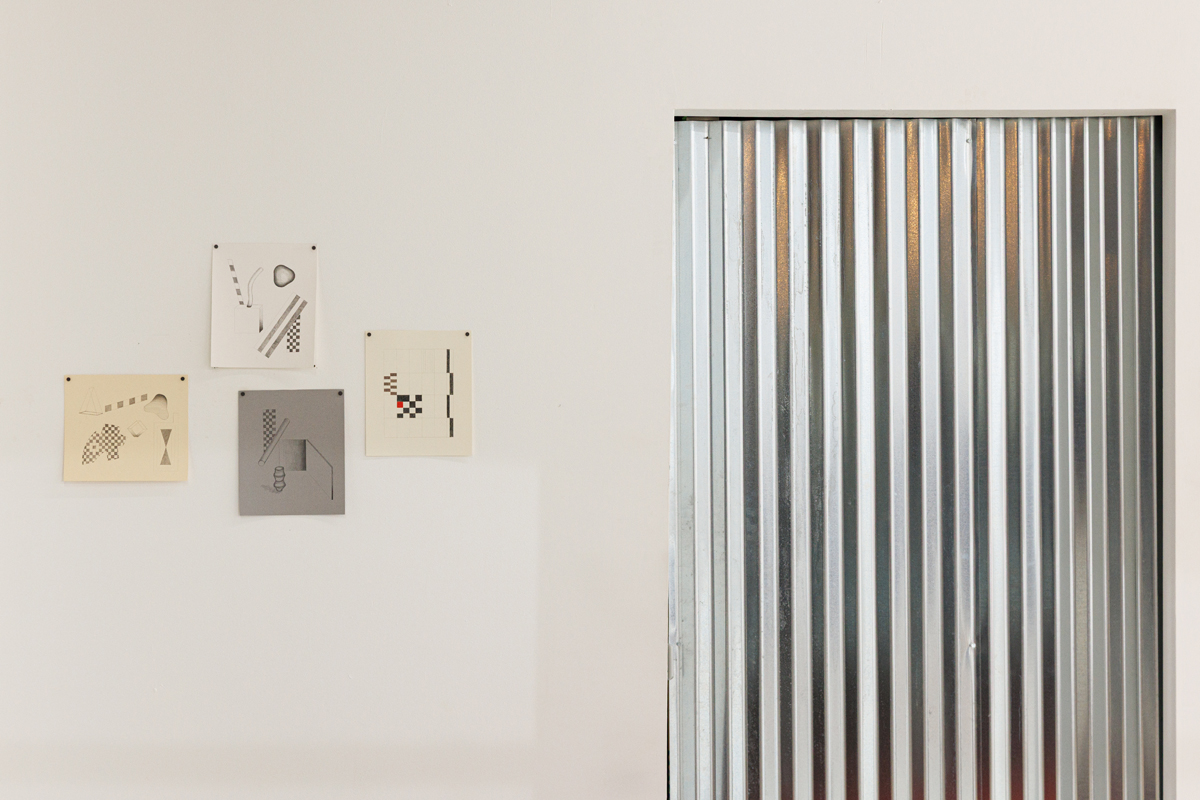
Currency Studio photographed by Brandon Towns, featuring works by Malcolm Majer (L) and Isaac Kim (R)
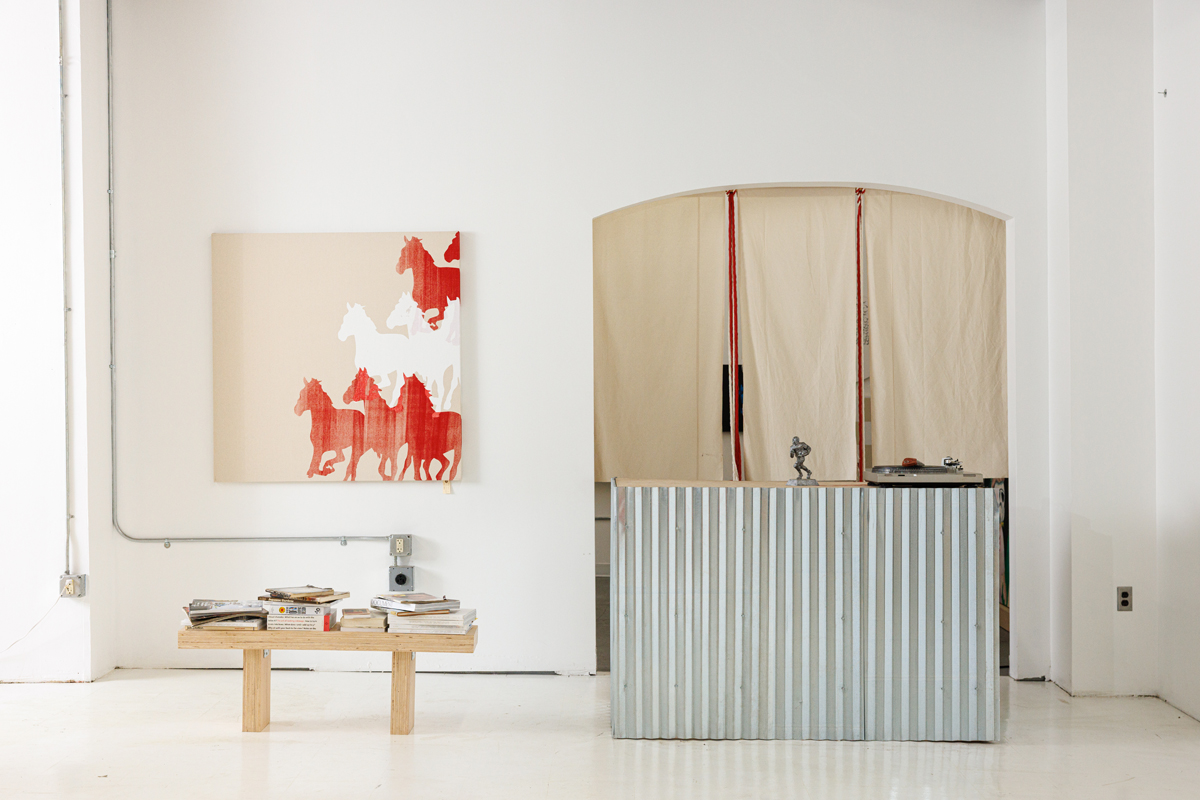
Currency Studio photographed by Brandon Towns featuring artwork by Michael Haskins Jr. Built Environment + All furniture is designed and/or sourced by Currency Studio

You have some unique pieces in your studio, including T-shirts and hats branded with “Popeye.” What does this symbolize?

Popeye is a Japanese magazine that I’ve been collecting for a few years. We sell Popeye magazine in the space. So we import Popeye magazines from Japan, and we sell them. But that t-shirt is a hand painted Popeye t-shirt. Popeye the magazine, the brand doesn’t actually sell merch. They don’t sell hats, they don’t sell t-shirts. It’s strictly a magazine publication. But I thought it was cool. I was really interested in that magazine and I was, ‘Since I’ve read them so much and they’ve been in my peripheral and around my home and around my spaces, I would love a t-shirt that says Popeye.’ And so I created one by picking up a paint brush and doing it myself.

A lot of the pieces in the space are hand painted and distressed. That’s my work. I am hand painting these pieces. I’m distressing these pieces, natural dying, sun burning and steaming and then drawing either places that I’ve traveled on these pieces or things that have inspired me.

You also clearly have a fascination with horses. Why are you drawn to them in your art?

The majority of my work is circular, a lot of which comes from me being interested in horse culture. And as I got older, thinking about all the complexities around only wanting to own a horse or horses being free, or how we’re so interested in horse culture in ways that we don’t even know. Growing up as young black men, we may think that horses are not for us.

But growing up, we want the Ferrari, we want the Porsche, we want the Mustang and not thinking like, ‘Oh, that horse is a symbol of power.’ So that’s where that language of work came from. And prior to painting horses, I was painting stripes. It started off as me just painting stripes on t-shirts from top to bottom. And that’s where our little logo came from.

It’s also known that you’re in business with your wife. How have you merged your passions and expertise for Currency Studio?

My wife’s name is Erica Lee Page, well now Erica Lee Haskins. She is a spatial designer. The easy way to put it is she does f–king everything. She’s really good with her hands. She can literally learn how to do anything. For Currency Studio, she sews our samples. If anything is sewn in the space, she sews it.

When it comes to myself, I think of myself as being someone that can ideate, but not someone who can also necessarily execute. That’s where my wife comes in. We were friends for three years or so before we entered into a romantic partnership. And she’s been an amazing partner in life and in business. Being in a marriage with her has elevated not just myself, but the brand overall, because I’ve been able to lean on her for things, and collaborate, whether that be through different skillsets or other resources.

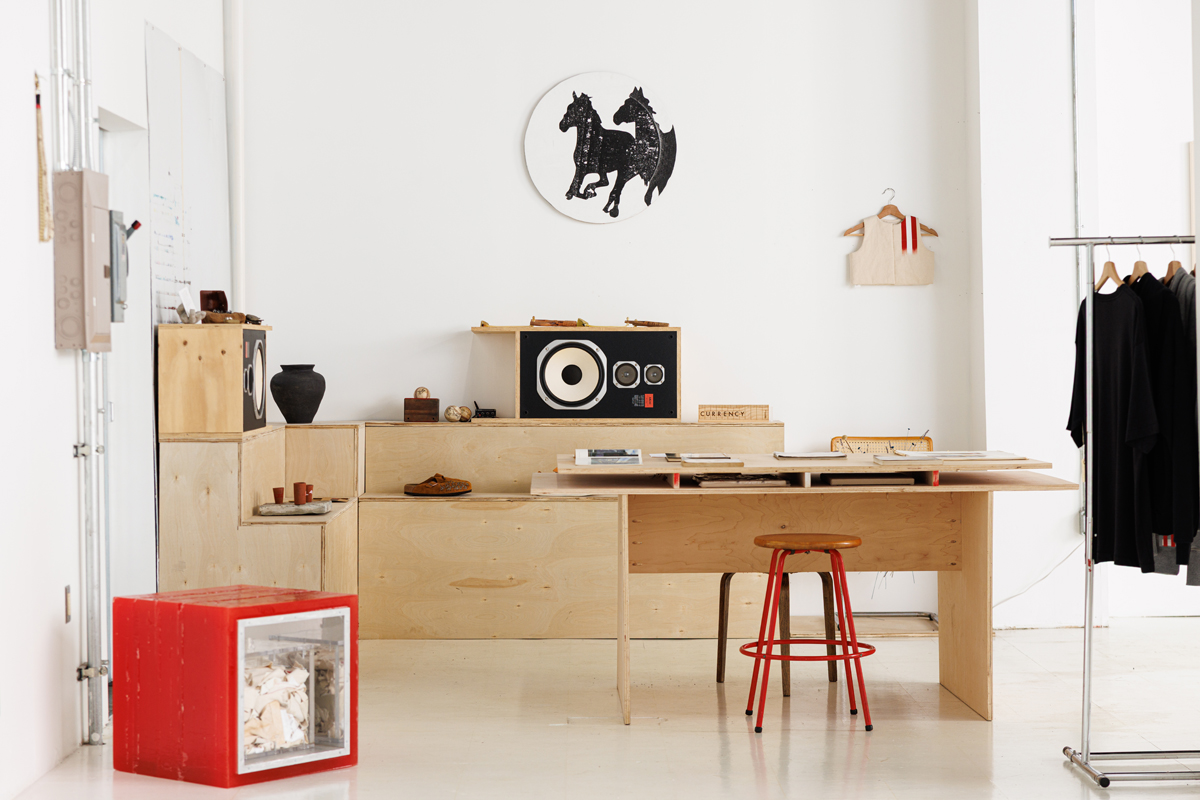
Currency Studio photographed by Brandon Towns, featuring works by Michael Haskins Jr. and Erica Lee Page. Built Environment + All furniture is designed and/or sourced by Currency Studio
I want to use Currency as a marketing tool for Baltimore. Because growing up I didn't give a f–k about Oregon, but then purchased something from Nike. I didn't know what Paris was until I bought a Louis Vuitton wallet.
Michael E. Haskins Jr.

With all of the places you’ve traveled to, why settle back home in Baltimore?

I want to use Currency as a marketing tool for Baltimore. Because growing up I didn’t give a f–k about Oregon, but then purchased something from Nike. I didn’t know what Paris was until I bought a Louis Vuitton wallet. I didn’t know what Italy was until I bought a Gucci belt. I didn’t know what any of these places were.

And I think the one thing that we do in Baltimore is we’re thinking… ‘Oh, people don’t know about us. We’re not on the map.’ And another thing that people don’t think about is that brands play a big role in the success of cities. And we can’t only have Under Armour. We can’t only have Johns Hopkins. We can’t only have The Wire. We can’t only have McCormick. We need small cool hero trailblazer stories.

And I’m working towards Currency Studio being one of those stories. And my goal is to grow a brand in this city that one day somebody living in D.C. or Philly or New York or wherever goes, ‘I wanna move to Baltimore to work for Currency.’ And so it’s like we use this small Baltimore space, actually build our operations business, hopefully find a real estate development partner who is willing to invest in our brand, and grow from there.

Compared to other places that are art, fashion, and culture meccas, where do you feel Baltimore is on that scale?

Let’s start with talent. I know the talent is here. There’s talent in music, there’s talent here in fashion, there are visionaries here, there are artists. It’s insane. But there’s no infrastructure. This is a very conservative city. Conservative in a sense of people don’t want you to know they have money here. Or they look down upon it seems. It’s an anti-capitalist city. And when you’re in a city like this, and you also have this talent, but there’s no ecosystem for the talent to survive and sustain their practice, they become expats elsewhere. Or they become bitter here.

If consumers aren’t spending money on art here, then artists aren’t making money. We want to go to New York and spend our money. We’re not looking for the local designer in Baltimore. We want to go to New York and spend money, or LA, or Miami, because that feels cool. Baltimore has a way to go, but it’ll get there, hopefully.

Despite making Baltimore your homebase for your brand, where are your favorite art hubs?

Of course Japan is insane. I love London for its architecture. In London, I felt like the amount of pop art I would see in places was fascinating. I caught myself going, ‘Oh, I never thought I was gonna see this in real life.’ And I love LA for its art. In LA, I feel like you see all this stuff in magazines growing up, or you see them in documentaries and you’re like, ‘I wonder where that piece is.’ And I, every time I’m in LA I just feel like I’ll walk past a building and then I’ll just be like, ‘Wow, that’s right there in that building.’ My favorite celebrity artist is Roy Lichtenstein, and hes’e everywhere in LA. I think there’s some good sculpting in LA for sure.

Currency Studio photographed by Brandon Towns
Currency Studio photographed by Brandon Towns, featuring artwork by Erica Lee Page

Your space is very clean and minimalistic. I also noticed you biked to the retail space and live nearby, so it seems you also choose a minimalist lifestyle.

That’s intentional. I always say it’s like you’re stepping into my home and my mind. I don’t need to be the loudest or the most flashy. People like that always try to tell me how to run my business, or are the loudest in the room, and they don’t necessarily measure up. This space is true to me, my mind, the way I see things, my art, and how I view things.

A lot of people may have an issue with price points from local artists. How do you feel about that?

Outside of everything we do regarding fabrics and manufacturing, there’s an intention to price point. Because when somebody walks out of this space with a piece, I want them to treat it like art. If somebody can come in here and buy a $30 t-shirt, they’re not going to care about that t-shirt next year. But if somebody comes in here and they spend $70 to $100 on a t-shirt, they are going to treat that t-shirt a lot better. And same with our artwork. You can come in here and you can buy a $60 t-shirt or you can buy a $10,000 art piece, and sometimes it happens.

What do you think sets yourself apart from others in Baltimore? What do you attribute your success to?

One of the ways we have been able to be successful is that we diversify what we can offer, and we do it in a way where we might have a consumer that is growing out of our clothing, and we don’t necessarily want to chase that, but that consumer that’s growing outside of our clothing, but they might have just bought a house so they might want to buy art for their home. So that same consumer that trusts our fashion aesthetic, they should be evolving to other products we have. As an ongoing consumer, they may pick up a piece of our artwork and say, ‘Oh, this is the artwork Michael likes.’

We’ve literally opened the market up in a way that we’re vertically integrated. Not to say that as far as growth and scale, we’re succeeding in the traditional way. A lot has to change for us to actually scale and grow in the fashion business. Our goal is to develop a strong relationship with the production partner, and open this new store. This space has been very experiential. You can’t really put your hands on how this could work anywhere else.

But in our new retail space, it’s a moment for me to strengthen our retail operations and just focus on clothing. In this space, we were having fun, we had furniture, artwork, and all this stuff in this space. And that was just a way to build our language and build trust and get awareness to diversify what we offer. But in this new retail space, the goal is to really focus and streamline on what Currency’s product offering is as far as clothing and how our retail works. And the goal would be to then build a relationship with a real estate development partner that is willing to see that model, and invest in us doing that same thing in LA, and expand from there.

We also have many collaborative efforts and community efforts. We do spatial design for other people. We’re creative directing for other brands. So Currency Studio is an idea strong enough that allows us to like branch out and go work in other spaces. It allows for our name and our brand to be visible.

This story is from Issue 19: Hidden Gems, available here.

Related Stories
Protest, Identity, and Humor Converge at Pubic Wig Fashion Show

Merkin Dream III expanded on themes of women’s rights, sex work, body image, and dysphoria through bold design, movement, and performance.

A Conversation with the BMA's Jewelry Buyer and Why You Should Never Overlook a Museum Gift Shop

After serving nearly ten years as Head Jewelry Buyer for the BMA's gift shop, Gray was promoted to her current role as Assistant Director of Retail Operations in early 2025. We talked about the ins and outs of working in the museum retail space and what inspires her love of jewelry.

From Upcycled Heirlooms to Ren-Fest Regalia, Craft Honed Over Half a Century

A collaborative approach and emphasis on repurposing materials characterizes Lauren Schott’s jewelry making and highlights the ethos of her business. Schott is not only a highly skilled jeweler with over five decades of experience, but she also is dedicated to reusing metals and gemstones.

Plant Stylist and Social Media Influencer Reigns King of the Urban Jungle

A Baltimore native and a creative force, Carter is changing the way people think about greenery in their homes, encouraging the masses to bring nature indoors.